

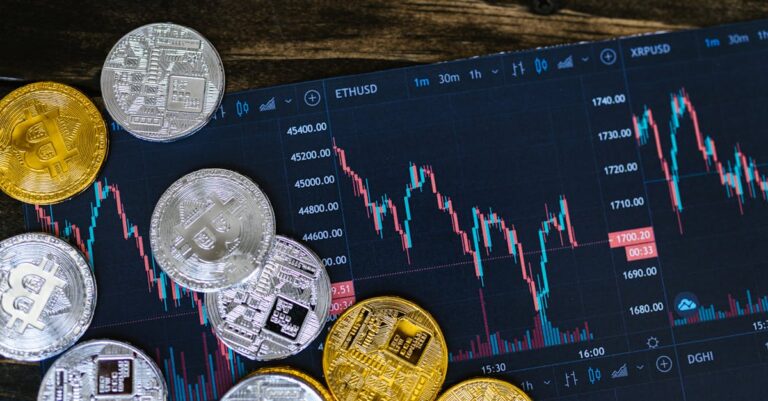
Understand how FX option expiries and geopolitical events influence currency movements, offering critical insights for protecting and growing your wealth in volatile markets.
For individuals building wealth, understanding the intricate dance of global financial markets is not merely an academic exercise; it’s a vital component of strategic financial planning. One often-overlooked yet potent influence on daily currency movements, and by extension, the broader economic landscape, is the phenomenon of FX option expiries. These predefined deadlines for foreign exchange options can act as significant magnetic forces on currency prices, particularly around specific times like the 10 am New York cut-off.
While often discussed in the context of professional trading desks, the implications of these expiries, especially when coupled with unpredictable geopolitical developments, resonate far beyond the interbank market. They contribute to the ebb and flow of currency market volatility, which can indirectly affect everything from the cost of imported goods to the value of international investments in your portfolio. This article will delve into what FX option expiries are, how they impact currency valuations, and crucially, how external factors like geopolitical tensions can either amplify or override their influence, providing a comprehensive guide for the discerning wealth builder.
We’ll explore how these expiries can create temporary “sticky” price action, examine real-world scenarios, and connect these intricate market mechanics to actionable insights for managing and growing your wealth. Understanding these dynamics is not about becoming a day trader, but about gaining a deeper appreciation for the forces that shape your financial future, allowing for more informed decisions and a robust wealth strategy.
Understanding FX Option Expiries: The Magnetic Pull on Currency Prices
To grasp the significance of FX option expiries, we must first understand what a foreign exchange (FX) option is. In simple terms, an FX option gives the holder the right, but not the obligation, to buy or sell a specific amount of one currency for another at a predetermined exchange rate (known as the strike price) on or before a certain date (the expiry date). These are powerful financial instruments used by corporations to hedge against currency risk, by investors to speculate, and by central banks for various purposes.
What Happens at Expiry? The 10 am New York Cut
A crucial element in the world of FX options is the expiry time. A particularly significant window is the 10 am New York cut-off. This time is standardized for many over-the-counter (OTC) FX options, meaning a large volume of options contracts often expire simultaneously. As this deadline approaches, market participants who have written (sold) these options, and those holding them, often take action to manage their positions.
For instance, if a large block of options to buy EUR/USD at 1.1750 is about to expire, and the current market price is just below that level, the entities that sold these options (typically large banks or financial institutions) might try to keep the price from moving too far above or below 1.1750. This is because significant price swings away from the strike price could result in losses for them if the option is exercised (or not exercised, depending on their position). This creates a phenomenon known as “pinning” or “stickiness,” where the market price tends to gravitate towards these major expiry levels.
Think of it like gravity pulling an object towards its center. The larger the volume of options expiring at a particular strike price, the stronger the magnetic pull becomes. This can lead to periods of reduced volatility around these levels, as market participants actively trade to manage their exposure, effectively anchoring the price for a short duration.
The Psychology of Key Levels and FX Option Expiries
Beyond the technical mechanics, there’s a psychological aspect to these expiry levels. Traders and algorithms are well aware of significant option expiries. They become watch points, influencing trading strategies. If many participants are expecting a certain level to hold due to an expiry, their collective actions can, for a time, make it a self-fulfilling prophecy. This can create temporary support or resistance levels that might not otherwise exist based purely on fundamental economic data or longer-term technical analysis.
For wealth builders, while not directly trading options, understanding this dynamic is key to interpreting short-term currency movements. A sudden halt in a currency pair’s ascent or descent might be attributed to an upcoming expiry, rather than a fundamental shift. This knowledge helps temper reactions to daily market noise and provides a clearer lens through which to view broader economic trends.
Illustrative Scenarios: EUR/USD and GBP/USD Expiries
To illustrate the practical impact of FX option expiries, let’s consider hypothetical scenarios for major currency pairs like EUR/USD and GBP/USD, drawing on the typical dynamics observed in the market. These examples highlight how specific expiry levels interact with other technical indicators and broader market sentiment.
The EUR/USD Example: A Tug-of-War at a Key Juncture
Imagine a scenario where a substantial EUR/USD option expiry is scheduled at the 1.1750 level for the 10 am New York cut. Simultaneously, the 200-hour moving average, a common technical indicator used by traders to gauge short-term trends, sits very close by, perhaps at 1.1740. This creates a confluence of forces.
In this situation, the expiry level at 1.1750 could act as a significant magnet. As the expiry time approaches, market participants with open option positions around this level will likely take action. Those who sold options at 1.1750 might be incentivized to keep the price from moving significantly above or below this point to minimize their risk. This often translates into increased trading activity around 1.1750, creating a temporary “sticky” zone for price action.
The proximity of the 200-hour moving average at 1.1740 further complicates matters. This moving average can often act as a dynamic support or resistance level. If EUR/USD is approaching 1.1740 from above, the 200-hour MA might provide some initial support. The option expiry at 1.1750, slightly above it, reinforces this area as a crucial battleground. Should the price dip below the 200-hour MA, especially if the expiry isn’t strong enough to hold it, it could signal a shift in short-term control from buyers to sellers, potentially paving the way for further declines towards levels like 1.1700.
For investors, this means that even if a currency pair initially opens with a gap down due to broader sentiment, the presence of a strong option expiry near a key technical level can temper immediate follow-through, offering a temporary period of consolidation or limited movement. It’s a reminder that short-term price action is a complex interplay of various factors.
The GBP/USD Example: Limiting Upside Potential
Similarly, consider a GBP/USD option expiry at the 1.3500 level, again for the 10 am New York cut. The pair’s 200-hour moving average is found just below, perhaps at 1.3488. Here, too, the expiry at 1.3500 could exert a magnetic force. If the pair is trading just below this level, the expiry might limit significant upside movements as market makers manage their positions.
The confluence of the 1.3500 expiry and the 200-hour moving average at 1.3488 suggests a strong area of potential resistance. If the general market sentiment favors a stronger underlying currency (e.g., a stronger dollar backdrop), this expiry could further cap any attempts for GBP/USD to rally significantly above 1.3500. The market might hover around these levels, experiencing limited upward momentum, despite other potentially bullish short-term signals.
In both these examples, FX option expiries are not standalone market drivers. They operate within a broader context, interacting with technical indicators, existing trends, and, most powerfully, overarching market sentiment and geopolitical developments. While they can create temporary zones of “stickiness,” their influence is often subservient to more significant macroeconomic or political catalysts.
The Overarching Influence of Geopolitical Risk on Currency Market Volatility
While FX option expiries can exert a measurable, albeit often temporary, influence on currency markets, their impact is frequently overshadowed by major geopolitical events. These “headline risks” introduce an element of unpredictable market volatility that can quickly override technical considerations and even the magnetic pull of expiring options.
Understanding “Headline Risks”
Headline risks refer to significant news events, political tensions, or unexpected announcements that can trigger rapid and substantial shifts in market sentiment and asset prices. These are often sudden and difficult to forecast, making them particularly challenging for financial planning.
A prime example, as seen in historical market reactions, is the resurgence of US-Iran tensions. Reports of increased friction, especially concerning strategic waterways like the Strait of Hormuz, can send ripples across global markets. The Strait of Hormuz, a critical chokepoint for global oil supplies, has immense geopolitical significance. Any threat to its free passage immediately impacts oil prices, which in turn affects inflation expectations, economic growth forecasts, and the relative strength of energy-producing versus energy-consuming economies.
Impact on the Dollar: The Safe-Haven Status
In times of heightened geopolitical uncertainty, the U.S. dollar often benefits from its status as a global safe-haven currency. When fear permeates the markets, investors tend to flock to assets perceived as secure and liquid, and the dollar, backed by the world’s largest economy and deepest financial markets, typically fits this description. This flight to safety can lead to broad dollar strength, even if the underlying U.S. economic data might not warrant such a rally.
This dollar strength can put pressure on other currency pairs, like EUR/USD and GBP/USD. Even if there are significant option expiries that might otherwise provide support or resistance, a strong surge in dollar demand due to geopolitical fears can easily break through these technical levels. The magnetic pull of expiries becomes secondary to the overwhelming force of risk aversion.
How Geopolitical Events Override Technicals
Geopolitical events often introduce a level of fundamental uncertainty that technical analysis and option expiries are simply not designed to capture. Technical levels and expiry zones are based on past price action, perceived market psychology, and anticipated behavior around known contractual obligations. Geopolitical shocks, however, introduce entirely new information that can fundamentally alter economic outlooks, risk appetites, and capital flows.
For instance, renewed concerns over the Strait of Hormuz can lead to a sudden spike in oil prices. This surge can disrupt global supply chains, increase inflation pressures worldwide, and force central banks to reconsider monetary policy. Such wide-ranging implications have a much greater and more lasting impact on currency valuations than a temporary pinning effect from options. Traders, instead of focusing on short-term expiry levels, pivot to assessing the broader implications of these developments for global trade, economic growth, and the stability of the financial system.
Therefore, while being aware of FX option expiries can help understand certain short-term market behaviors, it is paramount for any investor or wealth builder to recognize that major headline risks, particularly those with global economic implications, are the true drivers of significant and sustained currency market volatility.
Connecting FX Options and Geopolitics to Your Wealth Strategy
For the ‘Work to Wealth’ audience, the detailed mechanics of FX option expiries and the immediate reactions to geopolitical headlines might seem distant from long-term investment goals. However, ignoring these dynamics would be a disservice to a comprehensive wealth-building strategy. Currency market movements, whether driven by technical factors, options, or global tensions, have tangible effects on your portfolio’s value, purchasing power, and future financial stability.
Impact on International Investments
Many diversified wealth portfolios include international stocks, bonds, or real estate. The value of these foreign assets, when converted back to your domestic currency, is directly impacted by exchange rate fluctuations. If your investments are in a country whose currency weakens against your home currency, the value of your returns, when repatriated, diminishes. Conversely, a strengthening foreign currency can boost your returns.
For example, if you hold shares in a recognized brand based in Europe, and the EUR/USD exchange rate moves significantly due to geopolitical concerns or options-related “stickiness,” the dollar value of your European holdings will change. While short-term option expiries create temporary phenomena, persistent geopolitical tensions can lead to sustained currency shifts, eroding or enhancing the long-term value of your international diversified portfolio.
Inflation and Purchasing Power
Currency movements can directly influence inflation. A weakening domestic currency makes imports more expensive. If your country relies heavily on imported goods, services, or raw materials (like oil), a sustained depreciation of your currency can lead to higher domestic prices. This erosion of purchasing power affects everyone, from daily spending to the long-term value of savings.
Geopolitical events, particularly those affecting commodity prices (e.g., oil prices due to Strait of Hormuz issues), further amplify this effect. Higher oil prices, combined with a weakening currency, can create a powerful inflationary spiral. For wealth builders, this means the real return on their investments needs to outpace not just nominal inflation, but also any additional inflationary pressures stemming from currency depreciation.
Diversification and Risk Management
Understanding currency dynamics is crucial for effective diversification and risk management. While asset diversification across stocks, bonds, and real estate is common, currency diversification is often overlooked. Holding assets or investments denominated in different currencies can help mitigate the impact of any single currency’s weakness.
For businesses with international operations, or individuals with significant foreign income or expenses, managing currency risk becomes even more critical. While hedging directly with options might be too complex for individual wealth builders, understanding the market landscape allows for informed decisions on where to invest, what currencies to hold, and when to consider currency-hedged investment products offered by financial institutions.
Staying informed about geopolitical developments and major market events like FX option expiries enables you to make more strategic choices regarding your asset allocation and international exposure. It reinforces the importance of a well-thought-out long-term plan that anticipates and adapts to global economic forces, rather than being passively subjected to them.
Strategies for Navigating Currency Market Volatility
Given the complex interplay of FX option expiries, technical indicators, and overarching geopolitical risks, how can individuals building wealth effectively navigate the inherent market volatility? The goal isn’t to become a day trader, but to foster resilience and strategic foresight in your financial planning.
1. Embrace a Long-Term Perspective
The first and most crucial strategy is to maintain a long-term investment horizon. Short-term currency fluctuations, whether driven by option expiries or daily headlines, often dissipate over time. Reacting impulsively to every market tremor can lead to poor decisions, such as selling low during a panic or missing out on rebounds. A well-constructed wealth plan is designed to weather short-term storms and capitalize on long-term growth trends.
2. Diversify Across Asset Classes and Geographies
True diversification goes beyond simply spreading investments across different types of stocks. It involves allocating capital across various asset classes (stocks, bonds, real estate, commodities) and, importantly, across different geographical regions and currencies. This mitigates the risk associated with any single economy or currency experiencing prolonged weakness. International investments, when chosen wisely, can provide a hedge against domestic currency depreciation or economic downturns.
3. Understand Currency Exposure in Your Portfolio
Take time to understand your portfolio’s currency exposure. If a significant portion of your international holdings is denominated in a single foreign currency, you might be taking on more currency risk than intended. Consider investment products that offer currency hedging, especially if you have a specific future need for foreign currency (e.g., planning to buy property abroad or fund international education).
4. Stay Informed, Not Obsessed
While it’s important to be aware of major geopolitical developments and their potential impact on global markets, there’s no need to monitor every hourly FX option expiry. Focus on reliable financial news sources that provide macro-level analysis and long-term trends rather than minute-by-minute market commentary. Understanding the ‘why’ behind major market moves is more beneficial than tracking every ‘what’.
5. Maintain a Robust Emergency Fund
An adequately funded emergency reserve, ideally held in a highly liquid and stable currency (often your domestic currency or a globally recognized safe-haven currency), is your first line of defense against market shocks. This fund ensures you don’t have to sell investments at unfavorable times to meet unexpected expenses during periods of high volatility.
6. Consult with a Qualified Financial Advisor
Navigating the complexities of global markets and currency dynamics can be challenging. A reputable financial advisor specializing in wealth management can help you assess your risk tolerance, understand your currency exposure, and construct a diversified portfolio aligned with your long-term goals. They can also provide guidance on hedging strategies or selecting appropriate investment vehicles for international exposure.
7. Focus on Fundamentals Over Noise
While FX option expiries create temporary market “noise” and geopolitical events cause immediate reactions, long-term wealth accumulation is ultimately driven by economic fundamentals, corporate earnings, and sound financial principles. Ensure your investment decisions are anchored in these fundamentals, rather than being swayed by short-term market fluctuations.
By adopting these strategies, wealth builders can approach currency market volatility not as a threat to be feared, but as a dynamic aspect of the global financial landscape to be understood and strategically managed. This proactive approach fosters resilience and positions your wealth for sustained growth, irrespective of daily market shifts or geopolitical tremors.
In conclusion, the world of foreign exchange is a vibrant and ever-evolving ecosystem. While specific events like FX option expiries offer fascinating glimpses into short-term market dynamics, their true significance for wealth builders lies in understanding how they interact with broader forces. Geopolitical risks, in particular, serve as potent reminders that fundamental shifts can swiftly overshadow technical patterns, driving significant currency market volatility. By embracing a long-term perspective, diversifying wisely, and staying informed, you can navigate these complexities with confidence, safeguarding and growing your wealth for the future.
Frequently Asked Questions
How do FX option expiries impact my investment portfolio’s value?
While you might not directly trade FX options, their expiries can create temporary “sticky” price levels in currency markets. If you hold international investments, these short-term currency movements can indirectly affect the value of your foreign assets when converted back to your domestic currency. For instance, a temporary weakening of a foreign currency due to expiry-related selling pressure could slightly reduce the translated value of your holdings, though its long-term impact is generally minimal compared to fundamental drivers. However, understanding these dynamics helps interpret short-term market behavior rather than overreacting.
Why are geopolitical events so critical for currency market stability?
Geopolitical events, such as international tensions or conflicts, introduce significant uncertainty into global financial markets. Unlike planned economic data releases or technical patterns, these events are often unpredictable and can have far-reaching implications for global trade, commodity prices (like oil), inflation, and investor sentiment. This leads to rapid shifts in demand for safe-haven currencies (like the US dollar) and can cause substantial, lasting currency market volatility, overriding the temporary effects of FX option expiries. They fundamentally alter risk appetites and capital flows, directly impacting the stability of exchange rates.
What are practical steps to manage currency risk in my wealth plan?
To manage currency risk, focus on diversification across various asset classes and geographical regions. Ensure your international investments are spread across different currencies, not just a single foreign one. Consider using currency-hedged investment products if you have specific foreign currency needs or significant exposure. Maintaining a long-term perspective helps avoid panic selling during short-term currency fluctuations. Regularly review your portfolio’s currency exposure and consult a financial advisor for personalized strategies tailored to your goals and risk tolerance.
Can short-term FX movements truly affect my long-term wealth accumulation?
While individual short-term FX movements, like those around specific FX option expiries, generally have limited direct impact on long-term wealth, their cumulative effect, especially when influenced by persistent geopolitical factors, can be significant. Sustained currency depreciation of your domestic currency can erode the purchasing power of your savings and make imports more expensive, contributing to inflation. Conversely, strong foreign currencies can boost the returns from international investments. Therefore, understanding these dynamics helps in constructing a more resilient and strategically informed long-term wealth plan, mitigating potential erosion and capitalizing on opportunities.
Should I change my investment strategy based on daily FX option expiry news?
For the average wealth builder, it is generally not advisable to alter your long-term investment strategy based on daily FX option expiry news. These events primarily influence short-term price action and are most relevant to active traders. Your wealth strategy should be guided by your financial goals, risk tolerance, and a diversified, long-term approach focused on fundamental economic trends. While staying informed about major market drivers is beneficial, reacting to every short-term market tremor can lead to suboptimal decisions. Focus on macro trends and significant geopolitical developments rather than daily technical minutiae.