

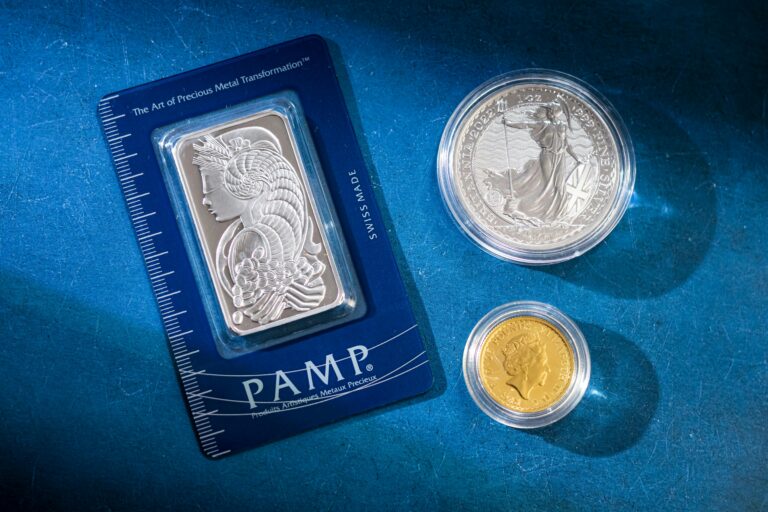
Explore the astounding precious metals surge with silver eyeing $110 and gold clearing $5,100. Discover the forces driving these historic gains and implications for your portfolio.
The Unprecedented Precious Metals Surge Rewarding Investors
The financial markets have witnessed an extraordinary spectacle: a monumental precious metals surge that has recalibrated expectations for investors worldwide. Silver (XAG/USD), often considered gold’s more volatile cousin, has embarked on a mission, its prices targeting a staggering $110 per ounce. This pursuit comes on the heels of an astonishing 250% appreciation over the past year, with a particularly scorching January alone contributing a 50% upside. This parabolic movement has left many observers in awe, prompting urgent re-evaluations of its role in a diversified wealth-building strategy.
Not to be outdone, gold (XAU/USD) has joined this remarkable rally, clearing the $5,100 mark for the first time ever. Its ascent in the preceding year of 2025 saw it post a formidable 60% gain, solidifying its position as a beacon of stability and a formidable store of value amidst global uncertainties. The combined performance of these two foundational assets paints a vivid picture of a market in flux, driven by a confluence of economic, geopolitical, and structural factors that have converged to create an environment ripe for substantial gains in the precious metals sector.
For individuals on their journey from work to wealth, understanding the dynamics behind this surge is not merely an academic exercise; it’s a critical component of informed decision-making. These aren’t just transient price movements; they represent a significant shift in how market participants perceive risk, value, and the future of global economics. The question for many now isn’t if precious metals are relevant, but how best to integrate their potential into a robust, resilient financial plan designed for long-term prosperity.
This article delves deep into the mechanisms propelling this historic precious metals surge, distinguishing between speculative fervor and fundamental demand. We will explore the unique narratives of both silver and gold, examining the forces that have enabled their astonishing returns and considering the broader implications for your investment portfolio. By dissecting these market movements, we aim to equip you with the knowledge to make strategic choices, ensuring that you are not merely observing wealth creation but actively participating in it.
Macroeconomic Winds Fueling the Precious Metals Rally
The current precious metals surge is not an isolated event but rather a direct response to a complex interplay of macroeconomic forces shaping the global economy. Investors, seeking safe havens and inflation hedges, have increasingly turned to gold and silver as traditional assets grapple with unprecedented volatility and uncertainty. Several key drivers stand out in explaining the intensity and duration of this rally.
Firstly, escalating trade tensions and geopolitical instability have cast a long shadow over global markets. In an interconnected world, conflicts and protectionist policies can disrupt supply chains, impact commodity prices, and erode investor confidence in conventional equity markets. Precious metals, with their inherent value and historical role as crisis commodities, become increasingly attractive during such periods of heightened anxiety. They offer a tangible form of wealth preservation, appealing to those who fear the depreciation of fiat currencies or the instability of financial systems.
Secondly, a softer global currency, particularly the widely traded major currencies, has provided a significant tailwind. When a currency weakens, it generally makes dollar-denominated assets, like gold and silver, more affordable for international buyers holding other currencies, thereby increasing demand. This dynamic can create a self-reinforcing cycle, as increased demand pushes prices higher. Furthermore, a perception of easing monetary policy often correlates with a softer currency outlook, further enhancing the appeal of non-yielding assets like precious metals.
Thirdly, and perhaps most crucially, expectations of future interest rate cuts have played a pivotal role. When central banks signal or implement lower interest rates, the opportunity cost of holding non-yielding assets like gold and silver decreases. In a low-interest-rate environment, the return on cash or fixed-income investments diminishes, making precious metals relatively more attractive. This effect is amplified when real interest rates (nominal rates minus inflation) are low or negative, as precious metals then serve as a more effective hedge against inflation and a better store of purchasing power.
Finally, pervasive inflationary pressures have fueled demand for assets traditionally viewed as hedges against rising prices. With global economies grappling with elevated inflation, investors are seeking assets that can preserve or even enhance their purchasing power. Gold, in particular, has a long-standing reputation as an inflation hedge, while silver, with its dual role as an industrial metal, can also benefit from inflationary pressures that drive up commodity prices generally. The collective impact of these macroeconomic factors has created a fertile ground for the current precious metals surge, transforming them from niche investments into a central component of many forward-looking financial strategies.
Silver’s Dual Narrative: Industrial Demand Meets Speculation in its $110 Ascent
The astonishing silver’s ascent to $110 per ounce is not solely a story of safe-haven demand; it’s a complex narrative where robust industrial consumption converges with significant speculative interest. Unlike gold, silver boasts a unique dual identity, serving both as a monetary metal and an indispensable industrial commodity, a characteristic that amplifies its price movements and potential for substantial gains.
Approximately 60% of current silver demand now originates from industrial applications, a notable increase from under half a decade ago, according to research by Metals Focus. This burgeoning industrial appetite is largely driven by its unparalleled conductivity and reflectivity, making it critical for a multitude of advanced technologies. Key sectors fueling this demand include:
- Electronics: Silver is a vital component in a vast array of electronic devices, from smartphones and computers to automotive electronics, due to its superior electrical and thermal conductivity.
- Solar Panels: The accelerating global transition to renewable energy sources has made silver an indispensable material for photovoltaic (PV) cells. Each solar panel contains a small but crucial amount of silver paste, and as solar adoption expands exponentially, so does the demand for silver.
- Power Infrastructure: Modernizing and expanding power grids, especially for electric vehicles and smart cities, requires significant amounts of silver in connectors, switches, and other components for efficient energy transmission.
This industrial powerhouse role contrasts sharply with a persistently tight supply situation. A significant challenge for silver production is that approximately three-quarters of new silver comes as a byproduct of mining other metals, such as copper, lead, and zinc. This inherent characteristic means that silver production cannot easily or rapidly scale up independently to meet surging demand. The output is largely dictated by the economics and production cycles of these primary metals.
Consequently, demand has consistently outstripped supply every year since 2018. Last year, the deficit neared an alarming 18%, and another significant shortfall is anticipated in 2026. This structural supply-demand imbalance creates a compelling fundamental case for higher silver prices, suggesting that its upward trajectory is supported by more than just market sentiment.
However, alongside these robust fundamentals, speculation undeniably plays a heavy role in silver’s dramatic price swings. With a total market value sitting near $5.3 trillion, silver is considerably smaller than gold’s roughly $33 trillion market capitalization. This relative smallness makes silver more susceptible to price volatility, behaving more like a dynamic small-cap stock than a sleepy store of value. Large institutional flows, sudden shifts in investor sentiment, and algorithmic trading can trigger rapid and significant price movements. It’s not uncommon for fifteen-minute trading windows to add or erase billions from its market capitalization, even in the absence of fundamental news specific to the metal.
Understanding this dual nature of silver – its indispensable industrial utility coupled with its smaller market size and resulting speculative appeal – is crucial for investors. While industrial demand provides a strong foundational support for prices, the speculative component can lead to exhilarating gains but also sharper pullbacks. For those seeking to leverage the current precious metals surge, recognizing these characteristics is key to managing risk and harnessing silver’s unique potential for wealth accumulation.
Gold’s Enduring Reign: The Ultimate Store of Value as Gold Tops $5,100
As gold tops $5,100, its narrative remains consistent and compelling: it is the quintessential store of value, a timeless asset whose appeal strengthens in times of economic uncertainty and inflation. While silver’s journey often involves industrial demand and speculative fervor, gold’s allure is rooted in its scarcity, historical significance, and unwavering trust as a safe haven.
The inherent scarcity of gold is a cornerstone of its value. According to the World Gold Council, only about 216,000 tonnes of gold have ever been mined throughout human history. This limited supply, coupled with decreasing discoveries of new, easily accessible reserves, as highlighted by the US Geological Survey, means that gold is a finite resource. Unlike fiat currencies, which can be printed indefinitely, or other commodities whose production can ramp up with technological advancements, gold’s supply growth is inherently constrained. This scarcity ensures its long-term value preservation, making it a critical component for investors seeking to protect their purchasing power across generations.
Gold’s role as a safe haven is deeply ingrained in financial psychology. In periods of geopolitical turmoil, economic downturns, or financial crises, investors consistently flock to gold. Its reputation as a stable asset during times of instability provides a sense of security that few other investments can match. This “fear-driven” demand ensures a steady floor for gold prices, even when other asset classes falter. It acts as a portfolio stabilizer, often moving inversely to equities or currencies, thereby offering diversification benefits.
Beyond individual investors, central banks globally are significant holders and buyers of gold. Central banks frequently diversify their foreign exchange reserves with gold to mitigate currency risks, hedge against inflation, and project financial strength. Their consistent demand provides a robust institutional pillar of support for gold prices, underscoring its strategic importance on a national level. This official sector demand is a testament to gold’s enduring status as a globally accepted reserve asset.
For wealth builders, gold serves as an essential component for maintaining wealth. It’s not typically an asset one buys for explosive growth like some tech stocks, but rather for its ability to preserve capital and purchasing power over extended periods. In an environment where inflation can erode savings and government policies can impact currency values, gold offers a tangible, independent asset that has demonstrated resilience for centuries. Its consistent appeal provides a bedrock for a long-term financial strategy, ensuring that a portion of your wealth remains protected from the vagaries of economic cycles and market volatility.
The fact that gold has cleared $5,100 signifies not just a temporary spike, but a reinforced confidence in its role. It reflects a widespread acknowledgment among investors, from individuals to sovereign entities, that in an increasingly unpredictable world, gold’s appeal as a steadier, more reliable store of value remains paramount. This enduring trust solidifies its position as a cornerstone of any prudent wealth preservation and growth strategy, particularly for those looking to buffer their portfolios against future economic shocks.
Navigating the Precious Metals Market for Wealth Growth
The recent precious metals surge presents both exciting opportunities and critical considerations for wealth builders. Navigating this dynamic market requires a clear strategy, a thorough understanding of risks, and an allocation approach aligned with your financial goals. Integrating gold and silver into your portfolio can offer significant advantages, but only when approached with prudence and foresight.
Strategic Role in a Diversified Portfolio
Precious metals historically serve as excellent portfolio diversifiers. Their tendency to perform well when other asset classes, such as stocks and bonds, are under pressure, can help reduce overall portfolio volatility. Including a modest allocation to gold and silver can act as an insurance policy, safeguarding your wealth during economic downturns, geopolitical crises, or periods of high inflation. For a “Work to Wealth” philosophy, this means protecting the capital you’ve worked hard to accumulate, ensuring it continues to grow rather than erode due to external factors.
Risk Assessment: Understanding Volatility and Market Cycles
While the recent gains have been astounding, it’s crucial to acknowledge the inherent volatility, especially with silver. As a smaller market with significant speculative interest, silver prices can experience sharp swings. Gold, while generally steadier, is not immune to corrections. Investors must assess their risk tolerance and understand that precious metals are subject to market cycles. What goes up can also come down, and patience is often required to weather short-term fluctuations for long-term benefits. Avoid chasing the rally blindly; instead, focus on a disciplined approach.
Investment Vehicles: Accessing the Precious Metals Market
There are several avenues for investing in precious metals, each with its own advantages and disadvantages:
- Physical Metal: This involves purchasing actual gold or silver bullion (bars, coins). It offers direct ownership and removes counterparty risk, but comes with considerations like storage, insurance, and potential premiums over spot prices.
- Exchange-Traded Funds (ETFs): These funds track the price of gold or silver and trade like stocks on major exchanges. They offer liquidity, ease of trading, and avoid storage issues, but involve management fees and are subject to the risks of the underlying commodity. Ensure you choose reputable ETFs backed by physical metal.
- Mining Company Shares: Investing in companies that mine gold and silver offers exposure to the metals, often with leverage. When metal prices rise, mining company profits can increase disproportionately. However, these investments carry additional risks related to company-specific factors like management, operational efficiency, geopolitical risks in mining regions, and production costs.
- Futures and Options: For experienced investors, these derivatives offer sophisticated ways to speculate or hedge against price movements. They involve significant leverage and are highly volatile, suitable only for those with a deep understanding of complex financial instruments.
Avoiding Common Pitfalls
In a booming market, it’s easy to fall prey to common investment mistakes:
- Fear Of Missing Out (FOMO): The impulse to jump into an asset after it has already made significant gains can lead to buying at the peak, just before a correction.
- Over-allocation: While precious metals offer diversification, over-allocating too much of your portfolio to any single asset class, including gold and silver, can expose you to undue risk. A balanced approach is key.
- Ignoring Costs: Be mindful of transaction fees, storage costs, and potential taxes on gains. These can eat into your returns.
The importance of a long-term perspective cannot be overstated. Precious metals are often best viewed as long-term holdings for wealth preservation and gradual growth, rather than short-term speculative plays. By understanding these aspects, investors can strategically participate in the precious metals surge, leveraging it to strengthen their journey towards financial independence and lasting wealth.
Actionable Insights for Your Financial Journey with Precious Metals
With the precious metals surge capturing headlines, it’s natural for individuals committed to building wealth to consider how these dynamics fit into their personal financial plan. Making informed decisions requires practical, actionable insights rather than succumbing to market hype. Here’s how you can approach precious metals strategically for your financial journey.
Assess Your Current Portfolio Allocation
The first step is always to review your existing investment portfolio. Understand what percentage of your assets are currently allocated to various classes like stocks, bonds, real estate, and other commodities. This holistic view will help you determine if adding precious metals would enhance diversification without creating an imbalance. A common guideline for precious metals allocation ranges from 5% to 15% of a total portfolio, but this should be tailored to your individual risk tolerance, investment horizon, and financial goals. For many on the ‘Work to Wealth’ path, a conservative entry might be more appropriate.
Understand the Risks Before Investing
While the potential for significant returns is appealing, a thorough understanding of the risks is paramount. Precious metals, particularly silver, can be volatile. Their prices are influenced by a myriad of factors, including economic data, interest rate decisions, geopolitical events, and even investor sentiment. Are you comfortable with the potential for short-term price fluctuations? Can your long-term wealth strategy withstand periods of consolidation or even correction? An honest self-assessment of your risk appetite will guide your investment decisions and prevent reactive, emotional trading.
Consider Dollar-Cost Averaging into Positions
Given the current elevated price levels, attempting to time the market can be risky. A disciplined strategy like dollar-cost averaging can mitigate this risk. Instead of investing a lump sum all at once, commit to investing a fixed amount of money at regular intervals (e.g., monthly or quarterly), regardless of the current price. This strategy allows you to buy more when prices are lower and less when they are higher, potentially reducing your average cost over time and smoothing out the impact of market volatility. This disciplined approach aligns perfectly with a long-term wealth-building mindset, fostering consistent growth rather than speculative bets.
Stay Informed, Not Reactive
The financial news cycle can be overwhelming and often focuses on sensational short-term movements. For wealth builders, the goal is to be informed but not reactive. Understand the fundamental drivers of precious metals prices – industrial demand, inflation expectations, interest rate policies, geopolitical stability – rather than reacting to every daily price swing. Rely on credible financial news sources and avoid speculative forums. A calm, well-researched approach will serve your long-term financial health far better than chasing every trending asset.
Consult with a Reputable Financial Advisor
For complex financial decisions, especially when significant capital is involved, seeking advice from a qualified and reputable financial advisor is invaluable. An advisor can help you:
- Evaluate your current financial situation and goals.
- Determine an appropriate allocation for precious metals based on your specific profile.
- Recommend suitable investment vehicles (e.g., specific ETFs, reputable bullion dealers).
- Integrate precious metals into your broader retirement and estate planning.
Their expertise can provide an objective perspective and help you create a robust strategy that aligns with your ‘Work to Wealth’ objectives. Engaging in the precious metals surge thoughtfully, with a clear strategy and a long-term view, can indeed be a powerful component of your overall financial success.
Future Prospects and Potential Headwinds for Precious Metals
The future trajectory of the precious metals surge is subject to a complex interplay of forces, making it crucial for investors to consider both potential tailwinds and headwinds. While the recent performance has been remarkable, sustained growth will depend on evolving global economic and geopolitical landscapes.
Several factors could continue to support and even propel the rally further. Persistent geopolitical instability, whether from ongoing trade disputes or regional conflicts, tends to bolster gold’s safe-haven appeal. Continued concerns about inflation, particularly if central banks maintain accommodative monetary policies, would reinforce the demand for both gold and silver as hedges against the erosion of purchasing power. The industrial demand for silver, especially from the burgeoning green energy sector and advanced electronics, is a powerful structural driver that shows no signs of abating. If the global shift towards renewable energy accelerates, the demand-supply deficit for silver could deepen, further supporting its price.
Moreover, a continued weakening of major global currencies could make dollar-denominated precious metals more attractive to international buyers, sustaining demand. Central bank buying, which has been a consistent factor, is also likely to continue as nations seek to diversify reserves and reduce reliance on a single global currency. These underlying fundamental and sentiment-driven factors suggest that the environment for precious metals may remain favorable for some time.
However, investors must also be mindful of potential headwinds that could temper the rally or even lead to corrections. A significant strengthening of the global economy, leading to a sustained period of growth and stability, could reduce the demand for safe-haven assets. If inflation proves to be transitory and interest rates begin to rise more aggressively than anticipated, the opportunity cost of holding non-yielding assets like precious metals would increase, potentially drawing capital into higher-yielding investments. A stronger global currency, particularly the dollar, would also make precious metals more expensive for international buyers, dampening demand.
Furthermore, any significant increase in silver mining output or new discoveries, while challenging due to its byproduct nature, could alleviate some of the supply constraints, impacting prices. Changes in investor sentiment, perhaps triggered by a resolution of major geopolitical tensions or a significant policy shift, could also lead to profit-taking and a cooling of speculative interest. The dynamic nature of markets means that no asset moves in a straight line indefinitely. For wealth builders, the key is to understand these potential shifts, maintain a diversified portfolio, and adjust strategies based on thorough research rather than short-term market noise. Staying informed about economic indicators, central bank policies, and global events will be essential in navigating the evolving landscape of the precious metals surge.
Frequently Asked Questions
Did I miss out on silver’s 250% surge to $110, and is there still an opportunity?
While silver has experienced an astounding 250% surge, including its recent ascent towards $110, the decision to invest now depends on your long-term view and risk tolerance. Silver’s unique dual demand (industrial and investment) suggests ongoing fundamental support. However, its volatility means careful consideration is needed. Instead of focusing on past gains, assess future potential and consider strategies like dollar-cost averaging to mitigate risk.
How can I prudently add precious metals to my wealth-building strategy without excessive risk?
Prudently adding precious metals involves strategic allocation, typically 5-15% of your total portfolio, depending on your risk profile. Focus on diversification benefits rather than speculative gains. Consider reputable investment vehicles like physical bullion or exchange-traded funds (ETFs) that track gold and silver prices. Implement dollar-cost averaging to smooth out entry points and consult a financial advisor to tailor your approach to your specific wealth-building goals.
Is silver’s extreme volatility too risky for my portfolio compared to gold, especially with the recent precious metals surge?
Silver’s market capitalization is significantly smaller than gold’s, making it more prone to extreme volatility and sharper price swings. While this can lead to higher potential returns, it also implies greater risk. Gold generally offers a steadier store of value. Your risk tolerance dictates which metal is more suitable. A balanced approach might involve a larger allocation to gold for stability and a smaller, strategic allocation to silver for growth potential, understanding its higher volatility.
What makes gold a reliable long-term wealth preserver, even as it tops $5,100, and how does it differ from silver’s drivers?
Gold’s reliability as a long-term wealth preserver stems from its scarcity, historical role as a safe haven, and consistent central bank demand. It acts as an inflation hedge and store of value, particularly in times of economic uncertainty. Unlike silver, which benefits significantly from industrial demand, gold’s drivers are primarily monetary and psychological, making its appeal steadier and less susceptible to industrial economic cycles. Its $5,100 peak reinforces its enduring trust.
How do I avoid speculation and invest soundly in this dynamic precious metals market?
To invest soundly and avoid pure speculation, focus on the fundamental drivers of precious metals: long-term industrial demand for silver, and gold’s role as a hedge against inflation and instability. Resist the urge to chase short-term price movements. Utilize dollar-cost averaging, maintain a diversified portfolio, and ensure your allocation to precious metals aligns with your overall financial strategy and risk tolerance. Always conduct thorough research and consider consulting a financial advisor.