

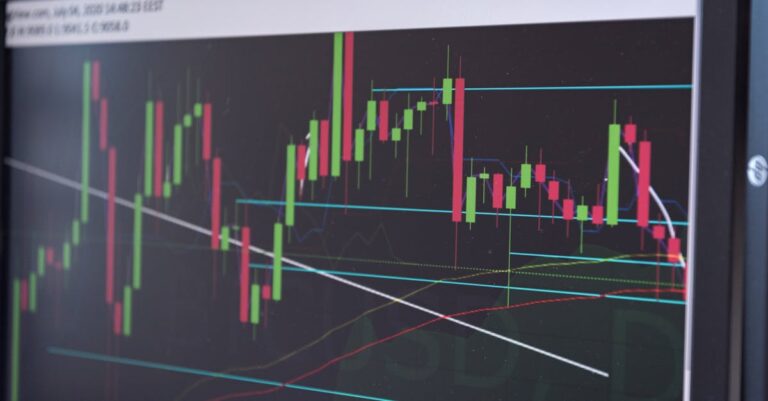
Navigate market volatility driven by global events with confidence. Discover strategies to fortify your investments and maintain long-term wealth growth, even during uncertain times.
The financial markets are often a reflection of the world’s complex tapestry, reacting to everything from economic data to geopolitical shifts. Recently, investors have witnessed heightened market volatility as global tensions surged, prompting swift and significant movements across major indices. Reports from financial news outlets highlighted a dramatic dip in stock futures following indications that an international conflict might extend, with one prominent leader suggesting prolonged engagement to bring a rival nation “back to the stone ages.” This rhetoric alone sent ripples, demonstrating just how sensitive our financial ecosystem is to international relations.
In the wake of these statements, benchmark crude oil contracts soared, with prices advancing significantly, topping levels not seen in some time. This immediate reaction in commodity markets underscored the interconnectedness of geopolitics, energy supply, and the global economy. While some market indices had shown signs of recovery earlier, optimism quickly reversed, leaving investors to ponder the potential for sustained economic strain. A prominent asset management firm’s Chief Investment Officer noted the challenging macroeconomic chain, stating, “You have this background of still a robust economy, but you have to worry you’re on the knife’s edge for a growth shock.” This sentiment encapsulates the tightrope walk investors face: balancing underlying economic strength with the looming threat of external shocks.
This article delves into the strategies essential for maintaining portfolio stability and pursuing long-term wealth growth, even when global events introduce significant uncertainty. For those on their journey from work to wealth, understanding how to navigate such turbulent periods is not just advisable; it’s imperative. We will explore how geopolitical tensions, commodity price surges, and shifting market sentiments impact your investments and, more importantly, what actionable steps you can take to protect and grow your capital.
Understanding the Echoes of Global Events on Your Wealth and Market Volatility
When international relations become strained, the financial markets often respond with a visceral reaction. The prospect of prolonged conflict or significant geopolitical shifts can ignite investor fear, leading to rapid capital reallocation. The recent scenario, where stock futures for broad market indices declined sharply after an address by a world leader, is a prime example. This immediate downturn reflects collective uncertainty about future economic conditions and corporate profitability.
One of the most immediate and tangible impacts of geopolitical tension is on commodity markets, particularly oil. Any threat to oil supply routes or production in major regions can send prices spiraling upward. The surge in benchmark crude oil futures to over $100 a barrel, briefly touching even higher levels, illustrates this perfectly. For consumers, higher oil prices translate to increased costs at the pump and for goods transported, fueling inflationary pressures. For businesses, elevated energy costs can compress profit margins, potentially impacting earnings and stock valuations.
Beyond oil, the uncertainty itself can trigger a flight to safety, where investors move capital out of riskier assets like stocks and into perceived safe havens such as government bonds or precious metals. This shift can cause broad market sell-offs, irrespective of the fundamental health of individual companies. We also observed how Asia-Pacific markets, initially showing gains, reversed course following the global leader’s speech, highlighting the widespread, interconnected nature of financial markets and their shared sensitivity to major international developments.
Sector-specific impacts are also noteworthy. While some sectors might suffer (e.g., airlines due to higher fuel costs, consumer staples due to squeezed discretionary income), others might experience gains (e.g., defense contractors, or certain industrial companies that benefit from increased government spending). The market data showed communication services and industrials leading gains in one session, while energy (despite rising oil prices, perhaps due to broader market sentiment) and consumer staples lagged. This divergence underscores the importance of a nuanced understanding of sector performance during times of heightened market volatility.
The Direct and Indirect Impact on Investment Portfolios
The ripples from global events don’t just stay at the surface of daily headlines; they penetrate deep into the fabric of your investment portfolio, manifesting as direct and indirect impacts. Understanding these mechanisms is crucial for maintaining portfolio stability and making informed decisions.
Direct Impacts: Sector-Specific Sensitivity
Certain sectors are inherently more vulnerable to geopolitical shocks and commodity price fluctuations. For instance, the airline industry, represented by a major global carrier, faces direct pressure from soaring fuel costs. While these companies often hedge against price swings, sustained high oil prices can erode profitability. Similarly, certain manufacturing and industrial sectors that rely heavily on energy inputs or intricate global supply chains can see their operating costs increase significantly, potentially impacting their earnings reports.
Conversely, some sectors might see unexpected boosts. Companies involved in national security or infrastructure projects could benefit from increased government contracts during times of elevated international tension. Even within the energy sector, while some integrated giants might feel pressure from broader market sentiment, specific exploration and production companies could see their revenues swell from higher commodity prices, if they can manage their operational costs effectively.
Indirect Impacts: Macroeconomic Headwinds
The indirect impacts are often broader and more pervasive. Increased geopolitical risk can dampen overall economic growth by reducing business investment, consumer confidence, and international trade. If businesses postpone expansion plans due to uncertainty, job creation slows, and economic output can falter. This “growth shock,” as described by a market analyst, is a significant concern, as it can lead to slower corporate earnings across the board.
Inflation is another critical indirect impact. Surging oil prices feed directly into higher transportation and production costs, which are then passed on to consumers. If left unchecked, inflation can erode the purchasing power of your savings and investment returns. Central banks might respond by raising interest rates, which can further slow economic activity and make borrowing more expensive for both consumers and corporations, impacting everything from mortgage rates to business loan costs.
Moreover, sustained periods of uncertainty can breed investor anxiety, leading to increased trading volume, wider price swings, and a general preference for short-term gains or losses over long-term strategic thinking. This emotional aspect of the market can be just as impactful as the economic fundamentals, often leading to irrational decisions by individual investors.
Pillar 1: Diversification – Your First Line of Defense Against Market Volatility
Diversification is arguably the most fundamental principle of sound investing, serving as a powerful shield against the unpredictable nature of market volatility. It’s not merely about owning multiple stocks; it’s about strategically spreading your investments across various asset classes, geographies, and sectors to mitigate risk.
Asset Allocation: Beyond Stocks and Bonds
A well-diversified portfolio extends beyond a simple mix of stocks and bonds. Consider including a broader range of asset classes that tend to perform differently under various market conditions. For instance:
- Equities: Provide growth potential, but come with higher risk. Diversify within equities by company size (large-cap, mid-cap, small-cap), style (growth, value), and geographic region.
- Fixed Income (Bonds): Often act as a ballast during stock market downturns, providing stability and income. Consider government bonds, corporate bonds (investment-grade and high-yield), and international bonds.
- Real Estate: Can offer income generation and capital appreciation, often with a low correlation to public equity markets. This can be through REITs (Real Estate Investment Trusts) or direct property ownership.
- Commodities: Assets like gold, silver, or broad commodity funds can serve as inflation hedges or safe havens during geopolitical crises. Gold, in particular, often sees demand surge during times of uncertainty, as evidenced by its historical performance.
- Alternative Investments: Depending on your net worth and risk tolerance, private equity, hedge funds, or managed futures could offer further diversification, though they typically come with higher costs and liquidity constraints.
Geographic Diversification: Spreading Global Risk
Relying solely on your home country’s economy can expose your portfolio to concentrated regional risks. The recent market reactions in Asia-Pacific markets following a global leader’s speech underscore this point. By investing in international markets, you can benefit from growth opportunities elsewhere and reduce the impact of any single country’s economic or political challenges. Consider investing in developed markets (like Europe and Japan) and emerging markets (like parts of Asia and Latin America) to capture a broader spectrum of global economic cycles.
Sector Diversification: Navigating Industry-Specific Headwinds
As observed in recent market performance, certain sectors thrive while others struggle during times of geopolitical tension or economic shifts. For example, while energy and consumer staples lagged, communication services and industrials saw gains. This highlights the importance of not over-concentrating in any single industry.
- Defensive Sectors: These tend to be less sensitive to economic cycles, such as utilities, healthcare, and some consumer staples. They often provide consistent dividends and can offer stability during downturns.
- Cyclical Sectors: Industries like technology, discretionary consumer goods, and financials often perform well during economic expansions but can be more vulnerable during recessions or periods of uncertainty.
- Growth vs. Value: Balancing investments in companies poised for rapid growth (growth stocks) with those considered undervalued by the market (value stocks) can also add another layer of diversification, as these styles can perform differently depending on market conditions.
Regularly reviewing and rebalancing your portfolio ensures that your asset allocation remains aligned with your risk tolerance and financial goals. Market movements can cause certain asset classes to grow disproportionately, potentially exposing you to unintended risks. Rebalancing involves selling off some of your overperforming assets and reinvesting in underperforming ones to restore your target allocation, effectively “buying low and selling high.”
Pillar 2: Maintaining a Long-Term Perspective Amidst Short-Term Swings
One of the greatest challenges for investors during periods of acute market volatility is resisting the urge to react emotionally to daily headlines and significant price swings. The temptation to panic sell when markets plummet is strong, but history repeatedly shows that a long-term perspective is the most reliable path to wealth accumulation.
The Cost of Emotional Decision-Making
When stock futures are plunging by hundreds of points or key indices are down several percentage points, fear can lead investors to make rash decisions. Selling off investments during a downturn effectively locks in losses and removes the opportunity for those assets to recover when the market inevitably rebounds. Countless studies demonstrate that investors who try to “time the market”—jumping in and out based on perceived short-term trends—consistently underperform those who remain invested over the long haul. The missed “best days” of the market, which often follow the “worst days,” can significantly erode overall returns.
Historical Resilience of Markets
Looking back at history provides a powerful antidote to short-term anxieties. Financial markets have navigated countless crises: wars, recessions, pandemics, and geopolitical upheavals. In almost every instance, after an initial period of decline and uncertainty, markets have recovered and gone on to reach new highs. This historical resilience is not a guarantee of future performance, but it offers a strong psychological anchor, reminding us that downturns are a normal, albeit uncomfortable, part of the investment cycle.
The Power of Compounding Over Time
The magic of compounding interest is best realized over extended periods. Small returns consistently reinvested can grow exponentially. Short-term market volatility, while jarring, often represents mere blips on the long-term growth trajectory of a well-constructed portfolio. By staying invested, you allow your earnings to generate further earnings, continually accelerating your wealth accumulation.
Dollar-Cost Averaging: Turning Volatility into Opportunity
For investors who regularly contribute to their investment accounts (e.g., through retirement savings plans or automatic investment programs), market downturns can actually present an opportunity. This strategy, known as dollar-cost averaging, involves investing a fixed amount of money at regular intervals, regardless of the asset’s price. When prices are high, your fixed sum buys fewer shares; when prices are low (during a dip), it buys more shares. Over time, this averages out your purchase price and can lead to lower overall costs per share compared to trying to time the market. During periods of market volatility, dollar-cost averaging effectively transforms uncertainty into an advantage.
In essence, focusing on your long-term financial goals – whether it’s retirement, buying a home, or funding education – rather than the daily ebb and flow of market headlines, is paramount. Develop an investment plan, stick to it, and trust in the market’s long-term upward bias. As the old adage goes, “Time in the market beats timing the market.”
Pillar 3: The Role of Cash Reserves and Emergency Funds
While a diversified, long-term approach forms the bedrock of wealth building, maintaining adequate cash reserves and a robust emergency fund is an equally critical, often overlooked, pillar of portfolio stability, especially during times of heightened market volatility.
Why Liquidity is Crucial
Cash, while not an investment that typically grows substantially in value (and can lose purchasing power to inflation), provides invaluable liquidity and peace of mind. During periods of economic uncertainty or personal financial shocks, having readily accessible cash means you won’t be forced to sell investments at an inopportune time to cover unexpected expenses. Imagine needing funds for a sudden job loss, a medical emergency, or an unforeseen home repair when the market is significantly down. Without an emergency fund, you might be compelled to liquidate portions of your portfolio at a loss, undoing years of disciplined saving and investing.
The Purpose of an Emergency Fund
An emergency fund should be easily accessible, typically held in a high-yield savings account or a money market fund. Financial experts generally recommend having at least three to six months’ worth of essential living expenses saved. For those with less stable incomes, self-employment, or significant family responsibilities, extending this to nine or twelve months can provide an even greater buffer.
This fund acts as a vital buffer between life’s unpredictable events and your long-term investment strategy. It ensures that your journey to wealth remains uninterrupted by the need to dip into assets meant for growth, especially when market conditions are unfavorable.
Seizing Opportunities During Market Dips
Beyond acting as a safety net, cash reserves can also be a strategic tool for opportunistic investing. When significant market downturns occur – such as the ones described by market analysts warning of a “growth shock” – assets become cheaper. Having a readily available “opportunity fund” (separate from your emergency fund) allows you to deploy capital during these dips, buying more shares at lower prices. This aligns perfectly with the dollar-cost averaging principle but on a larger, more intentional scale. It transforms periods of fear and selling into moments of strategic acquisition for those prepared.
Therefore, while the allure of fully invested capital for maximum growth is strong, neglecting cash reserves can expose your portfolio to unnecessary risk and force you into financially detrimental decisions during volatile times. Prioritize building and maintaining your emergency fund first, then consider a strategic cash reserve for potential investment opportunities.
Pillar 4: Risk Assessment and Personal Investment Profile
A crucial component of achieving portfolio stability and navigating market volatility successfully lies in a deep understanding of your personal risk assessment and investment profile. No two investors are identical, and what constitutes a prudent strategy for one person may be entirely inappropriate for another.
Understanding Your Own Risk Tolerance
Risk tolerance refers to your comfort level with the potential for investment losses in exchange for higher potential returns. It’s a psychological measure, influenced by your personality, past experiences, and emotional resilience. Some investors can sleep soundly through significant market drops, viewing them as temporary setbacks or even opportunities. Others find even minor fluctuations incredibly stressful, leading to anxiety and potentially impulsive decisions. To effectively manage your portfolio during times of uncertainty, you must honestly assess your own risk tolerance.
This assessment involves asking yourself critical questions:
- How would you react if your portfolio lost 10%, 20%, or even 30% of its value in a short period?
- Would you be able to resist selling your investments during a severe downturn?
- Do you prioritize capital preservation over aggressive growth, or vice-versa?
Your answers should guide your asset allocation. If you have a low tolerance for risk, a more conservative portfolio with a higher allocation to bonds and cash might be appropriate, even if it means lower potential returns. If you have a high risk tolerance and a long investment horizon, a more aggressive, equity-heavy portfolio could be suitable.
Aligning Your Portfolio with Your Goals and Time Horizon
Your investment profile is also heavily influenced by your financial goals and the time horizon for achieving them. A young professional saving for retirement 30 years away has a very different profile than someone nearing retirement in five years, or someone saving for a down payment on a house next year.
- Long-Term Goals: For goals many years or decades away, you generally have more time to recover from market downturns. This allows for a higher allocation to growth-oriented assets like stocks, even amidst market volatility.
- Short-Term Goals: For goals within the next few years, capital preservation becomes paramount. You wouldn’t want to risk a significant portion of your down payment fund in a volatile stock market. Here, more conservative investments like high-yield savings accounts, certificates of deposit, or short-term bonds are more suitable.
Reviewing Your Investment Thesis
Beyond asset allocation, regularly reviewing the investment thesis for each holding in your portfolio is crucial. During periods of geopolitical uncertainty, the underlying reasons you invested in a particular company or fund might change. For example, if you hold shares in a major airline, and sustained high oil prices become the new normal, you might need to re-evaluate whether that company’s long-term prospects remain attractive, or if its competitive advantage has been eroded. Similarly, a global beverage conglomerate might face different challenges regarding international supply chains or consumer spending habits.
This review isn’t about panicking and selling, but about ensuring your investments still align with their original purpose and your overall financial strategy. It might lead you to consider dividend-paying stocks, which can provide income even when capital appreciation is stagnant, or value investments, which might offer a greater margin of safety during uncertain times.
By consciously assessing your risk tolerance, aligning your portfolio with your goals, and regularly reviewing your investment choices, you empower yourself to make rational decisions that support your long-term wealth objectives, rather than being swayed by the emotional tides of the market.
Pillar 5: Navigating Economic Indicators and Corporate Earnings
While geopolitical events can provide sudden jolts to the market, the sustained direction of the economy and individual company performance are often reflected in a stream of economic indicators and corporate earnings reports. Understanding how to interpret these signals, especially during periods of market volatility, is key to informed decision-making and maintaining portfolio stability.
The Significance of Jobs Reports
One of the most closely watched economic indicators is the jobs report, often released towards the end of the month. Strong employment figures (e.g., lower unemployment rates, higher job creation) signal a robust economy with healthy consumer spending power. This can be a positive for corporate earnings and overall market sentiment. Conversely, rising jobless claims or slowing job growth can indicate economic contraction, leading to investor concern. Market participants closely watch these reports, even during shortened trading weeks, as they offer crucial insights into the health of the labor market and, by extension, consumer demand.
The job report can also influence central bank policy. If employment is strong, central banks might feel more comfortable raising interest rates to combat inflation, which in turn can impact bond yields, borrowing costs, and the attractiveness of different asset classes.
Inflation Data and Its Effects
Inflation data, such as the Consumer Price Index (CPI), measures the rate at which the general level of prices for goods and services is rising. As observed with surging oil prices, inflation can quickly become a significant concern. High inflation erodes purchasing power, diminishing the real returns on investments. It can also pressure corporate profit margins if companies cannot pass on increased costs to consumers.
Investors often seek hedges against inflation, such as real estate, commodities (like precious metals), or inflation-protected securities. Paying attention to inflation trends is vital, as sustained high inflation can prompt central banks to adopt more aggressive monetary policies, which can create headwinds for growth stocks and fixed-income investments.
Understanding Corporate Earnings Reports
Corporate earnings season is a regular feature of the financial calendar, where publicly traded companies report their financial results for the previous quarter. These reports include revenue, profit, and often provide guidance for future performance. Even during a sparse earnings calendar, reports from companies like a well-known apparel brand, a major airline, or a global beverage conglomerate can offer micro-level insights into broader economic trends and consumer behavior.
- Revenue and Profit: These are core indicators of a company’s financial health. Strong growth suggests robust business activity, while declines can signal trouble.
- Guidance: Management’s outlook for future quarters is often as important as past performance. Cautious guidance can trigger stock price drops, even if current earnings are solid, especially in an uncertain economic environment.
- Analyst Expectations: Stock prices often react to whether a company “beats” or “misses” analyst expectations. The market has already priced in anticipated results, so deviations can cause significant swings.
During periods of market volatility, earnings reports become even more scrutinized. Investors look for signs of resilience, cost management, and adaptable business models. A company’s ability to navigate supply chain disruptions, rising input costs, or changing consumer sentiment can differentiate it from competitors and help maintain its stock’s relative stability.
While it’s important to stay informed about these indicators, the goal is not to trade on every single piece of news. Instead, use this information to periodically reassess your long-term investment thesis and ensure your portfolio remains aligned with your overall financial strategy. Avoid overreacting to single data points and remember that the market often “digests” information quickly, moving on to the next catalyst.
The Indispensable Role of Professional Guidance
Navigating the complex and often emotional landscape of financial markets, especially during periods of heightened market volatility, can be overwhelming for even experienced investors. This is where the expertise and objective perspective of a qualified financial advisor become not just beneficial, but often indispensable for maintaining portfolio stability and advancing your journey from work to wealth.
Personalized Advice Tailored to Your Unique Situation
A financial advisor doesn’t offer one-size-fits-all solutions. They take the time to understand your unique financial situation – your income, expenses, assets, liabilities, risk tolerance, and, most importantly, your specific financial goals. Based on this comprehensive understanding, they can craft a personalized investment strategy that aligns with your life stage, short-term needs, and long-term aspirations. This tailored approach is crucial when market conditions are uncertain, as it ensures your portfolio is built to withstand specific pressures relevant to you.
An Emotional Buffer Against Market Swings
Perhaps one of the most significant contributions of a financial advisor during turbulent times is acting as an emotional buffer. When markets are plunging and headlines are grim, the natural human instinct is often to panic. An advisor can provide a calm, rational voice, reminding you of your long-term plan, the historical resilience of markets, and the dangers of making impulsive decisions. They help prevent you from “buying high and selling low,” which is a common pitfall for emotional investors. Their objective perspective can save you from costly mistakes driven by fear or greed.
Strategic Planning and Rebalancing Expertise
Market volatility often necessitates a review of your portfolio’s asset allocation. An advisor can expertly assess whether your current diversification strategy remains optimal given new market conditions or personal circumstances. They can guide you through the process of rebalancing, ensuring your portfolio remains aligned with your target risk profile without triggering unnecessary tax implications. Moreover, they stay abreast of tax laws, economic trends, and new investment opportunities, ensuring your strategy is always optimized.
They can also help you understand the implications of broader economic data, such as jobless claims or upcoming earnings reports, without letting these short-term signals derail your long-term strategy. By partnering with a financial advisor, you gain a trusted ally who can help you navigate the complexities of investing, keep you disciplined, and ultimately, steer you towards your financial goals with greater confidence and peace of mind.
Conclusion: Building a Resilient Portfolio for Enduring Wealth
The journey from work to wealth is rarely a straight line; it’s a dynamic path punctuated by periods of growth, consolidation, and sometimes, unexpected challenges. Recent events, characterized by geopolitical tensions and their immediate impact on global stock and commodity markets, serve as a potent reminder of the inherent market volatility investors must contend with. However, these periods of uncertainty also underscore the immense value of a disciplined, strategic approach to investing.
By diligently implementing the pillars discussed – robust diversification across asset classes, geographies, and sectors; maintaining a steadfast long-term perspective; ensuring adequate cash reserves for emergencies and opportunities; rigorously assessing your personal risk profile; and understanding relevant economic indicators – you equip your portfolio with the resilience needed to weather any storm. These strategies are not merely reactive measures; they are proactive foundations for sustained portfolio stability and growth.
Ultimately, while you cannot control global events or market movements, you can absolutely control your response to them. Empower yourself with knowledge, temper emotion with strategy, and consider the invaluable guidance of a financial professional. By doing so, you not only protect your hard-earned capital but also position yourself to emerge stronger, ensuring your wealth continues to grow, regardless of the jitters the world may present.