

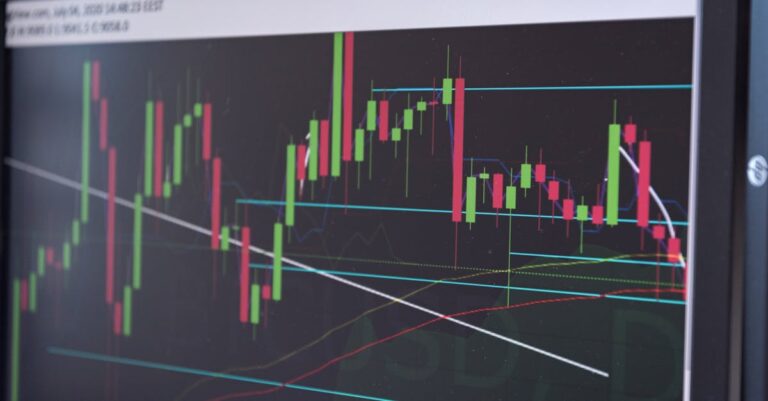
Understand today’s market turbulence, from oil shocks to tech shifts, and build a robust portfolio. Equip yourself with strategies for enduring economic uncertainty.
The financial markets perpetually move in waves, and recent weeks have underscored this fundamental truth with stark clarity. Investors have witnessed significant gyrations, a testament to the intricate dance between global economics, geopolitical shifts, and corporate performance. After a period where major averages bounced, fueled by easing oil prices, futures markets quickly signaled renewed caution. The S&P 500 futures, Nasdaq 100 futures, and Dow Jones Industrial Average futures all registered declines, hinting at the ongoing underlying anxiety.
This oscillation highlights a critical lesson for every investor: Market Volatility is not just a theoretical concept but a tangible force that demands preparedness and a strategic approach. While the S&P 500 recently added 1%, rebounding from its lowest level of the year, and the tech-heavy Nasdaq Composite gained 1.2%, these upswings are often met with immediate counter-movements. Such rapid shifts, influenced by a myriad of factors from global conflicts to central bank pronouncements, necessitate a deep understanding of market mechanics and a disciplined investment philosophy.
The recent market behavior, characterized by a rebound followed by a dip in futures, serves as a potent reminder that sustained positive momentum is often challenged by lingering concerns. For those seeking to build and preserve wealth, comprehending these dynamics is paramount. It’s not merely about reacting to headlines but about integrating diverse pieces of information into a coherent investment strategy that can withstand the inevitable periods of turbulence.
As we delve deeper, we will explore the forces at play, from the geopolitical chessboard influencing energy markets to the innovative strides in the technology sector, and critically, how the Federal Reserve’s decisions continue to shape the economic outlook. More importantly, we will outline actionable strategies to help you navigate these complex waters, ensuring your portfolio is not just resilient but positioned for long-term growth even amidst pronounced Market Volatility.
Geopolitical Undercurrents and the Shifting Sands of Oil Prices
The recent surge and subsequent cooling of oil prices have been a primary driver of market sentiment. The U.S.-Iran conflict has introduced a significant layer of geopolitical risk, specifically concerning the stability of energy supplies. The Strait of Hormuz, a critical choke point for global oil transit, immediately became a focal point of investor anxiety. Worries that a prolonged closure or disruption could severely impact global energy supplies sent crude prices soaring.
Initially, Brent crude settled down about 2.8% to $100.21 a barrel, with West Texas Intermediate crude falling about 5.3% to settle at $93.50 a barrel. This temporary relief undoubtedly contributed to the equity market rebound. However, the situation remains highly fluid. Treasury Secretary Scott Bessent’s statements regarding the U.S. allowing Iranian oil tankers to pass through the key waterway offered some reassurance. Yet, President Donald Trump’s signaling that a coalition to escort tankers through the strait is not yet finalized underscores the persistent uncertainty. Just hours later, oil prices jumped over 2% again, highlighting the market’s sensitivity to developing news.
This direct correlation between geopolitical events, specifically those impacting critical global resources like oil, and broad market movements, illustrates a fundamental challenge for investors. Energy prices directly influence inflation, corporate costs, and consumer spending, making them a crucial economic indicator. Understanding these linkages is vital for assessing overall market risk and anticipating potential shifts in economic policy. The ongoing tension, coupled with the immediate economic repercussions, adds a significant layer of complexity to predicting future market movements and managing a portfolio effectively during times of elevated Market Volatility.
The volatility in oil prices has a cascading effect throughout the economy. Higher energy costs can squeeze corporate profit margins, particularly for industries reliant on transportation and manufacturing. For consumers, increased fuel prices can reduce discretionary spending, impacting retail and service sectors. These factors collectively contribute to inflation, which in turn influences central bank policy, creating a feedback loop that investors must monitor closely. The uncertainty surrounding geopolitical stability ensures that energy markets will remain a key watchpoint, dictating much of the broader market’s directional cues for the foreseeable future. Investors must recognize that such external shocks are inherent to global markets and build strategies to absorb them.
Economic Fundamentals: A Shifting Landscape Amidst Market Volatility
Beneath the daily market fluctuations lies a complex interplay of economic fundamentals that shape investor confidence and corporate prospects. While some analysts credit a relatively strong economy, contained inflation, and robust earnings for continued market momentum, others articulate growing concerns. Bartlett Wealth Management president Holly Mazzocca, for instance, noted that “risks to that growth story are mounting.” This divergence in views is central to understanding the current investment climate.
Mazzocca specifically highlighted a significant weakening in the labor market, posing a “big question for investors right now.” A strong labor market is often considered a bedrock of economic health, indicating robust consumer spending and production. Any signs of softening can trigger worries about a broader economic slowdown or even recession. These concerns are amplified by the backdrop of geopolitical tensions and the associated inflationary pressures from oil prices.
The narrative of economic resilience is being tested. While corporate earnings have largely been supportive, the forward-looking sentiment is increasingly clouded by these mounting risks. Investors are grappling with the potential for higher interest rates, persistent inflation, and the impact of global conflicts on supply chains and demand. This creates an environment where economic data points, from unemployment figures to manufacturing indices, are scrutinized with heightened intensity. Every release can sway market sentiment, contributing to the very Market Volatility we aim to navigate.
Moreover, the concept of “contained inflation” is constantly being re-evaluated. The initial relief from easing oil prices can be quickly overshadowed if other factors, such as supply chain disruptions or strong wage growth, continue to push prices higher. Central banks, like the Federal Reserve, are caught in a delicate balancing act: fighting inflation without stifling economic growth. This challenge adds another layer of unpredictability to the economic outlook, making long-term financial planning more intricate. Prudent investors acknowledge these uncertainties and build flexibility into their strategies, understanding that the economic landscape is rarely static.
Investing in Innovation Amidst Market Volatility: The Enduring Appeal of Tech
Despite broader market turbulence, the technology sector has demonstrated remarkable resilience and leadership in recent rallies. For example, Nvidia shares advanced about 1.7% after CEO Jensen Huang’s announcements at the company’s annual GTC conference. Huang’s projections of $1 trillion in orders for next-generation AI systems through 2027 and the unveiling of a new computing platform for orbital data centers highlight the sector’s relentless pace of innovation.
The concept of “Space computing, the final frontier,” as Huang described it, signifies a new frontier for technological advancement. Nvidia’s Vera Rubin Space-1 Module, designed for “size-, weight- and power-constrained environments,” along with partnerships for orbital data centers, points to a future where intelligence extends beyond Earth. Such developments illustrate that even during periods of significant Market Volatility, certain segments of the market continue to generate excitement and substantial investment potential.
The tech sector’s ability to drive growth through innovation often allows it to outperform during periods when traditional industries might struggle. While the overall market might be reacting to macroeconomic headwinds or geopolitical events, companies at the forefront of transformative technologies, such as artificial intelligence, cloud computing, and advanced semiconductors, can continue to capture investor interest. Their growth drivers are often less cyclical and more tied to fundamental shifts in how businesses operate and consumers interact with technology.
However, investing in technology, especially cutting-edge areas, comes with its own set of risks. High valuations, intense competition, and the rapid pace of change mean that careful due diligence is essential. While the long-term trends in AI and space tech appear promising, individual companies can face significant challenges. Investors interested in this sector must balance the potential for high rewards with the inherent risks, ensuring that their exposure aligns with their overall risk tolerance and diversification strategy, especially when the broader market experiences elevated Market Volatility.
Strategies for Managing Market Volatility Effectively
In an environment defined by fluctuating oil prices, geopolitical tensions, and shifting economic forecasts, adopting a disciplined and proactive investment strategy is crucial. Reacting impulsively to every market headline can lead to poor decisions and erode long-term wealth. Instead, focusing on time-tested principles can help investors not only withstand periods of significant Market Volatility but also potentially capitalize on opportunities that arise.
Diversification: Your First Line of Defense
One of the most fundamental tenets of sound investing is diversification. This goes beyond simply holding a mix of stocks and bonds. Effective diversification involves spreading investments across various asset classes, industries, geographical regions, and even company sizes. When one sector or region faces headwinds, others might perform well, balancing out the overall portfolio. For instance, while oil-sensitive sectors might struggle during price surges, other areas like certain tech segments or defensive stocks might hold their value or even appreciate.
Consider diversifying beyond traditional equities and fixed income. Exploring alternatives like real estate, commodities (with caution due to inherent volatility), or even private equity (for accredited investors) can further spread risk. The goal is to avoid having “all your eggs in one basket,” ensuring that no single event or market downturn can disproportionately harm your entire financial standing. A well-diversified portfolio acts as a buffer against unforeseen shocks, allowing you to ride out periods of market turbulence with greater confidence.
Embracing a Long-Term Perspective
The daily ups and downs of the market can be emotionally taxing, prompting many investors to make rash decisions. However, history consistently shows that markets tend to recover from downturns over time. Adopting a long-term investment horizon, typically 10 years or more, allows you to weather short-term fluctuations. Focus on your long-term financial goals – retirement, education, wealth accumulation – rather than the day-to-day noise. Periods of Market Volatility often present opportunities for long-term investors to acquire quality assets at more attractive prices.
This perspective requires patience and discipline. It means resisting the urge to sell during a dip out of fear or to chase hot stocks during a rally out of greed. Instead, cultivate a mindset that views market corrections as temporary setbacks within a broader upward trend. Trust in the power of compounding and the general trajectory of economic growth over extended periods. Regular review of your long-term goals and investment plan can reinforce this perspective.
Dollar-Cost Averaging: Mitigating Entry Point Risk
Dollar-cost averaging is a strategy where you invest a fixed amount of money at regular intervals, regardless of the asset’s price. When prices are high, your fixed investment buys fewer shares; when prices are low, it buys more shares. Over time, this averages out your purchase price and reduces the risk associated with trying to “time the market” – a notoriously difficult task, especially during periods of high Market Volatility.
This systematic approach removes emotion from investing, ensuring you continue to participate in the market even during downturns. It’s particularly effective in volatile markets because it allows you to automatically buy more when prices are lower, potentially leading to greater returns when the market eventually recovers. For many investors, particularly those saving for retirement through regular contributions, dollar-cost averaging is an inherent and highly beneficial strategy.
Portfolio Rebalancing: Maintaining Your Target Allocation
Over time, market movements can cause your portfolio’s asset allocation to drift away from your desired targets. For example, a strong bull market might lead to your stock holdings growing to represent a larger percentage of your portfolio than you initially intended, increasing your overall risk exposure. Portfolio rebalancing involves periodically adjusting your holdings to bring them back in line with your original target allocation.
This typically means selling off some assets that have performed well (and now represent a larger portion of your portfolio) and buying more of those that have underperformed (and now represent a smaller portion). Rebalancing acts as a built-in “buy low, sell high” mechanism and helps manage risk by ensuring you’re not overexposed to any one asset class or sector. It’s a disciplined approach that forces you to take profits and allocate capital strategically, particularly important during fluctuating markets.
The Critical Role of an Emergency Fund
Before even considering investments, a robust emergency fund is paramount. This fund should ideally cover three to six months of essential living expenses, stored in a highly liquid, easily accessible account. During periods of economic uncertainty or personal financial shocks (like job loss or unexpected medical bills), this fund prevents you from having to sell investments prematurely at potentially unfavorable prices, thereby protecting your long-term growth.
An adequate emergency fund provides a crucial layer of financial security, allowing you to weather personal crises without disrupting your investment strategy. It offers peace of mind and enables you to maintain your long-term investment perspective even when external factors create significant Market Volatility or personal financial stress. Without this buffer, even minor life events can force detrimental investment decisions.
Prudent Debt Management
High-interest debt, such as credit card balances, can be a significant drag on your financial progress. During periods of economic uncertainty, carrying substantial debt can become even more precarious. Prioritizing the reduction of high-interest debt frees up cash flow, improves your financial flexibility, and reduces your overall financial risk. The guaranteed return from paying down a 20% interest credit card often far outpaces potential investment returns, especially in a volatile market.
Aggressively tackling debt creates a stronger financial foundation, making you more resilient to economic downturns or personal income shocks. It also frees up capital that can then be strategically directed towards building your emergency fund or increasing your investment contributions, further enhancing your long-term wealth accumulation efforts. Smart debt management is an often-overlooked but crucial component of a robust financial plan.
Reviewing Your Risk Tolerance
Your risk tolerance is your psychological comfort level with investment risk and potential losses. It’s crucial that your portfolio’s asset allocation aligns with your true risk tolerance. During periods of heightened Market Volatility, many investors realize their tolerance for risk was lower than they initially thought. If market swings cause you undue stress or keep you awake at night, your portfolio might be too aggressive for your comfort level.
Periodically reassessing your risk tolerance, especially after significant market events, is a healthy practice. It ensures that your investment strategy remains congruent with your emotional capacity to handle fluctuations. Adjusting your portfolio to a more conservative stance if necessary, or simply affirming your current approach, can help maintain discipline and prevent impulsive, fear-driven decisions when markets are turbulent. Your financial plan should support your well-being, not detract from it.
Seeking Professional Financial Advice
Navigating complex financial markets, especially during times of heightened uncertainty and Market Volatility, can be challenging for even seasoned investors. A qualified financial advisor can provide personalized guidance, help you assess your risk tolerance, create a diversified portfolio tailored to your goals, and ensure your strategy remains on track. They can also offer an objective perspective, helping you avoid emotional decisions that often undermine long-term success.
A professional can help interpret economic data, understand the implications of geopolitical events, and fine-tune your asset allocation. Their expertise can be invaluable in crafting a robust financial plan that accounts for various market conditions and helps you stay focused on your long-term objectives. Consider seeking advice if you feel overwhelmed, uncertain, or simply want a second opinion on your financial strategy.
The Federal Reserve and its Influence on Market Volatility
The Federal Reserve’s interest rate decisions loom large over the financial markets, acting as a powerful determinant of economic activity and investor sentiment. With the second Federal Reserve interest rate decision of the year scheduled, investors are acutely focused on its potential implications. Expectations for rate cuts, which were once prevalent, have significantly diminished. This shift is largely attributed to renewed inflation worries, especially since the escalation of the U.S.-Iran conflict and the subsequent volatility in oil prices.
According to CME Group’s FedWatch tool, the market’s assessment of future rate movements has adjusted rapidly. Higher oil prices can directly fuel inflation, making the Fed’s job of achieving price stability more challenging. If inflation persists at elevated levels, the central bank might be compelled to maintain higher interest rates for longer, or even consider further hikes, to cool the economy. Such actions directly impact borrowing costs for businesses and consumers, influencing corporate earnings, housing markets, and overall economic growth.
A hawkish stance from the Fed, implying a commitment to fighting inflation even at the risk of slower growth, can introduce additional Market Volatility. Conversely, signals of an impending dovish pivot, where the Fed prioritizes economic growth over strict inflation targets, could provide a boost to risk assets. However, in the current environment, the Fed is walking a tightrope, attempting to balance its dual mandate of maximum employment and stable prices amidst global uncertainties.
Investors must closely monitor the Fed’s communications, including statements from policymakers and economic projections. These signals provide crucial insights into the central bank’s mindset and its likely future course of action. Understanding how potential rate decisions could impact different sectors of the economy – from interest-sensitive technology stocks to value-oriented financial institutions – is key to adapting your portfolio strategy and managing risk effectively during these sensitive periods. The Fed’s influence is pervasive, touching almost every aspect of the financial ecosystem, making its pronouncements a dominant factor in ongoing market narratives.
Global Market Reactions and Interconnectedness
The interconnectedness of global financial markets means that events in one region often ripple across the world. While U.S. markets grappled with oil price volatility and Fed expectations, Asia-Pacific markets opened higher, demonstrating a nuanced response to global developments. Australia’s S&P/ASX 200 added 0.27%, Japan’s Nikkei 225 gained 0.75%, South Korea’s Kospi rose 2.94%, and Hong Kong’s Hang Seng index climbed 0.94%.
These movements were influenced by factors such as investor monitoring of the Iran conflict and news regarding U.S.-China diplomatic engagements. Interestingly, Australia’s central bank is anticipated to raise rates for a second straight time, pushing its key policy rate to 4.1%, a level not seen in many years. This highlights a divergence in monetary policy across different economies, where local inflationary pressures and economic conditions dictate central bank actions, even as global events unfold.
The varying responses across global markets underscore the importance of international diversification. While U.S. equities might face specific domestic headwinds, other regions could be experiencing different economic cycles or have distinct drivers of growth. Investing across multiple geographies can help smooth out portfolio returns and reduce overall exposure to single-country risks, a critical consideration when navigating periods of heightened Market Volatility.
Furthermore, the interplay of currency exchange rates also becomes a factor for international investors. A strong local currency can erode foreign investment gains, while a weaker one can amplify them. Understanding these dynamics is part of building a truly resilient global portfolio. Monitoring global economic indicators, trade relationships, and geopolitical stability across continents provides a comprehensive view for investors seeking to optimize their exposure and manage risks effectively in an increasingly globalized financial landscape.
The Power of Prudent Planning in Volatile Markets
The current financial climate, characterized by fluctuating oil prices, geopolitical tensions, and the Federal Reserve’s cautious stance, can feel overwhelming. However, it also serves as a powerful reminder of the enduring importance of prudent financial planning. Instead of succumbing to panic or making impulsive decisions, investors equipped with a well-thought-out strategy are far better positioned to not only withstand the storm but potentially emerge stronger.
Prudent planning involves more than just selecting investments; it encompasses establishing a robust emergency fund, diligently managing debt, regularly reviewing your risk tolerance, and committing to long-term goals. It’s about building a financial framework that is resilient to external shocks and adaptable to changing market conditions. The strategies discussed – diversification, dollar-cost averaging, and periodic rebalancing – are not merely theoretical concepts but practical tools that, when consistently applied, can significantly mitigate the impact of Market Volatility on your portfolio.
Moreover, proactive planning extends to staying informed and understanding the broader economic and geopolitical landscape. While you cannot predict every market move, comprehending the potential implications of events like the U.S.-Iran conflict, or the Federal Reserve’s rate decisions, allows you to make more informed choices and avoid being caught off guard. This knowledge, coupled with discipline, forms the bedrock of a successful investment journey.
In conclusion, while the daily market headlines may paint a picture of uncertainty and rapid shifts, the core principles of wealth building remain steadfast. By focusing on a diversified, long-term approach, exercising disciplined execution, and continuously educating yourself, you can transform periods of Market Volatility from a source of frustration into an opportunity for strategic positioning and sustained financial growth. Your financial future is a marathon, not a sprint, and careful preparation is your most valuable asset.
Frequently Asked Questions
How can investors mitigate losses during periods of significant Market Volatility?
To mitigate losses, investors should focus on diversification across asset classes, sectors, and geographies. Employing dollar-cost averaging can help reduce the impact of price swings, and regularly rebalancing your portfolio ensures you maintain your desired risk profile. Additionally, having an emergency fund prevents forced selling of investments during personal financial crises.
What role does diversification play in protecting a portfolio during market turbulence?
Diversification is crucial for protecting a portfolio during market turbulence by spreading investments across different asset types (stocks, bonds, real estate, etc.), industries, and geographical regions. This strategy ensures that if one part of the market performs poorly, the impact on your overall portfolio is cushioned by stronger performance in other areas, thereby reducing overall risk.
Should I adjust my investment strategy given current geopolitical tensions and rising oil prices?
Rather than making drastic, reactive adjustments, it’s generally advisable to review your existing strategy against your long-term goals and risk tolerance. Geopolitical tensions and oil price fluctuations are sources of Market Volatility, but often temporary. Ensure your portfolio remains diversified and aligned with your plan. Consider if your asset allocation still reflects your comfort level with risk given these new factors, but avoid impulsive decisions based on short-term news.
How do Federal Reserve interest rate decisions influence stock market performance?
Federal Reserve interest rate decisions significantly influence stock market performance by impacting borrowing costs, corporate profitability, and consumer spending. Higher rates can increase borrowing costs for companies, potentially reducing earnings, and make bonds more attractive relative to stocks, leading to increased Market Volatility. Conversely, lower rates can stimulate economic activity and boost stock valuations.
Is investing in technology stocks still a wise choice amidst broader market instability?
While market instability can affect all sectors, investing in technology stocks, especially those at the forefront of innovation (like AI or advanced computing), can still be a wise choice for long-term growth. These companies often have strong growth drivers independent of broader economic cycles. However, it’s crucial to maintain a diversified portfolio and assess individual company fundamentals and valuations carefully, as even robust sectors can experience periods of Market Volatility.
What specific steps can I take to ensure my financial plan withstands economic uncertainty?
To ensure your financial plan withstands economic uncertainty, prioritize building a substantial emergency fund (3-6 months of expenses), aggressively pay down high-interest debt, diversify your investments, and maintain a long-term perspective. Regularly review and rebalance your portfolio, and if needed, seek guidance from a qualified financial advisor to align your strategy with your evolving financial situation and risk tolerance, especially during periods of Market Volatility.