

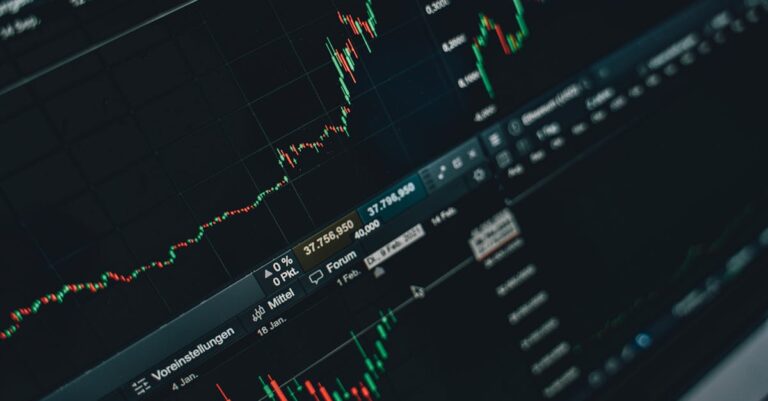
Understand the forces driving recent market instability, from oil surges to crypto declines. Equip your portfolio with strategies to navigate these challenging financial currents.
Navigating Recent Market Volatility: A Comprehensive Guide
The financial landscape has once again reminded investors of its inherent unpredictability. Recent events, particularly a significant slip in Bitcoin’s value below the $69,500 mark and a dramatic surge in oil prices above $100, have created ripples of concern across global markets. This confluence of geopolitical tensions and macroeconomic shifts presents a complex challenge for investors, making it crucial to understand the underlying dynamics and adapt investment strategies accordingly. For those striving for wealth accumulation, comprehending these forces is paramount to protecting and growing capital.
The immediate catalyst for this latest wave of market volatility was a series of attacks on oil tankers in critical waterways, sending Brent crude surging by over 10%. This unexpected development not only pushed energy prices to levels not seen in years but also triggered a broad retreat in risk sentiment. Asian equities registered significant declines, and the broader digital asset market, including major tokens like ether and solana, extended their weekly losses. This article will delve into the specifics of these market movements, analyze the implications for various asset classes, and offer actionable strategies for investors to navigate these uncertain times, focusing on how to manage your wealth when the market environment becomes turbulent.
The Geopolitical Quake: Oil Prices Surge Amidst Tensions
The recent escalation of tensions in key global regions has had an immediate and profound impact on commodity markets, particularly oil. Reports of attacks on two oil tankers in vital Iraqi waters triggered an instant reaction, propelling Brent crude prices sharply upwards, breaching the significant $100 per barrel threshold. This surge was not merely a fleeting spike but reflected deep-seated concerns about potential disruptions to global energy supplies. The Middle East, a primary source of the world’s oil, remains a hotbed of geopolitical activity, and any perceived threat to shipping lanes or production facilities sends jitters through the global economy.
The implications of such an oil price shock are far-reaching. Higher energy costs translate directly into increased expenses for businesses and consumers alike. Transportation costs rise, manufacturing inputs become more expensive, and inflationary pressures intensify. This creates a difficult environment for central banks, who are already grappling with the delicate balance of controlling inflation without stifling economic growth. The rapid increase in oil prices, therefore, acts as a significant headwind, exacerbating fears of stagflation – a period characterized by high inflation and stagnant economic growth. Investors seeking wealth protection must recognize how these fundamental shifts in global economics can erode purchasing power and impact asset valuations.
Moreover, the prompt spread in crude futures, reaching levels not seen in years, indicates a strong expectation of continued supply tightness in the near term. This market signal suggests that traders are pricing in sustained higher prices, reflecting persistent uncertainty regarding the resolution of regional conflicts and the stability of supply chains. Even amidst discussions of strategic reserve releases by international energy agencies, the market’s initial reaction underscored the gravity of the perceived supply disruption. This fundamental change in the cost of energy affects every sector of the global economy, making understanding its dynamics essential for robust financial planning.
Bitcoin’s Vulnerability Amidst Global Shocks
While often touted as a decentralized asset uncorrelated with traditional markets, Bitcoin has shown its susceptibility to broader economic and geopolitical shifts. The recent market downturn saw Bitcoin slide below $69,500, erasing a brief period of optimism. This wasn’t an isolated incident; it marked the third time in two weeks that Bitcoin had pushed above the $71,000 mark only to be knocked back by an escalation in Middle East conflict. Such repeated rejections at key resistance levels highlight a market struggling for upward momentum in the face of significant external pressures.
The narrative of Bitcoin as a “safe haven” asset during times of traditional market turmoil is consistently challenged by such events. When global risk sentiment retreats, investors tend to liquidate riskier assets, and in the current climate, digital currencies are still largely perceived as such. The correlation, though not always direct, between Bitcoin’s price movements and major macroeconomic indicators or geopolitical headlines, suggests that it has not yet fully decoupled from the broader financial system. Investors must therefore integrate this understanding into their digital asset strategies, acknowledging that crypto assets are not immune to global stressors, especially those that trigger widespread de-risking.
On-chain data further illuminates the underlying pressures on Bitcoin. Recent reports indicate persistent selling pressure and weak demand. The 30-day apparent demand for Bitcoin has been deeply negative, suggesting that more Bitcoin is being moved out of wallets typically associated with long-term holding or accumulation and into exchanges, indicating an intent to sell. CryptoQuant’s bull-bear indicator remains firmly in bear territory, and the supply of Bitcoin held at a loss continues to climb. This pattern suggests that every price bounce is met with selling by holders looking to exit their positions, reflecting a pervasive sense of caution and a lack of strong conviction among a segment of investors. This behavior is a clear signal that many are in capital preservation mode, prioritizing avoiding further losses over chasing potential gains in a turbulent market.
Broader Crypto Market Contagion: Beyond Bitcoin
The ripple effect of Bitcoin’s struggles and the overarching climate of market volatility extended across the entire digital asset ecosystem. Major altcoins, which often follow Bitcoin’s lead, experienced significant declines, underscoring the interconnectedness of the crypto market. Ether, the second-largest cryptocurrency by market capitalization, fell to $2,025, registering a weekly loss. Solana, another prominent digital asset, dropped even more significantly, making it one of the worst-performing major tokens over the seven-day period. XRP also saw declines, reflecting the general retreat from risk assets.
Even meme coins and other niche digital assets were not immune. Dogecoin, for instance, gave back most of its gains, which had been driven by unrelated social media attention earlier in the week. Binance Coin (BNB), a token associated with a major digital asset exchange, remained relatively flat but did not escape the overall bearish sentiment. This widespread downturn highlights a crucial aspect of digital asset investing: while individual projects may have unique value propositions, their price movements are often heavily influenced by the sentiment surrounding Bitcoin and the broader macroeconomic environment. This collective response to external pressures emphasizes the importance of a diversified approach even within the digital asset sphere, as diversification across different types of crypto assets can help mitigate some specific project risks but may not entirely shield against systemic market downturns.
For investors focused on long-term wealth building, understanding this contagion effect is vital. A portfolio heavily concentrated in digital assets, even if diversified across many different tokens, can still be vulnerable to systemic shocks. It reinforces the need to consider digital assets as part of a much larger, globally diversified investment strategy, rather than a standalone portfolio. The volatility seen in these broader crypto markets serves as a potent reminder that the pursuit of exponential gains often comes with significant, sometimes rapid, downside risks. Therefore, diligent risk management, including setting clear entry and exit strategies and understanding position sizing, becomes even more critical during periods of heightened market sensitivity.
Macroeconomic Headwinds: The Fed and Inflationary Pressures
The resurgence of high oil prices, coupled with persistent geopolitical tensions, significantly complicates the macroeconomic outlook, particularly for central banks like the Federal Reserve. With Brent crude climbing above $100, the specter of stagflation – a scenario combining high inflation with slow economic growth – becomes harder to dismiss. This is a nightmare scenario for policymakers, as traditional tools to combat inflation (raising interest rates) can further impede growth, while measures to stimulate growth (lowering interest rates) can exacerbate inflationary pressures. The market is now grappling with the very real possibility that earlier expectations for near-term Federal Reserve rate cuts might be overly optimistic.
The Fed meeting, just days away, now carries even greater weight. With inflation indicators already a concern, adding a significant energy price shock into the mix forces central banks to adopt a more hawkish stance. This means that the cost of borrowing is likely to remain higher for longer, impacting everything from corporate profits and consumer spending to bond yields and equity valuations. For investors, this translates into a higher hurdle for risk assets and a renewed focus on companies with strong balance sheets and consistent cash flow, which are better positioned to weather periods of elevated interest rates and economic uncertainty. The pursuit of wealth requires a keen awareness of these macro-level policies and their trickle-down effects on investment opportunities.
The mixed messaging and uncertainty surrounding geopolitical conflicts further cloud the economic horizon. Markets thrive on clarity and predictability, neither of which is abundant in the current environment. The inability to confidently price the duration or intensity of regional conflicts adds another layer of risk to investment decisions. This environment of heightened uncertainty naturally leads to risk aversion, with capital flowing out of more speculative assets and into perceived safe havens. Understanding this shift in investor psychology is key to positioning a portfolio defensively and preserving capital during challenging periods. Financial wealth is built not just on growth, but on intelligent protection against known and emerging risks.
Strategies for the Discerning Investor Amidst Volatility
In a period marked by such pronounced market volatility and uncertainty, discerning investors must adopt robust strategies to protect their capital and position themselves for long-term growth. Reacting impulsively to every headline is a recipe for poor investment outcomes. Instead, a disciplined, well-thought-out approach is essential.
Embrace Strategic Diversification
Diversification remains the cornerstone of prudent investing, especially when different asset classes react uniquely to economic shocks. While diversifying across various digital assets is a start, true diversification extends beyond this. It involves allocating capital across a range of asset classes: traditional equities (both domestic and international), fixed income (bonds), real estate, commodities, and, where appropriate, alternative investments. The goal is to ensure that a downturn in one sector or asset class does not decimate your entire portfolio. For instance, while digital assets may struggle with rising rates, certain commodities or inflation-indexed bonds might perform relatively better, offering a counterbalance to overall portfolio losses. This holistic approach to diversification helps to smooth out returns and reduce overall portfolio risk, critical for long-term wealth accumulation.
Prioritize Robust Risk Management
Effective risk management is not about avoiding risk entirely, but about understanding, quantifying, and mitigating it. This involves several layers. Firstly, determine your personal risk tolerance, which should guide your asset allocation decisions. Do not overexpose yourself to highly volatile assets if you cannot psychologically withstand significant drawdowns. Secondly, practice prudent position sizing; no single investment should be so large that its failure could jeopardize your financial well-being. Thirdly, consider using strategies like dollar-cost averaging, where you invest a fixed amount regularly, regardless of market fluctuations. This approach reduces the risk of trying to “time the market” and averages out your purchase price over time. Finally, maintain adequate liquidity through cash reserves, which can serve as a safety net during downturns and provide dry powder to seize opportune investments when asset prices are depressed. These measures are vital for financial resilience.
Maintain a Long-Term Investment Vision
Short-term market fluctuations, while anxiety-inducing, are a normal part of investing. Historical data consistently show that markets recover from downturns over time. Investors with a long-term perspective are better positioned to weather these storms. This involves focusing on the fundamentals of your investments – the underlying value of a company, the utility of a digital asset, or the income potential of a property – rather than being swayed by daily price swings. Regularly review your investment thesis for each holding and make adjustments only if the fundamental reasons for your investment have changed, not merely due to price drops. Patiently holding through periods of market volatility allows the power of compounding to work its magic over decades, leading to substantial wealth growth.
Re-evaluate Portfolio Allocation Periodically
Market conditions are dynamic, and your portfolio should evolve with them. Periodically, perhaps annually or when significant market shifts occur, review your asset allocation. Are you still comfortable with your exposure to riskier assets like digital currencies given the current macroeconomic climate? Has your risk tolerance changed? Are there new investment opportunities that align better with your goals? Rebalancing your portfolio – selling assets that have overperformed and buying those that have underperformed to restore your target allocation – can be an effective way to manage risk and lock in gains. This systematic approach ensures your portfolio remains aligned with your long-term objectives and current market realities. The goal is to build wealth intelligently, adapting to new information.
Understand Inter-Asset Correlations
During periods of heightened fear, asset correlations can shift dramatically. Assets typically seen as uncorrelated might begin to move in tandem, as was observed when both equities and digital assets fell following the oil price shock. Understanding these shifting correlations is essential for effective diversification. Investors should research how different asset classes have historically performed in various economic environments (e.g., inflationary periods, recessions, periods of geopolitical tension). This insight allows for more strategic allocation, potentially favoring assets that demonstrate true uncorrelated behavior or even inverse correlation during specific market regimes. Building wealth requires this deeper understanding of market mechanics.
The Future of Digital Assets and Energy: Emerging Opportunities
Amidst the current turmoil, it’s also important to look towards emerging trends that could reshape the financial landscape. One intriguing development highlighted in recent financial news is the concept of tokenizing traditional assets, specifically crude oil. Projects are emerging that aim to modernize the multi-trillion-dollar oil market by replacing slow, paper-based settlements with 24/7, on-chain trading and redemption mechanisms. This involves creating digital tokens, often pegged 1:1 to verified physical reserves of commodities, bringing the transparency and efficiency of blockchain technology to traditionally opaque markets.
The potential benefits of such tokenized commodity projects are substantial. They promise faster settlement times, reduced counterparty risk, and increased accessibility for a broader range of investors. By enabling fractional ownership and seamless digital trading, these initiatives could democratize access to commodity markets, which have historically been dominated by institutional players. Moreover, the smart logistics systems being developed in conjunction with these tokens aim to offer both cash and eventual physical redemption, bridging the gap between digital ownership and tangible assets. This innovation could represent a significant leap forward in how physical commodities are traded and invested in, offering new avenues for diversification and hedging against inflation.
For investors navigating the current market volatility, these developments present a fascinating long-term prospect. While the immediate focus might be on risk mitigation, understanding how digital innovation is impacting traditional sectors can reveal future investment opportunities. Tokenized crude, or other tokenized commodities, could potentially offer a new type of asset that combines the stability of physical commodities with the efficiency of digital platforms. As these projects move from pilot testing to broader implementation, they could become a viable component of a diversified portfolio, offering exposure to essential global resources in a modern, technologically advanced format. This evolution underscores the dynamic nature of finance and the continuous emergence of new tools for wealth creation and preservation.
Navigating Uncertainty: A Guide to Financial Resilience
The recent market movements, characterized by a sharp drop in Bitcoin’s value and a surge in oil prices due to geopolitical events, serve as a potent reminder of the inherent uncertainties in the global financial system. For individuals committed to building and preserving wealth, these periods of heightened market volatility are not merely challenges but also opportunities – opportunities to refine strategies, demonstrate discipline, and reinforce financial resilience.
The ability to remain calm and rational when markets are turbulent is a hallmark of successful investing. Instead of panicking or making emotional decisions, savvy investors use these times to review their portfolio’s alignment with their long-term goals, assess their risk exposure, and identify potential areas for strategic adjustments. This might involve rebalancing, increasing cash reserves, or even identifying undervalued assets that have been unfairly impacted by general market sentiment rather than fundamental deterioration.
Financial resilience is built on several pillars: a clear understanding of personal financial goals, a well-diversified portfolio that can withstand various market conditions, a robust risk management framework, and a commitment to continuous learning. Staying informed about global economic trends, geopolitical developments, and technological advancements is crucial. However, it is equally important to filter out the noise and focus on credible information that genuinely impacts your investment thesis.
Ultimately, wealth creation is a marathon, not a sprint. There will always be periods of growth, consolidation, and contraction. By adopting a disciplined, long-term perspective and leveraging the strategies outlined in this article, investors can navigate current market challenges with greater confidence. The goal is not to avoid all risk, which is impossible, but to manage it intelligently, ensuring that your financial journey remains on track towards achieving your wealth aspirations, regardless of temporary market dislocations. Seek professional financial advice when necessary to tailor these strategies to your unique circumstances and financial objectives.
Frequently Asked Questions
How can investors manage the uncertainty caused by geopolitical events on their crypto portfolio?
Managing uncertainty in a crypto portfolio amidst geopolitical events requires a multi-faceted approach. Firstly, prioritize diversification beyond just various cryptocurrencies to include traditional assets, which can offer a hedge. Secondly, implement strong risk management practices, such as prudent position sizing and setting clear exit strategies. Thirdly, maintain a long-term perspective, focusing on the fundamental utility of your digital assets rather than daily price swings caused by temporary news. Lastly, stay informed about global events but avoid impulsive reactions; consider how events fundamentally impact the broader economy and digital asset adoption.
Is Bitcoin still a viable investment when facing such volatility, causing investor concern?
Yes, Bitcoin can still be a viable investment despite its volatility, especially for those with a long-term investment horizon. Its viability often depends on an investor’s risk tolerance, time horizon, and overall portfolio allocation. While short-term price fluctuations can cause concern, Bitcoin’s underlying technology and growing adoption continue to present a compelling long-term thesis for many. Periods of volatility can also present opportunities for dollar-cost averaging. However, it’s crucial to acknowledge its higher risk profile and allocate capital accordingly, ensuring it’s part of a diversified strategy that aligns with your financial goals.
What strategies can mitigate the impact of rising oil prices on my wealth goals?
Rising oil prices can impact wealth goals by increasing inflation and production costs. To mitigate this, consider strategies such as investing in sectors that benefit from higher energy prices (e.g., certain energy companies or commodity-producing firms, without naming specific brands). Diversifying your portfolio with inflation-indexed bonds or real estate can also provide some protection. Additionally, re-evaluating your personal budget to manage increased living costs due to higher fuel and utility prices is crucial. For long-term wealth, focusing on companies with strong pricing power that can pass on increased costs to consumers may also be beneficial.
How do macroeconomic factors like potential Federal Reserve rate cuts influence digital asset values?
Macroeconomic factors, particularly the Federal Reserve’s stance on interest rates, significantly influence digital asset values. When the Fed signals potential rate cuts, it generally leads to a “risk-on” environment, making investors more willing to allocate capital to higher-risk assets like cryptocurrencies, potentially boosting their prices. Conversely, expectations of delayed rate cuts or rate hikes, especially amidst stagflation fears, create a “risk-off” sentiment. This prompts investors to move capital out of speculative assets and into safer havens, leading to downward pressure on digital asset prices. Understanding these cycles is key for strategic investment planning.
What are the emerging opportunities in tokenized commodities, and how can they diversify an investment portfolio?
Emerging opportunities in tokenized commodities involve using blockchain technology to represent physical assets like oil or gold as digital tokens. These projects aim to improve efficiency, transparency, and accessibility in commodity trading. They can diversify an investment portfolio by offering exposure to real-world assets in a more liquid and fractionalized digital format. This allows investors to gain exposure to commodities without the complexities of traditional physical holdings or futures contracts. As these markets mature, they could provide a new avenue for hedging against inflation and reducing overall portfolio volatility by adding assets with different risk-return profiles.