

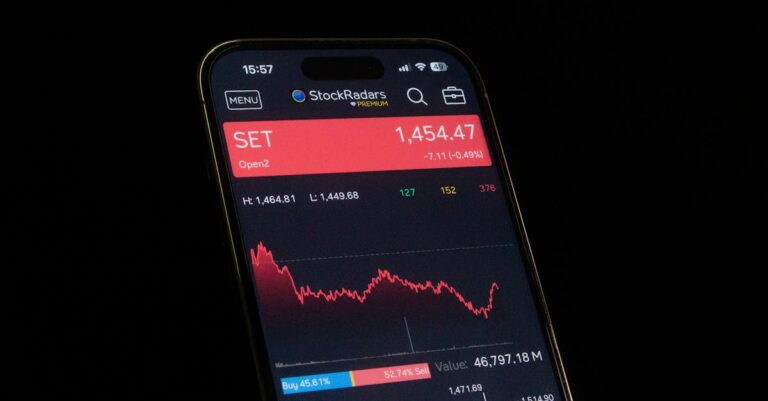
Navigate today’s unpredictable market volatility with smart strategies. Discover how geopolitical events and economic data shape your portfolio and secure your financial future.
The global financial landscape is a dynamic tapestry, constantly influenced by a myriad of factors ranging from geopolitical tensions to crucial economic data releases. For many investors, the current environment presents a complex challenge, often characterized by significant market volatility. Recent headlines underscore this reality: rising stock futures amidst escalating international disputes, alongside the anticipation of pivotal jobs reports. Such periods demand not just attention, but a well-thought-out strategy to safeguard and grow your wealth.
Understanding the forces that drive market volatility is the first step towards mastering it. This article will delve into the intertwined effects of global events and economic indicators on your investment portfolio. We will explore how geopolitical friction can trigger sudden shifts, how employment figures provide critical clues about the economy’s health, and crucially, what actionable steps you can take to build a resilient financial future, even when the markets seem to be charting an unpredictable course.
The goal is not to eliminate risk entirely – that is an impossibility in investing – but to equip you with the knowledge and tools to manage it effectively. By adopting a disciplined approach and focusing on long-term objectives, you can transform periods of heightened market volatility from sources of anxiety into potential opportunities for strategic growth. Let’s explore how to navigate these turbulent waters with confidence and clarity.
Understanding the Shifting Sands: Geopolitics and Your Portfolio’s Exposure to Market Volatility
Recent developments on the international stage serve as a potent reminder of how quickly geopolitical events can send ripples through global markets. Reports of escalating tensions in critical shipping lanes, such as the Strait of Hormuz, immediately impact commodity prices, particularly oil. When major oil-producing regions face instability, the supply chain is threatened, driving up costs for consumers and businesses alike. This surge in oil prices can contribute significantly to inflationary pressures and dampen economic growth, creating considerable market volatility.
The immediate reaction to such news is often a flight to safety, where investors move capital out of riskier assets like stocks and into perceived havens such as government bonds or gold. This shift can lead to broad market declines, as observed recently when major indices retreated from record highs. The S&P 500, Nasdaq Composite, and Dow Jones Industrial Average all experienced pullbacks in response to the renewed international friction.
Moreover, geopolitical disputes can affect specific sectors disproportionately. The energy sector, for instance, often sees increased market volatility and price swings, sometimes benefiting from rising oil prices but also facing heightened uncertainty. The materials and industrials sectors, which rely heavily on global trade and stable supply chains, often experience negative impacts during times of international tension. On Thursday, reports highlighted that these sectors were among the day’s laggards, underscoring their sensitivity to such developments. The intertwining of international relations and economic stability means that investors must remain vigilant, understanding that events far from their immediate vicinity can directly influence their investment performance.
Historically, markets tend to recover from geopolitical shocks, but the path can be uneven and prolonged. The key is not to react impulsively but to understand the underlying drivers and how they might affect your long-term investment strategy. For instance, while oil prices may climb in the short term, the long-term impact on the global economy and corporate earnings will eventually dictate sustained market movements. This understanding is crucial for managing the psychological impact of market volatility and avoiding rash decisions based on fleeting headlines.
The complexity of these interactions requires investors to think beyond immediate reactions. Companies with diverse global operations or those heavily reliant on international trade routes can face increased costs or disruptions. Conversely, domestic-focused businesses or those in less sensitive sectors might be relatively insulated. A nuanced view of your portfolio’s exposure to different industries and geographical regions becomes paramount in building resilience against unforeseen geopolitical events and mitigating the associated market volatility.
Furthermore, government responses to geopolitical events, such as sanctions or changes in trade policy, can introduce additional layers of uncertainty. These policy shifts can alter the competitive landscape for businesses, create new opportunities, or impose significant costs, further contributing to the inherent market volatility. Investors must therefore consider not just the initial event, but also the potential cascade of economic and political reactions that can follow, extending the period of market uncertainty.
For investors focused on wealth accumulation, acknowledging geopolitical risk is about integration, not panic. It means periodically reviewing your asset allocation, considering exposure to various sectors, and maintaining a healthy level of diversification. It also reinforces the value of fundamental analysis – investing in strong companies with solid balance sheets and adaptable business models that are better positioned to weather external shocks, thus reducing your portfolio’s susceptibility to extreme market volatility.
Assessing the Economic Barometer: Jobs Report and Interest Rates’ Influence on Market Volatility
Beyond geopolitical tremors, domestic economic data plays a foundational role in shaping market volatility and investor sentiment. One of the most eagerly anticipated releases each month is the jobs report, which includes crucial figures like the unemployment rate and payrolls data. These numbers are more than just statistics; they are vital indicators of the economy’s health, directly influencing monetary policy decisions and, consequently, the financial markets.
Looking ahead, economists are anticipating a modest gain in jobs and a steady unemployment rate. Such forecasts, when met, provide a snapshot of labor market conditions. A strong jobs market, characterized by low unemployment and consistent payroll growth, typically signals a robust economy. This, in turn, can lead to increased consumer spending, higher corporate revenues, and ultimately, stronger earnings – factors that generally support stock market growth. Conversely, a weakening jobs market can signal an economic slowdown or even a recession, often leading to increased market volatility and investor caution.
The significance of the jobs report extends to its impact on central bank policy, particularly regarding interest rates. A resilient labor market might give the central bank more leeway to maintain or even raise interest rates if inflation remains a concern. Higher interest rates can make borrowing more expensive for businesses and consumers, potentially slowing economic activity. For investors, higher rates can also make fixed-income investments more attractive compared to stocks, leading to shifts in portfolio allocation. This interplay between economic data and monetary policy is a constant source of market volatility.
When interest rates are on the rise, growth stocks, particularly in the technology sector, can sometimes face headwinds. These companies often rely on future earnings growth for their high valuations, and higher discount rates (a function of interest rates) can reduce the present value of those future earnings. Conversely, value stocks, which are often less sensitive to interest rate changes, might perform relatively better. Understanding these dynamics is key to positioning your portfolio against the backdrop of changing economic tides and managing the associated market volatility.
The jobs report also offers insights into wage growth, which is a critical component of inflation. If wages rise too quickly, it can fuel inflation, prompting the central bank to act more aggressively with interest rate hikes. This inflationary pressure and the central bank’s response can be significant drivers of market volatility, as investors grapple with the implications for corporate profitability and overall economic stability. Analysts meticulously dissect these reports, looking for any deviation from expectations that could signal a shift in the economic outlook or monetary policy trajectory.
Moreover, the jobs report influences consumer confidence, which is a powerful driver of economic activity. When people feel secure in their employment and prospects, they are more likely to spend, invest, and contribute to economic growth. A robust consumer base translates into healthier corporate revenues and, in turn, higher stock valuations. Therefore, the jobs report is not merely a historical account; it’s a forward-looking indicator that helps forecast consumer behavior and broader economic trends, contributing to periods of both stability and market volatility.
For long-term investors, the monthly fluctuations reported in jobs data should be viewed within the broader economic cycle. While each report can cause short-term market volatility, the cumulative trend over several quarters or years provides a more accurate picture of the economy’s health. Patience and a focus on the larger economic narrative, rather than knee-jerk reactions to individual data points, are essential for making informed investment decisions and avoiding the pitfalls of emotional trading.
By understanding how the jobs report feeds into central bank decisions and influences different segments of the market, investors can better anticipate potential shifts in market sentiment and prepare their portfolios accordingly. This proactive approach, grounded in economic fundamentals, is a powerful tool for navigating the inherent market volatility that defines modern financial markets.
Earnings Season: The True Pulse of the Market and Mitigating Market Volatility
While geopolitical events and economic data provide the macroeconomic backdrop, the true health of the stock market is often best reflected in corporate earnings. The current earnings season has been described as “strong,” with expectations of continued robust growth. This period, where publicly traded companies release their financial results, offers a granular look at performance and future outlook, helping to either assuage or exacerbate market volatility.
A “strong earnings momentum” as noted by strategists, indicates that companies are performing well, managing costs, and generating profits. This fundamental strength is what ultimately drives stock prices higher over the long term. When a broad range of companies report positive results, it signals a healthy underlying economy and strong demand for goods and services. This broad-based growth, spanning multiple sectors, is particularly encouraging as it suggests the gains are not isolated to just a few mega-cap companies.
The technology sector, in particular, has been a significant driver of market performance, often leading the charge in periods of growth. Strong tech earnings have put major tech-heavy indices on pace for substantial weekly gains. This performance is a testament to innovation, adaptability, and the continued demand for digital solutions. Analysts are forecasting continued high earnings growth for subsequent quarters, which provides a positive outlook for future market performance and can help stabilize investor confidence amidst other sources of market volatility.
However, not all companies perform equally. The earnings season often highlights dispersion, with some firms exceeding expectations while others fall short. For example, recent reports cited a leading cybersecurity and cloud computing company’s shares surging after securing a massive multi-year commitment, indicating strong demand for its services. In contrast, an online travel agency saw its shares decline after its revenue guidance missed analyst expectations, illustrating the market’s sensitivity to future outlooks. Similarly, a popular rideshare application and a cloud infrastructure provider also experienced declines due to disappointing earnings or revenue guidance.
These individual company results underscore the importance of selective investing, even during a generally strong earnings season. While broad market indices might trend upwards, specific stock movements are dictated by their unique financial performance and future prospects. Investors must look beyond the aggregate numbers and understand the health of the individual companies within their portfolios. This due diligence is crucial for mitigating company-specific market volatility.
Moreover, the reaction of different sectors to earnings reports can vary. While communication services and information technology sectors might show resilience or even gains, other sectors, such as materials and energy, might lag due to their exposure to commodity prices or global economic cycles. The market’s interpretation of earnings often considers the broader economic environment, geopolitical risks, and interest rate expectations, adding layers of complexity to how results translate into stock price movements and overall market volatility.
The forward-looking guidance provided by companies during their earnings calls is often as important, if not more important, than their past performance. Investors are constantly trying to discount future cash flows, and management’s outlook on revenues, profits, and capital expenditures provides critical inputs. Any hint of a slowdown or an unexpected boost can cause significant shifts in investor perception and stock valuations, further contributing to short-term market volatility.
For investors, a strong earnings season provides fundamental justification for market strength. However, it also serves as a reminder to continuously evaluate individual holdings, ensure diversification across different sectors, and align investments with long-term financial goals. Relying solely on the positive aggregate numbers without understanding the underlying company health can expose a portfolio to unnecessary risks when individual companies inevitably face challenges, thereby exacerbating the impact of any broader market volatility.
Navigating Market Volatility: Strategies for the Prudent Investor
Given the persistent presence of market volatility, a prudent investor needs a robust set of strategies to protect and grow their wealth. Reacting emotionally to headlines or sudden market swings is often counterproductive. Instead, a disciplined, long-term approach based on sound financial principles is essential.
1. Embrace Diversification as Your Shield Against Market Volatility
Diversification is perhaps the most fundamental principle of prudent investing. It involves spreading your investments across various asset classes, industries, and geographic regions. When one part of your portfolio is performing poorly, another might be doing well, thus balancing out returns and reducing overall market volatility. For instance, if tech stocks are soaring, but energy stocks are declining due to geopolitical uncertainty, a diversified portfolio ensures that you are not overly exposed to the underperforming sector.
- Asset Classes: Don’t put all your capital into stocks. Include bonds, real estate, and potentially commodities. Each asset class reacts differently to economic conditions.
- Sectors: Within stocks, diversify across industries. If the tech sector faces headwinds, a strong position in consumer staples or healthcare might provide stability.
- Geography: Investing in both domestic and international markets can mitigate region-specific risks and capitalize on growth opportunities worldwide.
2. Cultivate a Long-Term Perspective
Periods of market volatility are a normal, albeit uncomfortable, part of investing. Historical data consistently shows that over long periods (decades), stock markets tend to trend upwards, despite numerous downturns and crises. Trying to time the market by buying at the absolute bottom and selling at the absolute top is incredibly difficult, even for professional investors. A long-term view allows you to ride out short-term fluctuations and benefit from the power of compounding.
- Stay Invested: Unless your financial situation significantly changes, resist the urge to sell during a downturn. Selling turns paper losses into real losses and prevents you from participating in the eventual recovery.
- Dollar-Cost Averaging: Invest a fixed amount of money at regular intervals, regardless of market conditions. This strategy means you buy more shares when prices are low and fewer when prices are high, potentially lowering your average cost per share over time and smoothing out the impact of market volatility.
3. Understand Your Risk Assessment and Tolerance
Before making any investment decisions, you must have a clear understanding of your own risk tolerance – how much financial risk you are comfortable taking. This is influenced by your age, financial goals, income stability, and personal disposition. Someone nearing retirement might prioritize capital preservation over aggressive growth, while a younger investor with a longer time horizon might be able to tolerate more market volatility.
- Self-Assessment: Honestly evaluate your comfort level with potential losses.
- Adjust Your Portfolio: Your asset allocation should align with your risk tolerance. If high market volatility causes you sleepless nights, consider a more conservative mix.
4. Build and Maintain a Robust Emergency Fund
An emergency fund is your first line of defense against unforeseen personal financial shocks, which can prevent you from having to sell investments during a market downturn. Having liquid cash readily available for unexpected expenses – job loss, medical emergencies, home repairs – means you won’t be forced to liquidate your portfolio at an inopportune time, thus insulating your investment strategy from personal financial market volatility.
- Target: Aim for 3-6 months’ worth of essential living expenses, or even more if your income is unstable.
- Accessibility: Keep it in a high-yield savings account or a money market fund, separate from your investment accounts.
5. Periodically Rebalance Your Portfolio
Over time, different assets in your portfolio will perform differently, causing your asset allocation to drift from your original target. Rebalancing involves selling off some of the assets that have grown significantly and using the proceeds to buy more of the assets that have lagged. This ensures you maintain your desired risk profile and can be a way to “buy low and sell high.” Rebalancing helps to systematically manage your exposure to different types of market volatility.
- Set a Schedule: Rebalance annually or semi-annually.
- Adhere to Targets: Stick to your predetermined asset allocation percentages to keep your portfolio aligned with your long-term goals.
6. Consider Defensive Stocks and Sectors During Market Volatility
During periods of heightened market volatility or economic uncertainty, certain sectors tend to be more resilient. These are often referred to as “defensive” sectors because their products and services are consistently in demand, regardless of the economic climate.
- Consumer Staples: Companies producing essential goods like food, beverages, and household products.
- Utilities: Providers of electricity, gas, and water, which people need regardless of economic conditions.
- Healthcare: Demand for healthcare services and products tends to be stable.
While these sectors might not offer explosive growth, they can provide a valuable buffer during downturns, reducing the overall market volatility of your portfolio.
7. Explore Alternative Investments Strategically
While traditional stocks and bonds form the core of most portfolios, considering alternative investments can further enhance diversification and potentially offer uncorrelated returns, thereby dampening market volatility. However, these often come with their own set of risks and liquidity considerations.
- Real Estate: Direct ownership or through Real Estate Investment Trusts (REITs) can provide income and appreciation, often with a low correlation to the stock market.
- Commodities: As seen with oil price surges, commodities can act as an inflation hedge. However, they can also be highly volatile themselves.
- Managed Futures/Hedge Funds: For sophisticated investors, these can offer strategies designed to perform in various market conditions, including downturns.
8. Cultivate Patience and Discipline
Perhaps the most challenging aspect of investing, especially during times of market volatility, is maintaining emotional discipline. Fear and greed can lead to poor decisions. Patience means allowing your investments time to grow and recover, while discipline means sticking to your plan even when instinct urges you to deviate.
- Avoid Emotional Decisions: Base investment choices on research and your financial plan, not on daily news cycles or market rumors.
- Educate Yourself: Continuously learning about investing and market dynamics can build confidence and reduce anxiety during turbulent times.
Implementing these strategies requires effort and continuous monitoring, but they form the bedrock of a successful long-term investment journey. By proactively addressing the challenges posed by market volatility, you empower yourself to build lasting wealth rather than becoming a victim of market whims.
Spotting Opportunities Amidst Uncertainty: Leveraging Market Volatility
While market volatility often evokes fear, it can also present unique opportunities for the prepared investor. Periods of market downturns or significant price swings, triggered by geopolitical events or economic shifts, can create situations where quality assets are undervalued. For those with a long-term perspective and sufficient capital, these moments can be opportune for strategic investments.
One primary way to capitalize on market volatility is through value investing principles. This approach involves identifying companies whose stock prices appear to be trading below their intrinsic value. During a general market sell-off, even fundamentally strong companies can see their stock prices drop, not because of a deterioration in their business, but due to broad market sentiment or panic selling. A disciplined value investor will research such companies, understand their core business, financial health, and long-term prospects, and consider purchasing them at a discount.
For example, if a geopolitical event causes a temporary dip across the entire market, a well-managed company with a solid market position, consistent earnings, and a strong balance sheet might become available at a more attractive price. This “sale” on high-quality assets is a direct benefit of short-term market volatility. However, it requires careful due diligence to distinguish between a temporarily undervalued company and one facing genuine, long-term challenges.
Furthermore, periods of change often spur innovation and highlight resilient business models. The recent strong performance of the technology sector, even amidst broader market uncertainty, suggests that companies at the forefront of innovation continue to thrive. Identifying these forward-looking companies that are adapting to new challenges, developing cutting-edge solutions, or benefiting from long-term secular trends can be a source of significant growth. While these might not always be “value” plays in the traditional sense, their growth potential can be substantial when purchased during a general market dip caused by market volatility.
Another strategy during fluctuating markets is to focus on companies with strong competitive advantages, often referred to as “moats.” These could include powerful brand recognition, proprietary technology, high switching costs for customers, or significant network effects. Such companies are generally more resilient during economic downturns and geopolitical shocks, as their core business is harder to disrupt. When market volatility causes a temporary dip in their stock price, it can be an excellent opportunity to acquire shares in these enduring businesses.
The “buy the dip” mentality, while popular, must be approached with caution and not be driven by emotion. It’s not about buying *any* dip, but about buying quality assets that align with your long-term investment thesis when they are temporarily cheaper due to broader market volatility. This requires pre-identified investment targets and the discipline to execute when conditions are favorable.
Additionally, during periods of heightened market volatility, certain sectors might emerge as beneficiaries. For instance, in times of increased geopolitical tensions, defense contractors or cybersecurity firms might see increased demand. Similarly, if inflation becomes a concern, companies dealing in real assets or those with strong pricing power might perform better. Being aware of these macro trends and how they impact different industries can help uncover overlooked opportunities.
Ultimately, transforming market volatility into opportunity requires a combination of patience, research, and a clear investment plan. It’s about being prepared to act rationally when others are reacting emotionally. By maintaining a well-diversified portfolio, having an emergency fund, and understanding the intrinsic value of your investments, you can approach market downturns not with dread, but with a strategic eye for future growth, turning periods of high market volatility into stepping stones toward greater wealth.
Building a Resilient Portfolio Against Future Shocks and Market Volatility
The constant ebb and flow of global events, economic data, and corporate performance underscore a fundamental truth about investing: market volatility is inevitable. While we cannot predict the exact timing or nature of future shocks, we can certainly prepare for them. Building a resilient portfolio is not just about weathering storms; it’s about constructing a financial framework that can adapt, endure, and ultimately thrive through various market cycles.
Recapping the core strategies, the bedrock of resilience lies in robust diversification. This means spreading your investments across various asset classes like stocks, bonds, and real estate; diversifying across different industries and sectors, including both growth-oriented and defensive plays; and even considering international exposure to reduce region-specific risks. A portfolio that is thoughtfully diversified is inherently better equipped to absorb the impact of unexpected events, as a downturn in one area might be offset by stability or growth in another, thereby reducing the overall impact of market volatility.
Coupled with diversification is the unwavering commitment to a long-term investment horizon. Short-term market volatility, while unnerving, often looks like noise when viewed through a decade-long lens. History consistently shows that markets recover from downturns, and the greatest gains are often made by those who stay invested, patiently allowing their capital to compound. This long-term mindset helps investors resist the urge to panic sell during corrections and prevents them from missing out on subsequent recoveries.
Another crucial element is a clear understanding of your personal risk tolerance. Your investment strategy must align with your comfort level with risk. If a highly aggressive portfolio causes undue stress during periods of high market volatility, it’s likely too risky for you. Regularly assessing and adjusting your risk profile ensures that your portfolio supports your peace of mind as much as your financial growth. This may involve periodic rebalancing to maintain your desired asset allocation as market conditions cause your portfolio’s weighting to drift.
Moreover, maintaining a solid emergency fund is non-negotiable. This liquid safety net ensures that unforeseen personal expenses do not force you to liquidate investments during a market downturn, a scenario that can lock in losses and severely derail long-term financial goals. A well-funded emergency account provides a critical layer of insulation between your daily life and the inherent market volatility of your investment portfolio.
Beyond these foundational strategies, continuous learning and adaptation are vital. The financial world is not static; new technologies, geopolitical landscapes, and economic theories constantly emerge. Staying informed, understanding the implications of major economic reports like the jobs data, and observing how different sectors react to global events empowers you to make more informed decisions. This does not mean constantly tinkering with your portfolio, but rather understanding the broader forces at play and making adjustments only when they align with your long-term strategy, rather than reacting impulsively to every wave of market volatility.
Finally, consider the value of professional financial guidance. A qualified financial advisor can help you clarify your goals, assess your risk tolerance, construct a personalized investment plan, and provide objective advice during periods of intense market volatility. They can offer insights into tax-efficient strategies, estate planning, and retirement preparation, providing a holistic approach to wealth management that goes beyond just investment selection.
In conclusion, confronting market volatility head-on is not about avoiding risk, but about managing it intelligently. By adopting a disciplined, diversified, and long-term approach, supported by continuous learning and strategic rebalancing, you can build a resilient portfolio capable of navigating future shocks. This proactive stance transforms potential threats into opportunities, ensuring that your journey from work to wealth remains steady and fruitful, regardless of the turbulent currents of the global markets.