

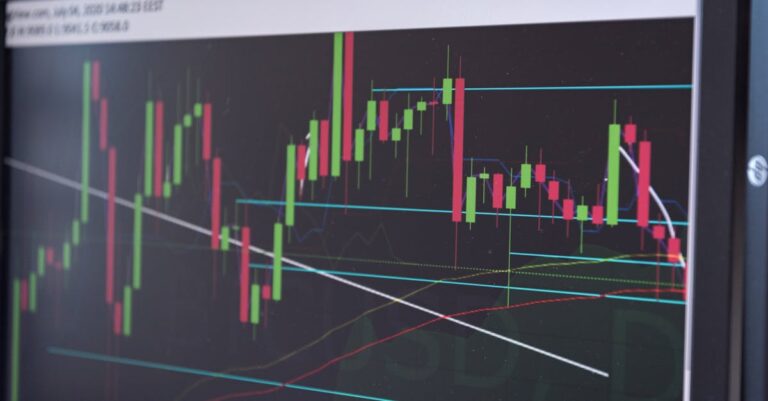
Worried about market swings? This guide reveals strategies for resilient portfolio growth, helping you build lasting wealth even when headlines fuel investor anxiety.
Recent headlines have once again cast a shadow of uncertainty over global financial markets. Geopolitical tensions, particularly developments in the Middle East and their immediate impact on crucial resources like oil prices, have triggered notable shifts in investor sentiment. As CNBC reported, U.S. stock futures recently saw slight gains following declines, illustrating the constant dance between global events and market reactions. While the immediate concerns about escalating conflict and their potential fallout on economic stability are valid, understanding how to navigate this inherent market volatility is paramount for long-term wealth builders.
Many investors feel a familiar anxiety when news of political instability or commodity price fluctuations dominate financial reporting. The blue-chip Dow, for instance, experienced a significant dip on a recent Monday, while the broader S&P 500 and tech-heavy Nasdaq Composite also saw losses. Such movements can provoke a knee-jerk reaction, tempting individuals to abandon their investment strategies or make impulsive decisions. However, seasoned wealth managers understand that these moments of pronounced market volatility are not merely obstacles; they are integral parts of the investment journey, offering opportunities for those who maintain a disciplined, strategic approach.
This article will delve into actionable strategies for investors to cultivate resilience in their portfolios, ensuring their financial goals remain intact even amidst the most turbulent market conditions. We will explore how to dissect market signals, manage emotional responses, and construct a robust investment framework designed to thrive over the long haul, transforming apprehension into steadfast progress toward financial prosperity.
Understanding the Landscape of Market Volatility
Market volatility refers to the rate at which the price of a security, index, or market increases or decreases over a given period. It’s often measured by the standard deviation of returns, indicating how much the price deviates from its average. While many associate volatility solely with dramatic drops, it encompasses both rapid upward and downward movements. It’s a natural, inherent characteristic of financial markets, influenced by a myriad of factors from economic data and corporate earnings to geopolitical events and shifts in investor psychology.
The recent reports of escalating tensions in the Middle East, including drone and missile launches and reported naval engagements, serve as a stark reminder of how geopolitical events can ignite immediate market jitters. When such news breaks, oil prices, for example, often react swiftly due to concerns about supply disruptions. CNBC noted a rise in U.S. West Texas Intermediate crude futures during one regular session, only for them to fall in extended trading, demonstrating the highly reactive nature of commodity markets to breaking news.
Historically, markets have always responded to global crises. From past conflicts to economic recessions and health crises, periods of heightened uncertainty are a recurring feature. What’s crucial for investors to grasp is that while these events can cause sharp, short-term corrections or declines, they often do not dictate the long-term trajectory of the market. The underlying drivers of economic growth – innovation, productivity, corporate profitability, and demographic shifts – tend to reassert themselves over time.
Distinguishing between short-term noise and long-term trends is a critical skill for any investor. A significant single-day drop in an index might grab headlines and provoke fear, but it’s essential to zoom out and observe the market’s performance over months, years, and even decades. This broader perspective often reveals that despite numerous “crises,” the market has a consistent upward bias over the long term, rewarding patient investors.
The Investor’s Emotional Gauntlet: Fear, Greed, and Market Swings
Investing is as much about managing emotions as it is about analyzing fundamentals. When market volatility intensifies, and headlines scream about declines, the primal emotions of fear and greed become potent forces, capable of derailing even the most carefully constructed financial plans. The sight of a portfolio shrinking, even temporarily, can trigger panic, prompting investors to sell at precisely the wrong time – at the bottom of a downturn.
Conversely, during periods of rapid ascent, greed can take over, leading investors to chase “hot” stocks or speculative assets without sufficient due diligence. This often results in buying at inflated prices, leaving them vulnerable to significant losses when the inevitable correction occurs. The cycle of fear and greed is a powerful behavioral bias, often amplified by the constant stream of financial news and commentary. A prime example is the recent broad market losses, which CNBC detailed, showing almost all sectors suffering declines, led by materials and industrials, while only energy saw a rise. Such disparity can confuse and unnerve investors.
Understanding these emotional triggers is the first step toward mitigating their impact. Behavioral finance studies have repeatedly shown that individual investors frequently underperform the market due to poor timing decisions driven by emotion. They tend to buy high and sell low, exactly the opposite of what a sound investment strategy advocates. This tendency is particularly pronounced during periods of intense market volatility.
To counteract this, investors must cultivate emotional discipline. This involves setting clear, long-term goals and adhering to an investment plan regardless of short-term market movements. It means understanding that market dips are often temporary and can present opportunities to acquire quality assets at lower prices, rather than signals to retreat. Building a robust psychological framework is as vital as constructing a diversified portfolio.
Strategic Shields Against Market Turbulence
When facing market volatility, a well-thought-out strategy acts as a critical shield. These strategies are not about avoiding downturns entirely, which is often impossible, but about mitigating their impact and positioning your portfolio for eventual recovery and growth.
Diversification: Your First Line of Defense
Diversification is perhaps the most fundamental principle of prudent investing. It’s the practice of spreading your investments across various asset classes, industries, geographic regions, and investment styles to minimize risk. The idea is that not all investments move in the same direction at the same time. While one segment of your portfolio might be underperforming, another might be holding steady or even gaining, thus cushioning the overall impact on your total wealth.
Consider the recent market movements described by CNBC, where energy was the only sector to end higher during a day of broad losses. This highlights the importance of not having all your capital tied to a single sector. A well-diversified portfolio might include:
- Asset Classes: A mix of equities (stocks), fixed income (bonds), real estate, and potentially commodities or alternative investments. Bonds, for instance, often act as a ballast during stock market downturns, providing stability and income.
- Geographic Diversification: Investing in companies and markets across different countries. Economic cycles and geopolitical events rarely affect all regions equally.
- Sector Diversification: Spreading investments across various industries. As seen with energy’s recent performance, different sectors respond differently to economic shifts, inflation, or geopolitical events. Holding a mix helps smooth out returns.
- Company Size and Style: A blend of large-cap, mid-cap, and small-cap companies, as well as growth and value stocks.
True diversification goes beyond simply owning many different stocks; it involves owning assets that behave differently under various market conditions, reducing concentration risk.
The Power of Dollar-Cost Averaging
Dollar-cost averaging (DCA) is a simple yet powerful strategy to combat the psychological pitfalls of market volatility. It involves investing a fixed amount of money at regular intervals, regardless of whether the market is up or down. For example, instead of investing a lump sum of $12,000 at once, you might invest $1,000 every month for a year.
The beauty of DCA is that it removes the emotional element of market timing. When prices are high, your fixed investment buys fewer shares. When prices are low (during a downturn), your fixed investment buys more shares. Over time, this averages out your purchase price, often resulting in a lower average cost per share than if you tried to time the market. It’s a disciplined approach that turns market dips from sources of fear into opportunities to accumulate more assets at a discount.
Regular Portfolio Rebalancing
Even with a well-diversified portfolio, market movements can cause your asset allocation to drift away from your target. For example, a strong bull market might cause your stock allocation to grow disproportionately, increasing your overall risk exposure. Rebalancing is the process of periodically adjusting your portfolio back to your original target asset allocation.
This typically involves selling a portion of your best-performing assets (which have likely grown beyond their target weight) and using the proceeds to buy more of your underperforming assets (which have likely fallen below their target weight). This strategy is inherently counter-cyclical: it forces you to sell high and buy low, aligning perfectly with the principles of long-term wealth creation during periods of market volatility.
Rebalancing can be done on a fixed schedule (e.g., annually) or when your portfolio deviates from your target allocation by a certain percentage. It’s a proactive measure that ensures your portfolio’s risk level remains consistent with your comfort zone and financial objectives.
Anchoring Your Portfolio in Quality and Fundamentals
When the winds of market volatility blow fiercely, the quality of your underlying investments becomes paramount. Companies with strong fundamentals are far better positioned to weather economic storms and geopolitical shocks than those built on shaky ground. Focusing on quality means looking beyond short-term hype and delving into the intrinsic value and resilience of a business.
Focus on Resilient Companies
What constitutes a resilient company? These are businesses characterized by:
- Strong Balance Sheets: Companies with manageable debt levels and ample cash reserves are better equipped to navigate revenue downturns or unexpected expenses without resorting to desperate measures like heavy borrowing or asset sales.
- Consistent Earnings and Cash Flow: Businesses that consistently generate profits and positive cash flow, even in challenging economic environments, demonstrate operational efficiency and market demand for their products or services. Morgan Stanley Wealth Management’s Dan Skelly highlighted this point, noting that “companies have been posting strong earnings reports thus far,” even amidst geopolitical concerns, as reported by CNBC. This fundamental strength often acts as a counterweight to external pressures.
- Competitive Advantages (Moats): Companies with sustainable competitive advantages—such as strong brand recognition, proprietary technology, economies of scale, or high switching costs for customers—are more likely to maintain market share and profitability.
- Diversified Revenue Streams: Businesses that don’t rely on a single product, service, or geographic market are less vulnerable to specific disruptions.
- Experienced Management Teams: A capable and ethical management team with a proven track record of navigating challenges is crucial.
During periods of heightened market volatility, investors often gravitate towards these “defensive” qualities. While their stock prices may still fluctuate, their underlying business strength provides a greater margin of safety and a stronger foundation for recovery.
Analyzing Economic Indicators Beyond the Headlines
While geopolitical tensions and oil prices capture immediate attention, a holistic view of economic indicators offers a more complete picture of the market’s health. Investors should monitor key economic data points that signal broader trends:
- Corporate Earnings: As Skelly noted, robust earnings are a significant driver. Companies reporting strong profits, like a major image-sharing platform or a leading digital payments provider, indicate underlying economic activity and corporate health. Conversely, companies like a language learning app that miss user estimates can see significant share declines, as CNBC highlighted.
- Inflation Data: Measures like the Consumer Price Index (CPI) influence central bank policy, which in turn affects interest rates and borrowing costs for businesses and consumers.
- Employment Figures: Reports like the Job Openings and Labor Turnover Survey (JOLTS), mentioned by CNBC, and unemployment rates provide insights into labor market strength, consumer spending capacity, and overall economic vigor.
- GDP Growth: Gross Domestic Product is the broadest measure of economic activity, indicating the rate at which an economy is expanding or contracting.
- Trade Balances: The U.S. trade deficit, also a focus for traders as noted by CNBC, indicates the relationship between a nation’s exports and imports, providing clues about its competitiveness and economic health.
- Manufacturing and Service Sector Indices: Surveys of purchasing managers (PMI) offer forward-looking indicators of economic activity in various sectors.
By focusing on these fundamental economic health markers, investors can better assess the long-term direction of the economy and market, rather than being swayed solely by short-term news cycles and the inevitable periods of market volatility.
Geopolitics as “Pop-Up Ads”: A Deeper Look
Morgan Stanley Wealth Management’s Dan Skelly offered a compelling analogy on CNBC‘s “Closing Bell: Overtime,” suggesting that the market often treats “geopolitics and some of these domestic policy shocks like pop-up ads along a longer, winding narrative centered on AI, the economy and resilient earnings.” This perspective is highly valuable for understanding how to approach market volatility.
Skelly’s point underscores a crucial observation about market behavior: while geopolitical events (like the recent Middle East developments or past significant global conflicts) can trigger immediate, often dramatic, reactions, their long-term impact on the fundamental drivers of economic growth is frequently limited. Markets are complex, adaptive systems, and they tend to process and price in new information very quickly. Once the initial shock is absorbed, the focus often shifts back to the more enduring themes that dictate corporate profitability and economic expansion.
Consider the “longer, winding narrative” Skelly mentions. The relentless march of technological innovation, particularly in areas like artificial intelligence, continues to drive productivity gains and create new industries and markets. This fundamental shift towards greater efficiency and new economic possibilities is a powerful underlying current. Similarly, the overall health and resilience of the global economy, driven by consumer spending, investment, and trade, forms the bedrock of market performance. And, crucially, resilient corporate earnings demonstrate that businesses are adapting, innovating, and generating value despite external challenges.
Historical data supports this “pop-up ad” analogy. Many major geopolitical crises throughout history, while causing significant market drops in the short term, have been followed by periods of recovery and continued growth. The market, while sensitive to immediate risks, possesses an inherent ability to discount future events and focus on the ongoing creation of wealth. Companies continue to invent, produce, and sell; people continue to work and consume. These economic engines, fueled by innovation and human ingenuity, tend to overpower the temporary disruptions caused by political friction.
This perspective does not diminish the human cost or gravity of geopolitical events, but rather provides an analytical framework for investors. It suggests that while remaining informed is important, allowing these “pop-up ads” to dictate wholesale changes to a well-considered, long-term investment strategy is often a mistake. Instead, prudent investors recognize these moments of heightened market volatility as part of the broader market narrative, rather than an abrupt ending to it.
The Indispensable Emergency Fund
Amidst discussions of portfolio construction and market strategies, the importance of a robust emergency fund can sometimes be overlooked, especially when considering market volatility. An emergency fund is a pool of readily accessible cash, typically held in a high-yield savings account, designated to cover unexpected expenses or income disruptions.
Its role becomes particularly critical during periods of market uncertainty or personal financial stress. Imagine a scenario where you lose your job during a market downturn. Without an adequate emergency fund, you might be forced to sell investments that have temporarily declined in value to cover your living expenses. This would convert a “paper loss” into a real, permanent loss, severely impacting your long-term wealth building goals. An emergency fund acts as a financial buffer, allowing your investments to recover without being liquidated prematurely.
Most financial experts recommend having three to six months’ worth of essential living expenses saved in an emergency fund. For those with less stable incomes or higher financial commitments, six to twelve months might be more appropriate. This fund provides peace of mind, allowing you to ride out personal financial storms and market fluctuations with greater confidence, knowing that your long-term investment strategy remains undisturbed.
Tax Efficiency in Volatile Markets
Navigating market volatility isn’t just about making smart investment decisions; it’s also about optimizing for tax efficiency. Downturns, while painful, can sometimes present opportunities for strategic tax planning that can benefit your portfolio in the long run.
Harvesting Losses
One common strategy is “tax-loss harvesting.” This involves selling investments that have declined in value (generating a capital loss) and using these losses to offset capital gains elsewhere in your portfolio. If your capital losses exceed your capital gains, you can typically use up to a certain amount (e.g., $3,000 in the U.S.) to reduce your ordinary taxable income each year. Any remaining losses can often be carried forward to offset future gains.
When implementing tax-loss harvesting, be mindful of the “wash sale rule,” which prevents you from buying a “substantially identical” security within 30 days before or after selling the original security at a loss. This requires careful planning but can be a powerful tool to reduce your tax burden during periods of market volatility.
Strategic Use of Retirement Accounts
Retirement accounts, such as employer-sponsored plans and individual retirement arrangements, offer significant tax advantages that are amplified during periods of market fluctuations. Contributions to traditional accounts are often tax-deductible, reducing your current taxable income, while growth within these accounts is tax-deferred until retirement. Roth accounts, on the other hand, allow for tax-free withdrawals in retirement, provided certain conditions are met, as contributions are made with after-tax dollars.
During downturns, contributing to these accounts can be particularly beneficial, as you’re effectively buying assets at lower prices within a tax-advantaged wrapper. This allows for potential tax-free or tax-deferred growth as the market recovers, maximizing your compounding returns without immediate tax liabilities.
Revisiting Your Risk Tolerance
Before any major investment decision, investors are typically asked to assess their risk tolerance. This assessment, however, often feels abstract until truly tested. Market volatility offers a real-world crucible for understanding your actual comfort level with risk. The true measure of your risk tolerance isn’t how you feel about a theoretical 10% market drop, but how you react when your portfolio genuinely experiences that decline amidst unsettling news about oil prices and geopolitical conflict, as recently reported by CNBC.
A period of significant market swings can provide invaluable insights. Did you panic and feel an overwhelming urge to sell everything? Or did you view the downturn as a potential buying opportunity, staying calm and sticking to your long-term plan? The answer to these questions is far more informative than any questionnaire.
If the recent market movements caused you considerable stress and sleepless nights, it might be a signal that your current portfolio’s risk level is higher than your actual comfort zone. This isn’t a failure, but an opportunity to adjust. You might consider reallocating some of your equity exposure to more conservative assets like high-quality bonds or increasing your cash position.
Conversely, if you remained calm and perhaps even felt invigorated by the prospect of acquiring more assets at a discount, your risk tolerance might be higher than initially perceived. In either case, regularly revisiting your risk tolerance, especially after experiencing a period of market volatility, ensures that your investment strategy remains aligned with your psychological comfort and financial objectives. This alignment is crucial for sticking to your plan and avoiding emotionally driven mistakes when markets inevitably become turbulent again.
Long-Term Vision: The Unwavering Compass
In the face of relentless news cycles reporting on every dip and swing, maintaining a long-term vision acts as the most potent antidote to the anxiety caused by market volatility. While short-term trading can be tempting, particularly during periods of rapid movement, historical data overwhelmingly favors a patient, long-term approach for wealth creation.
The power of compounding is the silent engine of wealth. It allows your investment gains to generate further gains over time, creating an exponential growth curve. This effect is maximized when investments are allowed to grow undisturbed over many years, ideally decades. Every time an investor reacts to a market dip by selling, they interrupt this compounding process and risk missing out on the subsequent recovery, which often happens swiftly and unexpectedly.
Consider the broader historical narrative of financial markets. Despite countless wars, recessions, pandemics, and geopolitical tensions – including recent concerns over Middle East developments and oil prices as reported by CNBC – equity markets have demonstrated an undeniable upward trend over the very long run. Each crisis, while painful in the moment, has eventually given way to recovery and new highs. This pattern reinforces the idea that temporary setbacks are part of the journey, not the destination.
Focusing on the long term means having faith in human innovation, economic progress, and the fundamental ability of quality companies to adapt and grow. It means recognizing that you are investing in the productivity and ingenuity of businesses and economies, not just the daily fluctuations of stock prices. This perspective allows investors to view periods of market volatility not as threats to their wealth, but as transient phases that, for the disciplined, can even offer opportunities for enhanced future returns.
Cultivating this long-term mindset requires discipline, education, and often, the guidance of a financial professional. It means shifting focus from daily market reports to your personal financial goals – retirement, a significant purchase, generational wealth transfer – and understanding that these goals are achieved through consistent, patient effort, not by reacting to every “pop-up ad” of market noise.
Conclusion: Steadfast Progress Amidst Market Swings
The financial markets, by their very nature, are dynamic and subject to continuous fluctuations. Geopolitical tensions, shifts in oil prices, and daily corporate earnings reports, as highlighted by recent CNBC coverage, are all part of the complex tapestry that creates market volatility. For the disciplined investor, however, these periods of uncertainty are not insurmountable obstacles but rather a test of resolve and an opportunity to refine one’s financial strategy.
We’ve explored how understanding the root causes of market swings, managing emotional responses, and implementing strategic safeguards are critical. Diversification across asset classes, sectors, and geographies acts as a robust defense. Dollar-cost averaging mitigates the risk of poor timing, while regular rebalancing keeps your portfolio aligned with your risk tolerance. Focusing on companies with strong fundamentals – robust balance sheets, consistent earnings, and competitive advantages – provides a bedrock of stability.
Furthermore, recognizing that many external shocks, as Dan Skelly aptly put it, are like “pop-up ads” against a broader narrative of economic growth, innovation (like AI), and corporate profitability, empowers investors to maintain perspective. An indispensable emergency fund, tax-efficient investing strategies, and regular reviews of personal risk tolerance further fortify a portfolio against unforeseen challenges. Ultimately, it is the unwavering commitment to a long-term vision, embracing the power of compounding, that transforms temporary market turbulence into stepping stones toward enduring wealth.
Building wealth in a volatile world requires more than just picking the right stocks; it demands discipline, patience, and a well-informed strategy. By adopting these principles, investors can navigate the inevitable ups and downs with confidence, ensuring their journey from work to wealth remains steadfast, resilient, and ultimately successful.
Frequently Asked Questions
How can investors reduce anxiety during intense market volatility?
Reducing anxiety during market volatility involves several strategies. First, focus on your long-term financial goals rather than daily market fluctuations. Ensure you have a diversified portfolio, as this helps cushion the impact of downturns in any single area. Practicing dollar-cost averaging and having a robust emergency fund can also provide peace of mind by preventing forced selling of investments. Regularly review your risk tolerance to ensure your portfolio aligns with your comfort level, and avoid constantly checking market news, as excessive exposure can heighten stress.
What are the immediate impacts of geopolitical tensions on investment portfolios?
Geopolitical tensions, such as conflict developments in the Middle East, can have immediate and noticeable impacts on investment portfolios. They often lead to increased market volatility, causing stock indices to dip as investor confidence wavers. Commodity prices, especially oil, can react sharply due to supply chain concerns, influencing inflation and corporate costs. Certain sectors might experience higher volatility (e.g., defense stocks up, travel stocks down), while safe-haven assets like government bonds or precious metals may see increased demand. However, these impacts are often short-term, with markets tending to refocus on underlying economic fundamentals over time.
Is it wise to make significant changes to my portfolio during a market downturn?
Generally, it is not wise to make significant, emotionally driven changes to your portfolio during a market downturn. Panic selling can lock in losses and prevent you from participating in the subsequent market recovery, which often occurs unexpectedly. Instead, focus on your pre-established long-term investment plan. Downturns can be opportunities for strategic actions like rebalancing your portfolio back to your target asset allocation (selling some winners to buy more of the underperformers) or utilizing tax-loss harvesting. Ensure any adjustments are well-reasoned and align with your enduring financial goals and risk tolerance, rather than being a reaction to fear.
How does diversification protect my investments from market swings?
Diversification protects your investments by spreading capital across various asset classes (stocks, bonds, real estate), industries, and geographic regions. The core principle is that not all investments move in the same direction at the same time or react equally to the same events. For example, during a stock market downturn, bonds might hold steady or even increase in value. By having a mix, the poor performance of one part of your portfolio can be offset by the better performance of another, reducing overall portfolio risk and smoothing out returns during periods of market volatility.
What role do corporate earnings play when markets are volatile?
Corporate earnings play a crucial role in providing stability and direction, especially when markets are volatile. While geopolitical events or economic data can cause short-term fluctuations, strong and resilient corporate earnings reports often reassure investors about the underlying health of companies and the economy. As observed by financial experts, even amidst significant external pressures, companies consistently posting robust earnings signal fundamental strength and innovation. This focus on corporate profitability can help the market look past “pop-up ad” distractions and return its attention to the core drivers of long-term value creation.