

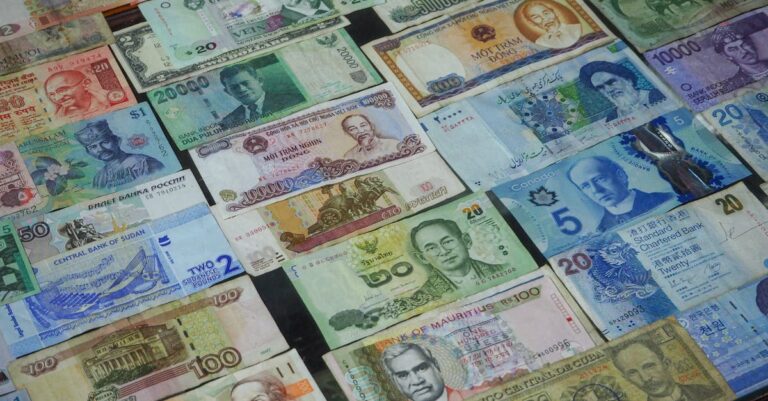
Navigating volatile currency markets is crucial for wealth preservation. Discover how the Euro’s recent vulnerability impacts your international investments and purchasing power.
Understanding Global Currency Impact on Your Wealth Journey
For individuals dedicated to building lasting wealth, understanding the dynamics of global currencies is not just a niche interest for day traders; it’s a foundational element of sound financial planning. The value of currencies like the Euro and the US Dollar doesn’t just fluctuate on screens for financial analysts; these movements have a tangible global currency impact on your investments, your purchasing power, and your overall financial stability. When a major currency like the Euro shows signs of vulnerability, as recent market analyses suggest, it warrants a closer look from anyone with international assets, aspirations, or even just an eye on the cost of imported goods.
The journey from work to wealth is paved with strategic decisions, and recognizing the broader economic landscape is paramount. While most wealth builders aren’t actively trading currency pairs, the macroeconomic forces that drive currency fluctuations are the very same forces that shape stock markets, bond yields, and real estate values across the globe. Ignoring these powerful currents is akin to navigating a ship without acknowledging the tides.
This article will delve into the factors contributing to currency movements, using the recent forecast regarding the EUR/USD pair as a springboard. We will explore how these seemingly distant financial shifts can affect your diversified portfolio, your savings, and your long-term financial goals. More importantly, we will discuss actionable insights to help you protect and potentially enhance your wealth in a world of ever-changing currency valuations.
The Macroeconomic Tapestry: Drivers of Global Currency Impact
Currency values are not arbitrary; they are reflections of underlying economic health, central bank policies, and geopolitical stability. The recent analysis indicating the Euro’s vulnerability against the US Dollar below a specific confluence point (e.g., 1.1780-1.1770) is rooted in several critical macroeconomic factors. Understanding these drivers is essential for comprehending the broader global currency impact.
Resilient US Economy and Hawkish Federal Reserve Policy
A significant factor in the US Dollar’s recent strength, and consequently the Euro’s weakness, has been the resilience of the US labor market and the stance of its central bank, the Federal Reserve (Fed). Data pointing to a robust jobs market suggests that the US economy might be weathering inflationary pressures better than anticipated. This strength provides the Fed with more leeway to maintain a relatively hawkish monetary policy, meaning a willingness to keep interest rates higher for longer or even to consider further increases if inflation persists. Higher interest rates typically attract foreign capital seeking better returns, increasing demand for the local currency and strengthening it.
Furthermore, minutes from recent FOMC meetings and hawkish comments from Fed officials have forced investors to scale back expectations for aggressive policy easing. When market participants anticipate fewer or delayed interest rate cuts, the Dollar tends to gain strength. This dynamic creates a favorable environment for the US Dollar, positioning it as a safe-haven asset in times of uncertainty and a preferred currency for yield-seeking investors.
European Central Bank’s Dovish Lean and Economic Outlook
In contrast to the US, the European Central Bank (ECB) appears to be leaning towards a more dovish stance, meaning a greater likelihood of interest rate cuts. Reviving bets for an interest rate cut by the ECB fundamentally undermines the shared currency. When interest rates are expected to fall, the Euro becomes less attractive to investors seeking higher returns, leading to capital outflow and downward pressure on its value.
Economic indicators from the Eurozone also play a crucial role. While flash PMIs (Purchasing Managers’ Index) offer short-term insights, broader concerns about economic growth or persistent inflation can fuel speculation about ECB policy. If the Eurozone’s economic growth falters or shows signs of fragility compared to other major economies, the ECB might be compelled to cut rates to stimulate activity, further weakening the Euro. This divergence in monetary policy outlook between the Fed and the ECB is a primary driver of the EUR/USD exchange rate, creating a clear disparity in the attractiveness of holding each currency.
Geopolitical Tensions and Safe-Haven Demand
Beyond economic data and central bank policies, geopolitical tensions cast a long shadow over currency markets. In times of global uncertainty, investors often flock to safe-haven assets, and the US Dollar has historically served this role. Rising geopolitical tensions, whether regional conflicts or broader international instability, can trigger a flight to safety, increasing demand for the Dollar and amplifying its strength. This “risk-off” sentiment further contributes to the Euro’s vulnerability, as capital moves out of potentially higher-risk assets or regions into the perceived safety of the US Dollar.
Key Economic Data Releases: Catalysts for Global Currency Impact
Upcoming economic reports act as catalysts, either confirming or challenging prevailing market sentiment. For the EUR/USD pair, attention often turns to significant releases from both the Eurozone and the US. These include:
- Eurozone Flash PMIs: These indices provide a snapshot of private-business activity in the manufacturing and services sectors, indicating the health of the Eurozone economy. A reading below 50 signals contraction and is bearish for the Euro.
- US Q4 GDP Report: Gross Domestic Product (GDP) measures the total value of goods and services produced, offering a comprehensive view of economic growth. Strong GDP figures bolster confidence in the US economy and the Dollar.
- US Personal Consumption Expenditure (PCE) Price Index: This is the Federal Reserve’s preferred measure of inflation. Higher-than-expected PCE figures could reinforce the Fed’s hawkish stance, further supporting the Dollar.
These reports provide crucial data points that shape investor expectations regarding central bank actions and economic trajectories, thereby influencing currency valuations and exerting a significant global currency impact on financial markets.
The Technical Lens: Interpreting Market Signals for the Wealth Builder
While Work to Wealth focuses on long-term financial strategies rather than daily trading, understanding how market participants, especially institutional investors, interpret technical signals can provide valuable context. The FXStreet analysis refers to technical indicators like the 200-period Simple Moving Average (SMA), Fibonacci retracement levels, Moving Average Convergence Divergence (MACD), and the Relative Strength Index (RSI). These are tools that reveal market sentiment, momentum, and potential price levels where large orders might be placed, influencing broader market trends that eventually affect your wealth.
Simple Moving Averages (SMAs) and Trend Identification
The 200-period SMA, often cited in the analysis, is a widely followed long-term indicator. It smooths out price data to create a single flowing line, helping to identify the average price over the last 200 periods (e.g., 200 four-hour candles in this case). When a currency pair trades consistently below its 200-period SMA, it generally suggests a long-term bearish trend. For wealth builders, understanding that major currency pairs are trending below key moving averages indicates that the underlying sentiment is negative, which could influence the performance of international investments denominated in that currency.
In the context of the EUR/USD forecast, finding acceptance below the 1.1780-1.1770 confluence, which includes the 200-period SMA, signals that the bearish momentum is strengthening. This isn’t a direct call to action for individual investors but rather an indicator that the Euro is facing significant selling pressure, which could persist. This perspective helps in gauging the overall health and direction of a currency relative to another, which is a crucial aspect of managing global currency impact on your portfolio.
Fibonacci Retracement: Identifying Support and Resistance
Fibonacci retracement levels are derived from the mathematical sequence discovered by Leonardo Fibonacci. In technical analysis, these levels (such as 23.6%, 38.2%, 50%, 61.8%, and 78.6%) are used to identify potential support and resistance areas where a price reversal or consolidation might occur after a significant move. The analysis mentions the 61.8% Fibonacci retracement level as part of the confluence area.
For institutional traders, these levels are critical for placing orders and managing risk. When a currency pair struggles to reclaim a significant Fibonacci retracement level, it suggests that sellers remain in control. For wealth builders, understanding that such technical barriers exist can offer insight into the current market structure and potential price trajectories. It reinforces the idea that market movements aren’t random but often react to predictable patterns and psychological levels, reflecting collective investor behavior and sentiment about the global currency impact.
Momentum Indicators: MACD and RSI
Momentum indicators like the Moving Average Convergence Divergence (MACD) and the Relative Strength Index (RSI) provide insights into the speed and strength of price movements. The MACD uses moving averages to identify changes in momentum, trend direction, and duration. A MACD line below its signal line and under the zero mark generally suggests bearish momentum. However, a “narrowing negative histogram” and “stabilizing MACD” can hint at easing downside pressure or potential for a corrective bounce.
The RSI, which ranges from 0 to 100, measures the speed and change of price movements. Readings below 30 typically indicate an “oversold” condition, suggesting that the asset might be undervalued and due for a price correction or rebound. The analysis notes the RSI at 29, indicating an oversold condition. While an oversold RSI might favor a short-term corrective bounce for traders, it does not negate the underlying fundamental weakness. For wealth builders, these indicators highlight periods of extreme market sentiment, which can sometimes precede consolidation or temporary reversals, but often within the context of the larger trend established by fundamental factors and longer-term technicals.
In essence, these technical tools, while detailed in a trading forecast, inform us about the collective psychology of the market. They show where market participants see value, where they expect support or resistance, and the current momentum behind a currency’s move. This knowledge is not for direct trading action for Work to Wealth readers but for understanding the depth and conviction behind the global currency impact observed in economic headlines.
The Direct Impact on Your Wealth: From Euro’s Vulnerability to Your Portfolio
The perceived vulnerability of a major currency like the Euro against the US Dollar has far-reaching implications that extend beyond the trading desks. For individuals on their journey to wealth, these shifts can subtly yet significantly affect various aspects of their financial well-being. Recognizing this global currency impact is key to proactive financial planning.
Eroding International Purchasing Power
If you hold Euros or assets denominated in Euros, a weakening Euro means that your purchasing power for goods and services priced in US Dollars (or other stronger currencies) diminishes. This is particularly relevant if you:
- Travel Internationally: A holiday in the US or any country whose currency strengthens against the Euro becomes more expensive. Your Euros buy fewer Dollars, making accommodations, meals, and activities pricier.
- Purchase Imported Goods: Many consumer goods, electronics, and even raw materials are priced in US Dollars globally. A weaker Euro means these items become more expensive for Eurozone consumers or businesses, which can contribute to domestic inflation.
- Plan for International Education or Retirement: If you are saving in Euros for a child’s education in the US or planning to retire in a Dollar-denominated country, a weakening Euro means you will need more Euros to cover the same expenses.
Impact on Investment Portfolios
The global currency impact on your investment portfolio is multifaceted:
For Euro-Denominated Investors with US Assets:
If you are a Euro-based investor holding US stocks, bonds, or real estate, a strengthening US Dollar (or weakening Euro) can be a boon. When you eventually convert your US Dollar returns back into Euros, you receive more Euros for the same amount of Dollars. This currency appreciation adds an extra layer of return on top of the asset’s performance. For example, if a US stock rises 5% and the Dollar strengthens 3% against the Euro, your total return in Euros could be approximately 8% (excluding other factors).
For Dollar-Denominated Investors with Euro Assets:
Conversely, if you are a Dollar-based investor holding Euro-denominated assets, a weakening Euro will detract from your returns when converted back to Dollars. Even if your Eurozone investment performs well in local currency terms, the depreciation of the Euro can erode those gains. For example, if a Eurozone stock rises 5% but the Euro weakens 3% against the Dollar, your actual return in Dollars might only be around 2%.
For Diversified Global Portfolios:
For those with broadly diversified global portfolios, currency movements can create natural hedges. A weaker Euro might negatively affect Eurozone holdings but could be offset by stronger performance from US assets or other regions where the local currency has strengthened against the Euro. This highlights the importance of thoughtful asset allocation and geographical diversification, ensuring that your wealth is not overly concentrated in a single currency or region.
Inflationary Pressures and Cost of Living
A sustained period of currency weakness can contribute to inflationary pressures within the weaker currency’s economy. When imports become more expensive due to currency depreciation, the cost is often passed on to consumers. This can lead to a general increase in the cost of living, diminishing the real value of your savings and fixed incomes. For wealth builders, this means that while your nominal wealth might remain stable, its real purchasing power could be eroding, subtly undermining your financial goals.
Opportunities for Strategic Rebalancing
While currency volatility presents challenges, it also creates opportunities. A weaker Euro, for instance, might make Eurozone assets (e.g., European stocks, real estate) relatively cheaper for investors holding stronger currencies like the US Dollar. This can be an opportune time for strategic rebalancing, allowing investors to acquire assets at a lower “effective” price. However, such decisions require careful analysis of underlying fundamentals, not just currency movements, and are best made with a long-term perspective.
The global currency impact is a constant factor in the financial world. For the Work to Wealth audience, it underscores the need for a comprehensive understanding of global economics and a well-thought-out, diversified investment strategy that considers currency risk as an inherent part of wealth accumulation and preservation.
Strategies for Wealth Preservation Amidst Global Currency Impact
Given the significant global currency impact on personal wealth, adopting proactive strategies for wealth preservation and growth is essential. While the average individual building wealth may not engage in daily forex trading, they can certainly benefit from understanding how to mitigate currency risks and leverage global opportunities.
1. Diversify Your Investments Geographically and by Currency
One of the most fundamental strategies is to diversify your investment portfolio across different geographical regions and, implicitly, different currencies. This means not putting all your investment eggs into one basket, such as only holding assets denominated in your home currency. By investing in a range of international markets, you naturally spread your currency exposure.
- Global Stock Market Exposure: Invest in companies listed in various countries, through international ETFs, global mutual funds, or direct stock purchases on foreign exchanges. This provides exposure to different economic cycles and currency strengths.
- Multi-Currency Savings Accounts: For more sophisticated investors or those with significant international transactions, consider holding small portions of your savings in different major currencies (e.g., US Dollar, British Pound, Japanese Yen) through a trusted financial institution. This can help hedge against the significant depreciation of any single currency.
- International Real Estate: While a larger commitment, international real estate can provide diversification and potentially appreciate in value in a different currency.
2. Understand and Monitor Key Economic Indicators
Staying informed about the economic health of major global economies is crucial. While you don’t need to pore over every daily data release, understanding the general direction of interest rates, inflation, and economic growth in regions like the Eurozone and the US will give you insight into potential currency movements. Pay attention to:
- Central Bank Statements: The language used by central bank heads (e.g., Federal Reserve Chair, ECB President) often signals future policy directions.
- Inflation Reports: High or persistent inflation can lead to central banks raising rates, strengthening their currency.
- GDP Growth: Strong economic growth typically supports a currency.
These indicators provide context for the global currency impact you might observe.
3. Consider Currency Hedging for Specific Exposures (Advanced)
For investors with significant, specific currency exposures – for example, an American investor owning a large portfolio of Euro-denominated bonds – currency hedging might be a consideration. This involves using financial instruments, such as currency forward contracts or options, to lock in an exchange rate for a future transaction or to offset potential losses from currency fluctuations. This strategy is more complex and typically involves additional costs, so it’s usually reserved for larger institutional investors or individuals with very specific risk profiles. Always consult a financial advisor before considering such advanced strategies.
4. Focus on Long-Term Value Investing
While currency fluctuations can create short-term volatility, a long-term value investing approach helps you weather these transient shifts. Focus on acquiring high-quality assets (stocks, bonds, real estate) with strong fundamentals, regardless of the immediate currency environment. Over the long run, the performance of the underlying asset and its ability to generate returns will often outweigh the impact of short-term currency movements. A strong company in a stable economy, even if its local currency weakens, may still be a valuable asset in the grand scheme of your wealth accumulation.
5. Review and Rebalance Your Portfolio Regularly
Periodically review your portfolio’s currency exposure. If one currency strengthens significantly, it might cause your portfolio to become overweighted in assets denominated in that currency. Regular rebalancing ensures your portfolio remains aligned with your desired asset allocation and risk tolerance, helping to manage your overall global currency impact and risk.
6. Build an Emergency Fund in Stable Currencies
Maintaining an emergency fund is a cornerstone of financial stability. If you have significant exposure to a potentially volatile currency, or if you plan to move or spend extensively in a different currency, consider holding a portion of your emergency fund in a highly stable, liquid currency, such as the US Dollar or Swiss Franc, through a reputable financial institution. This provides a buffer against unexpected local currency depreciation.
7. Consult with a Qualified Financial Advisor
Navigating the complexities of global currency dynamics and their impact on your wealth can be challenging. A qualified financial advisor can help you assess your current currency exposure, understand your risk tolerance, and formulate strategies tailored to your specific financial goals. They can provide personalized advice on diversification, hedging, and overall portfolio construction to manage the global currency impact effectively.
The journey to wealth is not just about earning more; it’s also about smart management and strategic planning in a dynamic global economy. By understanding the forces that drive currency movements and implementing thoughtful strategies, you can better protect and grow your financial future.
The Long-Term Perspective on Global Currency Impact
The journey from ‘Work to Wealth’ emphasizes a long-term vision, moving beyond daily market noise to focus on sustainable growth and financial independence. While short-term currency forecasts, such as the one concerning EUR/USD vulnerability, capture immediate market sentiment, their relevance to a wealth builder lies in the bigger picture they paint. They highlight the ongoing interplay of global economic forces, central bank policies, and geopolitical events that continuously reshape the value of money across borders.
For individuals building wealth, the goal is not to predict the next short-term currency swing but to understand the underlying drivers and ensure their financial strategy is robust enough to withstand and adapt to such changes. A resilient portfolio is one that acknowledges the inherent global currency impact and diversifies to mitigate undue risk from any single currency’s fluctuations. It means having an emergency fund that is not overly exposed to a potentially weakening currency, and an investment portfolio that intelligently allocates assets across different economic zones.
Ultimately, currency movements are a reminder that wealth is not static. It is a dynamic asset influenced by a myriad of factors. By staying informed, diversifying wisely, and maintaining a disciplined, long-term approach, wealth builders can navigate the complexities of global finance, transforming potential vulnerabilities into opportunities for growth and greater financial stability. The strength of your wealth journey depends on your ability to understand and adapt to these global tides, ensuring your efforts at work translate into lasting wealth for generations to come.
Frequently Asked Questions
How does a weaker Euro impact my US stock investments?
For an investor holding Euros and investing in US stocks, a weaker Euro (meaning a stronger US Dollar) is generally beneficial. When your US stock investments generate returns in Dollars, and you eventually convert those Dollars back into Euros, you will receive more Euros due to the favorable exchange rate. This means the currency appreciation adds to your overall investment gains. Conversely, if you are a US Dollar-based investor holding Euro-denominated assets, a weaker Euro would diminish your returns when converted back to Dollars. This illustrates a direct global currency impact.
What strategies can protect my wealth from currency volatility?
To protect your wealth from currency volatility, consider several strategies. Firstly, diversify your investments geographically across various countries and currencies. This spreads your risk. Secondly, maintain a portion of your savings in highly stable, liquid currencies if you have international financial commitments. Thirdly, stay informed about global economic indicators and central bank policies, as these are primary drivers of currency values. For very large exposures, some sophisticated investors might consider currency hedging, but this typically involves more complex financial instruments and costs. A focus on long-term value investing can also help to mitigate the effects of short-term currency fluctuations, as the intrinsic value of assets often outweighs temporary exchange rate shifts, thereby managing the global currency impact.
Should I convert my Euros to Dollars if the Euro is vulnerable?
Deciding whether to convert Euros to Dollars based on vulnerability forecasts depends on your specific financial situation and goals. If you have immediate, confirmed expenses in US Dollars (e.g., upcoming US travel, US-based education payments) and believe the Euro will weaken further, converting some funds might be prudent to lock in an exchange rate. However, making large, speculative currency conversions based purely on short-term forecasts is risky and often not advisable for long-term wealth builders. Focus on diversification rather than trying to time the market. Consult a financial advisor to understand the implications for your overall portfolio and discuss the broader global currency impact on your wealth plan.
How do central bank decisions influence my long-term financial plans?
Central bank decisions, particularly on interest rates, significantly influence your long-term financial plans by affecting currency values, inflation, and investment returns. Higher interest rates (like those from a hawkish Fed) tend to strengthen a currency, making international investments more attractive for some and imported goods cheaper. Lower rates (like a dovish ECB) can weaken a currency, making exports more competitive but imports more expensive. These policies also impact bond yields, corporate borrowing costs, and overall economic growth, which in turn affect stock market performance. Understanding these influences helps you make informed decisions about asset allocation and international diversification, managing the overall global currency impact on your wealth.
Is monitoring currency forecasts necessary for non-traders building wealth?
While daily currency forecasts are primarily for traders, understanding the broader trends and macroeconomic factors driving them is highly beneficial for non-traders building wealth. You don’t need to track every pip, but knowing if a major currency is generally strengthening or weakening helps you understand the context for your international investments, the cost of imported goods, and your overall purchasing power. It informs strategic decisions about geographical diversification and risk management, allowing you to better manage the long-term global currency impact on your portfolio rather than just reacting to immediate changes.