

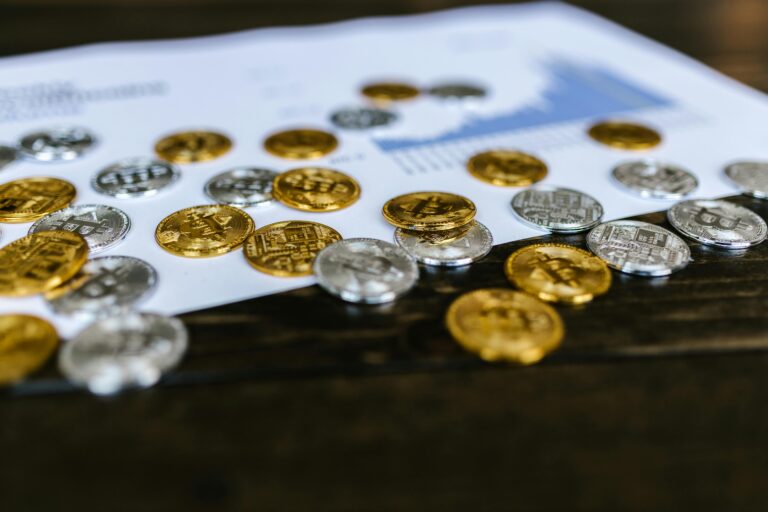
Navigating volatile markets, astute investors found solace and strong returns in precious metals during 2025. Discover why gold and silver remain crucial for wealth preservation.
2025 Precious Metals Surge Confirms Investor Portfolio Resilience
The financial landscape of 2025 presented a complex tapestry of global economic shifts, policy uncertainties, and persistent geopolitical tensions. Amidst this intricate environment, investors seeking stability and growth often turned their gaze towards perennial safe-haven assets. The year concluded with a notable softening in gold (XAU) and silver (XAG) prices, primarily attributed to the thin liquidity typical of year-end trading and lingering uncertainties surrounding the Federal Reserve’s monetary policy path. However, this minor dip scarcely overshadowed the robust gains accumulated by both commodities throughout 2025, setting a compelling precedent for potential further upside in 2026. The strong performance of these precious metals in the preceding year, coupled with unresolved global risks and supportive technical indicators, suggests that the year-end consolidation may merely be a strategic pause before another significant advance.
For investors focused on building and preserving wealth, understanding the dynamics of the precious metals market is paramount. These assets have historically offered a hedge against inflation, currency devaluation, and economic instability. The insights from the past year, particularly the drivers behind the substantial growth, offer valuable lessons for positioning a portfolio for future challenges and opportunities. As we delve into the specifics, we will explore the macroeconomic factors, geopolitical catalysts, and technical structures that underpinned the 2025 rally and continue to influence the outlook for gold and silver in the coming year. This comprehensive analysis aims to equip ‘Work to Wealth’ readers with the knowledge needed to make informed decisions regarding their investments in these vital commodities.
The Remarkable 2025 Performance of Precious Metals
The year 2025 was undeniably a strong period for precious metals, defying various market headwinds to deliver significant year-on-year growth. This surge was not a singular event but rather the culmination of several powerful macroeconomic and political forces converging to bolster demand for safe-haven assets. Gold, in particular, saw its price trade around $4,320 at the close of the year, a testament to its enduring appeal during times of uncertainty.
One of the primary catalysts for the impressive performance of gold and silver in 2025 was the introduction of a sweeping global tariff policy by the U.S. President in April. Such protectionist measures, while aimed at domestic economic benefits, invariably introduce volatility and uncertainty into global trade relations. This uncertainty often translates into increased demand for assets perceived as stable stores of value, with gold and silver being prime beneficiaries. Investors, fearing potential trade wars, supply chain disruptions, and inflationary pressures, allocated capital into these metals as a protective measure against potential economic fallout.
Beyond the policy-driven demand, institutional activity played a pivotal role. Central banks across the globe engaged in record buying of gold throughout 2025. This sustained accumulation by monetary authorities signifies a strategic shift towards diversifying reserves away from traditional fiat currencies, recognizing gold’s role as a universally accepted and unencumbered asset. Central bank demand provides a strong foundational support for gold prices, reflecting a long-term confidence in its value. This institutional buying spree underscored the enduring belief in gold’s status as a reliable asset, independent of short-term market fluctuations.
Simultaneously, the retail and institutional investor landscape witnessed surging demand for gold-backed Exchange Traded Funds (ETFs). These financial instruments offer an accessible and liquid way for investors to gain exposure to physical gold without the complexities of direct ownership. The increased inflows into these ETFs indicated a broad-based investor appetite for gold, reflecting a desire to hedge against various risks, including inflation and market volatility. This combination of policy-induced uncertainty, record central bank purchases, and robust ETF demand created a powerful tailwind that propelled gold and silver to their impressive 2025 valuations, solidifying the argument for including precious metals in a diversified portfolio.
Navigating Federal Reserve Uncertainty and its Impact on Precious Metals
The Federal Reserve’s monetary policy is a critical determinant for the trajectory of precious metals, particularly gold. The end of 2025 was marked by significant Fed uncertainty, a factor that contributed to the slight softening in gold and silver prices. The minutes from the Federal Open Market Committee (FOMC) meetings revealed a divergence of opinions among members regarding the future path of interest rates. Some officials advocated for a pause in rate adjustments, acknowledging the potential for inflation to continue easing, while others expressed a willingness to implement further cuts if economic data supported such a move. This lack of a clear, unified stance injected a degree of unpredictability into the market, prompting cautious investor behavior.
For non-yielding assets like gold, interest rate policy carries substantial weight. When interest rates rise, the opportunity cost of holding gold—which does not pay dividends or interest—increases. Investors might opt for higher-yielding alternatives such as bonds or interest-bearing accounts. Conversely, when interest rates are expected to fall, or when the real interest rate (nominal rate minus inflation) is low or negative, gold becomes more attractive. In a low-rate environment, the appeal of holding a safe, non-depreciating asset like gold intensifies as the return from conventional fixed-income investments diminishes.
The mixed signals from the Fed in late 2025 created a scenario where investors were weighing the likelihood of continued monetary tightening against the potential for an easing cycle. If the Fed were to pursue further rate cuts, it would likely weaken the U.S. dollar and reduce the real return on dollar-denominated assets, thereby increasing the allure of gold. A weaker dollar makes gold cheaper for international buyers, further boosting demand. Conversely, a hawkish stance, leading to higher rates, could temper gold’s appeal. Historically, periods of significant shifts in Fed policy have often heralded corresponding movements in the precious metals market, making the central bank’s actions a focal point for investors.
Looking ahead, the ongoing debate within the FOMC underscores the necessity for investors to remain vigilant. The Fed’s eventual decision on interest rates will be heavily influenced by inflation trends, employment data, and overall economic growth. Any clearer indication of the Fed’s future direction—whether towards sustained easing or a more restrictive stance—will undoubtedly have a profound and immediate impact on the prices of gold and silver. This sensitivity to monetary policy reinforces the need for a dynamic investment strategy, one that acknowledges and adapts to the evolving financial landscape shaped by central bank decisions. For wealth builders, integrating this understanding into their portfolio planning is crucial for optimizing returns and managing risk associated with precious metals.
Geopolitical Winds: Sustained Safe-Haven Demand for Precious Metals
Beyond economic indicators and monetary policy, the global geopolitical landscape played a profound role in driving demand for precious metals throughout 2025 and continues to provide an underlying layer of support. In an increasingly interconnected yet volatile world, political instability, regional conflicts, and diplomatic tensions often prompt investors to seek the perceived safety and reliability of gold and silver. These metals act as a traditional hedge against global uncertainty, a physical asset that historically retains value when fiat currencies or equities face stress.
The year 2025 saw a continuation of significant geopolitical flashpoints, dampening hopes for global peace and stability. The conflict between Russia and Ukraine, far from abating, showed renewed intensity. Reports of attacks on Russian leadership sites suggested a dangerous escalation, dimming prospects for an imminent resolution. Such developments immediately heighten risk aversion in financial markets. Investors, concerned about the broader economic and political ramifications of an protracted conflict, instinctively gravitate towards safe-haven assets. The fear of contagion, supply chain disruptions, and increased defense spending all contribute to this flight to quality, making precious metals an attractive destination for capital.
Concurrently, instability in the Middle East significantly escalated, adding another layer of geopolitical risk. The declaration of full-scale war by Iran and subsequent Saudi air strikes in Yemen marked a dangerous expansion of regional conflicts. The Middle East, being a critical region for global energy supply, means that any significant escalation there has immediate global implications for oil prices, trade routes, and diplomatic relations. Such events inherently create an environment of uncertainty and fear, making assets like gold and silver indispensable components of a crisis-resilient portfolio. The unresolved nature of these conflicts, along with the potential for further escalations, ensures a continued baseline demand for precious metals as a hedge against future shocks.
The consolidation of gold at high levels in late 2025, despite minor pullbacks, strongly indicates that these geopolitical risks are far from resolved and remain potent drivers. The market views these metals not just as financial instruments but as essential buffers against systemic risks that can erode wealth. For a wealth-focused investor, understanding this intrinsic link between global instability and the appeal of gold and silver is fundamental. Holding a strategic allocation of precious metals can offer crucial portfolio diversification, providing a counterbalance to more volatile assets during times of global strife and economic uncertainty. The psychological aspect of knowing one holds a tangible asset, universally valued, provides a significant sense of security in an unpredictable world.
Understanding Precious Metals Technical Analysis: Gold Outlook
Beyond fundamental drivers, technical analysis offers valuable insights into the probable future price movements of precious metals by examining historical price action and chart patterns. For gold, the daily chart analysis at the end of 2025 revealed a fascinating technical structure: the price had reached the support level of an ascending broadening wedge pattern. This pattern, characterized by expanding price ranges and higher highs and higher lows, typically signals increasing volatility and often precedes a significant move. The late 2025 price fall was largely due to year-end profit-taking and thin liquidity, common occurrences that can temporarily distort underlying trends.
As 2026 commenced, the gold market found strong technical support. Key levels to watch for investors include the $4,200 mark. A decisive break below this would signal further downside potential, possibly towards the psychological $4,000 level. Such a move would indicate a more significant corrective phase. Conversely, the respect of support around $4,300 and a subsequent break above the $4,400 resistance would re-establish buying pressure, potentially pushing prices towards the $4,600 region. The overarching sentiment, however, remains bullish as long as the price stays above $4,000, suggesting that the long-term upward trend for gold is intact for 2026.
A closer look at the 4-hour chart provides more granular detail on immediate price action. This chart showed that gold had broken below a critical red support zone at the $4,360 level. However, the price then found consolidation above a black dotted trendline support, which held firm in the $4,200 to $4,250 region. A breach of this trendline support would likely trigger another decline in early 2026. However, if this support holds, it is highly probable to induce another wave of buying momentum. For investors, these technical levels are not just arbitrary numbers; they represent potential entry and exit points, as well as crucial indicators of market sentiment. Understanding these patterns allows for a more strategic approach to investing in precious metals, enabling decisions based on both fundamental strength and short-to-medium-term price dynamics.
Understanding Precious Metals Technical Analysis: Silver Outlook
Silver, often referred to as “poor man’s gold,” shares many of gold’s safe-haven characteristics but also possesses significant industrial demand, making its price dynamics slightly more complex. From a technical perspective, the daily chart for spot silver indicated that the price encountered strong resistance at the $84 level on December 29, 2025. This resistance proved formidable, leading to a subsequent price decline. Such strong resistance zones often represent areas where a large volume of selling orders are accumulated, preventing further upward movement until sufficient buying pressure overcomes them.
Following this encounter with resistance, silver’s price began testing a good support level around $70. This level is crucial for maintaining the bullish outlook. A break below $70 would signal further downside potential, possibly leading to a test of the stronger support zone situated between $60 and $65. This wider support band signifies a more robust area where buyers are historically inclined to step in, preventing a deeper decline. As long as the $60 support holds, the long-term outlook for silver remains favorable, with the potential for prices to advance significantly towards the $100 region in 2026.
The 4-hour chart for spot silver provides additional short-term insights. It also highlighted the strong resistance area of $83 to $85, from which the price retreated. Post-retreat, silver continued to consolidate above the $70 area. Similar to the daily chart analysis, a definitive break below $70 on the 4-hour chart would likely trigger another drop towards the $60 region. However, the overall technical picture for silver, much like gold, remains bullish, suggesting that the recent correction is primarily due to profit-taking activities during the holiday period rather than a fundamental shift in market sentiment. For investors considering precious metals, silver offers a compelling proposition due to its dual nature as both a monetary metal and an industrial commodity, making its technical levels and trends particularly insightful for strategic positioning.
The US Dollar’s Influence on Precious Metals
The U.S. Dollar Index (DXY) holds a significant inverse relationship with precious metals. As gold and silver are primarily priced in U.S. dollars, a weakening dollar generally makes these commodities more affordable for international buyers holding other currencies, thereby boosting demand and prices. Conversely, a strengthening dollar typically exerts downward pressure on precious metal prices. Therefore, analyzing the technical outlook of the USD Index provides crucial context for understanding the potential movements of gold and silver.
At the close of 2025, the daily chart of the USD Index showed that it continued to trade below both its 50-day and 200-day Simple Moving Averages (SMAs). This configuration is generally interpreted as a bearish signal, indicating that the dollar is in a downtrend. Furthermore, the 50-day SMA was observed to be meeting the 200-day SMA, a convergence that often points to price uncertainty and signals a pending significant move in the USD Index. Such a “golden cross” or “death cross” scenario, depending on which way they cross, can be a powerful indicator for future trends. While the overall picture remained bearish, a definitive break below the 96.50 level would be required to trigger further significant downside in the USD Index, suggesting that while weakened, it held some immediate support.
The 4-hour chart for the US Dollar Index offered a more immediate perspective, revealing the formation of a double top pattern at the 100.50 level. A double top is a bearish reversal pattern, indicating that an uptrend is likely to reverse. The index subsequently broke the neckline of this double top pattern at the 99 level, a strong bearish signal that usually portends further declines. Following this break, the index continued its downward trajectory. A move below the 97.50 level would further confirm this bearish momentum, pushing the index towards the 96.50 level. Conversely, a recovery above the 99 level would negate the bearish pattern and suggest potential upside towards 100.50. The index’s consolidation in a tight range signifies a period of indecision, and a breakout from this range, in either direction, will largely dictate the next significant move for both the dollar and, by extension, the precious metals market. Investors in gold and silver must therefore closely monitor the dollar’s performance as a key external factor influencing their investment value.
Integrating Precious Metals into Your Wealth Strategy
For individuals committed to the ‘Work to Wealth’ philosophy, integrating precious metals into a broader wealth strategy is not merely about chasing short-term gains but about building a resilient and diversified portfolio. The strong performance of gold and silver in 2025, coupled with ongoing global uncertainties, underscores their vital role as foundational assets in long-term wealth preservation and growth. These metals offer several unique benefits that complement traditional equity and bond investments.
One of the primary advantages of precious metals is their role in portfolio diversification. They often exhibit a low or inverse correlation with other major asset classes, such as stocks and real estate. This means that when equities are declining, gold and silver may hold their value or even increase, providing a crucial hedge against market downturns. This uncorrelated behavior helps to reduce overall portfolio volatility and enhance risk-adjusted returns, contributing to a more stable wealth accumulation journey.
Furthermore, gold, in particular, has historically served as an excellent inflation hedge. During periods of rising prices, when the purchasing power of fiat currencies erodes, gold often performs well, preserving the real value of an investor’s capital. This characteristic is particularly relevant in an era where central banks have expanded their balance sheets and global fiscal policies could lead to inflationary pressures. For those concerned about maintaining their purchasing power over decades, a strategic allocation to precious metals can be a powerful antidote to inflationary erosion.
Precious metals are also considered a reliable store of value. Unlike paper currencies that can be devalued by government policy, gold and silver have intrinsic value derived from their scarcity, industrial uses, and historical acceptance as money. This makes them a tangible asset, providing a sense of security during times of economic or political turmoil. Many financial advisors suggest allocating a small but significant portion of a portfolio, typically between 5% and 15%, to precious metals. This allocation is usually not for aggressive growth but for capital preservation and as an insurance policy against unforeseen macroeconomic or geopolitical events.
Investors can gain exposure to precious metals through various avenues, including physical bullion (coins, bars), gold-backed ETFs, mining stocks, or futures contracts. Each method has its own set of pros and cons regarding liquidity, storage costs, and risk profile. For most long-term wealth builders, physical ownership or well-regulated ETFs offer the most straightforward and secure ways to participate in the precious metals market. The key is to adopt a long-term perspective, understanding that while short-term volatility is inevitable, the fundamental role of gold and silver in a balanced portfolio remains robust. By carefully considering these factors, investors can leverage the timeless appeal of precious metals to fortify their financial future.
Future Outlook and Strategic Considerations for Precious Metals
As we move further into 2026, the overarching outlook for precious metals, particularly gold and silver, appears constructive. While the closing days of 2025 saw some price softening due to liquidity issues and Federal Reserve ambiguity, the underlying bullish drivers remain firmly in place. The strong year-on-year gains experienced in 2025 were a clear signal of investor confidence in these assets during turbulent times, a sentiment likely to persist.
The continued uncertainty surrounding the Federal Reserve’s interest rate policy will be a pivotal factor. Should the Fed lean towards a more dovish stance, implying potential rate cuts or a prolonged pause, the opportunity cost of holding non-yielding assets like gold would decrease, making them more attractive. Conversely, a stronger dollar, influenced by hawkish Fed rhetoric, could provide temporary headwinds. Therefore, staying attuned to central bank communications and economic data releases will be crucial for investors.
Geopolitical risks, unfortunately, show little sign of abating. The ongoing conflicts in Eastern Europe and the escalating tensions in the Middle East serve as constant reminders of the inherent instability in the global political landscape. These persistent threats to global peace and economic stability will continue to fuel demand for safe-haven assets, providing a resilient floor for gold and silver prices. The role of these metals as an ultimate hedge against geopolitical turmoil cannot be overstated.
Technically, both gold and silver demonstrate supportive structures despite recent pullbacks. Gold’s consolidation at key support levels and silver’s ability to hold above significant areas suggest that the underlying bullish momentum is largely intact. These technical foundations, combined with strong fundamental drivers, indicate that the path of least resistance for precious metals is likely to be upward in 2026, assuming no drastic shifts in the macroeconomic or geopolitical environment.
For ‘Work to Wealth’ readers, the message is clear: precious metals are not merely speculative assets but essential components of a diversified, resilient portfolio designed for long-term growth and protection. Their ability to hedge against inflation, offer a safe haven during crises, and provide diversification benefits makes them invaluable. A strategic allocation, continuously reviewed in light of global developments, can significantly enhance portfolio stability and contribute to the successful accumulation and preservation of wealth. Informed decision-making, coupled with a long-term perspective, will be key to harnessing the enduring power of gold and silver in the years to come.
Frequently Asked Questions
How can I protect my portfolio from Federal Reserve policy shifts impacting precious metals?
To protect your portfolio, closely monitor Federal Reserve announcements and economic data. When interest rates are expected to fall or remain low, precious metals become more attractive due to a lower opportunity cost. Conversely, rising rates may make other investments more appealing. Diversifying your holdings beyond just precious metals and adjusting your allocation based on clear directional signals from the Fed can help mitigate risks. Understanding the inverse relationship between the U.S. Dollar Index and precious metals is also crucial.
What caused the significant growth in precious metals during 2025, and will it continue?
The strong growth in 2025 for precious metals was driven by a combination of factors: U.S. global tariff policies creating safe-haven demand, record buying by central banks, and surging investor interest in gold-backed ETFs. These factors are expected to largely persist in 2026. Ongoing geopolitical tensions and Federal Reserve uncertainty continue to provide a supportive environment, suggesting that the consolidation seen at the end of 2025 may indeed set the stage for further upside.
How do global conflicts and geopolitical risks affect my precious metals investments?
Global conflicts, such as the ongoing Russia-Ukraine situation and Middle East instability, significantly boost demand for precious metals. These events create uncertainty in financial markets, leading investors to seek safe-haven assets like gold and silver. Such geopolitical risks often act as a resilient floor for prices, as they are perceived as stable stores of value when other assets become volatile. For a diversified portfolio, these metals provide a crucial hedge against global instability.
Is the recent dip in gold and silver prices a cause for concern for my investment strategy?
The slight dip in gold and silver prices at the end of 2025 was primarily attributed to thin year-end liquidity and Federal Reserve uncertainty, rather than a fundamental shift in market conditions. Technical analysis suggests that these metals are consolidating at high levels, with strong support zones in place. This correction is likely due to profit-taking and does not necessarily indicate a reversal of the overall bullish trend. For long-term investors, such dips can represent potential buying opportunities in precious metals.
What role should precious metals play in a long-term wealth building portfolio?
In a long-term wealth building portfolio, precious metals serve primarily as a tool for diversification, an inflation hedge, and a reliable store of value. They often have a low correlation with traditional assets like stocks and bonds, helping to reduce overall portfolio volatility and protect against market downturns. A strategic allocation, typically between 5% and 15% of your total portfolio, can enhance stability and preserve purchasing power over time, contributing to robust wealth accumulation.