

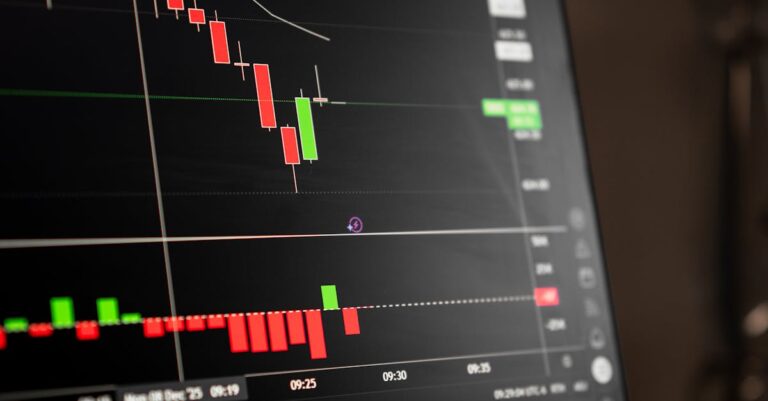
Market volatility, driven by rising bond yields and inflation fears, presents unique challenges for investors. Learn how to safeguard your portfolio and find growth opportunities in uncertain times for lasting financial peace.
Navigating Market Volatility: Protecting Your Portfolio When Yields Climb
Recent market action has left many investors with a palpable sense of unease. Futures contracts linked to major indices like the S&P 500 and Nasdaq have experienced declines, signaling a cautious sentiment as traders grapple with a confluence of economic and geopolitical factors. This period of heightened market volatility, marked by rising bond yields and persistent inflation concerns, presents both challenges and crucial opportunities for those committed to building long-term wealth. For the ‘Work to Wealth’ community, understanding these dynamics is not just academic; it’s fundamental to making informed decisions that protect and grow your hard-earned capital.
The broad market index and the technology-heavy Nasdaq Composite have recently posted consecutive losing sessions. This downturn is largely attributed to the ascent of U.S. Treasury yields, which have soared to levels not seen in nearly two decades. When bond yields climb, they exert significant pressure on equity markets, making future corporate earnings appear less attractive in comparison to the “risk-free” return offered by government debt. This article delves into the core drivers of this market turbulence, providing a roadmap for how individuals can navigate these choppy waters, reinforce their financial foundations, and identify pathways to continued prosperity.
Understanding the Pressures: Rising Yields and Inflation Fears Fueling Market Volatility
The most significant headwind for the equity markets in recent weeks has been the dramatic rise in U.S. Treasury yields. According to a prominent financial news outlet, the 30-year U.S. Treasury yield briefly topped 5.19%, reaching its highest level in almost 19 years, while the 10-year Treasury yield also surged, at one point hitting 4.687%. These movements are not isolated events; they are a direct consequence of persistent inflation data and the market’s evolving expectations for central bank policy.
When inflation appears to be “reigniting,” as indicated by a series of recent economic reports, central banks are often compelled to maintain or even increase interest rates. Higher interest rates are a tool used to cool down an overheating economy by making borrowing more expensive, thereby reducing demand and theoretically bringing down prices. However, this policy also has a profound impact on the stock market.
The Mechanism of Yield Impact on Equities
The relationship between bond yields and stock valuations is intricate but crucial to grasp. Bonds represent a relatively low-risk investment, particularly U.S. Treasury bonds, which are backed by the full faith and credit of the government. When the yield on these safe investments rises, they become more competitive with stocks. Investors might shift capital from equities to bonds, seeking a guaranteed return that is now more appealing.
Furthermore, higher interest rates increase the cost of capital for businesses. Companies often rely on debt to fund expansion, operations, and acquisitions. When borrowing costs rise, it can squeeze profit margins and dampen future growth prospects. For growth companies, whose valuations are heavily dependent on projected future earnings, higher discount rates (driven by rising yields) reduce the present value of those future profits, leading to a downward revaluation of their stock prices. This is particularly true for sectors like technology, which often rely on significant capital investment and future growth expectations.
The market’s anticipation of the central bank’s next moves, often gleaned from economic reports and official meeting minutes, plays a critical role. Traders closely scrutinize every piece of data, from inflation figures to employment numbers, trying to predict the trajectory of interest rates. This constant recalibration of expectations can lead to swift and sometimes dramatic market shifts, creating an environment ripe for market volatility.
The AI Narrative and Earnings Season: A Deep Dive into Tech and Beyond
Amidst the broader macroeconomic concerns, the earnings season offers a granular look into corporate health, capable of moving individual stocks and even entire sectors. A significant focal point for investors has been the upcoming first-quarter earnings report from a leading chipmaker, a company widely recognized as an artificial intelligence (AI) darling. This particular firm has been a powerhouse, contributing a substantial portion of the broad market index’s returns and earnings growth in the past year.
The performance of this chipmaker is viewed as a bellwether for the entire AI infrastructure buildout. Its results provide critical insights into demand for advanced processing chips, a fundamental component of the AI revolution. A strong report could rekindle investor enthusiasm for the technology sector, while a disappointing one could exacerbate existing market anxieties. This highlights the concentrated risk and reward often associated with high-growth narratives.
Beyond the AI Spotlight: Diverse Earnings Reports
While the focus on AI is intense, the earnings season is much broader. Several other major companies, spanning various industries, have also reported or are scheduled to report their quarterly results. These include major retailers, homebuilders, restaurant chains, and technology solutions providers. Their performance offers a more diversified perspective on the economic landscape.
- Retailers: Reports from prominent retail establishments provide insights into consumer spending habits, which are a cornerstone of economic activity. Strong sales figures could suggest consumer resilience despite inflationary pressures, while weaker results might signal a pullback.
- Homebuilders: The housing market is particularly sensitive to interest rates. A leading homebuilder’s strong fiscal second-quarter earnings and revenue beat, for example, suggests pockets of strength even as mortgage rates climb. This could be due to specific market niches or effective cost management.
- Restaurant Chains: The performance of restaurant operators reflects discretionary spending. A popular fast-casual chain, for instance, raised its adjusted earnings guidance and beat expectations, indicating robust customer demand and successful operational strategies. Similarly, a well-known gourmet burger chain surpassed earnings forecasts, showcasing a resilient customer base and potentially effective pricing strategies.
- Technology Solutions Providers: Beyond the high-profile chipmakers, other technology firms provide crucial electronic design, emulation, and test solutions. A company in this space guiding for higher current-quarter revenue and adjusted earnings per share, along with raised full-year guidance, underscores continued demand for specialized tech services.
These varied reports demonstrate that even in a challenging macroeconomic environment characterized by market volatility, well-managed companies with strong value propositions can still deliver positive results. This underscores the importance of fundamental analysis and selective investing, rather than making broad assumptions based solely on market headlines.
Geopolitical Tensions: An Unpredictable Factor in Global Markets
Adding another layer of complexity to the current market environment are escalating geopolitical tensions. Reports of renewed conflicts and the risk of escalation in key global regions can send ripples through financial markets, increasing uncertainty and prompting investors to seek safer assets. For instance, recent developments concerning a major oil-producing nation and the potential for military action underscore how quickly sentiment can shift.
Geopolitical events impact markets in several ways:
- Oil Prices: Tensions in oil-rich regions can directly affect global oil supply, leading to price spikes. Higher energy costs feed into inflation, creating a feedback loop that can further pressure central banks to maintain restrictive monetary policies.
- Supply Chains: Conflicts can disrupt international trade routes and supply chains, leading to shortages and increased costs for businesses, which ultimately impact consumer prices.
- Investor Confidence: Uncertainty breeds caution. When geopolitical risks rise, investors tend to reduce exposure to riskier assets like stocks and flee to perceived safe havens such as government bonds or gold. This flight to safety can temporarily depress equity valuations.
- Currency Fluctuations: Geopolitical events can cause significant shifts in currency values, impacting international trade and the profitability of multinational corporations.
The interconnectedness of the global economy means that events far from home can have tangible effects on one’s investment portfolio. While individual investors have little control over geopolitical developments, understanding their potential impact is crucial for prudent portfolio management during periods of elevated market volatility. It reinforces the need for diversification and potentially adjusting exposure to regions or sectors most vulnerable to such risks.
Navigating Market Volatility: Core Principles for Long-Term Wealth Building
In an environment marked by rising yields, inflation fears, and geopolitical tensions, adopting a disciplined and strategic approach is paramount for ‘Work to Wealth’ members. While short-term market movements can be unsettling, focusing on time-tested principles can help safeguard your capital and position you for future growth.
The Power of Diversification
One of the most fundamental principles of investing, and especially critical during periods of market volatility, is diversification. This involves spreading your investments across various asset classes (stocks, bonds, real estate, commodities), different industries or sectors, and even diverse geographic regions.
The recent market performance, where some sectors like healthcare, energy, and utilities showed gains while materials, communication services, and consumer discretionary lagged, perfectly illustrates the benefit of diversification. A portfolio heavily concentrated in one sector, particularly one sensitive to interest rates or consumer spending, would have faced greater headwinds. By diversifying, you reduce the impact of any single asset class or sector performing poorly, smoothing out overall portfolio returns.
Dollar-Cost Averaging: Your Ally Against Timing the Market
Trying to perfectly time the market—buying at the absolute bottom and selling at the absolute top—is notoriously difficult, even for seasoned professionals. Dollar-cost averaging (DCA) is a strategy that removes the emotion from this process. It involves investing a fixed amount of money at regular intervals, regardless of whether the market is up or down.
When prices are high, your fixed investment buys fewer shares; when prices are low, it buys more. Over time, this strategy helps to average out your purchase price and reduces the risk of investing a large sum at an unfortunate peak. In a period of market volatility, DCA is particularly effective because it allows you to capitalize on downturns by acquiring more assets at lower prices, which can significantly boost your returns when the market eventually recovers.
Rebalancing for Risk Management
As market conditions change, the allocation of your portfolio across different asset classes will naturally shift. For example, if stocks have had a strong run, they might come to represent a larger percentage of your portfolio than your original target allocation. Rebalancing is the process of adjusting your portfolio back to its original target asset allocation by selling off some of the overperforming assets and buying more of the underperforming ones.
This disciplined approach helps in two key ways: it ensures your portfolio’s risk level remains consistent with your personal risk tolerance, and it forces you to “buy low and sell high” by taking profits from winners and adding to laggards that may be poised for a rebound. Rebalancing is an essential tool for managing risk and capturing opportunities during periods of market volatility.
Focusing on Fundamentals and Quality
During market downturns, the true quality of a company’s fundamentals comes into sharper focus. Companies with strong balance sheets, consistent earnings, manageable debt, and robust competitive advantages tend to weather economic storms better than their weaker counterparts. Rather than chasing speculative trends, ‘Work to Wealth’ investors should concentrate on identifying and holding shares in businesses that demonstrate intrinsic value.
This approach involves diligent research, understanding a company’s business model, its industry position, and its long-term growth prospects. While even high-quality stocks can experience price declines in a broad market sell-off, they often recover more quickly and reliably.
Embracing a Long-Term Vision
Perhaps the most crucial principle during periods of market volatility is maintaining a long-term perspective. The financial markets have historically rewarded patient investors who stay invested through cycles of booms and busts. Short-term market fluctuations, while anxiety-inducing, are a normal part of the investing landscape.
Panicking and selling off investments during a downturn often locks in losses and prevents participation in the inevitable rebound. Instead, view these periods as opportunities to refine your strategy, perhaps by increasing contributions or reallocating assets, all with an eye toward your multi-decade financial goals.
Assessing and Managing Your Personal Risk Tolerance
Your financial plan should always align with your personal risk tolerance—how much market fluctuation you can emotionally and financially withstand without abandoning your strategy. In times of market volatility, it’s beneficial to revisit this assessment.
Are you losing sleep over your portfolio? If so, your current asset allocation might be too aggressive. It’s perfectly acceptable to adjust your holdings to a more conservative mix if it helps you stick to your plan. The goal is to build wealth steadily, not to experience undue stress that leads to rash decisions. Understanding your comfort level with risk is a cornerstone of effective personal finance.
The Role of Economic Data and Central Bank Policy
Staying informed about macroeconomic developments and central bank actions is not just for professional traders; it’s vital for every investor. The minutes from central bank meetings, such as the Federal Reserve’s April meeting, are eagerly awaited because they provide valuable clues about the future path of monetary policy. These minutes often reveal the discussions and differing viewpoints among policymakers regarding inflation, economic growth, and interest rates.
Understanding the central bank’s stance is critical because its decisions on interest rates directly influence everything from mortgage rates and corporate borrowing costs to the attractiveness of bonds versus stocks. When the central bank signals a hawkish (pro-rate hike) stance, it typically puts downward pressure on stock prices, especially growth stocks. Conversely, a dovish (pro-rate cut) stance can be a tailwind for equities.
Beyond central bank communications, key economic reports such as Consumer Price Index (CPI) for inflation, Producer Price Index (PPI), Gross Domestic Product (GDP), and employment reports offer a snapshot of the economy’s health. Interpreting these indicators allows investors to anticipate potential shifts in monetary policy and adjust their investment strategies accordingly. For instance, strong inflation data often suggests a central bank might maintain higher rates for longer, potentially prolonging periods of market volatility.
Opportunities Amidst Disruption: Identifying Growth in a Shifting Landscape
While market downturns can be unsettling, they also frequently present compelling opportunities for astute investors. Periods of market volatility often lead to mispricing of assets, creating scenarios where high-quality companies may trade below their intrinsic value.
Value Investing in a Turbulent Market
A core tenet of value investing is to identify companies that are trading at a discount relative to their fundamental worth. In a broad market sell-off, even fundamentally sound businesses can see their stock prices depressed. This environment allows patient investors to acquire shares in strong companies at more attractive valuations. Value stocks, often characterized by stable earnings, robust dividends, and lower price-to-earnings ratios, can offer a degree of resilience during periods when high-growth stocks are struggling due to rising interest rates.
Growth Sectors Resilient to Economic Headwinds
While the tech sector broadly may face headwinds from rising rates, specific areas within technology or other growth sectors might demonstrate resilience or even thrive. Innovation doesn’t stop during economic downturns; it often accelerates. Companies developing essential technologies, particularly in areas like cybersecurity, sustainable energy solutions, or specific niches within AI, may continue to experience strong demand regardless of broader economic sentiment. Identifying these pockets of enduring growth requires diligent research and an understanding of long-term trends.
Considering Alternative Investments
For some investors, exploring alternative investments can be part of a diversification strategy. These might include real estate investment trusts (REITs), certain commodities, or even private equity for eligible investors. Alternatives often have a lower correlation with traditional stock and bond markets, potentially offering portfolio stability and different sources of return during periods of conventional market volatility. However, alternatives often come with their own unique risks and liquidity considerations, requiring careful due diligence.
Building a Resilient Portfolio: Actionable Steps for ‘Work to Wealth’ Members
Transforming market insights into actionable steps is crucial. For members of the ‘Work to Wealth’ community, a proactive approach during periods of market volatility can significantly impact long-term financial success.
1. Review and Refine Your Financial Plan
A market downturn is an excellent time to revisit your comprehensive financial plan. Are your investment goals still aligned with your current situation and time horizon? Is your asset allocation appropriate for your revised risk tolerance? A well-defined plan acts as your compass, guiding your decisions and preventing emotional reactions to market noise.
2. Establish and Maintain an Emergency Fund
Before significantly increasing investment contributions, ensure you have a robust emergency fund. This liquid cash reserve, typically covering three to six months of living expenses, is your first line of defense against unexpected financial challenges. It prevents you from being forced to sell investments at an inopportune time to cover emergencies, especially during periods of negative market volatility.
3. Minimize High-Interest Debt
With interest rates on the rise, carrying high-interest debt (like credit card balances) becomes even more financially burdensome. Prioritizing the reduction or elimination of such debt can provide a guaranteed “return” in the form of saved interest payments, often far exceeding potential investment returns in a volatile market.
4. Stay Informed, But Avoid Over-Obsessing
While it’s important to understand market drivers and economic news, constantly checking your portfolio or following every minute market fluctuation can lead to stress and impulsive decisions. Choose a few reputable financial news sources, stay informed on major trends, but focus your energy on your long-term strategy rather than daily noise.
5. Consider Professional Guidance
If the complexities of market dynamics feel overwhelming, or if you’re unsure how to best position your portfolio, seeking advice from a qualified financial advisor can be invaluable. A professional can help you assess your situation, formulate a tailored strategy, and provide a disciplined perspective during periods of heightened market volatility.
Conclusion: Sustained Growth Through Prudent Action
The current market environment, characterized by rising bond yields, persistent inflation concerns, and unpredictable geopolitical tensions, undoubtedly presents challenges. Major indices have seen declines, and the earnings reports from bellwether companies continue to provide critical insights into the health of various sectors. However, for those committed to the ‘Work to Wealth’ philosophy, this period of market volatility is not merely a cause for anxiety, but a proving ground for sound investment principles.
By understanding the forces at play, such as the impact of higher interest rates on equity valuations and the significance of both macro and microeconomic data, investors can arm themselves with knowledge. Implementing strategies like diversification, dollar-cost averaging, and regular rebalancing can help mitigate risks and capture opportunities that arise when asset prices are depressed. Focusing on fundamentally strong companies and maintaining a long-term perspective are evergreen tenets that consistently reward patient investors.
Ultimately, building and protecting wealth is an ongoing journey that demands discipline, education, and resilience. By embracing these principles, even amidst the current market turbulence, ‘Work to Wealth’ members can confidently navigate present challenges and continue on their path toward lasting financial prosperity.
Frequently Asked Questions
How can rising bond yields impact my portfolio’s growth prospects?
Rising bond yields can exert downward pressure on stock prices, especially for growth companies, by making future earnings less valuable in present terms. As bonds offer a higher “risk-free” return, they become more competitive against stocks, potentially drawing capital away from equities. This can slow your portfolio’s growth if it’s heavily weighted towards interest-rate-sensitive assets. To mitigate this, consider diversifying across various asset classes and sectors, and focus on companies with strong fundamentals that can withstand higher borrowing costs.
What strategies help safeguard my wealth during increased market volatility?
To safeguard wealth during periods of increased market volatility, several strategies are highly effective. These include maintaining a diversified portfolio across different asset classes and industries, utilizing dollar-cost averaging to mitigate timing risk, and regularly rebalancing your portfolio to maintain your desired risk level. Additionally, focusing on investing in high-quality companies with strong balance sheets and consistent earnings can provide greater resilience. Having a robust emergency fund also prevents forced selling of investments during downturns.
Should I adjust my investment approach due to ongoing inflation fears?
Ongoing inflation fears warrant a review of your investment approach, though not necessarily a radical overhaul. Inflation erodes purchasing power, so your investments need to generate returns that outpace it. Consider investments that have historically performed well during inflationary periods, such as certain commodities, real estate, or value stocks. Companies with strong pricing power that can pass increased costs to consumers also tend to fare better. Ensure your portfolio is diversified to guard against the erosive effects of sustained inflation on specific asset classes.
How do geopolitical tensions create investor unease and what can I do?
Geopolitical tensions create investor unease by introducing unpredictability and potential disruptions to global trade, supply chains, and commodity prices, particularly oil. This uncertainty can lead to a “flight to safety,” where investors move capital out of riskier assets like stocks into government bonds or gold, causing market volatility. As an individual investor, you cannot control these events, but you can build a resilient portfolio through broad diversification, maintaining a long-term perspective, and ensuring your asset allocation aligns with your risk tolerance. Avoid emotional reactions to headlines.