

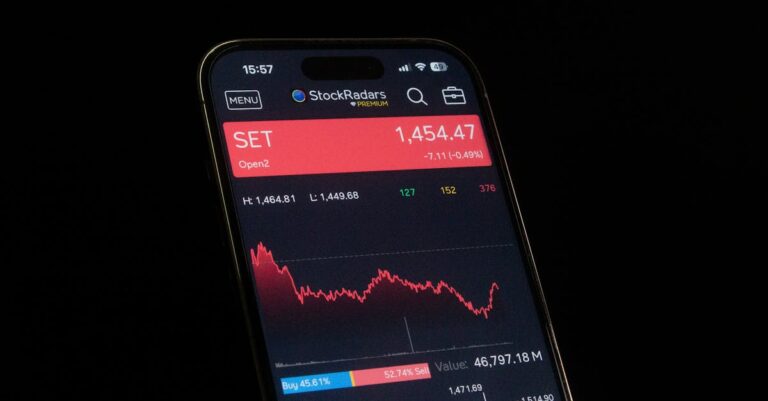
Confronting recent market volatility and economic shifts requires informed strategies. This guide offers insights for investors seeking resilience and long-term financial growth.
Recent shifts in the global financial landscape have presented investors with a complex tapestry of challenges and opportunities. From a significant tech sector sell-off to persistent inflationary pressures manifesting as rising interest rates, understanding these dynamics is paramount for anyone aiming to build and preserve wealth. This article delves into the latest market movements, expert opinions, and practical strategies to navigate these uncertain waters effectively. Understanding and managing market volatility is crucial for long-term financial success.
The financial headlines have been dominated by a pronounced tech sell-off, impacting major indices and individual portfolios alike. Concurrently, the cost of borrowing has escalated, with mortgage rates reaching multi-year highs. These macro trends, coupled with evolving geopolitical situations and company-specific earnings reports, paint a picture of a market in flux. For individuals committed to the ‘Work to Wealth’ philosophy, interpreting these signals and adapting financial plans is not just advisable, but essential.
The Tech Sector’s Tremors: From AI Hype to Job Cuts Amidst Market Volatility
The technology sector, a dominant force in recent market rallies, has recently experienced considerable turbulence. Reports indicate that futures tied to the S&P 500 and Nasdaq 100 experienced declines, following consecutive days of losses for the S&P 500 and Nasdaq Composite. This downturn was significantly influenced by a sell-off in memory chip stocks and broader concerns within artificial intelligence-adjacent companies.
A key catalyst for this specific tech downturn involved comments from the CEO of a prominent memory chip manufacturer. At a recent industry conference, the executive raised fears about the company’s ability to meet an escalating surge in demand driven by artificial intelligence. The remark that “building new factories would just take too long” underscored a potential supply constraint that sent ripples through the sector. The company’s stock dropped almost 7%, with a peer technology firm falling close to 6% in sympathy. This illustrates how quickly investor sentiment can shift, even in high-growth areas, if underlying fundamentals or logistical challenges emerge.
This incident highlights a critical aspect of the AI boom: while demand is soaring, the infrastructure and manufacturing capacity required to sustain it may not keep pace. Such supply-side limitations can quickly deflate investor enthusiasm, even in areas with immense growth potential. For investors, this serves as a potent reminder that even the most promising technological advancements are subject to real-world constraints and operational challenges. A healthy skepticism and a focus on viable execution are paramount when evaluating such opportunities.
Broader Implications: Tech Layoffs and Economic Health
Beyond specific stock movements, the technology sector is grappling with another significant challenge: widespread layoffs. A recent analysis from a recognized financial institution indicated that in April, a staggering 40% of all layoffs occurred within the information technology sector. This trend poses considerable risks for consumption growth and, by extension, overall U.S. economic growth, as a vital segment of the workforce faces uncertainty.
According to a leading strategist from the financial institution, “The engine of consumption growth from the ’80s onward — skilled professional services, filled by college grads — is gumming up.” The strategist further noted that “April’s layoffs were in Tech; the college grad u-rate is at recessionary levels.” This assessment suggests a fundamental shift in the labor market, where highly skilled professionals, historically insulated from economic downturns, are now facing increased job insecurity. This could have long-term consequences for disposable income and consumer confidence, which are critical drivers of economic expansion.
The wave of layoffs comes as industries across the board weigh the disruptive potential of artificial intelligence. Many publicly traded firms are integrating AI into their operations, often leveraging it to streamline processes and, in some cases, reduce staff. The market’s reaction to these workforce reductions, however, has been unpredictable, underscoring the deep uncertainty surrounding the widening adoption of AI. For individuals, this necessitates a proactive approach to career planning, skill development, and financial preparedness, emphasizing adaptability and continuous learning in a rapidly evolving job market.
Rising Interest Rates: A Direct Impact on Borrowing and Wealth Amidst Market Volatility
One of the most tangible recent economic shifts for many individuals has been the steady climb in interest rates. The average rate on a 30-year fixed mortgage, for instance, recently touched its highest level since July 2025, reaching 6.68%. This bump is significant, directly affecting the affordability of housing and the broader borrowing landscape. Such an increase can dramatically alter the calculations for purchasing a home or taking on new debt.
The movement of 30-year fixed mortgage rates is closely linked to the action in the 10-year Treasury yield. When the yield on the 10-year Treasury increases, as it recently did to 4.631% (its highest since February 2025), mortgage rates tend to follow suit. This correlation is crucial for understanding the mechanics behind borrowing costs. The Treasury market reflects broader investor expectations about inflation and economic growth, which in turn influence lending rates across the economy.
What Rising Rates Mean for Your Personal Finance Strategy
- Homeowners and Buyers: For prospective homebuyers, higher mortgage rates translate to significantly increased monthly payments, reducing purchasing power and potentially cooling demand in the housing market. An increase of even one percentage point can add hundreds of dollars to a monthly payment, making homeownership less accessible for many. Existing homeowners looking to refinance may find it less advantageous than in previous years, as current rates could be higher than their existing loan terms.
- Debt Management: For those with variable-rate debt, such as certain credit cards, home equity lines of credit (HELOCs), or some personal loans, rising benchmark rates can lead to higher interest charges. This means that the cost of carrying such debt increases, potentially straining monthly budgets. Prioritizing the repayment of high-interest debt becomes even more critical in such an environment to minimize the compounding effect of rising rates.
- Savings Accounts and CDs: On a more positive note, rising rates often mean better returns on savings accounts, money market accounts, and certificates of deposit (CDs). While often lagging behind loan rates, this can provide an opportunity for savers to earn more on their cash holdings, helping to offset some of the inflationary pressures. Reviewing your savings options and potentially moving funds to accounts with competitive yields is a wise step.
- Investment Portfolios: Higher interest rates can influence various asset classes. Growth stocks, particularly those in the tech sector, can be more sensitive to rising rates because their future earnings are discounted at a higher rate, making them less attractive in present value terms. This can lead to downward pressure on stock prices. Conversely, value stocks or dividend-paying companies might become more appealing as investors seek more stable income streams and less speculative growth. Fixed-income investments like bonds also see their yields rise, though existing bond prices may fall.
Understanding these impacts allows for informed decisions regarding debt, savings, and investment strategies, all of which are fundamental to a robust ‘Work to Wealth’ plan. Proactive adjustments can help mitigate the negative effects and even uncover new opportunities.
Global Market Dynamics and Geopolitical Influence on Market Volatility
While domestic economic factors are paramount, global events continue to shape market sentiment and performance. Recent geopolitical developments, such as the postponement of a planned attack by a major global power on a regional power in the Middle East, had an immediate effect on global markets. This news led to a slight easing of elevated oil prices, contributing to broadly higher openings in Asia-Pacific markets. Such events underscore how quickly global politics can impact financial stability.
Investors in Asia were also assessing key economic data. Japan’s first-quarter GDP data revealed a robust annualized growth of 2.1% in the first three months of the year, surpassing analyst expectations. This strong growth, however, did not fully capture the impact of regional conflicts which began later in the quarter, indicating potential future headwinds. Other markets presented a mixed picture: Japan’s Nikkei 225 saw marginal losses after early gains, while the Topix added 0.61%. South Korea’s Kospi and Kosdaq experienced sharper declines, whereas Australia’s S&P/ASX 200 gained, and mainland China’s CSI 300 traded flat.
Such divergence highlights the complex interplay of regional economic health, specific market characteristics, and the omnipresent influence of global political stability. For a diversified investor, these international dynamics underscore the importance of looking beyond domestic borders when constructing a resilient portfolio. Global events, even those far from home, can have tangible impacts on investment values and economic forecasts worldwide.
Corporate Performances and Investor Reactions Amidst Changing Conditions
Amidst the broader market movements, individual corporate earnings reports continue to provide crucial insights and drive significant stock movements. These reports often reflect company-specific strengths or weaknesses that can buck or amplify prevailing market trends. Understanding these micro-level dynamics is just as important as grasping macro-economic shifts.
For example, a hospitality software company saw its stock pop 16% after reporting strong fourth-quarter adjusted earnings and revenue that beat analyst expectations. The company also provided an optimistic full-year revenue guidance, further boosting investor confidence. This performance demonstrates that well-managed companies with strong operational fundamentals and clear growth strategies can thrive even in a challenging economic climate, rewarding investors who conduct thorough due diligence.
Conversely, a cloud computing and cybersecurity company experienced a 3% slip in shares after announcing a proposed offering of convertible senior notes. While such offerings can provide capital for growth or strategic acquisitions, they can also signal potential dilution for existing shareholders or be interpreted as a company taking on more debt, leading to cautious investor reactions. These contrasting examples illustrate the granular level at which corporate news can impact stock valuations, emphasizing the need for thorough due diligence when selecting individual investments and not relying solely on broad market sentiment.
Expert Perspectives on Market Direction: A Reality Check
As stocks have rallied to new highs in recent weeks, with major indices hitting fresh records, some experts believe that the market’s best days of rapid ascent might be behind us. A head of macro research and strategy at a prominent financial research center expressed this sentiment, stating that “From a positioning standpoint and how stretched things have gotten, probably means that you don’t see as sharp of the rallies that we were seeing certainly off the throes of the low in March.”
This perspective suggests that while the market may not necessarily enter a deep downturn, the era of easy, broad-based gains could be tapering off. Investors might need to prepare for a period of more moderate returns, increased volatility, and a greater emphasis on selective stock picking and strategic asset allocation rather than simply riding the wave of an expansive bull market. This implies a need for greater discernment and a more active approach to portfolio management.
“The market rally has already seen its best days. Investors should prepare for more measured returns and heightened selectivity.” — Kevin Gordon, Head of Macro Research and Strategy, Schwab Center for Financial Research
Strategies for Building Wealth Amidst Economic Shifts and Market Volatility
Given the multifaceted challenges and evolving economic landscape, a proactive and well-considered approach to financial planning is more critical than ever. The ‘Work to Wealth’ philosophy thrives on informed decision-making, resilience, and adaptability. Here are key strategies to consider for navigating the current environment.
Diversification Beyond Conventional Wisdom
While the tech sector has been a powerful engine of growth, its recent volatility underscores the dangers of overconcentration. True diversification involves spreading investments across various asset classes, industries, and geographies. This means not just different stocks, but also bonds, real estate, commodities, and potentially alternative investments, depending on your risk tolerance and financial goals. A truly diversified portfolio minimizes the impact of any single sector or asset class underperforming.
- Re-evaluate Sector Exposure: If your portfolio is heavily skewed towards technology, consider rebalancing to include sectors that might be less sensitive to interest rate fluctuations or have different growth drivers, such as consumer staples, healthcare, or utilities. These sectors often provide more stability during periods of economic uncertainty.
- Global Perspective: As shown by the mixed performance in Asian markets, different regions can react differently to global events. International diversification can help smooth out portfolio returns and tap into growth opportunities abroad that may not be present domestically. Consider a mix of developed and emerging markets based on your risk appetite.
- Asset Allocation Review: Regularly review your asset allocation to ensure it aligns with your risk profile and time horizon. A younger investor with a long time horizon might tolerate more equity exposure, while someone nearing retirement might prefer a more conservative mix with a greater emphasis on fixed income. Your allocation should be a dynamic reflection of your life stage and financial objectives.
Prudent Debt Management in a Rising Rate Environment
With mortgage rates and other borrowing costs on the rise, managing debt efficiently becomes paramount. This isn’t just about paying bills; it’s about optimizing your financial structure to minimize interest expenses and free up capital for wealth-building endeavors.
- Prioritize High-Interest Debt: Focus on aggressively paying down credit card balances, personal loans, or any other variable-rate debt that will become more expensive as rates climb. The interest saved can be substantial and represents a guaranteed return on your money.
- Review Mortgage Options: If you are considering purchasing a home, explore various mortgage products. While adjustable-rate mortgages (ARMs) might offer lower initial rates, understand the future rate reset risks. For existing homeowners, evaluate if a fixed-rate refinance makes sense before further rate increases, though current rates may make this less appealing than in the past. Always calculate the total cost over the life of the loan.
- Emergency Fund: Maintain a robust emergency fund, ideally covering 3-6 months of essential living expenses. This liquidity is crucial for navigating unexpected job loss (especially relevant with tech layoffs), health emergencies, or other financial shocks without resorting to high-interest debt or liquidating investments at an inopportune time.
Embracing Long-Term Investing Principles for Sustained Growth
Short-term market fluctuations can be unsettling, but a long-term perspective is the bedrock of wealth creation. Panicking and making impulsive decisions based on daily news can be detrimental, often leading to selling low and buying high. Patience and discipline are your allies.
- Dollar-Cost Averaging: Continue investing a fixed amount regularly, regardless of market highs or lows. This strategy, known as dollar-cost averaging, allows you to buy more shares when prices are low and fewer when prices are high, potentially reducing your average cost over time and mitigating the risk of timing the market.
- Focus on Quality: Invest in companies with strong fundamentals, healthy balance sheets, proven business models, and durable competitive advantages. These companies are often better positioned to weather economic storms and recover strongly when market conditions improve. Look for consistent earnings, low debt, and strong management.
- Rebalancing: Periodically rebalance your portfolio to bring your asset allocation back to your target. This often involves selling some assets that have performed well (and are now overweighted) and buying more of those that have underperformed (and are now underweighted), which can be a disciplined way to “buy low and sell high” and manage risk.
Understanding and Leveraging Economic Indicators in Turbulent Times
Staying informed about key economic indicators helps in anticipating market shifts and adjusting strategies proactively. This knowledge empowers you to make informed decisions rather than reacting purely to headlines.
- Employment Data: Pay attention to unemployment rates, job creation numbers, and sector-specific layoff reports. The rise in college graduate unemployment and tech layoffs, as highlighted by a recognized financial institution, is a significant signal about the health of the professional services sector and consumer spending capacity.
- Inflation and Interest Rates: Monitor inflation reports (Consumer Price Index, Producer Price Index) and central bank policy statements. These directly influence interest rates, affecting everything from mortgages to investment returns. Understanding the central bank’s stance can provide clues about future rate movements.
- GDP Growth: Gross Domestic Product reports provide a snapshot of overall economic health. Stronger GDP growth often indicates a more robust economy, though too much growth can sometimes fuel inflation. Japan’s recent strong GDP, for instance, offers a positive counterpoint to some Western economic anxieties, suggesting diversified growth opportunities.
Strategic Investment Approaches for Volatile Markets
When the market experiences market volatility, specific investment approaches can provide a sense of stability or even capitalize on disarray. These strategies require careful consideration and align with a disciplined ‘Work to Wealth’ philosophy.
- Value Investing: Consider value stocks, which are often overlooked or undervalued by the market relative to their intrinsic worth. These can offer a cushion against the speculative fervor that often accompanies growth stock rallies and may have greater upside potential when the market corrects its mispricings.
- Dividend Stocks: Companies that consistently pay dividends can provide income during market downturns, and often represent established, financially stable businesses. These dividends can help offset some portfolio losses and provide psychological comfort during periods of declining stock prices.
- Bonds and Cash Equivalents: While lower-yielding than equities, fixed-income investments and cash equivalents can act as a ballast in a volatile portfolio, providing stability and liquidity. With rising rates, bond yields become more attractive, though bond prices move inversely to yields, so new bond purchases at higher yields are more beneficial.
- Real Estate Considerations: The real estate market reacts directly to interest rates. If you are a prospective buyer, higher rates mean higher costs. However, for investors with existing properties, carefully consider the market dynamics. Diversifying your real estate exposure (e.g., through real estate investment trusts or REITs for commercial properties) can also be a viable option, offering both income and potential capital appreciation.
The Power of Financial Planning and Professional Guidance in Managing Market Volatility
Navigating these complex financial currents is rarely a solo endeavor. A comprehensive financial plan acts as your roadmap, defining your goals, assessing your risk tolerance, and outlining the steps to achieve your wealth objectives. It provides structure and direction, especially when external forces introduce uncertainty.
- Regular Review: Your financial plan shouldn’t be a static document. Economic conditions, personal circumstances, and market performance change. Regular reviews (at least annually, or more frequently during periods of significant market volatility) ensure your plan remains relevant and effective, allowing for timely adjustments.
- Professional Advice: Consulting with a qualified financial advisor can provide invaluable insights tailored to your specific situation. An advisor can help you understand the implications of market volatility, structure a diversified portfolio, optimize your debt strategy, and keep your long-term goals in focus even when short-term news is unsettling. They can provide an objective perspective, helping to curb emotional decision-making.
- Continuous Learning: Stay informed. Read reputable financial news, understand economic principles, and continuously educate yourself about investment strategies. The more you know, the more confident and capable you’ll be in managing your wealth, allowing you to make proactive and informed decisions rather than reactive ones.
In conclusion, the current economic climate, characterized by tech sector shifts, rising interest rates, and geopolitical uncertainties, demands a sophisticated yet pragmatic approach to wealth building. By understanding these market forces, diversifying strategically, managing debt prudently, maintaining a long-term outlook, and seeking expert guidance, individuals can not only withstand the challenges but also identify new opportunities to advance their ‘Work to Wealth’ journey. Resilience in the face of market volatility is not about avoiding change, but about effectively adapting to it.
Frequently Asked Questions
How can investors protect wealth when tech stocks fall?
Protecting wealth during a tech sell-off primarily involves diversification. Avoid overconcentration in any single sector. Rebalance your portfolio to include a broader mix of industries, such as healthcare, consumer staples, and utilities, which may be less sensitive to technology-specific downturns. Additionally, consider investments in value stocks or dividend-paying companies for more stability, and ensure your asset allocation aligns with your risk tolerance and long-term goals. A robust emergency fund also provides a critical buffer against unexpected financial strains.
What steps should I take with rising mortgage rates impacting my budget?
Rising mortgage rates necessitate a review of your personal budget and debt strategy. For prospective homebuyers, higher rates mean increased monthly payments, so reassess affordability and explore different mortgage products cautiously. Existing homeowners might find refinancing less attractive, but should still evaluate their current loan terms for any potential savings. Prioritize paying down high-interest, variable-rate debt like credit cards. Additionally, aim to boost your savings to reduce reliance on borrowing and to capitalize on potentially higher yields in savings accounts and CDs.
Is market volatility a signal to exit investments, or a chance for growth?
Market volatility often triggers anxiety, but for long-term investors, it can present opportunities. Panicking and selling during a downturn can lock in losses and cause you to miss subsequent rebounds. Instead, maintain a long-term perspective. Strategies like dollar-cost averaging allow you to buy more shares at lower prices. Rebalance your portfolio to ensure it aligns with your target asset allocation. Volatility can be a chance to acquire quality assets at reduced prices, fostering growth over the long run, rather than a signal for immediate exit.
How do tech layoffs affect the broader economy and my financial stability?
Significant tech layoffs, especially impacting skilled professionals, can dampen overall economic growth by reducing consumer spending. This ripple effect can spread beyond the tech sector. For your personal financial stability, it underscores the importance of career adaptability, continuous skill development, and robust financial preparedness. Ensure you have a substantial emergency fund to cover living expenses during potential periods of unemployment. Diversify your income streams if possible, and regularly assess your budget to identify areas where you can build resilience against economic shocks.
What long-term strategies foster resilience during uncertain economic periods?
Fostering long-term resilience involves a multi-pronged approach. Firstly, maintain a diversified portfolio across various asset classes, sectors, and geographies. Secondly, prioritize debt reduction, especially high-interest liabilities, and build a strong emergency fund. Thirdly, adopt a disciplined, long-term investing mindset, utilizing strategies like dollar-cost averaging and regular rebalancing. Fourthly, stay informed about economic indicators and adapt your financial plan as needed. Finally, consider seeking professional financial guidance to ensure your strategies are aligned with your personal goals and risk tolerance.
How important is diversification in a turbulent market environment?
Diversification is critically important in a turbulent market environment. It helps to mitigate risk by spreading investments across various asset classes, industries, and geographic regions. When one sector or asset class underperforms, others may perform better, helping to smooth out overall portfolio returns. This strategy reduces the impact of any single negative event and can protect your wealth from concentrated losses, providing a more stable foundation for long-term growth even amidst significant market fluctuations.