

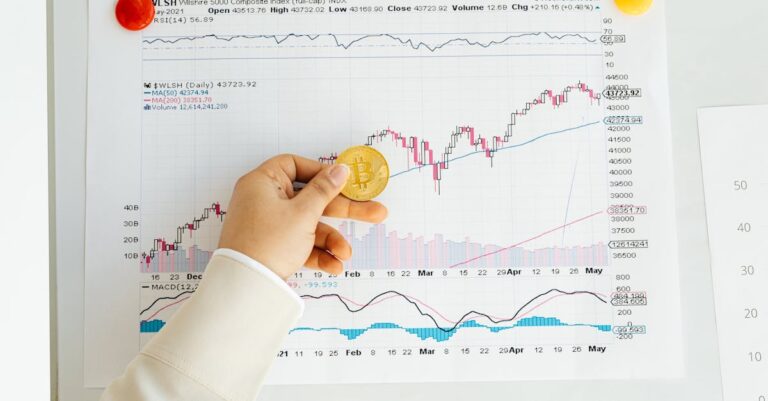
Discover why Bitcoin’s recent dip below $80,000 wasn’t external, but an internal market adjustment driven by profit-taking and leveraged positions. Essential insights for crypto investors.
The recent tumble of Bitcoin below the critical $80,000 threshold sent ripples of concern across the digital asset landscape. For many observers, such a sharp decline, witnessing over $90 billion erased from the combined crypto market cap and approximately $331 million in liquidations within 24 hours, often signals a significant market stressor. However, as discerning financial analysis reveals, the narrative behind this particular downturn is far more nuanced than a typical macro shock. This movement wasn’t a sudden crisis emanating from global economic tremors; rather, it was a self-correction, a powerful internal adjustment driven by the very dynamics that fuel crypto markets: profit realization and the unwinding of leveraged positions.
Understanding these internal forces is paramount for any investor seeking to navigate the volatile yet potentially rewarding world of digital assets. While the speed and scale of the move created the kind of alarm that typically accompanies a macro shock, a deeper dive into market data tells a different story. This analysis will unpack the specifics of this Bitcoin correction, drawing upon expert research to illuminate the mechanisms at play and provide valuable insights for informed decision-making.
The Illusion of External Pressure on Bitcoin’s Price Stability
When the price of Bitcoin began its rapid descent, shedding significant value and triggering widespread liquidations, the immediate instinct for many was to seek explanations in the broader economic environment. Past market corrections have often coincided with shifts in global interest rates, geopolitical tensions, or significant downturns in traditional equity markets. Yet, a closer examination of the prevailing financial climate during this specific period reveals a telling divergence.
Consider the performance of major stock market indices. Throughout the same timeframe that Bitcoin experienced its sharp decline, the S&P 500 and NASDAQ Composite remained robust, hovering near their record highs. Traditional equities did not sell off; there was no widespread flight from risk assets in broader financial markets. This crucial distinction suggests that the forces at play were not external, systemic threats to the broader financial ecosystem. Risk appetite in other markets did not deteriorate, indicating that the pressures driving Bitcoin below $80,000 were not universal market fears but rather specific to the internal structure of the cryptocurrency space.
Approximately $90 billion was erased from the combined crypto market capitalization from recent highs, with a staggering $331 million in liquidations over a 24-hour period. Nearly $100 million of these liquidations occurred within a concentrated two-hour window. Such figures undoubtedly create alarm and can lead to a misinterpretation of the underlying causes. However, the absence of similar stress in traditional markets serves as a powerful indicator that the issue lay elsewhere, within the unique ecosystem of digital assets itself.
Decoding Bitcoin’s Internal Market Dynamics with Expert Analysis
According to comprehensive research conducted by XWIN Research Japan, the recent decline in Bitcoin’s price was primarily driven by internal crypto market structure. This expert analysis offers a refreshing perspective, shifting focus away from external narratives and towards the intricate mechanics within the digital asset space. The report specifically highlights a potent combination of leverage positioning that had accumulated during the preceding recovery phase, coupled with significant profit realization from holders who had recently returned to profitability.
This thesis posits that the market did not break because of adverse external conditions; instead, it reached a point of internal saturation. The rally itself, while positive for investors, inadvertently created the very conditions for its own interruption. As prices ascended, they drew in new capital and encouraged existing holders to hold for higher gains. Simultaneously, the availability of leverage allowed traders to amplify their positions, creating a precarious balance that was susceptible to even minor shifts in sentiment or supply-demand dynamics.
The beauty of this internal market perspective is that it empowers investors with a more precise understanding of market movements. Rather than reacting to broad, often vague, macro headlines, individuals can begin to appreciate how the collective behavior of market participants, influenced by profit motives and risk appetites, can profoundly shape price action. This nuanced view is essential for developing robust investment strategies that account for the unique characteristics of the cryptocurrency market.
The Persistent Trend of Bitcoin Profit-Taking: A Deep Dive
One of the most significant mechanisms identified by XWIN Research Japan behind the recent Bitcoin decline was an extraordinary wave of profit-taking. On a single day, Bitcoin profit-taking reached an astonishing 14,600 BTC. This figure represents one of the highest levels recorded since December 2025, underscoring the magnitude of the selling pressure stemming from profitable positions. This event was not an isolated incident but the culmination of several weeks of recovery that had lifted prices significantly from previous lows.
The 37% recovery from April lows played a pivotal role in this dynamic. It returned a substantial cohort of investors to profitability, many of whom had been holding positions acquired at higher prices during earlier market peaks or during the initial phases of a downturn. For these individuals, the rebound presented a crucial opportunity to either recoup losses, reach their break-even point, or secure a modest profit after a period of uncertainty. The decision to act on this recovery simultaneously by a significant number of holders created a concentrated selling event.
Further confirmation of this profit-taking pattern comes from the Short-Term Holder SOPR (Output Profit Ratio). This metric, which measures the average profit/loss of all coins moved on-chain by short-term holders, reached 1.016 and had remained consistently above 1.0 since mid-April. When SOPR is above 1.0, it indicates that, on average, coins are being sold for a profit. The persistent nature of this metric above the profitability threshold confirms that recent buyers were systematically selling at a profit, indicating a sustained trend rather than a mere one-day anomaly.
Understanding the Behavioral Dynamic of Selling
Adding a crucial “human dimension” to this analysis, the report highlights the psychological impact of market movements on investor behavior. Between February and March 2026, many short-term traders found themselves sitting on substantial losses, often ranging from 20% to 30%. Enduring weeks or months of such losses can be incredibly taxing emotionally and financially. The April rebound did not just recover prices; it significantly restored the financial positions of these participants, moving them from a state of considerable loss to either break-even or a small profit.
Historically, this recovery from loss to break-even or a marginal profit is one of the most reliable triggers for renewed selling pressure across financial markets, not just in crypto. Participants who have endured prolonged periods of unrealized losses often develop a strong psychological inclination to exit their positions the moment the market provides them with an opportunity to do so without further losses. This phenomenon, often driven by loss aversion, can lead to a collective “sigh of relief” selling, where individuals prioritize psychological closure and capital preservation over waiting for potentially larger future gains.
This behavioral dynamic explains why a market recovery, which might intuitively seem bullish, can paradoxically usher in a wave of selling. It’s not about a lack of faith in the asset’s long-term potential for many of these short-term holders, but rather a strong desire to mitigate risk and lock in any positive return after a challenging period. The confluence of these individual decisions, amplified across a significant portion of the market, creates a powerful supply overhang that can temporarily halt or reverse an upward trend.
How Leverage Amplified Bitcoin’s Downward Momentum
While profit-taking provided the initial impetus for Bitcoin’s recent dip, the leverage dimension acted as a powerful accelerator, transforming what might have been a gentle pullback into a considerably sharper downturn. In cryptocurrency markets, derivatives trading, particularly with leverage, allows investors to control larger positions with a relatively small amount of capital. This amplification works in both directions: it can magnify gains during an uptrend but also dramatically increase losses during a downtrend.
As the market began to turn lower due to initial profit-taking, many leveraged “long” positions – bets that the price of Bitcoin would continue to rise – came under immense pressure. When the price moves against a leveraged position to a certain extent, the trading platform will issue a “margin call,” requesting additional funds to maintain the position. If the trader fails to provide this additional capital, the platform automatically liquidates their position to prevent further losses to the exchange. These forced sales are known as “long liquidations.”
The report by XWIN Research Japan explicitly notes that long liquidations intensified the downside momentum. As the price declined, it triggered a cascade of liquidations. Each liquidation added more selling pressure to the market, pushing prices even lower. This further decline then triggered more liquidations, creating a self-reinforcing feedback loop. This domino effect can quickly turn a moderate price correction into a rapid, dramatic fall, amplifying a move that began with profit realization into something considerably sharper and more alarming for market observers.
The derivatives market in cryptocurrencies is notoriously active and can exert significant influence over spot prices. The sheer volume of leveraged positions means that even a minor downturn can rapidly snowball into a more substantial correction as margin calls and liquidations ripple through the system. This phenomenon highlights a critical aspect of crypto market structure: the interconnectedness of spot and derivatives markets, where events in one can profoundly impact the other, often with surprising speed and intensity. Understanding this interplay is vital for any investor seeking to comprehend the full dynamics of Bitcoin’s price action.
Distinguishing a Bitcoin Correction from a Catastrophic Top
Amidst the alarm generated by the rapid price decline and widespread liquidations, it’s crucial for investors to differentiate between a healthy market correction and a more ominous structural top. A structural top typically signifies the end of a bull market cycle, often characterized by widespread distribution from large, strategic holders. These “whales” or institutions, with their significant capital and long-term vision, begin to offload their holdings, indicating a fundamental shift in market sentiment and potentially ushering in a prolonged bear market.
The constructive element preserved in XWIN Research Japan’s report offers a vital piece of context: exchange inflow data. The analysis indicates that large holder deposits remain relatively muted. This observation is a key distinction. It suggests that the participants with the most significant coin holdings and the most strategic patience have not yet begun aggressive distribution. If major holders were moving substantial amounts of Bitcoin to exchanges with the intent to sell, it would paint a far more bearish picture, signaling a potential long-term peak.
Instead, the current data points towards a “leverage-driven correction.” This type of market event, while painful in the short term, serves a critical function: it cleanses the market of excessive speculation and unhealthy leverage. When too many participants are highly leveraged in one direction, the market becomes fragile. A correction, even a sharp one, liquidates these overextended positions, returning market health and creating a more sustainable foundation for future growth. It’s akin to a necessary deleveraging event, flushing out weak hands and creating opportunities for those with a stronger long-term conviction.
Consequently, Bitcoin finds itself at a genuine crossroads. The data supports two primary interpretations, both with distinct implications. On one hand, it could be an early-stage bullish recovery, with the recent volatility serving to clear out accumulated leverage, thereby setting the stage for a healthier, more sustainable upward trend. On the other hand, it could be interpreted as the late phase of a bear market rally approaching its natural exhaustion, where the current price levels represent strong resistance before a potential further downturn. The distinction lies in the actions of large, strategic holders and the ongoing strength of underlying demand post-liquidation. This nuanced understanding is essential for investors to frame their expectations and strategies effectively.
Navigating the Current Bitcoin Price Landscape and Technical Indicators
Following the recent internal market adjustment, Bitcoin is currently trading near $80,200 on the daily chart. This price point places it just below a significant resistance zone that has consistently capped upside movements since the initial breakdown earlier in the year. Understanding these technical levels is crucial for gauging potential future price action and identifying key entry or exit points.
The recovery from the February low near $60,000 remains structurally intact, exhibiting a sequence of higher lows and steadily reclaiming crucial short- and mid-term moving averages. This pattern is generally considered a positive sign, indicating a shift in momentum from outright bearishness towards a more neutral-to-bullish outlook over the shorter timeframes.
Specifically, the 50-day and 100-day moving averages have both turned upward, a bullish cross-over often interpreted as a sign of strengthening trend. These averages are now acting as dynamic support in the $72,000–$75,000 region. This confirms that the short-term and intermediate trends have indeed shifted, providing a foundational level for buyers. However, the 200-day moving average, a widely watched indicator for long-term trend, continues to slope downward and currently sits above the price. This reinforces the $80,000–$82,000 range as a critical supply zone, where sellers who bought at higher prices or those anticipating a further downturn are likely to step in.
Recent price action further suggests slowing momentum beneath this resistance. Candlesticks on the daily chart are compressing, indicating a tightening trading range and indecision in the market. Furthermore, volume has not expanded meaningfully during the latest push towards resistance. This lack of significant volume during an attempted breakout often suggests that while buyers remain present, they are not yet strong enough or numerous enough to force a decisive breach of the overhead supply.
For investors, the implications are clear: a decisive breakout above $82,000 with conviction, ideally supported by a noticeable surge in trading volume, would confirm a continuation of the upward trajectory. Such a move would likely signal a clear path toward higher price levels, potentially targeting previous highs. Conversely, if rejection persists at the $80,000–$82,000 resistance, the market is likely to rotate back toward established support levels. The first level to watch would be the confluence of the 50-day and 100-day moving averages around $75,000, with deeper demand forming closer to the $70,000 mark. Monitoring these technical indicators, alongside the fundamental insights into market structure, will be vital for informed decision-making in the coming weeks.
Prudent Investment Strategies Amidst Bitcoin Volatility
The inherent volatility of Bitcoin and the broader cryptocurrency market, as evidenced by recent events, underscores the critical importance of adopting prudent investment strategies. For those looking to build wealth through digital assets, a disciplined and informed approach is not merely advisable; it is essential. Here are several key strategies to navigate market fluctuations and build a resilient portfolio:
1. Embrace Diversification Beyond Bitcoin
While Bitcoin often serves as the flagship cryptocurrency, relying solely on a single asset, even a dominant one, exposes an investor to concentrated risk. Diversifying within the crypto space means exploring other established digital assets with strong fundamentals and different use cases. Beyond crypto, true diversification involves balancing digital assets with traditional investment classes such as equities, bonds, and real estate, aligned with your overall financial goals and risk tolerance. This broader approach helps cushion your portfolio against significant downturns in any single asset class.
2. Master Risk Management and Position Sizing
Effective risk management is the cornerstone of successful investing in volatile markets. This begins with clearly defining your risk tolerance – how much capital you are comfortable losing without impacting your financial well-being. Never invest more than you can afford to lose. Implement robust position sizing rules, ensuring that no single investment, including Bitcoin, constitutes an excessively large portion of your total portfolio. Consider using stop-loss orders on trading platforms to automatically limit potential losses if the market moves against your position. While not foolproof, they provide a valuable safety net.
3. Practice Dollar-Cost Averaging (DCA)
Dollar-Cost Averaging involves investing a fixed amount of money at regular intervals, regardless of the asset’s price. For example, investing $100 in Bitcoin every week or month. This strategy automatically leads to buying more units when prices are low and fewer units when prices are high. Over time, DCA helps smooth out the impact of market volatility, reducing the risk of making a single large investment at an unfavorable peak. It removes the emotional decision-making often associated with trying to “time the market,” which is notoriously difficult even for seasoned professionals.
4. Prioritize Continuous Research and Education
The cryptocurrency market is dynamic and constantly evolving. Staying informed is paramount. Regularly consult reputable, independent research providers, much like the insights provided by XWIN Research Japan, to understand underlying market structures, technological advancements, and regulatory developments. Beyond news, delve into the fundamental technology behind various digital assets. A deeper understanding of concepts like blockchain, decentralized finance (DeFi), and tokenomics can empower you to make more informed decisions rather than relying on speculation or hype.
5. Cultivate Emotional Discipline
Fear of Missing Out (FOMO) during rallies and Fear, Uncertainty, and Doubt (FUD) during downturns are powerful emotional forces that can lead to costly investment mistakes. Developing emotional discipline means sticking to your predefined investment plan, even when market conditions seem dire or overwhelmingly positive. Avoid impulsive decisions based on short-term price swings or social media sentiment. Remember that market corrections are a natural part of any asset cycle, and panic selling often locks in losses. Conversely, chasing rapidly rising assets can lead to buying at unsustainable peaks.
6. Secure Your Digital Assets
Beyond investment strategies, the security of your holdings is paramount. Utilize strong, unique passwords for all accounts and enable two-factor authentication (2FA) wherever possible. For substantial holdings, consider hardware wallets (cold storage), which offer superior protection against online threats compared to keeping assets on exchanges. Be vigilant against phishing scams and maintain awareness of common cybersecurity best practices. Protecting your wealth also means protecting your access to it.
7. Rebalance Your Portfolio Periodically
As your investments grow or market conditions shift, your portfolio’s original asset allocation can drift. Periodically rebalancing your portfolio involves adjusting your holdings back to your desired allocation. This might mean selling some of your best-performing assets (e.g., if Bitcoin has surged and now represents too large a percentage) and buying more of those that have underperformed. Rebalancing helps manage risk, realize profits, and ensures your portfolio remains aligned with your long-term financial objectives.
By integrating these strategies, investors can approach the Bitcoin market with greater confidence and resilience, transforming periods of volatility from sources of anxiety into opportunities for strategic positioning and long-term wealth accumulation.
Bitcoin’s Enduring Value Proposition and Future Outlook
Despite the short-term volatility and corrective movements that characterize the cryptocurrency market, Bitcoin’s enduring value proposition remains robust. Its fundamental principles—decentralization, scarcity, and a tamper-proof ledger—continue to attract a growing base of adherents and investors worldwide. The recent internal market adjustment, far from being a sign of fundamental weakness, can be viewed as a necessary cleansing, strengthening the market’s long-term health by flushing out excessive leverage and short-term speculation.
Bitcoin continues to gain traction as “digital gold,” a potential hedge against inflation and a store of value in an increasingly uncertain global economic landscape. Its limited supply, capped at 21 million coins, stands in stark contrast to the inflationary pressures often associated with traditional fiat currencies. This scarcity principle is a powerful driver of its long-term appeal to those seeking to preserve purchasing power over time.
Furthermore, the ecosystem around Bitcoin continues to mature and expand. Institutional interest remains strong, with major financial institutions exploring and integrating digital assets into their offerings. The regulatory landscape, while still evolving, is gradually providing clearer frameworks, which can foster greater confidence and facilitate broader adoption. Innovation within the broader crypto space, often built upon or inspired by Bitcoin’s underlying blockchain technology, is constantly introducing new use cases and value propositions.
It is important to remember that all financial markets experience cycles of growth, consolidation, and correction. The crypto market, being relatively nascent, tends to exhibit these cycles with greater intensity. Periods of sharp decline, while unsettling, are a natural and often healthy part of an asset’s evolution. They test the conviction of investors, clear out speculative froth, and create opportunities for those with a long-term vision to accumulate assets at more favorable prices.
The future outlook for Bitcoin, while always subject to market forces and unforeseen developments, suggests continued integration into the global financial system. Its role as a pioneering digital asset, a decentralized store of value, and a catalyst for financial innovation appears increasingly cemented. For Work to Wealth readers, the takeaway is clear: while navigating short-term price fluctuations requires skill and discipline, the fundamental case for Bitcoin as a long-term wealth-building asset remains compelling for those willing to educate themselves and employ sound investment strategies.
Ultimately, the recent dip below $80,000 serves as a powerful reminder that understanding the internal mechanics of the market, beyond superficial headlines, is crucial. It underscores the importance of strategic patience, continuous learning, and a commitment to robust risk management. By embracing these principles, investors can transform market volatility into stepping stones on their journey toward financial prosperity.
Frequently Asked Questions
Why did Bitcoin suddenly drop below $80,000, causing investor concern?
Bitcoin’s recent drop below $80,000 was primarily an internal market adjustment, not a macro shock. It was driven by significant profit-taking from short-term holders who recovered from previous losses, combined with the unwinding of highly leveraged “long” positions. This created a cascade of selling pressure.
How can I avoid getting caught in sudden Bitcoin price downturns?
To mitigate risks from sudden downturns, practice diversification (both within crypto and traditional assets), implement robust risk management strategies like position sizing, use Dollar-Cost Averaging (DCA), and cultivate emotional discipline to avoid impulsive selling or buying. Staying informed through continuous research is also key.
Is this Bitcoin dip a sign of a larger market crash or a structural issue?
Expert analysis suggests this was a “leverage-driven correction” rather than a catastrophic structural top. Muted large holder deposits indicate that strategic, long-term investors are not aggressively distributing. This implies a cleansing of excess speculation, potentially setting the stage for a healthier market recovery.
What are the key technical levels to watch for Bitcoin’s price movement?
Currently, the $80,000–$82,000 range acts as strong resistance. A decisive breakout above $82,000 with high volume would signal continuation. On the downside, the 50-day and 100-day moving averages around $72,000–$75,000 provide support, with deeper demand forming closer to $70,000.
How does profit-taking by investors impact Bitcoin’s price?
When a significant number of investors simultaneously sell their Bitcoin at a profit, it creates concentrated selling pressure, increasing the supply in the market. This surge in supply, especially after a period of recovery from losses, can temporarily overwhelm demand and lead to a price decline.