

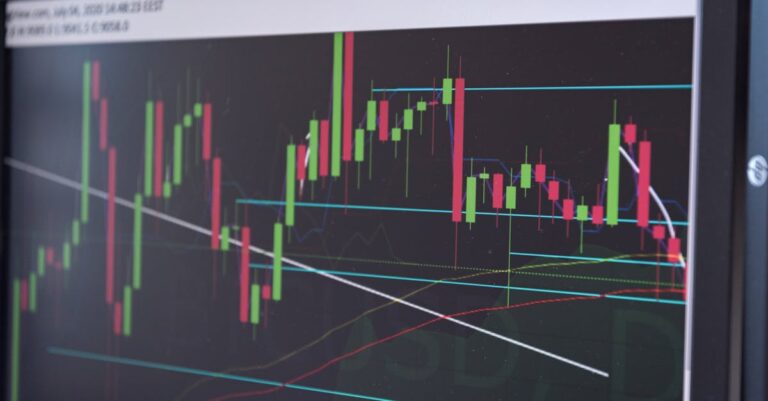
Grasp EUR/USD dynamics to safeguard and grow your portfolio. This guide deciphers Fed bets, geopolitical forces, and economic data, offering clarity for market participation.
Understanding the EUR/USD pair is crucial for any investor navigating the complexities of global financial markets. As the most heavily traded currency pair in the world, its movements reverberate across portfolios, influencing everything from international investments to the cost of imported goods. For individuals aiming for wealth accumulation and preservation, a grasp of the forces driving EUR/USD fluctuations is not merely academic; it is a vital component of informed decision-making.
Recent market conditions have highlighted the inherent volatility of the EUR/USD pair. Periods of consolidation are often punctuated by sharp movements, driven by a confluence of monetary policy expectations, geopolitical tensions, and critical economic data releases. Investors frequently grapple with the frustration of unpredictable swings, making it difficult to forecast future direction or protect capital effectively.
This article aims to demystify the key drivers behind EUR/USD movements, providing a comprehensive framework for understanding its behavior. We will delve into the intricate relationship between central bank policies, global events, and fundamental economic indicators, offering insights that can empower you to approach currency trading with greater confidence and strategic foresight. By understanding these dynamics, you can transform market volatility from a source of anxiety into an opportunity for calculated portfolio management and potential growth.
The Foundational Pillars of EUR/USD Movement
The EUR/USD exchange rate is a dynamic reflection of the economic health and monetary policy outlooks of the Eurozone and the United States. Its value is constantly recalibrated by a complex interplay of factors, each contributing to market sentiment and investor decisions. To successfully navigate this landscape, it is essential to understand the primary forces at play.
Monetary Policy: The Federal Reserve and the European Central Bank
The monetary policies enacted by the US Federal Reserve (Fed) and the European Central Bank (ECB) are arguably the most significant drivers of EUR/USD movements. These central banks wield immense power through their interest rate decisions, asset purchase programs (quantitative easing), and forward guidance. Expectations surrounding their next moves often dictate the currency pair’s short to medium-term trajectory.
Interest Rate Differentials and Expectations
When a central bank raises its benchmark interest rate, it generally makes the associated currency more attractive to foreign investors seeking higher returns on their deposits and fixed-income assets. Conversely, a reduction in interest rates or the expectation of such a move tends to weaken a currency. The EUR/USD pair reacts keenly to the differential between US and Eurozone interest rates, as well as the market’s perception of future rate changes.
For instance, if market participants increasingly expect the Fed to hold or even cut rates, while the ECB maintains a more hawkish (pro-rate hike) stance, the US Dollar (USD) may weaken against the Euro (EUR). This dynamic, often referred to as “Fed bets” or “ECB bets,” reflects the collective wisdom of traders attempting to price in future policy adjustments. Diminishing odds for a rate hike by one central bank compared to another can significantly cap gains for its respective currency, offering support to its counterpart.
Inflation Targeting and Mandates
Both the Fed and the ECB have primary mandates that guide their policy decisions. The ECB’s primary objective is to maintain price stability, typically aiming for inflation at or close to 2% over the medium term. The Fed also targets stable prices alongside maximum employment. When inflation in either region deviates significantly from these targets, it prompts the respective central bank to consider policy adjustments, which in turn impacts the currency.
Higher-than-expected inflation data in the Eurozone, for example, might increase the likelihood of the ECB raising interest rates to curb price pressures. This expectation can lead to an appreciation of the Euro. Similarly, US inflation data that surprises to the upside could fuel speculation of tighter Fed policy, strengthening the USD. Staying informed about inflation reports and central bank communications (like speeches by governors or meeting minutes) is paramount for understanding potential shifts in EUR/USD.
Quantitative Easing and Tightening
Beyond interest rates, central banks employ tools like quantitative easing (QE) and quantitative tightening (QT). QE involves purchasing government bonds and other assets to inject liquidity into the financial system and lower long-term interest rates. This typically devalues a currency. QT, the reverse process, involves reducing the central bank’s balance sheet, which generally has a strengthening effect on the currency by reducing market liquidity.
The scale and pace of these programs by the Fed and the ECB significantly influence capital flows and, consequently, the EUR/USD exchange rate. Any hints of changes to these programs are scrutinized by markets for their potential impact on currency valuations.
Geopolitical Undercurrents and Risk Sentiment
Global events, particularly those with geopolitical implications, frequently disrupt otherwise stable market trends and introduce periods of heightened EUR/USD volatility. These events can trigger shifts in investor risk sentiment, leading to capital flight towards perceived safe-haven assets.
Safe-Haven Flows
In times of global uncertainty or crisis, investors often seek safety in traditionally stable currencies, such as the US Dollar, the Japanese Yen, or the Swiss Franc. Even if the underlying economic conditions of the US are not stellar, the USD’s status as the world’s primary reserve currency often makes it a preferred haven. For example, tensions in critical global shipping lanes, international trade disputes, or regional conflicts can escalate geopolitical risks, prompting investors to flock to the USD.
This increased demand for the USD during periods of global unease can strengthen it against the Euro, even if the Eurozone’s economic outlook remains relatively stable. Such shifts are often sudden and can lead to significant intraday or intra-week movements in the EUR/USD pair. Understanding the global political landscape and monitoring international headlines is therefore an essential part of currency trading analysis.
Impact on Trade and Investment
Geopolitical events can also impact EUR/USD through their effects on international trade and investment flows. Sanctions, tariffs, or disruptions to supply chains can negatively affect the economic outlook of the Eurozone or the US, making investments in those regions less attractive. For instance, increased trade friction between major global economies could dampen export prospects for Eurozone businesses, potentially weighing on the Euro.
Economic Data and Fundamentals
Beyond central bank policies and geopolitical events, a steady stream of economic data releases provides crucial insights into the health of the US and Eurozone economies. These indicators influence EUR/USD by shaping expectations for future central bank actions and investor confidence.
Gross Domestic Product (GDP)
GDP is the broadest measure of economic activity and growth. Strong GDP growth typically signals a healthy economy, which can attract foreign investment and strengthen the associated currency. Conversely, weak GDP readings or a recession can lead to currency depreciation. Investors closely watch quarterly GDP reports for both regions.
Inflation Data (HICP for Eurozone, CPI for US)
As discussed, inflation data is critical for central bank policy. For the Eurozone, the Harmonized Index of Consumer Prices (HICP) is the key measure. For the US, the Consumer Price Index (CPI) is widely followed. If inflation rises more than expected, especially above the central bank’s target, it strengthens the case for interest rate hikes, generally benefiting the currency.
Purchasing Managers’ Indices (PMIs)
PMIs for manufacturing and services sectors are leading indicators of economic health. A reading above 50 generally indicates expansion, while a reading below 50 suggests contraction. Strong PMI data suggests robust economic activity, which is typically positive for the currency, as it signals potential for higher interest rates or stronger corporate earnings.
Employment Data
Employment figures, such as non-farm payrolls in the US or unemployment rates in the Eurozone, are vital indicators of economic strength. Strong job creation and falling unemployment suggest a healthy labor market, which supports consumer spending and economic growth, often leading to currency appreciation. Weak employment data can signal economic distress, weighing on the currency.
Consumer Sentiment and Retail Sales
Measures of consumer confidence and retail sales reflect the strength of consumer spending, a significant component of GDP in both regions. High consumer confidence and robust retail sales indicate a healthy economy, supporting the currency. Conversely, declining sentiment and weak sales can signal economic headwinds.
It is important to note that economic data from the four largest economies in the Euro area – Germany, France, Italy, and Spain – are especially significant. These countries collectively account for approximately 75% of the Eurozone’s economy, so their individual economic performance has a disproportionate impact on the Euro.
Trade Balance
The trade balance measures the difference between a country’s exports and imports over a given period. A positive trade balance (trade surplus) means a country exports more than it imports, leading to increased demand for its currency as foreign buyers convert their currency to purchase exports. This typically strengthens the currency. A negative trade balance (trade deficit) suggests a country imports more than it exports, potentially weakening its currency due to higher demand for foreign currency to pay for imports.
A persistent trade surplus for the Eurozone, for example, could indicate strong global demand for European goods and services, providing underlying support for the Euro. Conversely, a widening deficit could exert downward pressure on the currency.
Navigating EUR/USD with Technical Analysis
While fundamental and macroeconomic factors provide the ‘why’ behind EUR/USD movements, technical analysis offers insights into the ‘when’ and ‘how far’. By studying price charts and using various indicators, traders attempt to identify patterns, support and resistance levels, and potential trend reversals.
Understanding Key Technical Indicators
Fibonacci Retracement
Fibonacci retracement levels are horizontal lines indicating where support and resistance are likely to occur. These levels (23.6%, 38.2%, 50%, 61.8%, 78.6%) are derived from the Fibonacci sequence and are often drawn between two significant price points, such as a swing high and a swing low. Traders use these levels to anticipate potential reversal points or areas where price might consolidate before continuing its trend. For example, if EUR/USD retraces from a recent high, a level like the 23.6% or 38.2% Fibonacci retracement might act as initial support.
Exponential Moving Averages (EMAs)
Moving averages smooth out price data to identify trend direction. Exponential Moving Averages (EMAs) give more weight to recent prices, making them more responsive to new information than Simple Moving Averages (SMAs). A common EMA used is the 100-hour EMA. When EUR/USD trades above its 100-hour EMA, it often signals an uptrend, while trading below it suggests a downtrend. The EMA can also act as dynamic support or resistance.
Relative Strength Index (RSI)
The RSI is a momentum oscillator that measures the speed and change of price movements. It oscillates between 0 and 100. Generally, an RSI reading above 70 suggests that the asset is overbought and might be due for a correction, while a reading below 30 indicates it is oversold and could be due for a bounce. A mildly bearish RSI around 43, for example, suggests underlying selling pressure, but not yet extreme oversold conditions.
Moving Average Convergence Divergence (MACD)
The MACD is a trend-following momentum indicator that shows the relationship between two moving averages of a security’s price. It is calculated by subtracting the 26-period EMA from the 12-period EMA. A nine-day EMA of the MACD, called the “signal line,” is then plotted on top of the MACD line, functioning as a trigger for buy and sell signals. When the MACD line crosses above the signal line, it’s a bullish signal; when it crosses below, it’s bearish. A slightly negative MACD often indicates bearish momentum or a consolidative bias with a downside tilt.
Identifying Support and Resistance
Support and resistance levels are price points on a chart where the price has historically struggled to move beyond. Support is a price level where a downtrend is expected to pause due to a concentration of demand. Resistance is a price level where an uptrend is expected to pause due to a concentration of supply. These levels can be horizontal lines, trend lines, or even moving averages. Traders use these to identify potential entry and exit points for their trades.
For example, if the EUR/USD pair has consistently found buying interest around 1.1700, this level would be considered a significant support. Conversely, if it has repeatedly failed to break above 1.1800, that would be a key resistance. A clear break above a resistance level can signal a continuation of the upward momentum, while a break below support often indicates further downside potential.
Interpreting Technical Configurations
Technical analysis is rarely about relying on a single indicator. Experienced traders combine multiple tools to form a comprehensive view. For instance, a scenario where EUR/USD is hovering just above a key Fibonacci retracement level while being capped by its 100-hour EMA, coupled with a mildly bearish RSI and a slightly negative MACD, could suggest a “consolidative bias with a modest downside tilt.” This means the market is currently in a range, but the underlying momentum might favor a move lower.
Such configurations help traders gauge the market’s immediate sentiment and potential short-term direction, informing their decisions about managing existing positions or considering new ones in currency markets.
Strategies for Managing Wealth in EUR/USD Volatility
Given the multifaceted influences on the EUR/USD pair, a well-defined strategy is essential for managing wealth and mitigating risks. Simply reacting to headlines or emotional impulses can lead to significant losses. Instead, a disciplined and informed approach is paramount.
Robust Risk Management
Effective risk management is the cornerstone of successful currency trading. The inherent leverage in forex markets can amplify both gains and losses, making proper risk controls non-negotiable.
- Stop-Loss Orders: Always define your maximum acceptable loss for each trade by placing stop-loss orders. This automatically closes your position if the price moves against you to a predetermined level, preventing catastrophic losses.
- Position Sizing: Never allocate an excessively large portion of your capital to a single trade. A common rule of thumb is to risk no more than 1-2% of your total trading capital on any given position. This ensures that a few losing trades do not wipe out your account.
- Diversification: While focusing on EUR/USD, consider how your overall portfolio is diversified. Do you have exposure to other asset classes, currencies, or regions? Over-reliance on a single currency pair can concentrate risk.
Staying Informed and Adaptive
The EUR/USD market is constantly evolving, driven by new information. Staying abreast of developments is critical.
- Economic Calendars: Regularly check economic calendars for upcoming major data releases (GDP, inflation, employment) and central bank announcements. These events are known volatility catalysts.
- Central Bank Communications: Pay close attention to speeches from Fed and ECB officials, as well as minutes from their policy meetings. These provide insights into future policy direction and potential shifts in sentiment.
- Geopolitical News: Monitor global news for significant geopolitical events that could trigger safe-haven flows or impact trade relations between the US and Eurozone.
- Adaptability: Markets change. What worked yesterday might not work today. Be prepared to adjust your analysis and strategy in response to new information and shifting market dynamics.
Long-Term vs. Short-Term Perspective
Your investment horizon should dictate your approach to EUR/USD trading.
- Long-Term Investors: Those with a longer-term view might focus more on fundamental macroeconomic trends, interest rate differentials, and structural shifts in global trade. They may use currency pairs to hedge international investments or to capitalize on major economic divergence over several months or years.
- Short-Term Traders: Day traders or swing traders will rely heavily on technical analysis, intraday charts, and immediate news reactions. Their goal is to capture smaller, frequent price movements.
Hedging Currency Risk
For individuals or businesses with significant exposure to either the Euro or the US Dollar through international investments, imports, or exports, hedging currency risk can be a valuable strategy.
Hedging involves taking an offsetting position in the currency market to protect against adverse price movements. For example, if you are a US-based investor holding Euro-denominated assets, you might consider selling EUR/USD futures or options to mitigate the risk of the Euro depreciating against the Dollar, which would reduce the dollar value of your assets. This protects your portfolio from unfavorable currency swings, ensuring the value of your assets remains stable in your base currency.
Common Pitfalls in EUR/USD Trading and How to Avoid Them
Even with a sound understanding of market dynamics, investors can fall prey to common behavioral and analytical errors. Recognizing these pitfalls is the first step toward avoiding them and protecting your financial well-being.
Emotional Trading and FOMO
Fear of Missing Out (FOMO) and other emotional biases can lead to impulsive decisions. Chasing a rapidly rising market without proper analysis, or panicking and selling during a downturn, are common traps. A sudden surge in EUR/USD might tempt you to jump in without considering the underlying fundamentals or technical indicators. This often results in buying at the peak or selling at the trough.
Solution: Develop a strict trading plan that outlines your entry criteria, exit strategy, and risk management rules. Stick to this plan rigorously, even when emotions run high. Use stop-loss orders to take emotion out of exit decisions. Take breaks from the screen to avoid overtrading or becoming overly reactive.
Ignoring Fundamental or Technical Analysis
Some traders focus exclusively on one aspect of analysis (e.g., only technicals) while neglecting others. For instance, relying solely on chart patterns without considering upcoming central bank meetings or critical economic data can lead to unexpected losses. Conversely, a deep understanding of fundamentals without recognizing key technical support or resistance levels might cause you to enter a trade at an unfavorable price point.
Solution: Adopt a holistic approach. Combine fundamental analysis to understand the long-term trend and catalysts with technical analysis to pinpoint optimal entry and exit points. For EUR/USD, this means understanding central bank policies alongside chart patterns like Fibonacci retracements and moving averages.
Over-Leveraging
Forex trading often involves high leverage, meaning you can control a large amount of currency with a relatively small amount of capital. While leverage can amplify profits, it can also magnify losses, potentially wiping out your account quickly. The allure of quick riches often leads to over-leveraging, a common source of frustration for new traders.
Solution: Exercise extreme caution with leverage. Understand that higher leverage equates to higher risk. Only use leverage that you are comfortable with and that aligns with your risk tolerance. Always maintain sufficient margin in your account to withstand market fluctuations.
Lack of Continuous Learning
The global financial landscape is constantly evolving. New economic theories emerge, geopolitical dynamics shift, and central bank policies adapt. What was relevant analysis last year might be less so today.
Solution: Commit to continuous learning. Read financial news, follow reputable economic analysis, and review your own trading performance regularly. Understand that mastering currency trading is a journey, not a destination. Keeping up-to-date with shifts in the global economy and central bank rhetoric is vital for navigating the EUR/USD market effectively.
Trading Without a Clear Objective
Entering the EUR/USD market without a clear goal or understanding of why you are taking a position is a recipe for inconsistency. Are you looking to hedge an international investment, speculate on a short-term move, or capitalize on a long-term trend? A lack of clarity often leads to indecision and poor execution.
Solution: Before making any trade, define your objective. What is your rationale for entering this position? What is your expected profit target, and what is your maximum acceptable loss? A clear objective helps frame your strategy and provides a benchmark against which to measure success or failure.
Conclusion: Empowering Your EUR/USD Decisions for Wealth Growth
The EUR/USD pair, while presenting opportunities for wealth growth, demands a robust understanding of its underlying drivers and a disciplined approach to trading. Its movements are not arbitrary; they are the cumulative result of decisions made by powerful central banks, the unfolding of global geopolitical events, and the constant stream of economic data reflecting the health of two of the world’s largest economies.
By diligently monitoring the Federal Reserve’s and the European Central Bank’s monetary policies, comprehending the impact of geopolitical tensions on risk sentiment, and meticulously analyzing economic indicators like GDP, inflation, employment, and trade balances, you equip yourself with the foresight necessary to navigate this complex market. Complementing this fundamental understanding with effective technical analysis, utilizing tools such as Fibonacci retracements, EMAs, RSI, and MACD, provides a clearer picture of price action and potential turning points.
Ultimately, safeguarding and growing your wealth in the dynamic currency markets boils down to knowledge, strategy, and discipline. Embrace comprehensive risk management techniques, stay continuously informed, and cultivate an adaptive mindset. By avoiding common pitfalls such as emotional trading or over-leveraging, you can transform the perceived frustrations of market volatility into structured opportunities. This empowers you to make informed decisions, protecting your capital while positioning your portfolio for sustainable wealth accumulation.
Frequently Asked Questions
How do interest rate expectations affect my EUR/USD investments?
Interest rate expectations are a primary driver of EUR/USD movements. If the market anticipates higher interest rates from one central bank (e.g., the Fed) compared to the other (e.g., the ECB), the currency associated with the higher expected rates typically strengthens. This is because higher rates attract foreign investors seeking better returns. Understanding these “Fed bets” or “ECB bets” helps you anticipate potential shifts in the currency pair and manage your portfolio to benefit from or protect against these changes.
What role do geopolitical tensions play in my EUR/USD trading frustrations?
Geopolitical tensions often introduce unpredictable volatility, which can be a significant source of frustration for traders. Events like international conflicts or trade disputes can lead to sudden shifts in risk sentiment, causing investors to flock to safe-haven currencies like the US Dollar. This increased demand can strengthen the USD against the Euro, even if fundamental economic data for the Eurozone is stable. Monitoring global events is crucial for understanding these sudden shifts and avoiding unexpected losses in your EUR/USD positions.
How can I use economic data to improve my EUR/USD investment decisions?
Economic data provides insights into the health of the US and Eurozone economies, directly influencing central bank policy expectations and currency valuations. Key indicators like GDP, inflation (HICP/CPI), employment figures, and trade balance can signal potential strength or weakness. By regularly consulting economic calendars and understanding how each data point impacts the monetary policy outlook, you can make more informed decisions about when to enter or exit EUR/USD trades, enhancing your chances for profitable outcomes and mitigating risk.
What technical analysis tools are most effective for EUR/USD to reduce uncertainty?
To reduce uncertainty in EUR/USD trading, combining several technical analysis tools offers a more robust perspective. Fibonacci retracement levels can identify potential support and resistance zones. Exponential Moving Averages (EMAs), especially the 100-hour, help determine trend direction and dynamic support/resistance. Momentum indicators like the Relative Strength Index (RSI) and Moving Average Convergence Divergence (MACD) can signal overbought/oversold conditions or shifts in momentum. Using these tools together helps to confirm signals and improve the accuracy of your trading decisions.
How can I protect my wealth from sudden EUR/USD market swings?
Protecting your wealth from sudden EUR/USD market swings requires robust risk management. Always implement stop-loss orders to limit potential losses on each trade. Practice prudent position sizing, risking only a small percentage (e.g., 1-2%) of your total capital per trade. Consider diversification across different asset classes if EUR/USD is part of a larger portfolio. Additionally, staying informed about upcoming economic events and geopolitical developments can help you anticipate potential volatility and adjust your strategy proactively.