

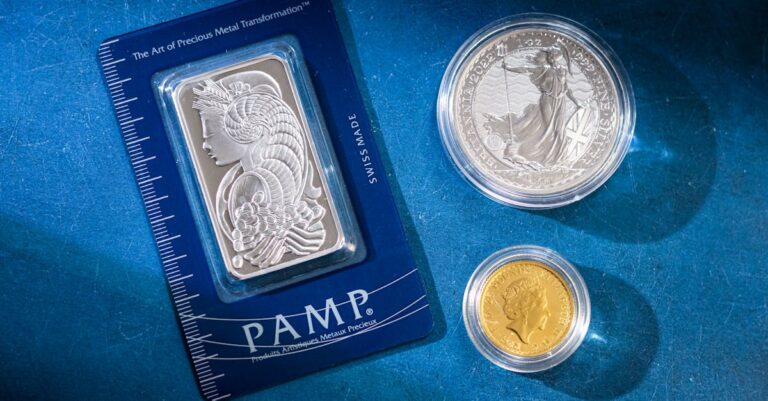
Understand why precious metals are dipping and learn strategic approaches to fortify your long-term wealth portfolio against market shifts. Perfect for prudent investors.
Recent market reports, such as those from Kitco News on March 12, 2026, indicate a downturn for precious metals investment, with gold and silver prices experiencing a decline. This movement is attributed to a rally in the U.S. Dollar Index (USDX) and a concurrent rise in bond yields. For many wealth builders, such news can spark concern, raising questions about the stability of their diversified portfolios. However, understanding the underlying dynamics of these market shifts is crucial for maintaining a long-term perspective and making informed decisions rather than reacting impulsively.
The immediate reaction to a dip in the value of assets often involves a degree of apprehension. Yet, for those committed to building enduring wealth, periods of volatility are not merely setbacks but rather opportunities for strategic evaluation and, potentially, adjustment. This article will delve into the factors influencing the current decline in gold and silver, explore the fundamental role these metals play in a robust portfolio, and outline actionable strategies to navigate such market conditions, ensuring your wealth-building journey remains steadfast.
Understanding the Market Forces Behind the Precious Metals Dip
To effectively respond to the current market trend, investors must first grasp the economic forces driving the downturn in gold and silver. The Kitco report specifically points to two primary catalysts: a strengthening U.S. Dollar Index (USDX) and rising bond yields. These are not isolated events but rather interconnected components of the broader financial landscape that exert significant influence on commodity markets, impacting the outlook for precious metals investment.
The Strengthening U.S. Dollar Index (USDX) and Its Impact on Gold and Silver
The USDX is a measure of the value of the U.S. dollar relative to a basket of six major world currencies: the euro, Japanese yen, British pound, Canadian dollar, Swedish krona, and Swiss franc. When the USDX rallies, it signifies that the U.S. dollar is strengthening against these other currencies. This has a direct and often inverse relationship with the price of precious metals, particularly gold and silver.
- Pricing in U.S. Dollars: Gold and silver are universally traded in U.S. dollars. When the dollar gains strength, it makes these commodities more expensive for buyers using other currencies. This increased cost can suppress demand, subsequently pushing prices down. Conversely, a weaker dollar makes precious metals more affordable, often leading to increased demand and higher prices.
- Safe Haven Appeal: The U.S. dollar itself is often considered a global safe-haven asset, especially during times of economic uncertainty or geopolitical instability. When the dollar strengthens, it often indicates a flight to safety towards the dollar, diminishing the relative appeal of traditional safe havens like gold. Investors might prefer holding dollar-denominated assets, such as U.S. Treasury bonds, over non-yielding precious metals.
- Monetary Policy Expectations: A strengthening dollar can also be a reflection of expectations regarding U.S. monetary policy, particularly the anticipation of higher interest rates by the central bank. Higher interest rates typically bolster the dollar and can make non-yielding assets less attractive.
Therefore, a robust USDX acts as a headwind for gold and silver, creating downward pressure on their prices by making them less accessible and less attractive to a broad spectrum of international investors. This directly impacts the profitability and sentiment surrounding precious metals investment.
Rising Bond Yields: An Opportunity Cost for Precious Metals
The second critical factor cited by Kitco is the rise in bond yields, specifically referring to instruments like the 10-year U.S. Treasury bond. Bond yields represent the return an investor receives on a bond. When these yields rise, it has significant implications for assets that do not provide a regular income stream, such as gold and silver, altering the landscape for precious metals investment.
- Opportunity Cost: Precious metals like gold and silver do not pay interest or dividends. They are held for their potential capital appreciation, as a store of value, or as a hedge against inflation and economic instability. When the yield on alternative, low-risk investments like government bonds increases, the “opportunity cost” of holding non-yielding assets rises. Investors might choose to allocate capital to bonds, which now offer a more attractive guaranteed return, rather than holding metals that offer no such yield.
- Investor Sentiment: Rising bond yields can also be a signal of improving economic conditions or expectations of future inflation, which might prompt central banks to tighten monetary policy. In such environments, the perceived need for gold as a hedge against economic crisis might diminish, or its role as an inflation hedge might be overshadowed by other strategies that offer a yield.
- Real Yields: It’s particularly important to consider “real yields,” which are nominal bond yields adjusted for inflation. When real yields rise, it means investors are earning a higher return after accounting for inflation. This makes bonds significantly more attractive compared to gold, which offers no real yield, making the precious metals investment case weaker in relative terms.
The combination of a strong USDX and rising bond yields creates a challenging environment for precious metals. These macroeconomic forces reduce the attractiveness of gold and silver by increasing their effective cost for international buyers and by presenting more appealing, yielding alternatives for investors. Understanding this interplay is the first step in navigating the current dip with confidence.
The Indispensable Role of Precious Metals in a Diversified Wealth Portfolio
Despite the recent market downturn, the fundamental rationale for including precious metals in a long-term wealth portfolio remains robust. Gold and silver are not typically held for short-term gains but rather for their unique attributes as anchors within a diversified strategy. For wealth builders, their role transcends immediate price fluctuations, making precious metals investment a critical consideration for enduring financial security.
Inflation Hedge and Store of Value: Core Benefits of Precious Metals Investment
Historically, gold, and to a lesser extent silver, have been considered reliable hedges against inflation. When the purchasing power of fiat currencies erodes due to inflation, precious metals often maintain or increase their value. This is because their supply is finite, and they are not subject to the same inflationary pressures as paper money. Many investors include a strategic allocation to precious metals investment precisely for this protective quality, especially during periods of economic uncertainty or when inflationary pressures are anticipated.
Beyond inflation, these metals act as a store of value. Unlike other assets that can be affected by corporate performance or geopolitical stability, gold and silver have been recognized as valuable assets for millennia. This enduring quality provides a sense of security, preserving wealth across generations and through various economic cycles, offering a tangible alternative to fluctuating paper assets.
Portfolio Diversification and Risk Mitigation with Gold and Silver
One of the primary reasons financial advisors recommend a modest allocation to precious metals is for diversification. Their price movements often exhibit a low or negative correlation with traditional asset classes like stocks and bonds. This means that when stocks or bonds are performing poorly, gold and silver may be performing well, or at least holding their value. This helps to balance the overall portfolio performance, making precious metals investment a strategic choice for stability.
This counter-cyclical nature helps to reduce overall portfolio volatility and risk. During times of economic turmoil, market crashes, or geopolitical crises, investors often flock to gold and silver as safe havens. This flight to quality can help cushion the blow to a portfolio heavily invested in other asset classes. A well-diversified portfolio aims to minimize the impact of any single asset class’s poor performance, and precious metals serve a critical function in this regard.
Geopolitical Hedge and Crisis Protection through Precious Metals
In addition to economic hedging, gold and silver have historically served as hedges against geopolitical instability. Wars, trade disputes, and political unrest can cause significant disruptions in financial markets, leading to declines in equities and other assets. During such periods, the universal acceptance and tangible nature of precious metals make them highly desirable assets. They offer a form of “crisis insurance” for a wealth builder’s portfolio, providing a reliable asset that can retain value when other investments falter. This makes precious metals investment a vital component for those seeking robust portfolio protection.
While the current dip might cause short-term concern, it is vital to remember the core reasons these metals are part of your long-term wealth strategy. Their role as an inflation hedge, a diversified asset, and a safeguard against broader economic and geopolitical risks remains undiminished by temporary market movements driven by specific currency and yield dynamics.
Strategic Investing Amidst Precious Metals Volatility
The recent dip in gold and silver, while driven by understandable macroeconomic factors, presents a crucial test for any long-term investor. The key is to respond with a strategic mindset rather than emotional panic. Wealth builders understand that market volatility is an inherent part of investing, and it often creates opportunities for those who are prepared and disciplined. Navigating this volatility wisely is essential for effective precious metals investment.
Maintaining a Long-Term Perspective: Avoid Panic Selling During a Dip
One of the most common pitfalls for investors is reacting emotionally to short-term market fluctuations. The Kitco report highlights a specific market moment, but successful wealth accumulation rarely hinges on day-to-day or even month-to-month price movements. For assets like gold and silver, which are often held for decades as a store of value or a hedge, a temporary dip should not trigger panic selling. A long-term vision is paramount for sustainable precious metals investment.
Instead, revisit your original investment thesis. Why did you invest in precious metals investment in the first place? If your reasons—such as inflation hedging, diversification, or geopolitical risk mitigation—are still valid, then a temporary price decline might simply be noise in the grand scheme of your financial journey. Focusing on your long-term goals helps filter out the psychological pressure of short-term market movements.
The Power of Diversification: Review Your Asset Allocation
The importance of a truly diversified portfolio cannot be overstated, especially when an individual asset class faces headwinds. If precious metals constitute only a prudent portion of your overall wealth, their temporary dip will have a proportionally smaller impact on your total portfolio value. This is the essence of risk management, and a fundamental principle of precious metals investment strategy.
Use this market moment as an opportunity to review your overall asset allocation. Is your portfolio appropriately diversified across various asset classes—stocks, bonds, real estate, and alternatives like precious metals? Ensure your allocations align with your risk tolerance and financial objectives. If precious metals have grown to an outsized portion due to previous gains, a dip might naturally bring them back closer to your target allocation. If they are now significantly below your target, this might present a rebalancing opportunity.
Dollar-Cost Averaging: Capitalizing on Precious Metals Dips
For investors who regularly contribute to their investment portfolios, a market dip in a desired asset can actually be advantageous. Dollar-cost averaging (DCA) is an investment strategy where you invest a fixed amount of money at regular intervals, regardless of the asset’s price. When prices are low, your fixed investment buys more shares or units of the asset. When prices are high, it buys fewer. This systematic approach is particularly effective for precious metals investment.
In the context of a precious metals investment strategy, a dip driven by factors like a strong USDX and rising bond yields could be seen as an opportunity to acquire more gold or silver at a lower average cost. This approach removes the need to time the market, which is notoriously difficult, and instead allows you to steadily build your position over time, potentially benefiting from future price recoveries.
Strategic Rebalancing: Aligning Your Precious Metals Investment with Your Goals
Rebalancing involves periodically adjusting your portfolio back to your target asset allocation. For example, if your target allocation for precious metals is 5-10% of your portfolio, and a market downturn has caused it to fall to 3%, you might consider purchasing more gold or silver to bring it back up to your target. Conversely, if a prolonged rally pushed it to 15%, you might trim your position to reduce risk and lock in some gains.
Rebalancing is a disciplined approach that forces you to “buy low” (when an asset class has dipped below its target) and “sell high” (when it has exceeded its target). The current precious metals dip could be a trigger for rebalancing for those whose allocations have strayed from their intended targets. This ensures your portfolio consistently reflects your desired risk profile and long-term investment strategy, optimizing your precious metals investment component.
By adopting a strategic, long-term outlook, embracing diversification, utilizing dollar-cost averaging, and periodically rebalancing, wealth builders can transform short-term volatility in assets like gold and silver from a source of anxiety into an integral part of their disciplined wealth accumulation plan.
Historical Context and Cycles: The Enduring Narrative of Precious Metals
Understanding the historical performance and cyclical nature of precious metals investment is vital for maintaining perspective during periods of decline, such as the one described by Kitco News. Market movements are rarely linear, and assets like gold and silver have witnessed numerous peaks and troughs throughout history, often influenced by broader economic narratives.
Gold and Silver: A History of Resilience in Precious Metals Investment
For thousands of years, gold and silver have served as currencies, stores of value, and symbols of wealth. Their enduring appeal stems from their scarcity, durability, and universal acceptance. While their prices can fluctuate significantly in the short term, their long-term trend, especially when viewed against the backdrop of inflation and currency debasement, often shows a remarkable resilience, underpinning the case for precious metals investment.
- Inflationary Eras: Historically, precious metals have performed strongly during periods of high inflation, as investors seek tangible assets to protect their purchasing power. For instance, the 1970s saw significant gold appreciation amidst stagflation.
- Economic Crises: During major economic downturns or financial crises (e.g., the 2008 global financial crisis), gold often experiences a flight to safety, where investors seek refuge from volatile stock markets and uncertain economic futures.
- Geopolitical Turmoil: Periods of international conflict or political instability tend to boost demand for gold, as its universal value makes it a reliable asset when other forms of wealth might be compromised.
These historical patterns suggest that while current factors like a strong USDX and rising bond yields may temporarily suppress prices, the fundamental drivers for holding precious metals in a portfolio often reassert themselves over time, particularly when economic conditions shift. This reinforces the long-term strategic value of precious metals investment.
Distinguishing Market Noise from Fundamental Shifts
The challenge for investors is to differentiate between temporary “market noise” and genuine, fundamental shifts that might alter the long-term investment thesis for an asset. The current dip, influenced by currency strength and bond yields, could be viewed as market noise if the underlying economic and geopolitical landscape suggests a continued need for inflation hedges and safe havens in the future.
A fundamental shift, conversely, would involve a drastic change in the role of gold and silver in the global financial system, perhaps a complete eradication of inflation risk, or an extended period of unprecedented global stability that negates the need for crisis hedges. Such shifts are rare and would typically unfold over many years, if not decades. Thus, maintaining a clear distinction is vital for informed precious metals investment decisions.
Therefore, understanding the historical context helps to frame the current dip as part of a larger, often cyclical, narrative. It encourages investors to look beyond immediate headlines and consider how current events fit into the broader arc of economic history and the enduring reasons for holding precious metals.
Beyond Physical Metals: Exploring Different Precious Metals Investment Avenues
While the focus often remains on physical gold and silver, wealth builders have several avenues to gain exposure to precious metals investment. Each option carries its own set of advantages, disadvantages, and suitability depending on an investor’s goals, risk tolerance, and logistical preferences.
Physical Bullion: The Traditional Approach to Precious Metals Investment
Investing in physical gold and silver, such as coins and bars, is the most direct way to own these assets. This method offers tangible security and the absence of counterparty risk. For many, the ability to physically hold their wealth is a significant draw, especially as a hedge against extreme financial system instability.
- Pros: Direct ownership, no counterparty risk, tangible asset, ultimate safe haven.
- Cons: Storage costs (safe deposit boxes, secure home storage), insurance costs, liquidity can be lower than other options (especially for large amounts), potential premiums over spot price, and security concerns.
Physical holdings are often best suited for a smaller, foundational portion of a wealth builder’s precious metals allocation, intended for true crisis hedging rather than active trading. This represents the purest form of precious metals investment.
Exchange-Traded Funds (ETFs) and Exchange-Traded Commodities (ETCs) for Gold and Silver Exposure
For many investors, precious metals-backed ETFs and ETCs offer a more convenient and liquid way to gain exposure. These funds typically hold physical gold or silver on behalf of their investors, and their shares trade on stock exchanges like regular stocks. They provide an accessible route for precious metals investment without direct physical handling.
- Pros: High liquidity, ease of trading, lower transaction costs compared to physical bullion, no personal storage or insurance concerns.
- Cons: Introduce counterparty risk (though generally low for reputable providers), management fees, potential tracking error, and they are not direct ownership of physical metal. Some may also have tax implications that differ from physical bullion.
ETFs are a popular choice for investors looking for market exposure to gold and silver without the logistical complexities of physical ownership, allowing for easy integration into a standard brokerage account for their precious metals investment component.
Mining Stocks: Indirect Precious Metals Investment with Operational Leverage
Investing in the stocks of companies that mine gold and silver offers an indirect way to gain exposure. Mining stocks can provide leverage to the underlying metal prices; if the price of gold rises, the profitability of a gold mining company can increase disproportionately, leading to higher stock prices. This allows for a different angle on precious metals investment.
- Pros: Potential for higher returns than direct metal ownership (due to operational leverage), offers dividend income in some cases, can be part of a broader equity portfolio.
- Cons: Subject to company-specific risks (e.g., management issues, operational disruptions, geopolitical risks where mines are located, exploration failures), not a pure play on metal prices, can underperform metals if costs rise or management is inefficient.
Mining stocks are generally considered a higher-risk, higher-reward option for precious metals investment and should be approached with thorough due diligence on individual companies or through diversified mining ETFs.
Futures Contracts and Options: Advanced Precious Metals Investment Strategies
Futures contracts and options on precious metals are complex derivatives primarily used by experienced traders for speculation or hedging. They offer significant leverage but also carry substantial risk, including the potential for losses exceeding the initial investment. This type of precious metals investment requires a deep understanding of market mechanics and risk management.
- Pros: High leverage, ability to profit from both rising and falling prices, good for short-term speculation.
- Cons: Very high risk, complex, require deep market understanding, often involve margin calls, not suitable for long-term wealth builders or novice investors.
For the typical ‘Work to Wealth’ reader focused on long-term capital preservation and growth, direct speculation with futures and options on precious metals is generally not recommended.
Choosing the right avenue for precious metals investment depends on your personal financial strategy. For most wealth builders, a combination of physical bullion (for ultimate security) and reputable ETFs (for convenient market exposure) offers a balanced approach, allowing them to benefit from gold and silver’s unique portfolio attributes without undue complexity or risk.
Economic Outlook and Future Considerations for Precious Metals
While the Kitco report highlights current headwinds for gold and silver, the future trajectory of precious metals investment is influenced by a dynamic interplay of global economic, monetary, and geopolitical factors. Understanding these broader trends can help wealth builders anticipate potential shifts and position their portfolios accordingly.
Inflationary Pressures: A Persistent Concern for Precious Metals Investment
Despite recent central bank actions to curb inflation, the specter of persistent or resurgent inflation remains a significant consideration for investors. Massive fiscal stimulus, ongoing supply chain adjustments, and demographic shifts could fuel future price increases. Should inflation accelerate beyond expectations, the appeal of gold and silver as inflation hedges would undoubtedly strengthen, potentially reversing the current downtrend and bolstering precious metals investment.
Investors should pay close attention to inflation data, central bank commentary, and commodity prices, as these indicators can signal a renewed interest in precious metals for their protective qualities.
Central Bank Policies and Interest Rate Environment Impacting Precious Metals
The policies of major central banks, particularly the U.S. Federal Reserve, are paramount. If central banks signal an end to rate hikes or even indicate potential rate cuts in the future, the environment for non-yielding assets like gold and silver could improve. Lower interest rates reduce the opportunity cost of holding precious metals, making them relatively more attractive compared to fixed-income assets. A weaker U.S. dollar, often a consequence of dovish central bank policy, would also support gold and silver prices, positively influencing precious metals investment.
Geopolitical Landscape and Global Uncertainty: Fueling Safe Haven Demand
The global geopolitical landscape remains a critical determinant for precious metals. Ongoing conflicts, trade tensions, and political instability in various regions of the world invariably increase demand for safe-haven assets. Gold and silver historically perform well during periods of heightened uncertainty as investors seek refuge from systemic risks that could impact traditional financial markets. Any escalation of existing conflicts or emergence of new geopolitical flashpoints could quickly shift investor sentiment back towards precious metals, regardless of currency strength or bond yields, reinforcing the value of precious metals investment as a hedge.
Debt Levels and Fiscal Sustainability: Long-Term Drivers for Precious Metals
Soaring national debt levels across many developed economies, including the U.S., pose a long-term risk to currency stability and financial markets. Concerns about fiscal sustainability or the potential for governments to monetize their debts could lead to a loss of confidence in fiat currencies, bolstering the case for physical assets like gold and silver as ultimate stores of value. This underlying concern often forms a foundational argument for strategic precious metals investment within a long-term portfolio.
While these factors do not suggest an immediate rebound for gold and silver in the face of current headwinds, they highlight the enduring fundamental arguments for their inclusion in a diversified portfolio. Wealth builders should monitor these broader trends, as they represent the macro-forces that can eventually outweigh short-term market dynamics.
Actionable Steps for the Prudent Wealth Builder
In light of the recent dip in gold and silver, as highlighted by Kitco, and the broader economic context, what specific actions should a prudent wealth builder consider? The emphasis should always be on strategic decision-making aligned with long-term financial goals, rather than reactive short-term trading for their precious metals investment.
1. Re-Evaluate Your Investment Thesis for Precious Metals
Take this opportunity to revisit why you initially invested in gold and silver. Was it primarily as an inflation hedge, a diversification tool, or a safe haven against economic collapse? Are those original reasons still valid for your personal financial situation and outlook? If your core reasons for a precious metals investment remain intact, then a temporary price decline might simply be a moment to stay the course or even consider accumulation.
2. Assess Your Overall Asset Allocation for Portfolio Stability
Examine your entire investment portfolio. What percentage of your total wealth is allocated to precious metals? Is it within your comfort zone and aligned with your risk profile? A common allocation for gold in a diversified portfolio might range from 5% to 15%, depending on individual circumstances and market views. If the recent dip has caused your precious metals investment allocation to fall below your target, this could be an ideal time to rebalance by adding to your holdings.
3. Consider Dollar-Cost Averaging for Consistent Growth
If you are a long-term investor looking to build a position in gold and silver, the current dip might present an opportune moment to implement or continue a dollar-cost averaging strategy. By investing a fixed amount regularly, you automatically buy more when prices are low and less when prices are high, smoothing out your average purchase price over time and potentially benefiting from future recoveries. This disciplined approach can enhance your precious metals investment.
4. Stay Informed, Not Overwhelmed by Market Noise
It’s important to stay abreast of economic news and market analysis, like the reports from Kitco. However, avoid constant monitoring and emotional reactions to daily fluctuations. Focus on the broader trends – inflation expectations, central bank policies, and geopolitical stability – rather than fixating on short-term price movements. Consult reputable financial news sources and avoid speculative sensationalism that might impact your precious metals investment decisions.
5. Consult with a Qualified Financial Advisor for Personalized Guidance
If you are unsure how the current market conditions for gold and silver impact your specific financial plan, or if you are considering significant portfolio adjustments, it is always wise to consult with a qualified and independent financial advisor. They can provide personalized advice based on your unique financial situation, goals, and risk tolerance, helping you make decisions that align with your overall wealth-building strategy, including your precious metals investment.
6. Focus on Long-Term Wealth Building, Not Speculation
The ‘Work to Wealth’ philosophy emphasizes sustainable, long-term wealth creation. Gold and silver, for this audience, are typically components of a robust, diversified portfolio designed to preserve and grow capital over decades. Resist the temptation to speculate on short-term market movements. Instead, focus on building a resilient portfolio that can weather various economic cycles and contribute to your ultimate financial independence, ensuring your precious metals investment serves its intended purpose.
By taking these actionable steps, wealth builders can navigate the current environment of declining precious metals prices with confidence and continue on their path towards achieving their financial aspirations.
Conclusion: Steadfast Strategies for Enduring Wealth
The recent reports detailing a dip in gold and silver prices, driven by a strengthening U.S. Dollar Index and rising bond yields, serve as a timely reminder of the dynamic nature of financial markets. For the astute wealth builder, such movements are not cause for alarm but rather an invitation for strategic reflection and disciplined action. Understanding the underlying macroeconomic forces is the first step in converting perceived setbacks into opportunities for fortification of your precious metals investment.
Precious metals, particularly gold and silver, occupy a unique and historically validated position within a diversified investment portfolio. Their intrinsic value as an inflation hedge, a robust store of value, and a crucial diversifier against economic and geopolitical uncertainties remains undiminished by short-term market fluctuations. The current environment simply underscores the importance of a well-considered investment thesis and adherence to long-term principles for precious metals investment.
By maintaining a steadfast long-term perspective, actively practicing portfolio diversification, leveraging strategies like dollar-cost averaging, and periodically rebalancing, investors can effectively manage volatility. Exploring various investment avenues, from physical bullion to exchange-traded funds, allows for tailored exposure that aligns with individual preferences and risk appetites for their precious metals investment.
Looking ahead, the interplay of inflation concerns, central bank policies, and the evolving geopolitical landscape will continue to shape the narrative for precious metals. Remaining informed, seeking expert advice when needed, and consistently prioritizing your overarching wealth-building goals over immediate market noise are the hallmarks of successful investing.
Ultimately, the path to enduring wealth is paved not by avoiding market dips, but by skillfully navigating them. The current decline in gold and silver offers a valuable lesson and a strategic window for those committed to building and preserving their financial future. Embrace the opportunity to fortify your portfolio and reinforce your journey towards lasting prosperity through intelligent precious metals investment.
Frequently Asked Questions
Why are gold and silver prices falling, impacting my wealth-building efforts?
Gold and silver prices are currently dipping due to a combination of factors. A strong U.S. Dollar Index (USDX) makes these dollar-denominated assets more expensive for international buyers, reducing demand. Simultaneously, rising bond yields (like U.S. Treasury bonds) increase the opportunity cost of holding non-yielding assets like precious metals, as investors can get a better guaranteed return elsewhere. These macroeconomic shifts temporarily reduce the attractiveness of precious metals investment.
How can I protect my overall portfolio when my precious metals investment dips?
Protecting your portfolio during a precious metals dip hinges on diversification and strategic asset allocation. Ensure that gold and silver constitute only a prudent portion of your total wealth, spread across various asset classes like stocks, bonds, and real estate. This diversification cushions the impact of any single asset’s decline. Regularly review and rebalance your portfolio to ensure your asset mix aligns with your long-term goals and risk tolerance, preventing a temporary dip in precious metals investment from significantly derailing your progress.
Should I sell my precious metals when prices are down, or is there a smarter strategy?
For long-term wealth builders, selling precious metals during a dip is generally not the smartest strategy, as it can lock in losses and contradict your original investment thesis (e.g., inflation hedge, diversification). Instead, consider a long-term perspective and avoid panic selling. Strategies like dollar-cost averaging can be beneficial: by continuing to invest a fixed amount regularly, you buy more units when prices are low, potentially lowering your average purchase price over time. This disciplined approach optimizes your precious metals investment by capitalizing on market fluctuations.
Do precious metals still serve as a reliable inflation hedge for my long-term wealth?
Yes, despite short-term fluctuations, precious metals like gold and silver fundamentally retain their role as a reliable inflation hedge for long-term wealth. Their finite supply and historical performance during periods of currency debasement make them valuable stores of value. While factors like a strong dollar and rising bond yields can temporarily reduce their appeal, the core drivers for holding them as protection against persistent inflation and economic uncertainty remain valid. For a robust portfolio, precious metals investment continues to offer a vital shield against the erosion of purchasing power over decades.