

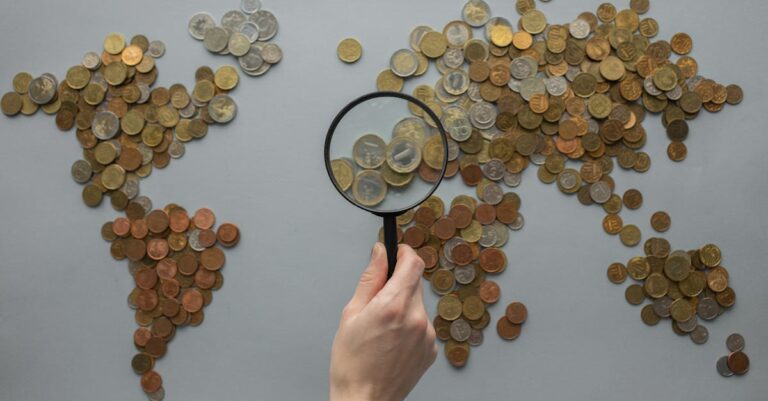
Navigate global market shifts and safeguard your investments. Discover practical strategies to build financial resilience and mitigate risks from currency volatility, ensuring your wealth endures.
The global financial landscape is a dynamic tapestry, constantly shifting with economic winds and geopolitical currents. For many, terms like exchange rates, interest rate differentials, or trade balances might seem like distant concepts, perhaps only relevant to international travelers or large corporations. However, understanding the pervasive impact of currency volatility is increasingly crucial for every individual aiming to build and preserve wealth.
In an interconnected world, your investment portfolio, your purchasing power, and even the future value of your savings are subtly yet powerfully influenced by the ebb and flow of global currencies. This article delves into the complexities of currency volatility, dissecting its drivers, exploring its hidden effects on your financial life, and, most importantly, providing actionable strategies to fortify your wealth against its unpredictable nature.
Our goal is not to turn you into a forex trader, but to equip you with the knowledge and tools to proactively manage your financial exposure. By adopting a strategic perspective and implementing prudent measures, you can move beyond merely surviving market fluctuations to truly thriving amidst global economic shifts, ensuring your journey from work to wealth remains steadfast.
Understanding Currency Volatility: More Than Just Exchange Rates
At its core, currency volatility refers to the degree of variation in the exchange rate of one currency against another over time. When you see a news headline about the national currency strengthening or weakening against a major global counterpart, you’re observing an aspect of this volatility. While these movements might seem abstract, their implications ripple through economies and directly touch individual finances.
Why does currency volatility matter to the everyday investor? Consider the fundamental principle: your money’s value is not static. If you hold assets or plan expenses in a currency that weakens significantly, your purchasing power diminishes. Conversely, a strengthening currency can make imports cheaper and enhance the value of your international investments when converted back to your home currency.
Several key drivers contribute to these fluctuations:
- Interest Rate Differentials: Central banks raise or lower interest rates. Higher interest rates often attract foreign capital seeking better returns, increasing demand for that currency and causing it to strengthen.
- Geopolitical Events: Wars, political instability, trade disputes, and international agreements can create uncertainty, prompting investors to move capital into perceived safe-haven currencies, driving their value up, and causing others to fall.
- Economic Data: Reports on a nation’s Gross Domestic Product (GDP), inflation rates, employment figures, and manufacturing output provide insights into economic health. Strong positive data typically supports a currency, while weak data can lead to depreciation.
- Trade Balances: A country that exports more than it imports typically sees greater demand for its currency, as foreign buyers need to purchase it to pay for goods. A trade deficit, where imports exceed exports, can put downward pressure on the currency.
- Government Debt and Fiscal Policy: Nations with high levels of debt or unsustainable fiscal policies may face currency depreciation as investors become concerned about the government’s ability to manage its finances.
For instance, imagine a scenario where the national currency suddenly strengthens significantly against the currency of a popular tourist destination. While this might make your next international vacation more affordable, it could simultaneously make your nation’s exports more expensive for foreign buyers, potentially impacting the profitability of export-oriented businesses you might be invested in. This dual effect highlights the complex nature of currency volatility and its far-reaching consequences.
The Hidden Impact of Currency Fluctuations on Your Portfolio
While the direct impact of currency volatility is most visible in international travel or purchasing imported goods, its effects on your investment portfolio are often more subtle, yet equally significant. Understanding these hidden influences is paramount for constructing a truly robust financial plan.
International Stocks and Bonds
If your portfolio includes international equities or fixed-income assets, currency movements play a crucial role in your overall returns. When you invest in a company listed on a foreign exchange, your return comes from two sources: the performance of the underlying asset and the movement of the foreign currency relative to your home currency.
For example, if a stock in a foreign market appreciates by 10%, but the foreign currency simultaneously depreciates by 5% against your home currency, your net gain upon converting your investment back home would be closer to 5%. Conversely, if the foreign currency strengthens, it can amplify your returns. This currency conversion risk is a silent partner in every international investment.
Commodities
Many globally traded commodities, such as crude oil, gold, and silver, are primarily priced in a major global currency. This means that even if you’re buying them in your local market, their price in your home currency is indirectly affected by the strength or weakness of that major global currency. If the major global currency strengthens, it can make commodities more expensive for buyers using other currencies, potentially impacting demand and price dynamics. This adds another layer of complexity for investors seeking exposure to raw materials.
Real Estate (International)
For those considering or already owning international real estate, currency fluctuations are a significant factor. The cost of acquisition, ongoing maintenance, and potential rental income or sale proceeds are all subject to exchange rate movements. A weakening home currency can make it more expensive to buy property abroad, while a strong home currency offers a purchasing advantage. Similarly, if you earn rental income in a foreign currency, its value upon conversion to your home currency will vary.
Everyday Expenses
Beyond investments, currency volatility directly impacts your cost of living. If your nation heavily relies on imported goods – from electronics and clothing to certain food items and energy – a weakening national currency will make these imports more expensive. This can lead to higher consumer prices and reduced purchasing power, essentially eroding the value of your savings and income.
Retirement Planning
Long-term retirement plans are particularly susceptible to the insidious effects of currency shifts. If you envision retiring abroad, the value of your pension or savings, denominated in your home currency, will dictate your lifestyle in another country. Even if you plan to stay home, a portfolio heavily invested in international assets needs to account for currency effects that could subtly erode your nest egg over decades, especially if you haven’t considered currency hedging strategies within your investment vehicles.
Building a Resilient Portfolio: Strategies Against Currency Volatility
The good news is that while currency volatility is an undeniable force, it doesn’t have to be a destructive one. With careful planning and strategic diversification, you can build a portfolio designed to withstand and even benefit from these global shifts. The key is to think holistically and long-term.
Diversification Beyond Borders and Asset Classes
Diversification is the cornerstone of intelligent investing, and it’s especially critical when addressing currency risk. Instead of concentrating all your investments in a single market or asset type, spread your capital across various regions, industries, and asset classes.
- Geographic Diversification: Invest in companies and markets across different countries and economic blocs. This means not just holding stocks from your home country but also from developed and emerging markets worldwide. When one region faces economic headwinds or currency depreciation, other regions might be performing strongly, balancing your overall portfolio.
- Asset Class Diversification: Beyond stocks, consider bonds, real estate (local and potentially global through REITs), commodities, and even alternative investments. Different asset classes react differently to currency movements and economic cycles, providing a buffer.
- Currency Diversification (Indirect): While direct currency speculation is generally unsuitable for most individual investors, you can achieve indirect currency diversification by investing in globally diversified mutual funds or exchange-traded funds (ETFs) that hold assets denominated in multiple strong currencies. Some funds may even employ their own currency hedging strategies, providing a layer of protection without you needing to manage it directly.
Focus on Strong Fundamentals
When selecting individual investments, prioritize companies with robust financial fundamentals. Look for businesses that have: strong balance sheets, consistent earnings growth, competitive advantages, and global revenue streams. Companies with international operations and diversified revenue sources are often more resilient to local currency fluctuations because their income streams come from multiple currencies, offsetting the impact of weakness in any single one.
Embrace a Long-Term Perspective
Short-term currency volatility is often just market noise. Over periods of months or even a few years, currency movements can be significant and unpredictable. However, over decades, these short-term fluctuations tend to smooth out. By adopting a long-term investment horizon, you allow your investments to ride out temporary turbulence and benefit from the underlying growth of well-chosen assets. Emotional reactions to daily currency news often lead to poor investment decisions, such as panic selling at market lows.
Simplified Hedging Considerations
For most individual investors, complex currency hedging strategies (like using forward contracts or options) are too sophisticated, costly, and risky. These are tools typically employed by institutional investors or large corporations. However, you can achieve a form of “passive hedging” by investing in funds that offer hedged share classes. These funds attempt to neutralize the currency exposure of their foreign holdings, ensuring your returns are solely based on the performance of the underlying assets, not currency swings. Always understand the fees and methodologies of such funds.
Inflation Protection
Inflation often goes hand-in-hand with discussions of currency strength and purchasing power. Assets that historically perform well during inflationary periods – such as real estate, certain commodities (like gold), and inflation-protected securities – can also offer a degree of protection against the erosion of wealth that can occur when a currency weakens significantly and drives up domestic prices. Diversifying into these assets can indirectly safeguard your capital against some of the negative effects of currency volatility on purchasing power.
Practical Steps for Individual Investors to Mitigate Currency Risk
Translating theoretical strategies into actionable steps is crucial. Here’s how you, as an individual investor, can proactively manage your exposure to currency volatility without becoming a full-time market analyst.
Review Your Current Holdings and Exposure
Begin by taking an inventory of your existing investments. Where are your assets domiciled? Do you primarily hold funds that invest solely in your home market, or do you have international exposure? Understand the underlying currency exposure of any globally diversified funds you own. Many financial platforms provide tools to help visualize your geographic and currency breakdown. Knowing your starting point is essential for making informed adjustments.
Invest in Globally Diversified Funds
For most investors, the simplest and most effective way to gain diversified international exposure and manage currency risk is through broadly diversified mutual funds or Exchange Traded Funds (ETFs). Look for funds that specifically state their international or global mandate. These funds inherently spread your investment across multiple currencies and regions, reducing the impact of any single currency’s fluctuation. Consider funds that offer both hedged and unhedged share classes, and choose based on your risk tolerance and investment objectives.
Consider Multi-Currency Accounts (for Specific Needs)
If you frequently conduct international transactions, travel extensively, or have income/expenses in multiple currencies, a multi-currency bank account or a financial service that allows you to hold balances in different currencies might be beneficial. This allows you to convert funds when exchange rates are favorable and hold them in the foreign currency until needed, avoiding repeated conversions at potentially disadvantageous rates. This is a more advanced strategy and typically only relevant for individuals with significant international financial activity.
Stay Informed, Not Obsessed
While understanding the drivers of currency volatility is important, you don’t need to track daily forex movements. Focus on major economic trends, central bank policies, and significant geopolitical developments that could have a lasting impact. Read reputable financial news sources periodically to stay abreast of the broader economic picture, but avoid the temptation to make impulsive trading decisions based on short-term headlines. Long-term investors focus on principles, not daily predictions.
Consult a Qualified Financial Advisor
Navigating the intricacies of global markets and currency risk can be complex. A qualified financial advisor who understands your personal financial situation, risk tolerance, and long-term goals can provide invaluable guidance. They can help you assess your current exposure, recommend appropriate diversified investment vehicles, and integrate currency risk management into your overall financial plan, ensuring it aligns with your wealth-building objectives.
The Role of Economic Indicators in Navigating Currency Volatility
Understanding the interplay between key economic indicators and currency volatility is not about becoming a market pundit, but about recognizing the fundamental forces that shape the value of money. These indicators provide a compass in the often-turbulent waters of global finance, offering clues about the direction of economies and, by extension, currencies.
Interest Rates and Central Bank Policies
Central banks are key players. When a central bank raises interest rates, it generally makes the national currency more attractive to foreign investors seeking higher returns on bonds or savings. This increased demand can cause the currency to strengthen. Conversely, interest rate cuts can weaken a currency. Monitoring central bank statements and policy decisions is crucial, as they signal future rate intentions and economic outlooks.
Inflation Reports
Inflation measures the rate at which the general level of prices for goods and services is rising. High inflation that is not matched by economic growth can erode a currency’s purchasing power, making it less attractive. Central banks often use interest rates to control inflation, creating a direct link between inflation, interest rates, and currency values. Consistent, moderate inflation is often seen as a sign of a healthy economy, but runaway inflation can be detrimental to a currency.
Gross Domestic Product (GDP) Growth
GDP is the total monetary or market value of all the finished goods and services produced within a country’s borders in a specific time period. Strong GDP growth signals a healthy and expanding economy, which typically supports a stronger currency. Conversely, sluggish or negative GDP growth can weigh down a currency, as it suggests economic weakness and potential for lower investment returns.
Employment Data
Key employment figures, such as unemployment rates, job creation numbers, and wage growth, provide insights into a nation’s economic health and consumer spending power. Robust employment data typically indicates a strong economy, potentially leading to higher consumer confidence and spending, which can support the currency. Weak employment data, on the other hand, can signal economic distress and exert downward pressure on the currency.
Geopolitical Events
Events like major elections, trade negotiations, international conflicts, or significant political shifts can dramatically impact investor sentiment and, consequently, currency values. Uncertainty often leads investors to seek safety in traditionally stable currencies, while currencies of countries facing instability may weaken. For example, trade war rhetoric between major economies can cause significant shifts in global currency pairs, as investors react to potential economic disruptions.
For long-term investors, the goal is not to predict daily currency moves based on these indicators, but to understand the broader economic narratives they paint. This understanding helps in assessing the long-term viability and risk profiles of different markets and asset classes in your diversified portfolio, making your investment decisions more informed and resilient to currency volatility.
Avoiding Common Pitfalls in Volatile Markets
In environments characterized by currency volatility and broader market swings, emotional responses can often derail even the best-laid financial plans. Recognizing and avoiding common pitfalls is as important as implementing sound strategies.
Panic Selling
One of the most destructive behaviors for investors is panic selling. When markets experience significant downturns or currencies weaken rapidly, the fear of further losses can lead individuals to sell their holdings at the worst possible time. This locks in losses and prevents participation in the inevitable market recovery. Remember that volatility is a normal part of investing; successful investors remain disciplined and focused on their long-term objectives.
Chasing Returns
On the flip side, the temptation to chase outsized returns during periods of rapid growth or speculative bubbles is another common pitfall. This often involves investing in highly volatile assets or strategies (like direct, leveraged forex trading) without fully understanding the associated risks. While some might achieve short-term gains, the vast majority of individual investors engaging in such speculative activities eventually incur significant losses. A prudent approach prioritizes consistent, sustainable growth over speculative gambles.
Over-Leveraging
Leverage involves borrowing money to amplify investment returns. While it can magnify gains, it equally magnifies losses, often at an accelerated rate. In markets characterized by currency volatility, where sudden, sharp movements are possible, over-leveraging can lead to rapid and catastrophic capital depletion. For the ‘Work to Wealth’ philosophy, which prioritizes sustainable growth and wealth preservation, significant leverage in personal investment portfolios is generally to be avoided, especially in speculative endeavors.
Ignoring Risk Tolerance
Every investor has a unique risk tolerance – the amount of financial risk they are comfortable taking. A common mistake is to invest in assets or strategies that exceed one’s comfort level, often influenced by external pressures or the perceived success of others. When markets become volatile, these investors are more prone to making impulsive decisions born of anxiety. It’s crucial to honestly assess your risk tolerance and ensure your portfolio allocation, including your exposure to international markets and potential currency risk, aligns with it. A portfolio that keeps you awake at night is likely not the right portfolio for you.
By staying rational, disciplined, and true to your personalized financial plan, you can navigate volatile periods without succumbing to these common, wealth-eroding traps. Focus on the long game and the principles that build lasting wealth.
Case Studies: Navigating Currency Dynamics
To illustrate the practical implications of currency volatility, let’s consider a few generic scenarios that highlight how individuals can be affected and how strategic planning can make a difference.
Scenario 1: The Global Traveler’s Budget
Consider Anya, a retiree living in a country whose national currency has been strong for several years. She receives a stable pension income in her home currency and plans to travel extensively across Europe. As her national currency strengthens against the Euro, her travel budget effectively expands; hotels, meals, and excursions in Europe become more affordable when converted from her home currency. Anya benefits from favorable exchange rates, enhancing her retirement experience without increasing her fixed income. However, if her national currency were to suddenly weaken, her carefully planned travel budget would shrink, requiring her to adjust her spending or travel less.
Scenario 2: The Resilient Investor’s Portfolio
David is an investor who, early in his career, diversified his portfolio significantly beyond his home country. A substantial portion of his investments is in a globally diversified ETF that holds equities across North America, Europe, and Asia, with a mix of developed and emerging markets. When an economic downturn and subsequent currency depreciation hit one particular region, say a significant weakening of a regional currency against a major global currency, David’s portfolio experiences some impact from that specific region. However, due to his broad diversification across many regions and currencies, the negative impact from that single event is mitigated by the stable or positive performance of his investments in other parts of the world. His multi-currency exposure, even if unhedged at the fund level, acts as a natural buffer against severe swings in any one currency, showcasing the power of geographic diversification in cushioning currency volatility.
Scenario 3: The Small Business Owner’s Dilemma
Sarah owns a small online retail business that sources unique handcrafted goods from various international suppliers. Her business relies on importing these goods, which are priced in several foreign currencies. When her national currency suddenly weakens against these foreign currencies, the cost of her inventory increases significantly. This squeezes her profit margins, as she cannot always immediately pass on the increased costs to her customers without losing sales. To mitigate this, Sarah explores options such as building relationships with multiple suppliers in different countries, diversifying her sourcing, or sometimes making larger inventory purchases when exchange rates are favorable, thereby reducing the impact of short-term currency volatility on her operational costs and profitability.
These examples underscore that currency movements aren’t just abstract numbers; they have tangible effects on individuals and businesses. Proactive planning, diversification, and awareness are the keys to navigating these dynamics effectively.
The Future of Wealth in a Connected World
The trend towards greater global economic integration is undeniable and set to continue. As borders become more porous for capital, goods, and services, the influence of international markets, and consequently currency volatility, on personal wealth will only grow. This reality demands a proactive and adaptive approach to financial planning.
For individuals building wealth, this means moving beyond a purely domestic financial perspective. Your investment decisions, retirement planning, and even daily financial habits must acknowledge the global context. Understanding how your home currency interacts with others, how geopolitical events reverberate through financial markets, and how to position your assets to withstand these forces is no longer an advanced concept for sophisticated investors – it’s a fundamental requirement for anyone aspiring to long-term financial security and prosperity.
The need for continuous learning and adaptation in your financial journey cannot be overstated. Financial markets are constantly evolving, and new challenges and opportunities emerge regularly. Staying informed about global economic trends, revisiting your portfolio strategy periodically, and being open to adjusting your approach based on significant shifts in the world economy are vital practices. This doesn’t imply constant tinkering; rather, it suggests an informed and considered review process.
Ultimately, the power lies in embracing the long view. While currency volatility can create short-term noise and anxiety, a disciplined, diversified, and long-term investment strategy is the most robust defense. Focus on building a portfolio of quality assets that are resilient across various economic conditions and geographies. This approach allows you to ride out the inevitable ups and downs, confident that your underlying wealth-building engine remains strong.
The journey from work to wealth is not always a straight line, especially in a world marked by interconnectedness and rapid change. However, with prudent planning, informed decision-making, and a steadfast commitment to diversification, you can harness the dynamics of global finance to your advantage, ensuring your financial future is not just secure, but truly thrives.
Conclusion: Your Path to Enduring Wealth Amidst Uncertainty
In conclusion, the pervasive influence of currency volatility on personal wealth is a fundamental reality of our interconnected global economy. While the daily fluctuations of exchange rates might seem distant, their impact can profoundly affect everything from your investment returns and purchasing power to your long-term retirement plans.
We’ve explored how various economic indicators and geopolitical events drive these currency movements and uncovered the often-hidden ways they can shape your financial portfolio. The key takeaway is not to fear this volatility, but to understand it and arm yourself with effective strategies.
Building a resilient portfolio starts with robust diversification – geographically, by asset class, and indirectly by currency exposure. Focusing on strong fundamental investments, maintaining a steadfast long-term perspective, and continuously educating yourself on global economic trends are indispensable practices. Furthermore, avoiding common pitfalls like panic selling or speculative trading will safeguard your capital from impulsive decisions.
Your path to enduring wealth amidst uncertainty requires proactive engagement, thoughtful planning, and, when appropriate, the guidance of a qualified financial advisor. By embracing these principles, you can transform the challenge of currency volatility into an opportunity to strengthen and expand your financial foundations, ensuring your work truly leads to lasting wealth.