

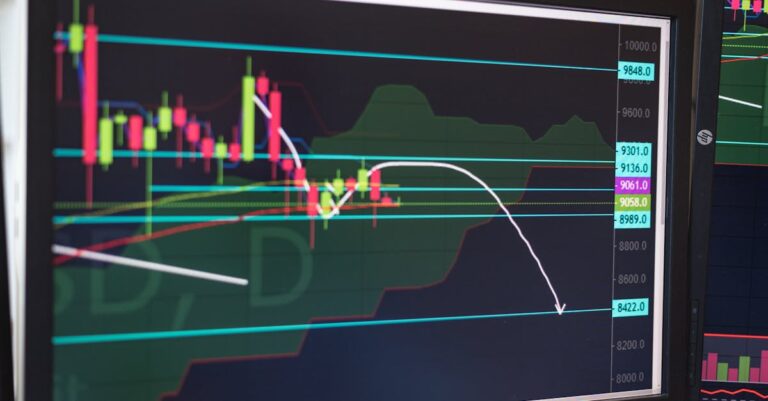
Understand the extreme market volatility impacting investor portfolios in key Asian markets. Learn strategies to safeguard your wealth and seize opportunities amidst rapid shifts.
Unpacking the Paradox: A Market’s Meteoric Rise and Sudden Swings
The global investment landscape often presents intriguing paradoxes, but few are as stark as the recent performance of a prominent Asian equities market. Heralded as the world’s top-performing stock market in 2025, it has since devolved into a hotbed of historic market volatility, leaving investors grappling with extreme uncertainty. What drives a market to such exhilarating heights, only to plunge into unprecedented daily swings?
This article delves into the intricate factors contributing to this dynamic, exploring the deep-seated structural issues and external pressures that magnify both triumphs and tribulations for investors. Understanding these forces is not merely an academic exercise; it is crucial for anyone looking to navigate complex financial terrains and build lasting wealth.
The Ascent of 2025: A Beacon of Growth
The year 2025 was a period of remarkable growth for this particular Asian market, drawing significant global attention. The benchmark index saw substantial gains, driven primarily by its leading technology sector. Reports indicated that some of the dominant players within this market experienced staggering growth rates, with share values skyrocketing by 125% to an astonishing 274% in that single year. This impressive performance positioned the market as a global leader, fueled by innovation and robust demand for its key exports.
The underlying drivers for this ascent were clear: a surge in global demand for advanced technology components, particularly memory chips, and a strong export-oriented economy benefiting from international trade flows. This period of rapid expansion created substantial wealth for investors and instilled a sense of optimism about the market’s future potential. It attracted both domestic and foreign capital, eager to capitalize on the momentum.
The Whiplash of Wild Market Volatility
However, the narrative dramatically shifted. The market, once a symbol of consistent growth, began to experience extreme market volatility. Recent reports detailed extraordinary daily swings that defied conventional market behavior. One week saw the benchmark index plunge by as much as 12% in a single day, marking its largest single-day drop on record. Yet, almost immediately, it staged a powerful rebound, gaining nearly 10% in the very next session, registering its best day since 2008. Such whipsaw movements are not just statistical anomalies; they represent significant challenges and opportunities for investor portfolios.
This level of unpredictability creates a challenging environment for investors, where fortunes can be made or lost in a matter of hours. The rapid shifts necessitate a deeper understanding of the market’s unique characteristics, moving beyond simple growth metrics to examine the forces that generate such profound and sudden market volatility.
The Concentrated Power of Technology: A Double-Edged Sword for Investor Portfolios
One of the primary explanations for this market’s pronounced market volatility lies in its highly concentrated structure. Unlike more diversified global indices, a significant portion of its market capitalization is dominated by a handful of technology giants.
Dominance of Key Innovators
Specifically, two leading memory chip manufacturers and global electronics giants account for approximately one-third of the benchmark index’s total market capitalization, according to a report from a local capital market institute, as cited by a major financial news outlet. These companies are not just local players; they are global leaders in their respective fields, driving innovation in semiconductors, consumer electronics, and artificial intelligence.
Their products are integral to the global technology supply chain, making their performance a bellwether for the broader tech sector. This concentration means that their individual fortunes are disproportionately reflected in the overall market index, creating a unique dynamic for investors.
Magnifying Gains and Market Volatility Risks
This heavy concentration acts as a double-edged sword. When the key technology sector, particularly the memory chip cycle, is strong, the index can rally rapidly and impressively, as evidenced by its performance in 2025. The strong earnings and positive outlook for these dominant firms propel the entire market upward, generating substantial returns for investors.
However, the inverse is also true and dramatically amplified. When investors take profits, sentiment turns risk-off, or when these heavyweight stocks face headwinds, declines can drag the entire market lower with significant force. This magnification of movement contributes heavily to the extreme market volatility observed. For instance, the market’s Volatility Index surged 27% to hit a record high during a recent sell-off, a clear indicator of heightened risk and investor anxiety. While it subsequently dipped, it remained at historically elevated levels, underscoring the persistent market volatility.
Investors in this market must therefore contend with the inherent risk of having their portfolios heavily influenced by the performance of a select few, albeit powerful, companies. This structural feature is a key differentiator when comparing this market to more broadly diversified global indices.
Retail Investor Leverage: Fueling Market Swings and Investor Frustration
Beyond structural concentration, another critical factor amplifying the market’s extreme movements is the pervasive influence of its large and highly active base of retail investors, coupled with extensive use of leveraged trading instruments. This dynamic creates a powerful feedback loop that can exacerbate market swings and detach price action from fundamental value.
The Rise of the Individual Investor
Individual investors have become a dominant force in this Asian market. Data from the local stock exchange reveals that during recent periods of high market volatility, individual traders accounted for the largest share of daily turnover, often making up over 45% of total trading volume. This level of participation surpasses that of foreign institutional investors and local institutions, highlighting the significant collective impact of retail trading decisions.
These investors are often driven by shorter-term horizons and a willingness to engage in more aggressive trading strategies, seeking to capitalize on rapid price movements. Their collective behavior can thus generate substantial market momentum, both upwards and downwards.
The Double-Edged Sword of Margin Trading and Derivatives
A significant portion of this retail activity involves the use of margin accounts and leveraged exchange-traded funds (ETFs). Margin trading allows investors to borrow money to buy more stocks than they could afford with their own capital, effectively amplifying potential returns. Similarly, leveraged ETFs are designed to magnify the daily returns of an underlying index or asset, often by two or three times.
While leverage can boost gains during bull markets, it dramatically magnifies losses during downturns. When stock prices fall sharply, margin calls are triggered, forcing investors to either deposit more funds or liquidate their holdings. As one market strategist noted, “This is just too much of the leverage trading that’s affecting the market. We had a huge amount of margin calls for retail investors. So they just dumped it… And then [the next day] it went back up again. It has nothing to do with fundamentals.” This cycle of forced selling exacerbates price declines, creating a cascade effect that further fuels market volatility. Conversely, aggressive buying by these same leveraged retail investors can trigger powerful rebounds, contributing to the “whipsaw” effect.
Separating Price from Fundamental Value
This heavy reliance on leverage means that short-term market movements can become disconnected from the underlying fundamentals of the companies being traded. During periods of extreme market volatility, technical factors such as margin call liquidations or speculative buying can dominate price action, overriding considerations of corporate earnings, growth prospects, or long-term value. This can be a source of significant investor frustration, as the market appears to behave irrationally or unpredictably. For those who invest based on solid financial principles, navigating a market driven by such rapid, leveraged sentiment shifts presents a unique challenge.
Understanding the pervasive role of retail leverage is essential for anyone seeking to comprehend the extreme market volatility in this region and to develop robust strategies to protect and grow their wealth.
Global Headwinds: Geopolitical Tensions and Energy Shocks Amplifying Market Volatility
While internal structural factors and domestic investor behavior play a significant role in magnifying market volatility, external global events also exert a powerful influence. This particular Asian market, being highly integrated into the global economy and reliant on international trade, is especially susceptible to geopolitical tensions and fluctuations in commodity prices.
The Ripple Effect of Global Events
Recent escalations in geopolitical conflicts, such as those in the Middle East, have sent ripples across global financial markets. These events create uncertainty, leading investors to adopt a “risk-off” sentiment where they withdraw capital from perceived riskier assets and move towards safer havens. The interconnectedness of global finance means that even conflicts far removed geographically can have immediate and profound impacts on seemingly distant markets.
The market under discussion, with its substantial foreign investor participation, is particularly sensitive to these global shifts in sentiment. Any indication of heightened global risk can trigger outflows of foreign capital, contributing to downward pressure and exacerbating existing market volatility.
Energy Sensitivity and Economic Impact
A specific vulnerability for this market stems from its heavy reliance on crude oil imports. As a major industrial and technological powerhouse, the country requires significant energy resources to power its economy and manufacturing sectors. Consequently, disruptions in global supply chains or surges in international oil prices can have a direct and pronounced impact on its economic outlook and corporate profitability.
As one global market strategist observed, “While we had seen sell-offs in major equity markets driven by the uncertainties around the Middle East, it has been more pronounced in [this Asian market] given its relatively higher dependence on crude oil imports.” Rising energy costs translate into higher operational expenses for businesses, increased transportation costs, and potential inflationary pressures for consumers. These factors can dampen economic growth expectations and lead to a reassessment of corporate earnings, which, in turn, contributes to market volatility.
Therefore, understanding the interplay between global geopolitical developments, commodity markets, and the specific economic sensitivities of this region is crucial for any investor attempting to navigate its unpredictable financial landscape and comprehend the drivers of its extreme market volatility.
Enduring Strengths: The Semiconductor Cycle and Long-Term Value in a Volatile Market
Despite the recent periods of intense market volatility and the underlying structural challenges, it is crucial for investors to look beyond the short-term noise and consider the robust fundamental strengths that underpin this market. The dominant semiconductor sector, in particular, continues to present a compelling long-term investment case.
Resilient Semiconductor Sector
The core of this market’s economic prowess lies in its leading position in the global semiconductor industry. The demand for advanced memory chips, particularly Dynamic Random Access Memory (DRAM), has been exceptionally strong, extending from 2025 and projected to continue growing robustly through the first half of 2026. This sustained demand is driven by global trends such as the expansion of artificial intelligence, cloud computing, 5G technology, and the proliferation of smart devices.
This translates directly into strong earnings for the local chipmakers, which, as discussed, constitute a significant portion of the market index. As one investment director of Asian equities commented, “Memory prices… have been rising after a strong 2025 and are expected to continue growing through the first half of 2026, supporting earnings for [local] chipmakers.” This fundamental strength acts as a powerful counterbalance to the short-term market swings, suggesting that the underlying value creation remains intact.
Beyond the Choppiness: Underlying Investment Opportunities
Market analysts generally agree that the recent pullbacks, while dramatic, appear to be more “knee-jerk and more sentiment-driven at this stage, rather than fundamentally driven.” This distinction is critical for long-term investors. Sentiment-driven declines, especially those amplified by leveraged retail trading and external shocks, often present opportunities for those with a strategic perspective.
When valuations stabilize after such sharp drops, fundamentally strong companies become more attractive. The long-term drivers for equities in this market, particularly within the semiconductor space, are considered to remain robust. While concerns about demand destruction or inventory hoarding might arise, the demand-supply dynamics in the memory chip sector are projected to remain tight for the foreseeable future, ensuring continued support for earnings. Therefore, for investors capable of weathering the market volatility, these periods of correction might well represent advantageous entry points into high-quality assets at more reasonable valuations.
The key is to differentiate between temporary market turbulence and fundamental erosion of value. In this market, the latter appears to be largely absent in its core growth sectors, suggesting that for prudent investors, opportunity exists amidst the market volatility.
Prudent Navigation: Strategies for Investor Wealth Preservation Amidst Market Volatility
Navigating a market characterized by extreme market volatility requires a strategic and disciplined approach. While no strategy can entirely eliminate risk, certain principles and practices can significantly help investors preserve and grow their wealth, even amidst dramatic swings. The goal is to build resilience into your portfolio and maintain a long-term perspective.
Diversification: Your First Line of Defense
In a market heavily concentrated in a few sectors, diversification becomes paramount. Spreading investments across various asset classes (e.g., stocks, bonds, real estate), different industries, and geographies can significantly reduce the impact of a single market’s or sector’s underperformance. For investors primarily exposed to this volatile Asian market, considering investments in other regional markets or global sectors could balance the portfolio. Diversification mitigates reliance on specific growth cycles, such as the semiconductor market, and hedges against localized economic or geopolitical shocks.
The Power of a Long-Term Investment Horizon
History consistently demonstrates that “time in the market” is generally more effective than “timing the market.” Short-term market volatility, while emotionally challenging, often represents temporary fluctuations rather than permanent impairments of value. A long-term perspective allows investors to ride out the inevitable ups and downs, benefiting from the compounding effect of returns over years, rather than reacting impulsively to daily or weekly price changes. For fundamentally sound markets, periods of extreme market volatility often precede eventual recoveries and new growth phases.
Risk Management: Setting Boundaries and Expectations
Understanding and defining your personal risk tolerance is fundamental. This involves assessing how much financial loss you can comfortably bear without it impacting your financial goals or emotional well-being. Based on this, establish clear rules for your investments, such as allocating only a certain percentage of your portfolio to higher-risk assets. Regularly review your portfolio to ensure it aligns with your risk profile. Having realistic expectations about potential returns and acknowledging that market volatility is an inherent part of investing can also prevent panic-driven decisions.
Avoiding Excessive Leverage: A Prudent Investor’s Choice
Given the amplified market volatility fueled by retail leverage in this market, individual investors should exercise extreme caution with margin accounts and leveraged financial products. While they offer the allure of magnified gains, they carry an equally magnified risk of substantial losses and forced liquidations during downturns. For most retail investors focused on long-term wealth accumulation, avoiding excessive leverage is a prudent strategy that protects capital from sudden, severe market corrections caused by technical rather than fundamental factors.
Dollar-Cost Averaging: Smoothing Out the Ride
Dollar-cost averaging is a strategy where you invest a fixed amount of money at regular intervals, regardless of the asset’s price. This approach automatically leads to buying more shares when prices are low and fewer when prices are high. It removes the emotional element of trying to time the market, which is particularly difficult and often counterproductive in highly volatile environments. Over time, dollar-cost averaging can reduce the average cost per share and mitigate the impact of short-term market volatility on your overall returns.
Focus on Fundamental Analysis: Knowing What You Own
Amidst market noise and speculative trading, returning to the fundamentals is crucial. Research the companies you invest in: understand their business models, competitive advantages, financial health, earnings growth, and management quality. This approach helps in identifying genuinely strong companies that are likely to thrive over the long term, irrespective of short-term market sentiment. When market volatility causes price dislocations, fundamental analysis can help identify undervalued opportunities, allowing you to invest with conviction rather than conjecture.
Strategic Portfolio Rebalancing: Staying Aligned with Goals
Periodically rebalancing your portfolio involves adjusting your asset allocation back to your desired target. For instance, if stocks have performed exceptionally well, they might now represent a larger portion of your portfolio than you initially intended. Rebalancing would involve selling some of those high-performing stocks and reinvesting the proceeds into assets that have lagged, or into different asset classes. This systematic approach ensures you take profits from overvalued segments and reallocate capital to potentially undervalued areas, maintaining your risk profile and disciplined investment strategy.
Maintaining a Cash Reserve: Liquidity and Opportunity
Holding a portion of your wealth in cash or highly liquid assets serves multiple purposes. Firstly, it provides a safety net for unexpected expenses, preventing the need to sell investments at an inopportune time. Secondly, a cash reserve positions you to seize opportunities during significant market downturns. When extreme market volatility leads to widespread selling and depressed asset prices, having readily available capital allows you to invest in high-quality assets at attractive valuations, effectively “buying low.”
Seeking Expert Guidance: A Collaborative Approach
For many investors, especially when navigating complex and highly volatile markets, seeking advice from a qualified financial advisor can be invaluable. A professional can help you assess your risk tolerance, define clear financial goals, develop a diversified investment plan tailored to your needs, and provide objective guidance during periods of market stress. They can offer insights into specific market dynamics and help you stay disciplined, preventing emotional reactions to market volatility from derailing your long-term wealth accumulation strategy.
The Future of Dynamic Markets: Embracing Smart Investment for Wealth Accumulation
The extreme market volatility witnessed in this leading Asian market underscores a fundamental truth about investing: markets are dynamic, inherently uncertain, and constantly influenced by a confluence of economic, political, and social forces. While the recent swings have been particularly dramatic, they are a stark reminder that even the most robust economies and innovative companies operate within a larger, often unpredictable, global context.
For investors, the key takeaway is not to shy away from dynamic markets, but to approach them with intelligence, discipline, and a well-defined strategy. The structural concentration, retail leverage, and geopolitical sensitivities that contribute to this market’s volatility also highlight its unique characteristics and potential for outsized returns when conditions are favorable. The underlying strength of its dominant technology sector, particularly semiconductors, remains a powerful engine for long-term growth, suggesting that periods of correction may offer compelling opportunities for those with foresight.
By embracing principles such as diversification, maintaining a long-term perspective, practicing diligent risk management, and avoiding the pitfalls of excessive leverage, investors can build resilient portfolios. Strategies like dollar-cost averaging, fundamental analysis, and strategic rebalancing empower individuals to navigate the choppiness and turn market volatility into an advantage. Ultimately, success in such an environment is not about predicting the next swing but about preparing for it, staying grounded in your financial goals, and making informed decisions that align with your journey from work to wealth.
Frequently Asked Questions
Why is a leading Asian stock market experiencing such extreme swings, creating investor frustration?
This market’s extreme market volatility stems from several factors. It has a high concentration of market capitalization in a few dominant technology companies, whose performance heavily sways the entire index. Additionally, a large base of retail investors actively uses margin trading and leveraged financial products, amplifying both gains and losses through cycles of forced selling and rapid buying. External factors like geopolitical tensions and its high dependence on crude oil imports also contribute to its sensitivity and unpredictable movements, leading to investor frustration over sudden changes.
How does market concentration impact my investment returns during high volatility, affecting my wealth accumulation goals?
Market concentration significantly impacts investment returns during high market volatility. When a few companies dominate an index, their performance dictates the market’s direction. If these few stocks perform well, your returns can be substantial. However, if they face profit-taking, industry slowdowns, or external shocks, the entire market can plummet disproportionately, leading to significant losses and hindering your wealth accumulation goals. This magnifying effect makes diversification across different sectors and geographies even more crucial to mitigate risk.
What role do retail investors and leverage play in market unpredictability, causing investor concern?
Retail investors, particularly those using margin accounts and leveraged products, play a significant role in increasing market unpredictability. While their collective buying can fuel rapid rallies, a sudden downturn can trigger widespread margin calls, forcing them to sell holdings rapidly. This forced selling amplifies price drops, leading to sharp declines that may not reflect underlying company fundamentals. Such leveraged trading creates “whipsaw” movements and increases overall market volatility, causing substantial investor concern due to the detachment from fundamental value.
What strategies can safeguard investor wealth during periods of market volatility and achieve financial security?
To safeguard investor wealth during market volatility and achieve financial security, consider several strategies: Diversify your portfolio across various asset classes, sectors, and geographies; maintain a long-term investment horizon to ride out short-term fluctuations; implement robust risk management by defining your risk tolerance and setting clear investment rules; avoid excessive leverage; utilize dollar-cost averaging to smooth out entry points; focus on fundamental analysis; periodically rebalance your portfolio; and maintain a strategic cash reserve. Seeking guidance from a qualified financial advisor can also provide tailored support.
Despite the current choppiness, what is the long-term outlook for growth in this dynamic market, offering hope for future gains?
Despite the current market volatility, the long-term outlook for growth in this dynamic market remains positive, offering hope for future gains. This is primarily driven by the enduring strength of its dominant semiconductor sector, which continues to benefit from robust global demand for memory chips, fueled by AI, cloud computing, and 5G. Experts view recent pullbacks as largely sentiment-driven rather than fundamentally impaired. With strong underlying earnings and projected growth in key industries, the market is poised for recovery and continued wealth creation for patient, strategic investors.