

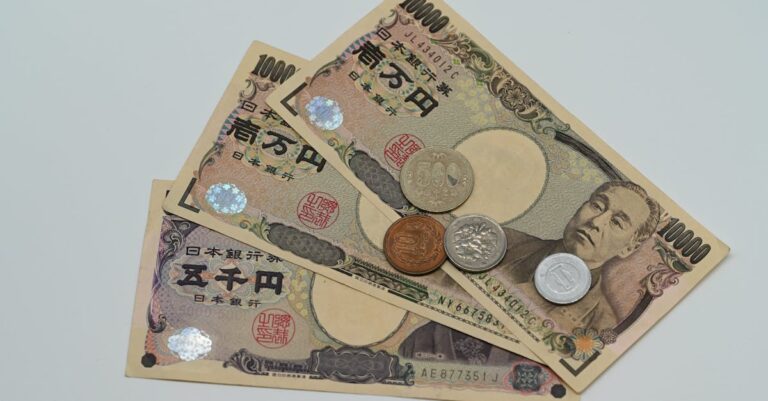
Master the forces behind Japanese Yen movements and USD/JPY stability. This guide equips investors to leverage market insights for informed wealth-building strategies.
The intricate dance between the US Dollar (USD) and the Japanese Yen (JPY), forming the crucial USD/JPY currency pair, remains a focal point for global investors and those building their wealth. Its movements are not merely abstract numbers on a screen; they reflect deep underlying economic, political, and sentiment-driven forces that can significantly impact investment portfolios, international trade, and even the cost of goods and services for everyday consumers. Understanding these dynamics is paramount for anyone looking to make informed financial decisions in an interconnected world, especially when the pair steadies near a significant level like 156.00, inviting both caution and opportunity.
Recent headlines, such as the Japanese Yen steadying against the US Dollar following significant political addresses, underscore the volatility and sensitivity inherent in this pairing. The interplay of a major global economy like the United States, with its robust albeit fluctuating growth, and Japan, with its unique monetary policy history and distinct economic challenges, creates a complex environment for currency valuation. For individuals and businesses striving for wealth accumulation, deciphering these signals is not just an academic exercise but a practical necessity for safeguarding and growing capital.
The Echoes of US Policy: Trump’s SOTU and the Dollar’s Trajectory
The statements emanating from high-level political figures in major economies often send ripples through financial markets. When former US President Donald Trump delivered his first State of the Union (SOTU) address of his second administration, his focus on economic achievements and future policy directions immediately became a critical data point for currency traders and long-term investors alike. His assertion of having overseen a “turnaround for the ages” and praise for “lower inflation” directly speaks to the fundamental pillars of currency strength.
A nation’s currency typically strengthens when its economy demonstrates robust health, characterized by sustainable growth, low unemployment, and controlled inflation. Trump’s emphasis on lower inflation, if seen as a direct outcome of his administration’s policies, could imply a stable economic environment, potentially reducing the need for aggressive interest rate hikes from the central bank. Such a scenario generally supports a currency like the US Dollar, making it more attractive to international investors seeking stable returns.
Inflation Management and Its Currency Impact
Inflation, the rate at which the general level of prices for goods and services is rising, has a profound impact on currency valuations. When inflation is high and uncontrolled, a currency’s purchasing power erodes, often leading to depreciation. Conversely, low and stable inflation, as Trump highlighted, suggests economic health and price stability, which can bolster a currency’s appeal. Central banks, like the US Federal Reserve, closely monitor inflation to guide their monetary policy decisions, particularly concerning interest rates. If inflation is tamed, the pressure to raise rates might ease, influencing the carry trade dynamics against lower-yielding currencies like the Japanese Yen.
The perception of economic achievement, especially regarding inflation, can influence investor confidence. Higher confidence in the US economy typically translates into increased demand for US assets, including the dollar, as capital flows into the country seeking better returns or safer havens. This demand naturally strengthens the USD against other major currencies, including the Japanese Yen. The SOTU address, therefore, was not just a political speech but a potential catalyst for shifts in market sentiment towards the world’s reserve currency.
Trade War Rhetoric and Global Economic Uncertainty
Beyond domestic economic boasts, Trump’s SOTU also touched upon international trade, threatening to impose higher tariffs on countries that “play games” with recent trade deals after a legal challenge blocked some sweeping global levies. This rhetoric, reminiscent of past trade disputes, introduces a significant element of uncertainty into global markets. Trade wars can disrupt supply chains, reduce international commerce, and slow down global economic growth. For the Japanese Yen, such threats have a dual impact.
Firstly, as Japan is a major export-oriented economy, any disruption to global trade, particularly with a key partner like the United States, could negatively affect its economic performance. Reduced exports would impact corporate profits, potentially leading to slower economic growth, which generally weakens the Japanese Yen. Secondly, in times of increased global uncertainty and geopolitical tension, the Japanese Yen often benefits from its traditional status as a safe-haven currency. Investors might flock to the JPY, alongside other perceived safe assets like gold or certain government bonds, seeking refuge from market turmoil. This conflicting dynamic means that trade war threats can create complex movements for the USD/JPY pair, pushing it in different directions depending on the prevailing market sentiment and the perceived severity of the trade tensions.
The Japanese Economic Tightrope: BoJ, Government, and the Yen’s Future
While the US Dollar’s trajectory is influenced by its own economic and political narratives, the Japanese Yen’s movements are equally, if not more, sensitive to the unique policy decisions and economic conditions within Japan. The Bank of Japan (BoJ) plays a pivotal role, given its long history of unconventional monetary policies aimed at combating deflation and stimulating economic growth. Recent discussions involving high-ranking Japanese officials highlight the delicate balance the BoJ must strike between supporting the economy and managing currency stability.
Reports suggesting that Japanese Prime Minister Sanae Takaichi expressed concerns about further interest rate hikes during her meeting with BoJ Governor Kazuo Ueda shed light on the political pressures that central banks sometimes face. While BoJ Governor Ueda clarified that the discussion broadly covered economic and financial developments and that the Prime Minister made no specific monetary policy requests, the mere suggestion of political influence can stir market speculation. This kind of interaction underscores a perennial challenge for central banks: maintaining independence while operating within a broader government framework that often has its own economic objectives, such as promoting exports or managing debt burdens, which can be affected by currency strength.
BoJ’s Ultra-Loose Monetary Policy: A Legacy of Yen Depreciation
For over a decade, between 2013 and 2024, the BoJ maintained an ultra-loose monetary policy stance, a defining characteristic of its efforts to escape persistent deflation. This involved a combination of quantitative easing (QE), negative interest rate policy (NIRP), and yield curve control (YCC). Under NIRP, commercial banks were charged for holding reserves at the BoJ, intended to encourage lending. YCC involved targeting specific levels for government bond yields, effectively capping long-term interest rates. The goal was to make borrowing cheaper, stimulate investment, and push inflation towards the BoJ’s 2% target.
This prolonged period of exceptionally low, and even negative, interest rates in Japan created a significant policy divergence with other major central banks, particularly the US Federal Reserve. As the Fed began hiking interest rates in response to rising inflation, the interest rate differential between US and Japanese bonds widened considerably. This widening differential made the US Dollar more attractive for carry trades, where investors borrow in low-yielding JPY and invest in higher-yielding USD assets. The consequence was a sustained depreciation of the Japanese Yen against the US Dollar, impacting import costs and potentially boosting exports.
The gradual unwinding of this ultra-loose policy, which began around 2024, has been a significant event for the Japanese Yen. As the BoJ started to remove NIRP and adjust YCC, it signaled a shift towards a more conventional monetary policy. This shift has provided some support to the Yen, as the prospect of higher Japanese interest rates makes the currency more appealing to investors. However, the pace and extent of this normalization remain key factors determining the Yen’s future direction, with government officials closely monitoring the impact on the economy and foreign exchange markets.
The Delicacy of Central Bank Independence
The statements from Deputy Chief Cabinet Secretary Masanao Ozaki, emphasizing that monetary policy specifics should be left to the Bank of Japan, serve as a crucial reinforcement of central bank independence. This principle is vital for maintaining credibility and ensuring that monetary policy decisions are made based on economic fundamentals rather than short-term political expediency. Any perception of political interference could undermine investor confidence in the BoJ’s autonomy, potentially leading to increased market volatility and an unpredictable Japanese Yen.
Yet, Prime Minister Takaichi’s commitment to “closely monitor foreign exchange moves with a heightened sense of urgency” reflects the reality that currency strength has tangible implications for Japan’s economy. A significantly depreciated Yen, while potentially boosting exports, also makes imports more expensive, contributing to domestic inflation and potentially eroding household purchasing power. For an economy heavily reliant on imported energy and raw materials, a weak Yen can be a double-edged sword, necessitating careful observation and, at times, verbal intervention from policymakers.
Key Drivers of the Japanese Yen: A Deeper Dive for Investors
Understanding the interplay of these domestic and international factors is critical for anyone engaging with the USD/JPY pair. The value of the Japanese Yen, often considered one of the world’s most traded currencies, is broadly determined by a combination of Japan’s economic performance, the Bank of Japan’s policy decisions, the differential between Japanese and US bond yields, and broader global risk sentiment.
Japan’s Economic Performance: The Bedrock of Currency Strength
The fundamental health of the Japanese economy forms the bedrock of the Yen’s value. Indicators such as Gross Domestic Product (GDP) growth, industrial production, manufacturing output, and trade balance are closely watched. A robust and growing economy typically attracts foreign investment, increasing demand for the domestic currency. Japan’s economy, being heavily export-oriented, is particularly sensitive to global trade conditions. A strong global economy generally boosts demand for Japanese goods, leading to higher exports and a stronger Yen. Conversely, global slowdowns or trade protectionism can hurt Japan’s economy, putting downward pressure on the currency.
Demographic challenges, such as an aging population and a shrinking workforce, also present long-term structural headwinds for Japan’s economic growth potential. These factors, while not causing immediate daily fluctuations, influence the long-term outlook for the Japanese Yen, as they bear upon the nation’s productive capacity and fiscal health.
The Bank of Japan’s Monetary Policy: A Unique Path
As discussed, the BoJ’s monetary policy is arguably the most dominant factor influencing the Japanese Yen. Its prolonged period of ultra-loose policy distinguished it sharply from other major central banks. The BoJ’s mandate includes price stability and contributing to the sound development of the national economy. Its tools, historically, have been unconventional: near-zero or negative interest rates, extensive asset purchases (quantitative easing), and yield curve control (YCC) to manage long-term bond yields.
The recent pivot away from NIRP and adjustments to YCC mark a significant shift. This gradual normalization is driven by nascent signs of inflation finally emerging in Japan, after decades of deflationary pressures. The future path of BoJ policy will depend heavily on whether inflation can sustainably reach and maintain the 2% target. Any further rate hikes or adjustments to asset purchases will likely provide further support to the Yen, narrowing the policy divergence with the US Federal Reserve and other central banks. Investors must closely monitor BoJ statements, press conferences, and economic outlook reports for clues on future policy direction.
Interest Rate Differentials: The Carry Trade Magnet
The differential between Japanese and US bond yields, particularly the 10-year government bond yields, is a powerful driver of the USD/JPY exchange rate. This differential reflects the difference in interest rates offered by each country’s government bonds, which in turn are heavily influenced by their respective central bank policies. When US interest rates are significantly higher than Japanese rates, investors can earn a higher return by holding US Dollar-denominated assets. This encourages the “carry trade,” where investors borrow funds in the lower-yielding currency (JPY) to invest in the higher-yielding currency (USD).
This flow of capital from Japan to the US creates demand for the US Dollar and supply of the Japanese Yen, leading to JPY depreciation and USD appreciation. Over the last decade, the widening divergence between the BoJ’s ultra-loose policy and the Fed’s tightening cycle created a substantial yield differential that significantly favored the US Dollar. However, as the BoJ begins to normalize its policy and other major central banks consider interest-rate cuts, this differential could narrow. A narrowing differential reduces the attractiveness of the carry trade, potentially leading to unwinding positions and providing support for the Japanese Yen.
Risk Sentiment and the Japanese Yen as a Safe Haven
The Japanese Yen is often referred to as a “safe-haven” currency. This means that in times of global economic uncertainty, geopolitical stress, or financial market turmoil, investors tend to move their capital into the JPY, perceiving it as a relatively stable and reliable store of value. Several factors contribute to this status: Japan’s large current account surplus, its status as the world’s largest creditor nation (meaning Japanese investors hold substantial foreign assets), and its historically stable political environment.
During crises, Japanese investors often repatriate their foreign assets, converting them back into JPY, which creates demand for the currency. Additionally, global investors seeking to de-risk their portfolios might sell off more volatile assets and buy JPY. Therefore, events such as major geopolitical conflicts, global economic recessions, or significant market corrections in equity markets can lead to an appreciation of the Japanese Yen. Conversely, during periods of strong global growth and high risk appetite, the JPY may weaken as investors seek higher-yielding, riskier assets elsewhere.
Navigating the USD/JPY Market for Wealth Accumulation
For ‘Work to Wealth’ readers, understanding these complex drivers isn’t just about academic knowledge; it’s about practical application for financial growth and stability. Whether you are an active currency trader, an international investor, or simply managing a portfolio exposed to global markets, strategic engagement with the USD/JPY pair can be a powerful tool.
Integrating Fundamental and Technical Analysis
Successful navigation of the USD/JPY market requires a blend of fundamental and technical analysis. Fundamental analysis involves evaluating the economic health, monetary policies, and geopolitical factors discussed above. This includes monitoring central bank announcements, GDP reports, inflation data, employment figures, and trade balance statistics from both the US and Japan. Keeping abreast of political developments, such as SOTU addresses or statements from prime ministers, also falls under this umbrella, as they can signal future policy directions or market sentiment shifts.
Technical analysis, on the other hand, involves studying historical price charts to identify patterns, trends, and key support/resistance levels. Tools like moving averages, Bollinger Bands, and Relative Strength Index (RSI) can help identify potential entry and exit points for trades. For instance, if the USD/JPY pair steadies around 156.00, technical analysts would examine whether this level acts as a strong support or resistance, looking for confirmation from other indicators before making a move. Combining these two approaches provides a more holistic view, allowing investors to understand “why” the market is moving (fundamentals) and “where” it might go next (technicals).
Hedging Strategies for International Exposure
Businesses or individuals with significant international exposure, such as those with income in one currency and expenses in another, or investors holding foreign assets, can use the USD/JPY pair for hedging. For example, a Japanese company importing goods from the US faces risk if the Yen weakens against the Dollar, making imports more expensive. They could hedge this risk by purchasing US Dollars in the forward market, locking in an exchange rate for a future transaction. Similarly, a US investor holding Japanese stocks might consider hedging their currency exposure if they anticipate a significant depreciation of the Yen, protecting the value of their investment when converted back to USD.
Effective hedging requires careful consideration of the costs involved (e.g., forward points, option premiums) and the degree of risk reduction desired. It’s a strategy aimed at reducing uncertainty and protecting profit margins or asset values, rather than speculating on currency movements for profit.
Diversification and Risk Management in Portfolios
For wealth builders, including the Japanese Yen in a diversified portfolio can offer unique benefits, especially given its safe-haven characteristics. During periods of global market stress, when equity markets may be declining, the JPY can sometimes appreciate, providing a counterbalance to other riskier assets. This counter-cyclical behavior can help reduce overall portfolio volatility. However, relying solely on the safe-haven status requires careful monitoring, as factors like interest rate differentials or domestic Japanese economic woes can sometimes outweigh the safe-haven demand.
Risk management is paramount. This includes setting clear stop-loss orders for speculative trades, not overleveraging, and allocating capital appropriately. Understanding the potential for sudden policy shifts, unexpected geopolitical events, or data surprises is key. Given the high leverage often available in forex markets, even small movements in USD/JPY can have significant impacts on capital, necessitating strict adherence to a disciplined risk management framework.
The Interplay of Geopolitics and Global Trade on the Yen
The global economic landscape is increasingly shaped by geopolitical events and trade policies, and the Japanese Yen is acutely sensitive to these shifts. The threat of higher tariffs, as raised in Trump’s SOTU, is a potent example. Tariffs, essentially taxes on imported goods, can trigger retaliatory measures, leading to trade wars. In such scenarios, global supply chains are disrupted, and international trade volumes decline. As a highly export-dependent nation, Japan’s economy would likely suffer from a slowdown in global trade, potentially weakening the Yen.
However, the Yen’s safe-haven status can also come into play during these times of heightened uncertainty. If a trade war escalates to a point where it threatens global economic stability, investors might seek refuge in perceived safe assets, including the JPY. This creates a complex dynamic where trade tensions could initially weaken the Yen due to economic impact but then strengthen it due to safe-haven flows. The net effect on USD/JPY depends on the market’s assessment of which force is more dominant at any given moment.
Beyond trade, broader geopolitical events—such as conflicts in critical regions, significant political instability in major economies, or international diplomatic crises—can all drive demand for the Japanese Yen. Japan’s generally neutral foreign policy stance and its strong economic fundamentals (e.g., low external debt) contribute to its appeal during turbulent times. Therefore, individuals focused on building wealth must not only follow economic indicators but also keep a keen eye on the geopolitical thermometer, as these events can trigger rapid and substantial shifts in currency valuations.
Conclusion: Mastering the Yen for Enduring Wealth
The Japanese Yen, particularly when paired with the US Dollar, presents a microcosm of the forces that shape global finance. From presidential addresses discussing economic achievements and trade threats to nuanced discussions between a prime minister and a central bank governor on interest rate policy, every piece of information contributes to the complex mosaic of currency valuation. The steadiness of USD/JPY near 156.00 is not a static point but a dynamic equilibrium reflecting these ongoing pressures.
For ‘Work to Wealth’ readers, the journey to financial prosperity demands a comprehensive understanding of these drivers. Whether it’s dissecting the impact of inflation rhetoric, anticipating the next move of the Bank of Japan, understanding the subtle art of interest rate differentials, or recognizing the Yen’s role as a safe haven in a turbulent world, informed decision-making is the cornerstone of successful investing. By diligently monitoring fundamental and technical indicators, employing strategic hedging, and maintaining robust risk management practices, investors can navigate the fascinating and often volatile world of the Japanese Yen, turning market movements into opportunities for sustainable wealth accumulation.
Frequently Asked Questions
How can I accurately predict Japanese Yen movements?
Predicting Japanese Yen movements involves a multi-faceted approach, combining fundamental and technical analysis. Fundamentally, you need to monitor Japan’s economic performance (GDP, inflation, trade balance), the Bank of Japan’s monetary policy (interest rates, asset purchases), and the differential between Japanese and US bond yields. Geopolitical events and global risk sentiment also play a crucial role, given the Yen’s safe-haven status. Technically, analyze price charts, trends, and key support/resistance levels to identify potential entry and exit points. No single method guarantees accuracy, but a comprehensive approach enhances forecasting capabilities.
Why do Bank of Japan policies make my JPY investments volatile?
The Bank of Japan’s (BoJ) long history of unconventional monetary policies, such as negative interest rates and yield curve control, created a significant policy divergence with other major central banks. This divergence has historically led to JPY depreciation. As the BoJ now gradually unwinds these policies, the market reacts to every subtle shift or hint of future policy, causing volatility. Changes in interest rates or asset purchase programs directly impact the attractiveness of the Yen for carry trades and overall capital flows, leading to rapid currency fluctuations that can affect JPY-denominated investments.
How do interest rate differences make my USD/JPY trades challenging?
Interest rate differentials, particularly between US and Japanese bonds, are a primary driver of the USD/JPY pair. When US rates are significantly higher, it encourages “carry trades” where investors borrow cheap JPY to invest in higher-yielding USD assets, typically strengthening the USD and weakening the JPY. Managing USD/JPY trades becomes challenging because these differentials can widen or narrow rapidly due to central bank policy changes or shifting economic outlooks. Unexpected shifts can lead to quick reversals in carry trade flows, causing significant price swings that impact profitability and risk management for traders.
How can I leverage the Japanese Yen’s safe-haven status during market turmoil?
You can leverage the Japanese Yen’s (JPY) safe-haven status by strategically allocating a portion of your portfolio to JPY-denominated assets or by considering JPY as a hedge during periods of heightened global market uncertainty or geopolitical stress. When risk appetite diminishes, investors often move funds into assets perceived as stable, like the JPY. This demand can lead to JPY appreciation. However, it’s crucial to balance this strategy with an understanding of other JPY drivers, such as interest rate differentials, which could counteract safe-haven flows depending on the specific market context.
What are the trade implications of global tariffs on the Japanese Yen?
Global tariffs and trade wars pose a complex challenge for the Japanese Yen. As a highly export-oriented economy, Japan relies heavily on international trade. Increased tariffs can disrupt global supply chains, reduce international trade volumes, and slow down economic growth, which would generally weaken the Yen due to reduced demand for Japanese exports. However, in times of severe trade-induced uncertainty, the Yen’s safe-haven status might cause it to strengthen as investors seek refuge. The overall impact depends on the severity of the trade tensions and the prevailing market sentiment between economic impact and safe-haven demand.
How can individual investors effectively monitor USD/JPY trends?
To effectively monitor USD/JPY trends, individual investors should regularly follow economic calendars for key data releases from both the US and Japan, such as inflation reports, GDP figures, and employment data. Pay close attention to central bank announcements from the US Federal Reserve and the Bank of Japan, including interest rate decisions and policy statements. Read reputable financial news sources for geopolitical developments and expert analysis. Utilize financial charting platforms to track price movements, identify trends, and observe technical indicators. Consistently integrating these sources will provide a holistic view for informed decision-making.