

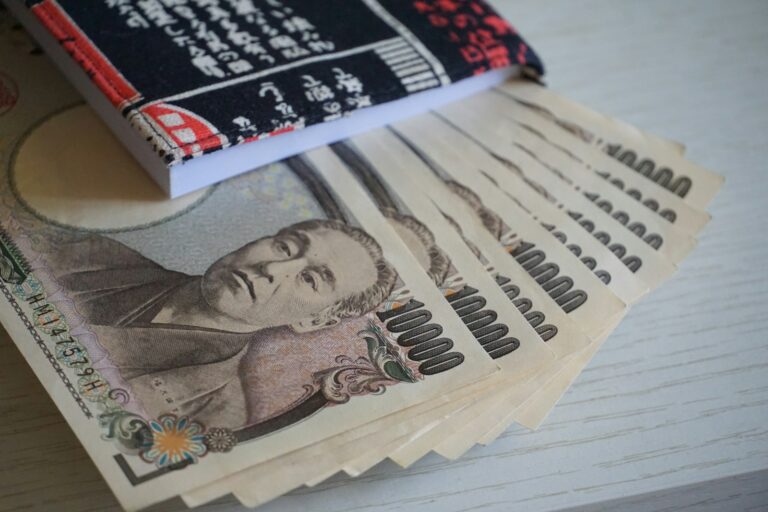
The Japanese Yen’s recent decline raises vital questions for global investors. Discover why currency movements matter and how to safeguard your wealth amidst shifting economic tides.
The global financial landscape is constantly in motion, and few movements capture attention quite like significant shifts in major world currencies. Recently, the Japanese Yen (JPY) has been on a noticeable downward trajectory, drifting to a multi-week low against the US Dollar and sparking discussions among investors worldwide. This depreciation is not merely a technical blip; it reflects a complex interplay of fiscal concerns, evolving monetary policy expectations from the Bank of Japan (BoJ), and broader shifts in global market sentiment. For those diligently building their wealth, understanding these dynamics is crucial, as currency volatility can have tangible impacts on investment portfolios, purchasing power, and future financial planning.
The JPY’s decline is multifaceted. One significant factor is the prevailing upbeat market mood, which has reduced demand for traditional safe-haven assets. When geopolitical tensions ease and global economic prospects appear brighter, investors tend to move away from perceived safe havens like the Japanese Yen and into riskier, growth-oriented assets. A recent example is the positive reaction to US President Donald Trump’s shift in stance regarding Greenland and an agreement on a framework for a future deal with NATO, which buoyed the S&P 500 and Asian equities, consequently undermining demand for the JPY as a safe-haven asset.
Beyond global sentiment, domestic concerns within Japan are exerting considerable pressure. The nation’s bond markets have experienced a “chaotic selloff,” as reported by FXStreet, driven by increasing anxieties about Japan’s fiscal health. These concerns are largely tied to the anticipated expansionary fiscal policies under Prime Minister Sanae Takaichi. Such policies, while intended to stimulate economic growth, often entail increased government spending and potentially larger budget deficits, leading to a rise in government debt. This can erode investor confidence in a nation’s ability to manage its finances, making its bonds less attractive and, by extension, its currency less desirable.
A recent 20-year debt auction, which saw a tepid response, further intensified this negative sentiment, pushing yields on long-dated government bonds to record highs. High bond yields are a sign that investors are demanding more compensation for holding a country’s debt, often due to perceived higher risk or expectations of future inflation. This direct impact on the bond market inevitably spills over into the currency market, contributing to the JPY‘s weakness.
Monetary Policy and the Bank of Japan: A Pivotal Role in Japanese Yen Dynamics
The Bank of Japan (BoJ) plays a central role in shaping the JPY‘s trajectory through its monetary policy decisions. For years, the BoJ has maintained an ultra-loose monetary policy, including negative interest rates and massive asset purchases, in an effort to combat deflation and stimulate economic growth. However, there has been a growing expectation among market participants that the BoJ might begin to normalize its policy, moving away from its long-standing dovish stance.
Expectations of a potential interest rate hike as early as April, as suggested by a Reuters report citing some BoJ policymakers, have created a complex dynamic. On one hand, higher interest rates typically make a currency more attractive to foreign investors seeking better returns, which could support the JPY. On the other hand, the actual implementation and communication around such a shift are critical. The market is keenly awaiting the outcome of the upcoming two-day BoJ meeting and Governor Kazuo Ueda’s comments during the post-decision press conference for clearer cues on the timing and pace of future policy adjustments.
The sustained inflation in Japan is another key factor pushing the BoJ towards potential tightening. A BoJ survey for December revealed that most Japanese households expect prices to continue rising for the next few years. Furthermore, data released earlier showed that Japan’s inflation has averaged above the BoJ’s 2% target for four consecutive calendar years. This persistent inflationary pressure strengthens the argument for the BoJ to take action to prevent inflation from becoming entrenched, thereby backing the case for further policy tightening. Paradoxically, the recent JPY downfall could also add to price pressures by making imports more expensive, potentially forcing the BoJ into faster action than initially anticipated.
Despite these expectations, the JPY bulls appear hesitant. Investors are exercising caution, opting to remain on the sidelines ahead of the crucial BoJ policy meeting. While the BoJ raised its overnight interest rate to 0.75% in December—the highest in 30 years—it is expected to maintain the status quo at the upcoming meeting. This wait-and-see approach underscores the uncertainty surrounding the BoJ’s future moves and their impact on the Japanese Yen.
Global Currency Landscape and the US Dollar
The strength of the US Dollar (USD) also plays a significant role in the USD/JPY pair’s dynamics. The so-called ‘Sell America’ trade, which saw investors moving away from the USD, appears to have receded amid easing trade war fears and renewed optimism about global growth. This shift has provided the US Dollar with some positive traction, acting as a tailwind for the USD/JPY pair. Investors are now looking to key US economic data, such as the Personal Consumption Expenditure (PCE) Price Index and the final US Q2 GDP growth report, for further impetus. Strong US economic data could bolster the USD, further widening the interest rate differential between the US and Japan and putting more downward pressure on the Japanese Yen.
Technical Outlook for USD/JPY
From a technical analysis perspective, the USD/JPY pair has shown a constructive setup favoring the bulls. The overnight breakout through the 158.15 confluence, which included the 100-hour Simple Moving Average (SMA) and the 38.2% Fibonacci retracement level, signals upward momentum. The Moving Average Convergence Divergence (MACD) line positioned above the Signal line, both just above the zero mark, further reinforces this bullish sentiment, even as a contracting histogram suggests that momentum might be cooling slightly after the recent surge. The Relative Strength Index (RSI) at 58, above its midline, also indicates mild bullish traction.
Immediate resistance for USD/JPY is capped at the 50% retracement level around 158.39. A decisive break above this level would open the door for a test of the 61.8% Fibonacci retracement, near 158.63. Ultimately, the pair might aim to test its 18-month peak, around 159.45. Conversely, a failure to clear the 50% level could lead to a pullback toward dynamic support at the 100-hour SMA. This technical insight, provided by FXStreet, highlights the near-term volatility and potential directions for the currency pair, crucial information for those engaged in international transactions or investments.
Implications for Wealth Builders and Investors
For individuals focused on building and preserving wealth, the volatility in the Japanese Yen is not just an abstract financial news item. It has practical implications that warrant attention and strategic consideration.
Portfolio Diversification and Currency Risk
Many investors hold globally diversified portfolios, either directly through international stocks and bonds or indirectly through global mutual funds and Exchange Traded Funds (ETFs). If your portfolio includes exposure to Japanese assets, such as companies trading on the Tokyo Stock Exchange or Japanese government bonds, a weakening JPY can erode the value of these investments when converted back into your home currency. For example, if a Japanese stock performs well in JPY terms but the JPY depreciates significantly against your base currency, your overall return in your home currency might be diminished or even negative.
Understanding the currency exposure within your portfolio is a critical step. Review your investment statements and fund holdings to identify any direct or indirect exposure to the Japanese Yen. Consider whether your funds are currency-hedged or unhedged. Currency-hedged funds aim to mitigate the impact of currency fluctuations, while unhedged funds expose you directly to these movements, offering both potential upside from a strengthening foreign currency and downside from a weakening one.
Impact on Purchasing Power and Global Trade
Even if you don’t directly invest in Japanese assets, a weakening JPY can still affect your financial well-being. For consumers, a weaker JPY makes Japanese goods and services cheaper for foreign buyers and more expensive for Japanese consumers. This can influence the prices of imported goods, potentially contributing to inflationary pressures in countries that heavily import from Japan. While the immediate impact might be negligible for many, sustained currency depreciation can contribute to broader global inflation, which erodes the purchasing power of your savings and investments over time.
Moreover, for those planning international travel or remittances, currency exchange rates are a direct factor. A depreciating JPY means your home currency buys more Yen, making travel to Japan more affordable, but sending money from Japan to another country less favorable. While these are not directly wealth-building activities, they highlight the pervasive nature of currency movements.
Monitoring Central Bank Actions
The actions of central banks, particularly the Bank of Japan, are paramount. Their interest rate decisions and forward guidance on monetary policy directly influence currency valuations. For wealth builders, this means staying informed about central bank announcements and understanding the potential implications. A move towards tightening monetary policy by the BoJ (e.g., raising interest rates) could strengthen the JPY, while a continuation of a dovish stance or unexpected easing could lead to further depreciation. These shifts create opportunities and risks that savvy investors should track.
It’s not just the BoJ; the monetary policies of other major central banks, like the US Federal Reserve, also influence exchange rates. When the Fed raises interest rates, it generally strengthens the US Dollar, making it more attractive relative to currencies like the JPY if Japan’s rates remain low. The divergence in monetary policies between major economies is a powerful driver of currency movements.
Strategies for Navigating Currency Volatility
Given the persistent volatility of the Japanese Yen and other global currencies, what proactive steps can wealth builders take?
- Review and Rebalance Your Portfolio: Regularly assess your investment portfolio for geographical and currency exposure. If you find yourself overly concentrated in a particular currency or region that is experiencing significant volatility, consider rebalancing to maintain your desired risk profile. This doesn’t necessarily mean selling off assets, but rather ensuring your allocation aligns with your long-term goals and risk tolerance.
- Consider Currency-Hedged Investments: For those with significant international exposure, particularly in volatile currencies, exploring currency-hedged investment products can be a prudent strategy. These funds use financial instruments to offset the impact of currency fluctuations, providing a more stable return profile in your home currency. However, hedging also comes with costs and can limit upside if the foreign currency strengthens significantly.
- Diversify Across Currencies: Beyond asset class diversification, consider diversifying your currency exposure. Holding assets denominated in several strong, stable currencies can help mitigate the impact of any single currency’s depreciation. This might involve investing in global funds that automatically provide broad currency exposure or directly holding foreign currency deposits, though the latter often entails lower returns and additional risks.
- Stay Informed on Global Economic Trends: Develop a habit of following major economic news and central bank announcements. Understanding the underlying drivers of currency movements—fiscal policy, monetary policy, trade balances, and geopolitical events—will enable you to make more informed decisions about your investments. Resources like FXStreet, Bloomberg, or Reuters offer valuable insights into these complex dynamics.
- Adopt a Long-Term Perspective: For most retail investors, attempting to profit from short-term currency trading is highly speculative and risky. Instead, focus on your long-term wealth accumulation goals. Currency fluctuations tend to normalize over extended periods, and a well-diversified portfolio built on sound fundamental principles is usually more resilient to short-term market noise, including currency volatility.
- Consult a Financial Advisor: Navigating complex global economic trends and their impact on your personal wealth can be challenging. A qualified financial advisor can help you assess your current exposure, understand your risk tolerance, and develop a tailored strategy to manage currency risk and optimize your portfolio for long-term growth and stability. They can provide personalized advice based on your specific financial situation and goals.
The Japanese Yen‘s current weakness is a stark reminder of the interconnectedness of global financial markets. From Japan’s fiscal health and the Bank of Japan’s delicate balancing act to global risk sentiment and the strength of the US Dollar, multiple factors converge to influence currency valuations. For wealth builders, this situation underscores the importance of a dynamic and informed approach to investment management. By understanding the forces at play and adopting strategic measures to manage currency risk, investors can better protect their purchasing power and ensure their wealth continues to grow amidst an ever-evolving global economic landscape. The focus should always be on building a resilient portfolio that can withstand various economic headwinds, including those emanating from currency volatility, ensuring a steady path towards financial prosperity.
Frequently Asked Questions
How does Japanese Yen volatility affect my diversified investment portfolio?
If your diversified portfolio includes assets denominated in Japanese Yen (e.g., Japanese stocks, bonds, or global funds with JPY exposure), a weakening JPY can reduce the value of those investments when converted back into your home currency. This can lead to diminished returns or even losses, impacting your overall portfolio performance and wealth accumulation goals.
What are the key factors driving the current depreciation of the Japanese Yen?
The current depreciation of the Japanese Yen is driven by several factors: an upbeat global market mood reducing demand for safe-haven assets, concerns about Japan’s expansionary fiscal policies leading to bond market selloffs, and the Bank of Japan’s relatively dovish monetary policy stance compared to other major central banks, which creates an interest rate differential. Persistent inflation above target, however, is building pressure for the BoJ to eventually tighten policy.
Should I adjust my investment strategy due to the Bank of Japan’s actions regarding the Japanese Yen?
While it’s important to monitor the Bank of Japan’s (BoJ) monetary policy decisions, significant adjustments to a long-term investment strategy should not be based solely on short-term currency movements. Instead, assess your portfolio’s JPY exposure, consider currency-hedged investment options if appropriate, and maintain a diversified approach. Staying informed about BoJ announcements and consulting a financial advisor for personalized guidance is recommended to ensure your strategy aligns with your wealth goals.
How can I protect my wealth from currency fluctuations like the Japanese Yen‘s decline?
To protect your wealth from currency fluctuations, consider diversifying your portfolio across various currencies and geographical regions. You might explore currency-hedged investment products designed to mitigate exchange rate risks. Regularly review your portfolio’s currency exposure and maintain a long-term perspective, avoiding speculative short-term currency trading. Consulting a financial advisor can also help tailor a strategy for managing currency risk effectively.
What are the long-term implications of Japan’s fiscal health on global investors and the Japanese Yen?
Long-term concerns about Japan’s fiscal health, driven by expansionary policies and rising government debt, could erode investor confidence, potentially leading to sustained weakness in the Japanese Yen. For global investors, this implies a need to carefully evaluate exposure to Japanese assets and consider the risk of currency depreciation impacting returns. It could also have broader implications for global bond markets and investor demand for sovereign debt.