

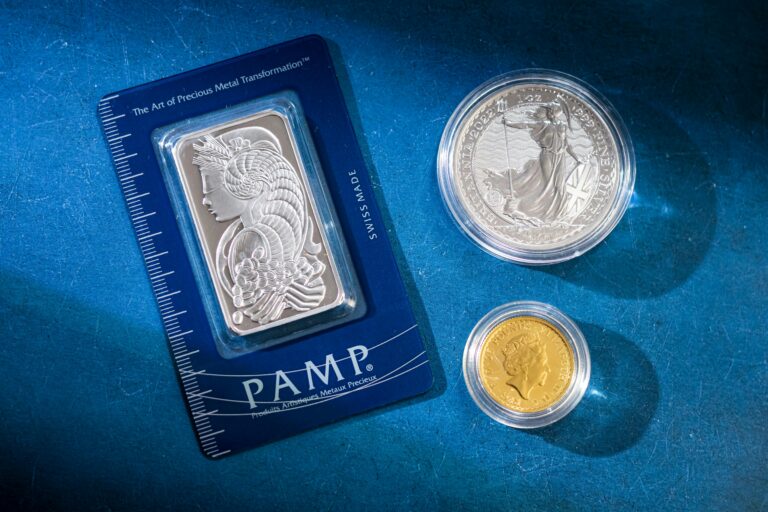
Discover how targeted precious metals investment fortifies your portfolio against inflation and geopolitical shifts, promising stability and growth. Learn to navigate market dynamics for lasting financial security.
Precious Metals Investment: A Steadfast Anchor in Volatile Times
The dawn of a new year often brings a renewed focus on financial strategies and portfolio fortification. For many, the question of how to preserve and grow wealth amidst fluctuating global landscapes takes center stage. Recent market activity, as observed at the start of the week, indicates a compelling trend: precious metals investment is once again capturing significant attention, showcasing remarkable resilience and upward momentum.
Gold and silver, the perennial favorites in the precious metals sphere, have begun the year with notable gains. Gold, for instance, registered an increase of 2.1% to $4,420, while silver surged by 3.7% to $75.46. This robust performance follows a period of earlier fluctuation, where sellers initially held sway. However, the current shift points to buyers exerting dominance, pushing prices above critical technical levels, signaling a more bullish near-term bias. This renewed vigor in the market underscores the enduring appeal and strategic importance of precious metals investment, particularly when geopolitical tensions remain elevated and economic uncertainties persist.
The narrative is clear: in times of flux, investors often gravitate towards assets perceived as safe havens. Precious metals, with their long history as stores of value, consistently fulfill this role. Their current strength is not merely a statistical anomaly but a reflection of deeper market forces at play, including the lingering global unrest and the seasonal tendency for gold to perform well in January. For those seeking to safeguard their financial future, understanding the nuances of precious metals investment is more crucial than ever.
The Enduring Allure of Precious Metals Investment: Why They Matter
Investing in precious metals like gold, silver, platinum, and palladium has been a cornerstone of wealth preservation for millennia. Their intrinsic value, scarcity, and industrial utility imbue them with qualities that conventional financial instruments often lack. For the modern investor, the reasons for considering precious metals investment are multifaceted and deeply rooted in historical performance and economic principles.
One of the primary drivers is their role as a hedge against inflation. When the purchasing power of fiat currencies erodes, the value of physical commodities, especially gold, tends to hold firm or even increase. This counter-cyclical behavior makes them an invaluable asset during periods of rising prices, protecting your capital from the insidious effects of inflation.
Furthermore, precious metals serve as a vital safe haven asset during times of economic instability, market volatility, or geopolitical crises. When equity markets tumble, bonds yield little, and global confidence wanes, investors frequently flock to gold and silver. This flight to quality provides a buffer against losses in other parts of a diversified portfolio, offering a sense of security when traditional investments falter. The current uptick in precious metal prices, directly correlated with heightened geopolitical concerns, is a testament to this inherent characteristic.
Diversification is another compelling reason for precious metals investment. By adding non-correlated assets to a portfolio that primarily consists of stocks and bonds, investors can significantly reduce overall risk. Precious metals often move independently of other asset classes, smoothing out portfolio returns and enhancing stability during turbulent market conditions. This strategic allocation can lead to more consistent long-term growth and better risk-adjusted returns.
Moreover, precious metals are tangible assets. Unlike digital currencies or paper assets, you can physically hold gold or silver. This tangibility offers a psychological comfort and a sense of enduring value that resonates with many investors, especially those wary of financial system vulnerabilities or the abstract nature of modern finance. They represent a final backstop, a universally recognized form of wealth that transcends national borders and economic systems.
In essence, integrating precious metals investment into a comprehensive financial plan is not merely about speculation; it is about building a robust, resilient portfolio capable of weathering economic storms and preserving purchasing power across generations. It’s about leveraging thousands of years of human experience with value and security to fortify your own financial future.
Gold’s Enduring Reign in Precious Metals Investment
Gold stands as the quintessential precious metal, revered across cultures and civilizations for its beauty, rarity, and immutable value. Its history as a medium of exchange, a store of wealth, and a symbol of prestige dates back millennia. In the realm of precious metals investment, gold often takes center stage, and for good reason.
The demand for gold is diverse and resilient. A significant portion comes from jewelry manufacturing, particularly in emerging markets where gold plays a pivotal role in cultural traditions and celebrations. Industrial demand, though smaller, is also critical, with gold used in electronics, dentistry, and specialized medical applications due to its excellent conductivity and corrosion resistance.
Crucially, central banks globally hold vast reserves of gold, viewing it as a critical component of national reserves and a hedge against currency fluctuations and economic crises. Their buying and selling activities can significantly influence the market. However, it is investment demand that often drives short-term price movements and captures headlines. Investors acquire gold through various forms – physical bullion, coins, exchange-traded products, and mining stocks – motivated by inflation fears, geopolitical risks, and the desire for portfolio diversification.
The supply side of gold is relatively inelastic. New gold discoveries are rare, and mining operations are capital-intensive and time-consuming. This inherent scarcity, coupled with rising global demand, creates a fundamental upward pressure on its price over the long term. The recent surge in gold prices, as noted by the 2.1% gain, illustrates its immediate responsiveness to market sentiment, particularly when global anxieties are heightened.
For investors considering precious metals investment, gold offers a unique blend of stability and growth potential. While it does not offer a yield like dividends from stocks or interest from bonds, its capital appreciation during inflationary or uncertain periods can more than compensate. It acts as a counterweight, providing liquidity and acting as a strong defensive asset in a balanced portfolio.
Silver’s Dynamic Role in Precious Metals Investment
While gold basks in its reputation as the ultimate safe haven, silver offers a more dynamic, dual nature within the landscape of precious metals investment. Often referred to as “poor man’s gold,” silver shares many of gold’s investment characteristics but also boasts extensive industrial applications, making its price movements potentially more volatile and intriguing.
Silver’s industrial demand is substantial and growing. It is an indispensable component in numerous high-tech applications, including solar panels, electrical contacts, batteries, medical devices, and water purification systems. The global push towards green energy and technological advancement ensures a steady baseline demand for silver. For instance, the expanding solar energy sector is a significant consumer of silver, and as this industry grows, so too does the fundamental demand for the metal.
As an investment, silver mirrors gold’s role as an inflation hedge and a safe haven. During periods of economic and political uncertainty, investors turn to silver as a store of value. However, because of its industrial ties, silver prices can also be influenced by the health of the global economy; robust industrial activity can boost demand, while economic slowdowns might temper it.
The volatility of silver is generally higher than that of gold. This can be attributed to its smaller market size and its dual demand profile. For aggressive investors, this volatility can present greater opportunities for capital gains, as evidenced by its recent 3.7% surge. Conversely, it also implies higher risk. The gold-to-silver ratio, which indicates how many ounces of silver it takes to buy one ounce of gold, is a closely watched metric. Fluctuations in this ratio can provide insights into the relative value of each metal and potential investment opportunities.
Incorporating silver into a precious metals investment strategy offers diversification within the metals category itself. It provides exposure to both safe-haven characteristics and industrial growth potential. While often considered a secondary precious metal, silver’s unique attributes make it a powerful component for those looking to maximize their exposure to the precious metals market.
Key Drivers Influencing Precious Metals Investment Valuations
Understanding the forces that shape the prices of gold, silver, and other precious metals is paramount for any investor engaged in precious metals investment. These markets are complex, influenced by a confluence of economic, geopolitical, and sentiment-driven factors.
Geopolitical Tensions and Global Instability
As highlighted by recent market movements, geopolitical tensions are a powerful catalyst for precious metal prices. Conflicts, political instability, trade wars, and international crises invariably drive investors towards safe-haven assets. Gold, in particular, is seen as a universally accepted form of wealth that is immune to the direct impacts of localized conflicts or national currency devaluations. When the news cycles are dominated by uncertainty, precious metals investment demand typically surges.
Economic Uncertainty and Inflationary Pressures
Periods of economic uncertainty, characterized by slow growth, high unemployment, or recessionary fears, also fuel demand for precious metals. Investors seek assets that can preserve capital when traditional equity markets are under pressure. Furthermore, inflation is a significant driver. When central banks implement expansionary monetary policies, such as quantitative easing, or when fiscal spending increases dramatically, concerns about currency devaluation and rising inflation become prominent. Precious metals, especially gold, historically maintain their purchasing power during such times, making them an attractive hedge against inflationary erosion.
Interest Rates and Monetary Policy
The stance of central banks on interest rates and monetary policy has a profound impact on precious metals investment. Gold and silver are non-yielding assets, meaning they do not pay dividends or interest. When interest rates are high, the opportunity cost of holding precious metals increases, as investors can earn more from interest-bearing accounts or bonds. Conversely, in a low-interest-rate environment, the opportunity cost diminishes, making precious metals more appealing. Changes in central bank rhetoric, such as hints of future rate hikes or cuts, can therefore trigger significant price movements.
Currency Strength, Particularly the US Dollar
Given that precious metals are typically priced in US dollars, the strength or weakness of the dollar often has an inverse relationship with their prices. A weaker dollar makes precious metals cheaper for investors holding other currencies, thereby increasing demand. Conversely, a stronger dollar makes them more expensive, potentially dampening demand. Major shifts in global currency markets can thus directly influence the attractiveness and valuation of precious metals investment.
Supply and Demand Dynamics
The fundamental laws of supply and demand also play a crucial role. Mining output, recycling rates, and the level of industrial and jewelry demand all contribute to the overall supply-demand balance. Unexpected disruptions to mining operations, significant new discoveries, or shifts in consumer preferences can impact prices. For silver, its substantial industrial demand means that periods of strong manufacturing growth can push prices higher, while an economic slowdown might reduce industrial consumption.
Market Sentiment and Technical Analysis
Finally, market sentiment and technical analysis, while not fundamental drivers, can significantly influence short-term price action. Investor psychology, herd mentality, and the breaking of key technical levels (like the 100-hour and 200-hour moving averages mentioned in the recent market report) can create momentum, either pushing prices higher or lower. Algorithmic trading and speculative positions also add to the complexity and volatility, requiring careful monitoring for those involved in active precious metals investment.
Navigating Precious Metals Investment: Diverse Strategies for Every Investor
Embarking on precious metals investment offers a spectrum of approaches, each with its own advantages, disadvantages, and suitability for different investor profiles. Choosing the right strategy depends on your financial goals, risk tolerance, and investment horizon.
Direct Ownership of Physical Metals
The most traditional form of precious metals investment is owning physical gold or silver in the form of bars, coins, or rounds. This provides direct ownership of a tangible asset, offering the ultimate hedge against systemic financial risks. Many investors appreciate the peace of mind that comes with holding a physical asset, independent of any financial institution or digital system.
- Pros: Direct ownership, no counterparty risk (if held independently), privacy, historical store of value.
- Cons: Storage costs (safe deposit boxes, secure home storage), insurance costs, potential for high premiums over spot price, less liquid than other forms, verification needed for selling.
Investing in Exchange-Traded Products (ETPs)
For investors seeking exposure to precious metals without the complexities of physical storage, ETPs like Exchange-Traded Funds (ETFs) or Exchange-Traded Notes (ETNs) are a popular choice. These financial instruments trade on major stock exchanges and are designed to track the price of underlying precious metals. Many prominent ETPs are backed by physical bullion held in secure vaults.
- Pros: High liquidity, ease of trading, lower transaction costs than physical, no storage concerns, ability to invest smaller amounts.
- Cons: Potential for management fees, counterparty risk (if the fund issuer defaults), may not track the spot price perfectly, no physical possession.
Mining Company Stocks
Another indirect way to engage in precious metals investment is by purchasing shares of companies involved in mining, exploring, or processing precious metals. These stocks offer leverage to the underlying metal prices; if the price of gold goes up, the profitability of a gold mining company can increase significantly, potentially leading to higher stock prices and even dividends.
- Pros: Potential for higher returns due to leverage, diversification into the equity market, some companies pay dividends.
- Cons: Exposure to company-specific risks (management issues, operational challenges, geopolitical risks in mining regions), commodity price fluctuations, environmental regulations.
Futures and Options Contracts
For sophisticated investors with a higher risk tolerance, futures and options contracts on precious metals offer a way to speculate on price movements. Futures contracts are agreements to buy or sell a commodity at a predetermined price on a future date. Options provide the right, but not the obligation, to buy or sell at a specific price. These instruments allow for significant leverage, meaning small price movements can lead to large gains or losses.
- Pros: High leverage, potential for significant gains, can be used for hedging.
- Cons: Extremely high risk, requires active management, not suitable for novice investors, potential for margin calls.
Precious Metals IRAs and Retirement Accounts
In certain jurisdictions, it is possible to hold eligible physical precious metals within a self-directed Individual Retirement Account (IRA). This allows investors to enjoy the tax advantages of a retirement account while still benefiting from precious metals investment. Typically, the metals must be held by an approved custodian, not in personal possession.
- Pros: Tax-advantaged growth, diversification of retirement savings, secure storage by a custodian.
- Cons: Limited choice of eligible metals, specific custodian fees, less direct control over physical assets.
Each of these strategies offers a distinct pathway into the precious metals market. A well-rounded precious metals investment approach might even combine several of these methods to balance direct ownership with liquidity and growth potential, tailored to individual financial objectives.
Building a Resilient Portfolio with Precious Metals Investment
Integrating precious metals investment into a broader portfolio strategy is about more than just adding another asset class; it’s about enhancing overall resilience and optimizing risk-adjusted returns. A thoughtfully allocated precious metals component can act as a crucial shock absorber, particularly during periods when traditional assets are under stress.
Determining Appropriate Allocation
The ideal allocation to precious metals varies widely depending on an individual’s financial situation, risk tolerance, and investment goals. Financial advisors often suggest allocating anywhere from 5% to 15% of a total portfolio to precious metals. For more conservative investors or those nearing retirement, a higher allocation might be considered for capital preservation. For younger investors with a longer time horizon and higher risk tolerance, a smaller allocation might suffice as part of a growth-oriented strategy.
Consider the purpose of the allocation: is it primarily for inflation hedging, safe-haven protection, or diversification? If the primary goal is wealth preservation against systemic risk, a larger allocation to physical gold might be appropriate. If it’s for tactical trading or leveraging market trends, ETPs or even mining stocks could be more suitable.
Long-Term vs. Short-Term Perspectives
While precious metals can offer short-term trading opportunities, their true power in a portfolio often lies in their long-term role. Over extended periods, precious metals have demonstrated their ability to preserve purchasing power and act as a reliable store of value, particularly across multiple economic cycles. Viewing precious metals investment as a strategic, long-term holding can help investors avoid being swayed by short-term market fluctuations and focus on their enduring benefits.
However, understanding short-term technical indicators and market sentiment, as noted by the breaking of 100-hour and 200-hour moving averages, can also inform tactical entry and exit points for those who wish to be more active. These movements, often driven by immediate geopolitical news or economic data, can create opportunities for agile investors.
Strategic Rebalancing
Like any asset class, the performance of precious metals can fluctuate. It is essential to periodically review and rebalance your portfolio to maintain your desired allocation. If your precious metals holdings significantly appreciate, they might exceed your target percentage. In such cases, you might consider selling a portion to bring it back into line, thus realizing gains and reinvesting in underperforming assets. Conversely, if their value declines, you might consider adding to your position to restore your target allocation, effectively buying low.
This disciplined approach ensures that your portfolio remains aligned with your original investment strategy and risk profile. Rebalancing prevents any single asset class from dominating your portfolio unexpectedly and helps maintain diversification benefits.
Complementing Other Assets
Precious metals investment works best as a complement to a diversified portfolio, not as a replacement for core assets like stocks and bonds. They offer unique characteristics that can enhance the overall stability and performance of a portfolio by acting as a non-correlated asset. When equities are bearish, precious metals often exhibit bullish tendencies, and vice-versa, providing a balancing effect.
For instance, during periods of economic expansion, growth stocks might outperform. However, when economic slowdowns or inflation fears emerge, the protective qualities of precious metals become invaluable. By holding a mix, investors can potentially navigate various market conditions with greater confidence and less volatility.
Risks and Considerations in Precious Metals Investment
While the benefits of precious metals investment are considerable, it is imperative for investors to be fully aware of the associated risks and important considerations. No investment is without its drawbacks, and precious metals are no exception. A clear understanding of these aspects allows for more informed decision-making and better risk management.
Price Volatility
Despite their reputation as safe havens, precious metals are not immune to price volatility. Silver, in particular, can experience significant swings due to its dual industrial and investment demand. While gold is generally more stable, it too can undergo periods of substantial price corrections, influenced by factors such as interest rate hikes, a strengthening dollar, or a sudden decrease in geopolitical tensions. Investors must be prepared for these fluctuations and avoid making rash decisions based on short-term movements.
Lack of Yield
One of the most frequently cited drawbacks of precious metals investment, especially in their physical form, is the lack of yield. Unlike stocks that can pay dividends or bonds that offer interest, physical gold and silver do not generate ongoing income. This means that an investor’s return relies solely on capital appreciation. In a high-interest-rate environment, the opportunity cost of holding non-yielding assets can be significant, as capital could potentially earn returns elsewhere.
Storage and Insurance Costs
For those who opt for direct ownership of physical precious metals, storage and insurance costs are a practical consideration. Secure storage, whether in a home safe, a bank safe deposit box, or a specialized third-party vault, incurs expenses. Insurance is also necessary to protect against theft or loss. These costs, though seemingly small, can eat into overall returns, especially for smaller holdings over long periods. ETPs and certain IRA structures can mitigate direct storage concerns but may introduce their own fees.
Counterparty Risk
When investing in precious metals through financial instruments like ETPs, futures contracts, or even certain custodial IRA accounts, investors face counterparty risk. This is the risk that the other party in a financial contract (e.g., the ETP issuer, the custodian, or the futures exchange) may default on their obligations. While regulatory oversight is generally robust for reputable institutions, it’s a risk that is not present with direct, independently secured physical ownership.
Market Manipulation Concerns
Historically, there have been instances and allegations of market manipulation in precious metals markets. While major markets are subject to stringent regulations and oversight, the sheer volume and complexity of trading can sometimes lead to concerns about unfair practices. While such events are rare and heavily investigated, it’s an underlying consideration for some investors, leading them to favor physical assets held outside of the traditional financial system.
Liquidity for Large Holdings
While ETPs offer high liquidity, selling a significant quantity of physical gold or silver, particularly unique coins or large bars, might not always be as instantaneous as selling stocks. Finding a buyer willing to pay a fair price and the logistics of secure transfer can take time. This is less of an issue for smaller, common bullion products but becomes more relevant for substantial physical holdings.
By carefully weighing these risks against the potential benefits, investors can make more informed decisions about the role of precious metals investment within their overall financial strategy. Diversification within the precious metals space itself (e.g., holding both gold and silver), and a long-term perspective, can help mitigate many of these risks.
The Current Landscape and Future Outlook for Precious Metals Investment
The beginning of the year has set an optimistic tone for precious metals investment, with gold and silver demonstrating strong performance despite broader market uncertainties. This resilience is not accidental but is underpinned by several ongoing global dynamics that are likely to continue influencing the market well into the future.
The persistent geopolitical tensions around the globe remain a primary driver. From regional conflicts to heightened international rivalries, the backdrop of global instability inherently boosts the appeal of safe-haven assets. As long as these tensions simmer, or escalate, the demand for gold and silver as reliable stores of value is expected to remain robust. Investors will continue to seek refuge in tangible assets that stand apart from national currencies and volatile equity markets.
Economically, the global landscape presents a mixed picture. While some economies show signs of recovery, inflation remains a concern in many regions, and the prospect of future economic slowdowns cannot be entirely dismissed. In such an environment, the role of precious metals as an inflation hedge and a buffer against economic downturns becomes even more critical. Should central banks signal a pivot towards more accommodative monetary policies, potentially including interest rate cuts later in the year, the opportunity cost of holding non-yielding precious metals would decrease, making them even more attractive.
The technical indicators, as observed in recent trading, also point to a positive near-term outlook. The successful breach of key moving averages for both gold and silver suggests that buyer sentiment is strong and could propel prices higher. While technical analysis should always be considered alongside fundamental drivers, it indicates momentum that active traders and investors will be watching closely. The seasonal strength often observed in January for gold, as highlighted by market analysts, adds another layer of positive sentiment early in the year.
Looking ahead, the industrial demand for silver, particularly from burgeoning sectors like renewable energy and advanced electronics, is poised for continued growth. This structural demand provides a fundamental floor for silver prices and offers an additional growth vector beyond its safe-haven attributes. As global economies transition towards greener technologies, silver’s utility will only increase.
In conclusion, the current environment appears conducive to continued strength in precious metals investment. While market volatility is an ever-present factor, the fundamental drivers – geopolitical risk, inflation concerns, economic uncertainty, and growing industrial demand – create a compelling case for their inclusion in a well-diversified portfolio. For those seeking to secure their wealth and navigate an unpredictable financial future, understanding and strategically utilizing precious metals will be an increasingly vital component of their investment journey.
Frequently Asked Questions
How can I protect my savings from inflation using precious metals investment?
Precious metals, particularly gold, have historically served as an effective hedge against inflation. When the purchasing power of fiat currencies declines due to rising prices, the intrinsic value of gold tends to hold firm or even appreciate. You can protect your savings by allocating a portion of your portfolio (e.g., 5-15%) to physical gold or gold-backed exchange-traded products (ETPs), which are designed to track gold’s price. This diversification helps preserve your purchasing power over time.
I’m worried about global instability; how does precious metals investment offer security?
In times of global instability, geopolitical tensions, or economic crises, precious metals like gold and silver act as “safe haven” assets. Investors flock to them when traditional markets (stocks, bonds) become volatile or uncertain. Their universal recognition as a store of value and their independence from specific national economies make them a reliable asset during periods of unrest, offering a sense of security and a hedge against broader market downturns.
What’s the best way to start precious metals investment without managing physical storage?
If you want to invest in precious metals without the hassle of physical storage and insurance, Exchange-Traded Products (ETPs) are an excellent option. Gold and silver ETPs trade like stocks on major exchanges and track the price of the underlying metals. Many are backed by physical bullion held in secure institutional vaults. This approach offers liquidity, ease of trading, and lower transaction costs compared to buying and selling physical metals directly.
How can I diversify my portfolio effectively with precious metals investment?
To effectively diversify your portfolio with precious metals, consider their generally low correlation with other major asset classes like stocks and bonds. This means they often move independently, or even inversely, to these assets. By allocating a modest portion (typically 5-15%) of your portfolio to gold and silver, you can reduce overall portfolio volatility and enhance risk-adjusted returns, creating a more resilient investment strategy that performs better across different economic cycles.