

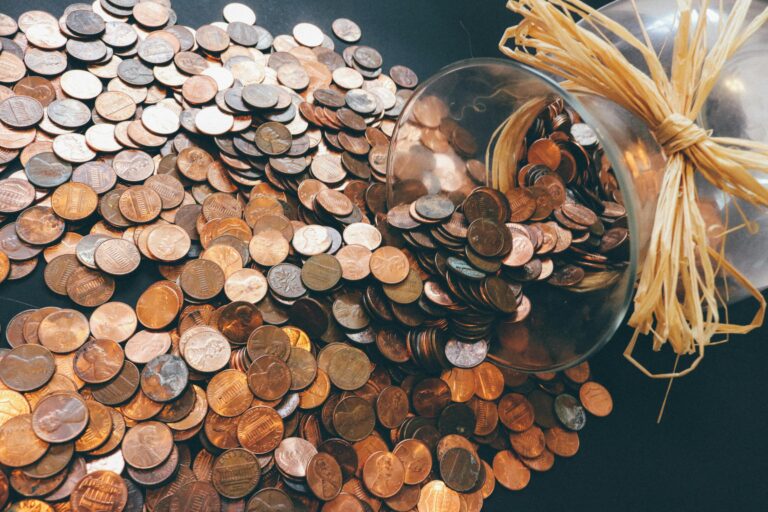
The United States has officially minted its final one-cent coin, a historic decision that marks the end of the penny after more than 230 years. This article explores the dramatic reasons behind this change, what it means for your daily transactions, your personal budget, and the surprising new value hidden in your old coin collection. Discover how to navigate a world without the penny and potentially profit from this monumental shift in American currency.
It’s a moment many economists have predicted for decades, yet it still feels monumental. The familiar copper-colored coin, a staple of American commerce and a resident of countless jars, fountains, and couch cushions, is officially a relic of the past. The U.S. Mint has ceased production of the one-cent piece, marking the definitive end of the penny. This decision, driven by stark economic realities, will reshape how we handle cash and think about the very nature of our money.
For over two centuries, the penny has been the bedrock of our currency system. It has been the subject of idioms, the start of savings for children, and the bane of cashiers everywhere. But its time has run out. This shift isn’t just a minor administrative change; it’s a reflection of inflation, changing consumer habits, and a government seeking to trim fiscal waste, one cent at a time.
In this comprehensive guide, we will delve into every facet of this transition. We’ll examine the compelling financial arguments that sealed the penny’s fate, explore its rich history, and provide practical advice on how to adapt your financial habits. Most importantly, we’ll uncover the potential financial opportunities this change creates for savvy individuals who understand its implications.
Why This Drastic Move? The Financial Case for the End of the Penny
The decision to discontinue the penny was not made lightly. It was the result of a long, data-driven debate about the coin’s economic viability. For years, the simple truth has been that the penny costs more to produce than it is worth.
According to a report from the U.S. Treasury Department, cited by ABC News, the cost to mint a single one-cent coin had soared to 3.69 cents. This means that for every penny put into circulation, the U.S. government was losing more than two and a half cents. When you consider the billions of pennies minted each year, these losses accumulate into a staggering figure. In the fiscal year 2024 alone, the U.S. Mint reported a loss of $85.3 million just on the production of pennies.
This phenomenon is known as negative seigniorage. Seigniorage is the profit a government makes from issuing currency. For most coins and bills, the cost of production is far less than their face value. The penny, however, has been a financial drain for over a decade. The rising costs of zinc and copper, the primary metals used in its production, coupled with manufacturing and transportation expenses, turned the humble cent into a significant liability for the federal budget.
Beyond Production Costs: The Hidden Burdens of the Penny
The argument for the end of the penny extends beyond the balance sheet of the U.S. Mint. There are significant, often overlooked, costs associated with its continued circulation.
Consider the time cost. Economists refer to this as “friction” in the economy. Studies have shown that handling pennies at the point of sale—counting them out, waiting for customers to find them—adds several seconds to each cash transaction. While a few seconds may seem trivial, when multiplied by the billions of cash transactions occurring daily across the nation, it amounts to millions of hours of lost productivity and wasted time for both consumers and businesses.
Furthermore, the environmental impact of minting pennies is not insignificant. The process involves mining zinc and copper, transporting these raw materials, and then running energy-intensive minting facilities. Eliminating the production of billions of new coins each year represents a small but meaningful step toward reducing the environmental footprint of our currency system.
From Revolutionary Copper to Lincoln’s Profile: A Brief History
To fully grasp the significance of the penny’s retirement, it’s essential to appreciate its long and storied past. The coin’s journey is interwoven with the history of the United States itself. The first one-cent coins, known as Fugio cents, were produced in 1787 even before the U.S. Mint was formally established. As cited by the Federal Reserve Bank of Atlanta, these early coins were struck from copper bands used to hold together gunpowder kegs supplied by the French during the American Revolution.
The U.S. Mint officially began producing the one-cent piece in 1793. These early pennies were made of pure copper and were much larger than the coin we know today, roughly the size of a modern quarter. Their size and composition changed multiple times over the next century to reflect fluctuating metal prices and evolving production technologies.
The most iconic design change occurred in 1909, on the 100th anniversary of Abraham Lincoln’s birth. It was then that his profile was added to the obverse of the coin, making him the first real person to be featured on a regular-issue American coin. This design, with minor variations, has endured for over a century. The “wheat” reverse was used until 1958, replaced by the Lincoln Memorial design from 1959 to 2008, followed by a series of Bicentennial designs in 2009 and the Union Shield reverse from 2010 onward.
The coin’s metallic content also underwent a major transformation. Due to the rising price of copper, the U.S. Mint changed the composition in 1982 from 95% copper to a core of 97.5% zinc, plated with a thin layer of copper. This is why pennies minted before 1982 are noticeably heavier and contain significantly more intrinsic value in their metal content.
Your Personal Finances After the End of the Penny
With production halted, the most immediate question for most people is: how does this affect me? While pennies will remain legal tender and can still be used, the practical reality is that they will slowly fade from daily cash transactions. This will primarily be managed through a system of rounding.
Understanding Cash Rounding
The United States will likely adopt a rounding system similar to those successfully implemented in countries like Canada, Australia, and New Zealand. It’s crucial to understand how this works:
- Rounding only applies to cash transactions. Electronic payments, such as those made with debit cards, credit cards, or digital wallets, will continue to be processed to the exact cent.
- Rounding applies to the final total, not individual items. A store will add up all your items, calculate the sales tax, and only round the final bill.
- Rounding goes to the nearest five cents. Totals ending in 1 or 2 cents will be rounded down to the nearest 0. Totals ending in 3 or 4 cents will be rounded up to the nearest 5. Totals ending in 6 or 7 cents will be rounded down to the nearest 5, and totals ending in 8 or 9 cents will be rounded up to the nearest 10.
For example:
- A final cash total of $12.72 would be rounded down to $12.70.
- A final cash total of $12.73 would be rounded up to $12.75.
- A final cash total of $12.77 would be rounded down to $12.75.
- A final cash total of $12.78 would be rounded up to $12.80.
Will Rounding Cost Me Money?
A common fear is that businesses will exploit this system by always rounding up, effectively creating a hidden price increase. However, studies from other countries that have eliminated their lowest-value coin have shown this fear to be largely unfounded. The rounding rules are designed to be statistically fair. Over a series of transactions, the times you benefit from rounding down should roughly equal the times you pay a few cents extra from rounding up. The overall impact on the average consumer’s budget is expected to be negligible.
Don’t Throw Them Out! The Surprising Value After the End of the Penny
While the penny’s life as a circulating coin is over, its second life as a collectible is just beginning. The end of the penny production is a catalyst that will almost certainly increase interest and, consequently, the value of existing pennies, especially rarer ones.
Identifying Valuable Pennies
Now is the time to sift through that jar of change you’ve been neglecting. While most pennies will only ever be worth one cent, certain coins can be worth hundreds or even thousands of dollars. Here’s what to look for:
- Key Dates: Some years had very low mintage numbers, making them inherently rare. The most famous is the 1909-S VDB Lincoln cent. The “S” indicates it was minted in San Francisco, and the “VDB” are the initials of its designer, Victor David Brenner. Another key date is the 1914-D.
- The 1943 Copper Penny: In 1943, during World War II, pennies were made of zinc-coated steel to conserve copper for the war effort. However, a few were mistakenly struck on copper planchets left over from 1942. These are exceptionally rare and highly valuable. (Beware of fakes—many steel pennies were simply copper-plated by counterfeiters).
- Error Coins: Mistakes happen at the mint, and these errors can create valuable coins. The most famous is the 1955 “Doubled Die” cent, where the date and lettering on the coin appear to be stamped twice, slightly offset.
- Pre-1982 Copper Pennies: As mentioned, pennies minted before 1982 are composed of 95% copper. Depending on the price of copper, their “melt value” (the value of the metal they contain) can be more than two or three times their face value. While it is illegal to melt U.S. coins, this intrinsic value provides a floor for their worth and makes them a popular item for hoarders.
The Collector’s Market
The halt in production will likely fuel the numismatic (coin collecting) market. As pennies become less common in circulation, nostalgia and scarcity will drive up demand. Even common “wheat pennies” (those minted from 1909-1958) in good condition could see a modest increase in value. If you have old coin folders or uncirculated rolls of pennies, it would be wise to have them appraised or, at the very least, hold onto them as a long-term tangible asset.
Beyond Your Wallet: The Ripple Effect of the Penny’s Demise
The impact of this change will be felt beyond individual consumers. Businesses, charities, and the broader economy will need to adapt.
Business and Pricing Strategies
Retailers will face the most immediate adjustment. They will need to reprogram cash registers to handle the new rounding rules for cash transactions. This may also lead to a shift in pricing strategy. The psychological tactic of “charm pricing”—ending prices in .99—has been a staple of retail for over a century. Without the penny, we may see a move toward prices ending in .95 or simply rounding to the nearest dollar. This could have subtle but interesting effects on consumer psychology and purchasing behavior.
The Impact on Charitable Giving
Many charities, from local food banks to large international organizations, have long relied on the spare change collected in donation jars at checkout counters. The disappearance of the penny raises a valid concern: will this source of revenue dry up? While some drop-off may occur initially, many believe the effect will be minimal. People who are inclined to donate their change will likely just start dropping in nickels and dimes instead. In fact, some argue that total donation amounts could even increase as the lowest value coin donated shifts from one cent to five cents.
We’re Not the First: Global Perspectives on Retiring Coins
The United States is relatively late to the party when it comes to retiring its smallest coin. Dozens of other developed nations have already navigated this transition successfully, providing a clear roadmap for what to expect.
Canada officially ended distribution of its penny in 2013. The transition was smooth, with the Royal Canadian Mint providing clear guidance on rounding rules for businesses and consumers. Post-transition studies in Canada found no measurable impact on inflation and widespread public acceptance of the change.
Australia and New Zealand eliminated their one and two-cent coins decades ago, in the early 1990s. Their economies have long since adapted, and the concept of rounding cash transactions is second nature to their citizens. Similarly, several countries within the Eurozone, such as the Netherlands, Finland, and Ireland, have voluntarily adopted rounding rules to eliminate the use of one and two-euro-cent coins, citing the same reasons of cost and inefficiency that led to the end of the penny in the U.S.
The experience of these nations demonstrates that retiring a low-value coin is a logical and manageable step in the evolution of a modern economy. The initial adjustment period is typically short, and the long-term benefits of increased efficiency and cost savings are significant.
The Future is Cents-less: Embracing a New Financial Era
The end of the penny is more than just the retirement of a coin; it is a symbol of our evolving economy. It’s an acknowledgment that a coin with virtually no purchasing power is an anachronism in a world of digital payments and rising prices. While there may be a touch of nostalgia in saying goodbye to the Lincoln cent, the move is a pragmatic and fiscally responsible one.
For the readers of ‘Work to Wealth’, this transition is not something to fear. It is a minor change in our daily habits that comes with a silver—or rather, copper—lining. It presents an opportunity to think more critically about our money, to educate ourselves about the potential value hiding in plain sight, and to embrace a more efficient financial system.
So, check your pockets, empty your change jars, and take a closer look at the humble pennies you’ve collected over the years. They are no longer just spare change; they are now small pieces of American history. Their story as a functional part of our economy has ended, but their legacy, and potential value, will live on.
Frequently Asked Questions
Why is my cash total being rounded now that the penny is gone?
With the end of the penny, physical one-cent coins will no longer be distributed for cash transactions. To accommodate this, final cash totals are rounded to the nearest five cents. For example, a bill of $5.52 will be rounded down to $5.50, while a bill of $5.53 will be rounded up to $5.55. This rounding system only applies to cash payments; electronic transactions like credit or debit card payments will still be charged to the exact cent.
Will the end of the penny make me lose money on every purchase?
No. The rounding system is designed to be fair over time. While some of your transactions will be rounded up by a cent or two, others will be rounded down by the same amount. Economic studies from other countries that have eliminated their smallest coin show that the net effect on consumers is neutral. You are just as likely to save two cents as you are to pay an extra two cents.
Are my old pennies completely worthless now?
Far from it. While their face value is still one cent, the halt in production makes them more interesting to collectors. Certain pennies, like those minted before 1982 (which are 95% copper), rare error coins (like the 1955 Doubled Die), or key-date coins (like the 1909-S VDB), can be worth significantly more than their face value. It’s a great time to check your change for these hidden treasures.
Can I still use pennies to pay for things?
Yes. The U.S. Treasury has stated that the penny remains legal tender. You can still use them to pay for goods and services, and businesses are legally required to accept them. However, as they are no longer being minted, they will become increasingly rare in general circulation. You can also take your accumulated pennies to a bank or a coin-cashing kiosk to exchange them for larger denominations.
How will the end of the penny affect prices and cause inflation?
The impact on overall inflation is expected to be virtually zero. The rounding process applies only to the final cash total, not to the prices of individual items. Therefore, businesses have no new incentive to raise their shelf prices. The experiences of countries like Canada and Australia, which retired their pennies years ago, confirm that this type of change does not lead to any measurable increase in inflation.