

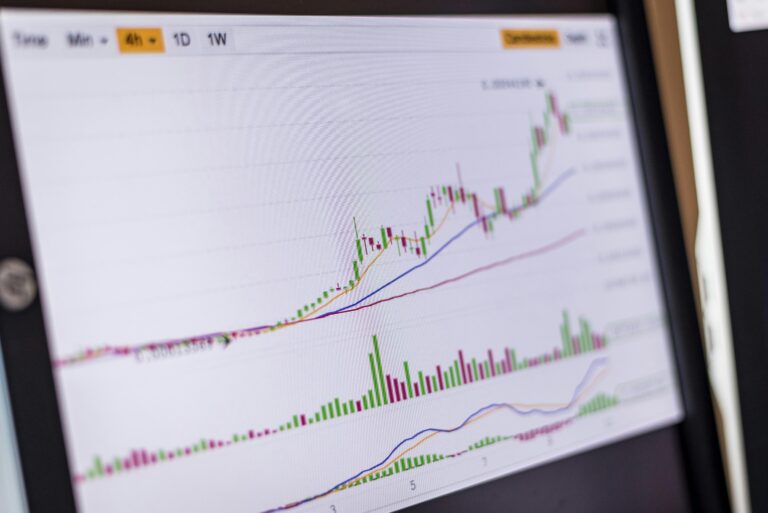
This in-depth Bitcoin price analysis dissects the shocking drop to $94K and what key levels will determine the next major market move.
Watching your portfolio value plummet is a heart-stopping experience. For many, the recent, aggressive downturn in Bitcoin’s price feels like a punch to the gut. The optimism of just a few weeks ago has evaporated, replaced by anxiety and a single, pressing question: what happens next? This is where a sober, data-driven Bitcoin price analysis becomes not just helpful, but essential for navigating the turmoil. The market has sent a clear signal by crashing through key support levels and landing in the critical $94K–$96K demand region. This isn’t random noise; it’s a structural test.
Right now, the market is balanced on a knife’s edge. The reaction in this current zone will likely dictate the trend for the coming weeks, if not months. Will this be a “buy the dip” opportunity that forms the foundation for the next leg up, or is it the start of a much deeper, more painful correction? By examining the technical picture on multiple timeframes and digging into the on-chain data to see what different investor cohorts are doing, we can build a clear, unbiased framework to understand the risks and opportunities ahead.
A Sobering Bitcoin Price Analysis: The Big Picture on the Daily Chart
To understand the gravity of the current situation, we must first look at the daily chart, which gives us a macro view of the market’s health. The picture it paints is undeniably bearish in the short to medium term. Bitcoin is now trading decisively below two of the most-watched technical indicators: the 100-day and 200-day moving averages.
Think of these moving averages as the market’s long-term momentum gauges. When the price is above them, the overall trend is considered healthy and bullish. When it falls below, as it has now, these averages flip from being underlying support to becoming overhead resistance. Every attempt to rally will now have to fight through these significant price levels, where sellers are likely to be waiting.
The Rejection That Sparked the Fire
The recent decline wasn’t a slow bleed; it was an acceleration. A key catalyst was the failed attempt to reclaim the 100-day moving average, which was sitting around the $110K mark. The market rallied towards this level, but was met with overwhelming selling pressure. This sharp rejection was a massive red flag, signaling that the bears were in firm control.
This failure led to a cascade of selling. It triggered a clean sweep of the liquidity clustered between $99K and $100K. In simple terms, many traders had placed their “stop-loss” orders in this area to protect their positions. The sharp drop was designed to trigger these orders, creating a rapid downward spiral as automated selling flooded the market. As one analyst from TradingView noted, this was a clear demonstration of “clear dominance from sellers as the market transitioned into the lower portion of its multi-month distribution range.”
The Last Stand: The Critical $94K–$96K Demand Block
All of this intense selling pressure has driven the price down to its current location: the significant demand block between $94,000 and $96,000. This isn’t just a random number; it’s a region with a history. Looking back at the charts from earlier this year, this was an area of intense accumulation.
This is where long-term participants and large-scale investors stepped in to buy heavily, believing the price was fair value. Their past activity created a strong foundation of support. Now, the market has returned to test their resolve. Two primary scenarios can unfold from here:
- The Bullish Scenario: If buyers step in with conviction and defend this zone, we could see the price stabilize. The formation of a “higher low” — where the price bottoms out above the previous major low — would be the first sign that the worst is over. This area could once again serve as a structural base, launching the next recovery attempt.
- The Bearish Scenario: If the price fails to hold this support and breaks down decisively, the floor gives way. The next major support level is significantly lower, located in the macro range of $80K–$82K. A drop to this level would represent a far deeper correction and would likely cause widespread panic, forming what could be the bottom boundary of the entire cycle structure.
The price action in the coming days within this $94K–$96K zone is therefore the most important thing for any investor to watch.
The Short-Term Battle: A Microscopic Bitcoin Price Analysis
Zooming into the 4-hour chart gives us a more detailed look at the recent carnage and the immediate hurdles for any potential recovery. This timeframe reveals the mechanics of how the uptrend completely fell apart.
The breakdown began with the failure of a classic bearish pattern known as a “rising wedge.” This pattern forms when the price makes higher highs and higher lows, but the trend lines are converging, indicating that bullish momentum is fading. A break below the lower trendline of the wedge is a strong signal that sellers are taking over.
Following this breakdown, the market did exactly what technical analysts expect: it attempted to rally back to the scene of the crime. The price returned to the underside of the broken trendline, which was then located near the $106K–$108K region. This “retest” is a crucial moment. If the price had managed to climb back above the line, the breakdown would have been a false alarm. Instead, it was cleanly and forcefully rejected.
This rejection was the final confirmation. It validated the transition of that trendline from support into new resistance, shifting the short-term market flow decisively downward and giving sellers the green light to push the price lower with confidence.
The Immediate Roadblock to Recovery
The subsequent selloff was swift, driving the price directly into the historically reactive $94K–$96K demand zone we discussed earlier. While this area has a reputation for initiating reversals, the market structure remains heavy. An initial bounce is one thing, but a sustainable recovery is another entirely.
For any real short-term strength to materialize, Bitcoin must first overcome the nearest barrier, which is the liquidity pocket between $101K and $103K. This area now acts as the first line of defense for the bears. Any attempt to rally will likely face selling pressure here. Reclaiming this zone would be the first small victory for bulls and a necessary step to suggest that a more meaningful recovery could be underway.
On-Chain Bitcoin Price Analysis: Peeking Behind the Curtain
While chart analysis shows us what is happening with the price, on-chain analysis tells us why it’s happening by revealing the behavior of investors. By looking at the public ledger of the blockchain, we can see who is buying, who is selling, who is in profit, and who is in loss. This provides an unparalleled level of insight into market psychology.
A powerful tool for this is analyzing the Realized Price distribution across different UTXO (Unspent Transaction Output) age bands. Let’s break that down:
- UTXO: Think of this as the “change” you get back from a transaction. Each piece of Bitcoin is a UTXO.
- Age Bands: We can group these UTXOs based on how long it has been since they were last moved. For example, coins moved 1-3 months ago are in one band, while coins that haven’t moved in over a year are in another.
- Realized Price: This is the average price at which all the coins in a specific age band were last moved. It effectively represents the average cost basis, or “break-even point,” for that group of investors.
The Squeeze on Short-Term Holders
The current on-chain data reveals a fascinating and tense dynamic. Bitcoin’s price has now dropped below the realized price of two key cohorts: the 1–3 month holders and the 3–6 month holders. This means that, on aggregate, anyone who bought Bitcoin within the last six months is now sitting on an unrealized loss.
When this happens, their cost basis—which sits roughly between $105K and $110K—transforms from a psychological floor into a powerful ceiling. It becomes what analysts call “realized supply.” Many of these investors, feeling the pain of their losing position, will be desperate to simply get their money back. If the price rallies back to their break-even point, they are highly likely to sell, creating a massive wall of resistance that any recovery must overcome.
The Resolve of Mid-Term Holders
In stark contrast, we have the 6–12 month cohort. This group of investors is, on average, still in profit. Crucially, their realized price—their average cost basis—is situated right around the $94K–$96K level. This aligns almost perfectly with the technical support zone identified on the charts.
This group is typically more resilient. They have weathered volatility before and are less prone to panic selling. Their realized price often acts as a stabilizing force during deep corrections. Historically, during market shakeouts, this is the zone where these more experienced, long-term participants absorb the supply from capitulating short-term holders. They see the fear of others as their opportunity.
This on-chain structure perfectly explains the current market battle. The price is literally caught between a rock and a hard place: the “realized supply” from fearful short-term holders above, and the “realized demand” from confident mid-term holders below. A decisive break below this $94K on-chain support would be particularly dangerous, as it would start putting this stronger cohort into a loss, potentially triggering a much wider and deeper capitulation event across the market.
Strategic Navigation: What’s an Investor to Do Now?
This comprehensive Bitcoin price analysis paints a clear, if challenging, picture. We are at a critical decision point. So, how should one approach this market? While this is not financial advice, we can explore established strategies for handling such volatility.
For the Long-Term Believer
If your investment thesis for Bitcoin is measured in years, not weeks, then periods of high fear can be viewed differently. For these investors, a Dollar-Cost Averaging (DCA) strategy can be effective. This involves investing a fixed amount of money at regular intervals, regardless of the price.
During downturns like this, your fixed investment buys more of the asset. This approach removes the emotional stress of trying to perfectly “time the bottom,” which is nearly impossible. It builds a position over time at an attractive average price, assuming your long-term conviction remains intact.
For the Cautious and Concerned
If the volatility is unsettling, there is no shame in waiting on the sidelines for more clarity. Acting on emotion is the surest way to lose money. A prudent approach is to wait for market confirmation that a bottom is in. What does that look like?
- A strong reclaim and hold above the $101K–$103K resistance level.
- The formation of a clear higher low on the daily chart, showing the downward momentum has been broken.
- A noticeable shift in market sentiment, moving from extreme fear toward neutrality.
Patience is a strategy. It’s better to miss the first 10% of a recovery and be sure of the trend than to buy into a falling market that continues to fall.
The Universal Truth: Risk Management
Regardless of your outlook, sound risk management is non-negotiable. This means never investing more than you are comfortable losing, especially in a volatile asset class. Using leverage in such a market is extremely dangerous and can lead to total loss.
Have a plan before you invest. Know your entry points, your exit strategy if the trade goes against you (a stop-loss), and your goals if the price recovers. A plan, created when you are calm and rational, is your best defense against making panicked decisions in the heat of the moment.
Ultimately, this deep dive and Bitcoin price analysis reveals a market at a crossroads. The battle between short-term fear and long-term conviction is playing out in real-time at the critical $94K–$96K level. Whether this proves to be a generational buying opportunity or a warning of further pain depends on which side wins this fight. Your job as an investor is not to predict the future, but to be prepared for either outcome.
Frequently Asked Questions
What is the most critical price level for Bitcoin after this terrible drop?
Based on this Bitcoin price analysis, the most critical level is the $94K–$96K demand zone. This area represents strong historical and on-chain support. If the price holds here, it could form a base for recovery. If it breaks below this level, the next major support is significantly lower, around $80K–$82K.
Why is my recent Bitcoin purchase already at a huge loss?
On-chain analysis shows that the price has fallen below the average cost basis (realized price) for anyone who purchased in the last six months. This means most recent buyers are currently at an unrealized loss. Their break-even point, around $105K-$110K, now acts as a major resistance level as many will look to sell if the price returns to that zone.
What’s the worst-case scenario according to this Bitcoin price analysis?
The worst-case scenario outlined in the technical and on-chain analysis would be a decisive failure to hold the $94K support level. This could trigger a wider capitulation event, pushing the price down to the next major macro support range of $80K–$82K, representing a much deeper and more painful market correction.
How can on-chain data help me understand my investment fears?
On-chain data provides context for price movements by revealing investor behavior. It shows that the current pressure comes from short-term holders selling at a loss, while long-term holders are providing support at their average cost basis. Understanding this dynamic can help you see the market as a battle between different investor psychologies rather than just random price action, which can help manage fear.