

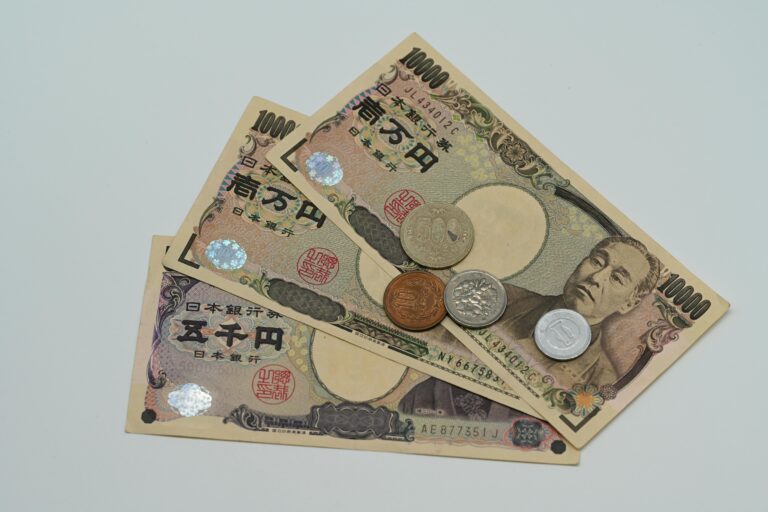
Are volatile yen swings making you nervous? We explain why the currency is unstable and what these non-fundamental shifts mean for your investments.
You check your investment portfolio, and the numbers don’t make sense. The overseas companies you invested in are reporting record profits, yet the value of your holdings is shrinking. You plan a trip abroad, and the budget you carefully set a month ago is suddenly inadequate. This isn’t a problem with your choices; it’s the silent erosion caused by volatile yen swings, a phenomenon that has left even the highest levels of government concerned.
The feeling of powerlessness is palpable. Recently, Japan’s own Finance Minister, Satsuki Katayama, voiced this exact concern, stating that it is “clear” that these currency movements are not based on the country’s economic health. According to a report from Bloomberg, this highlights a significant disconnect.
It is “clear” that volatile yen swings aren’t “moving based on fundamentals.”
– Satsuki Katayama, Japan’s Finance Minister, as reported by Bloomberg
When a top financial official admits that the market isn’t behaving rationally, it’s a clear signal for every saver and investor to pay close attention. This article will demystify what’s happening, explore why these volatile yen swings are a serious threat to your wealth, and provide concrete strategies to protect your hard-earned money.
What Are Economic Fundamentals and Why Do They Matter?
Before we can understand the problem, we need to understand how things are supposed to work. In a rational market, a country’s currency value is a reflection of its economic strength. These measures of strength are called “economic fundamentals.”
The Pillars of a Currency’s Value
Think of a currency as the stock price of a country. When the company (the country) is doing well, its stock price (currency value) should go up. The key performance indicators for a country include:
- Gross Domestic Product (GDP): This is the total value of all goods and services produced by a country. Strong, consistent GDP growth signals a healthy, expanding economy, which typically attracts foreign investment and strengthens the currency.
- Interest Rates: Central banks set interest rates to control inflation and manage economic growth. Higher interest rates offer better returns to lenders. Consequently, higher rates tend to attract foreign capital from investors seeking higher yields, increasing demand for and the value of the currency.
- Inflation Rate: A moderate level of inflation is normal, but high inflation erodes the purchasing power of a currency. A country with consistently low inflation is seen as having a more stable currency, making it more attractive.
- Trade Balance: This is the difference between a country’s exports and its imports. A country with a trade surplus (exporting more than it imports) has a high demand for its goods, and therefore, its currency. This demand pushes the currency’s value up.
- Employment Data: Low unemployment and strong wage growth indicate a robust economy where consumers are confident and spending money. This is another sign of economic health that supports a strong currency.
When these fundamentals are positive—GDP is growing, interest rates are attractive, and the trade balance is healthy—the yen should, in theory, be strong and stable. But as recent events show, theory and reality have parted ways.
The Troubling Disconnect: Understanding Today’s Volatile Yen Swings
The Finance Minister’s statement confirms what many have suspected: the yen is no longer trading based on Japan’s economic performance. Instead, its value is being tossed around by powerful external forces. These volatile yen swings are the result of a complex interplay of global factors that have little to do with Japan’s domestic economy.
Factor 1: Global Risk Sentiment and the “Safe-Haven” Curse
The Japanese yen has a long-standing reputation as a “safe-haven” currency. This means that during times of global uncertainty—a stock market crash, geopolitical conflict, or a financial crisis—investors panic and pull their money out of riskier assets (like stocks) and park it in assets they perceive as safe, such as the yen.
This creates a paradoxical situation. A crisis in Europe or the United States could have absolutely nothing to do with Japan’s economy, yet it can cause a massive influx of capital into the yen. This surge in demand causes the yen to strengthen rapidly, often to the detriment of Japan’s own export-driven economy. It’s a “curse” because the yen’s strength is driven by fear elsewhere, not by confidence in Japan.
Factor 2: The Dominance of Speculative Trading
The foreign exchange (Forex) market is the largest financial market in the world, with trillions of dollars traded daily. A significant portion of this trading is speculative. Large institutional players, hedge funds, and algorithmic trading systems make massive bets on short-term currency movements.
These speculators are not investing based on a 10-year outlook of Japan’s GDP. They are trading based on complex algorithms, technical chart patterns, and momentum. A small move can trigger a cascade of automated trades, creating a self-fulfilling prophecy that pushes the currency further in one direction. These speculative flows can easily overpower the more gradual influence of economic fundamentals, leading to the sharp, volatile yen swings we are witnessing.
Factor 3: The Great Chasm of Interest Rate Differentials
For decades, Japan has maintained ultra-low, and sometimes even negative, interest rates to stimulate its economy. Meanwhile, other major economies, particularly the United States, have raised their interest rates to combat inflation. This has created a massive gap, or “differential,” in the returns offered by holding different currencies.
This differential fuels a popular strategy called the “carry trade.” A trader borrows money in a low-interest-rate currency (like the yen), where the cost of borrowing is negligible. They then convert that money and invest it in a high-interest-rate currency (like the US dollar), pocketing the difference in interest. To do this, they must sell yen and buy dollars, which puts downward pressure on the yen’s value. Billions of dollars in carry trades can cause the yen to weaken significantly, regardless of Japan’s positive trade balance or low unemployment.
Factor 4: The Shadow of Government Intervention
When a currency becomes too volatile, or moves too far in a direction that harms the economy, the government or central bank may step in. This is known as intervention. The Bank of Japan can sell yen to weaken it (to help exporters) or buy yen to strengthen it (to curb import inflation).
The mere threat of intervention can cause massive volatility. Traders try to guess the government’s next move, leading to frantic buying or selling. The Finance Minister’s recent comments are a form of “verbal intervention”—an attempt to talk the market into behaving differently. While sometimes effective, it also highlights the government’s limited control and adds another layer of uncertainty, contributing to volatile yen swings.
How Volatile Yen Swings Directly Impact Your Wealth
This isn’t just a theoretical problem for economists and policymakers. The yen’s instability has a direct and tangible impact on your wallet, your savings, and your financial future. Understanding these impacts is the first step toward protecting yourself.
Impact on Your International Stock Portfolio
Many savvy investors diversify their portfolios by holding international stocks, particularly from robust markets like the United States. However, this exposes them to currency risk.
Let’s imagine you invest 1,000,000 JPY in a popular US stock index fund. At an exchange rate of 150 JPY per USD, your investment is worth approximately $6,667. Let’s say the US market has a great year, and your investment grows by 10% to $7,333.
But during that same year, the yen strengthens due to global uncertainty, and the exchange rate moves to 130 JPY per USD. When you convert your $7,333 back to yen, you get only 953,290 JPY. Despite the US market going up 10%, you’ve actually lost nearly 5% of your initial investment in yen terms. This is how volatile yen swings can erase your investment gains.
Impact on Your Savings and Purchasing Power
Currency volatility isn’t just about investing; it affects the cost of living. When the yen weakens, the price of everything Japan imports goes up. This includes:
- Energy: Japan is heavily reliant on imported oil and natural gas. A weaker yen means higher prices at the gas pump and on your utility bills.
- Food: A significant portion of Japan’s food is imported. A weak yen leads to higher grocery bills, reducing your disposable income.
- Electronics and Goods: Many components for electronics and other consumer goods are manufactured abroad. A weak yen translates to more expensive smartphones, computers, and cars.
This import-driven inflation acts as a hidden tax on your savings. The money in your bank account buys less and less each month, silently eroding your wealth.
Impact on Your Life Goals
The unpredictability of the yen can throw a wrench into your long-term plans.
- International Travel: Planning a vacation becomes a gamble. The cost of your trip could increase by 10-20% in a matter of weeks, potentially making it unaffordable.
- Studying Abroad: For parents saving for a child’s education overseas, volatile yen swings are a nightmare. The amount of yen needed to cover tuition and living expenses in dollars or euros can change drastically, making long-term financial planning extremely difficult.
- Retirement: If you plan to retire abroad or rely on income from foreign investments during retirement, currency volatility introduces a major element of risk to your financial security.
Strategies to Protect Your Portfolio from Volatile Yen Swings
Feeling anxious is a natural response, but helplessness is not a strategy. While you cannot control global markets, you can control your own financial plan. By implementing smart, defensive strategies, you can build a more resilient portfolio that is better equipped to handle the turbulence of volatile yen swings.
Strategy 1: Embrace Radical Diversification
Diversification is the single most important principle for managing risk. But in this environment, it needs to be more than just owning a few different stocks.
Geographic Diversification
Don’t concentrate all your investments in one or two countries. Invest globally. While this introduces currency risk, it also mitigates it. A strengthening yen might hurt your US stock returns, but a weakening euro might be offset by gains in an emerging market. The key is to spread your exposure so that no single currency’s movement can devastate your entire portfolio.
Asset Class Diversification
Your portfolio should contain a mix of different asset types that behave differently in various economic conditions.
- Stocks: For long-term growth.
- Bonds: For stability and income. Government bonds from different countries can behave very differently.
- Real Estate: Can provide rental income and act as an inflation hedge. This can include physical property or Real Estate Investment Trusts (REITs).
- Commodities: Assets like gold are often seen as a store of value when faith in fiat currencies falters. Gold is priced in US dollars, so a weakening yen can lead to a rise in its yen-denominated price.
Strategy 2: Understand and Use Currency Hedging
For investors who are particularly concerned about currency risk, hedging can be a powerful tool. You don’t need to be a professional Forex trader to do this.
Currency-Hedged ETFs and Mutual Funds
Many investment firms offer “currency-hedged” versions of their popular international funds. These funds invest in foreign assets (like US stocks) but also use financial instruments called derivatives to neutralize the effect of exchange rate fluctuations.
How it works: A hedged fund that buys US stocks will simultaneously enter a contract to sell dollars and buy yen at a future date. This locks in an exchange rate. If the yen strengthens (which would normally hurt your return), the gain on the currency contract offsets the loss on the stock conversion.
The trade-off: This protection is not free. Hedged funds typically have higher management fees (expense ratios). Furthermore, if the yen weakens (which would normally boost your returns from foreign assets), the hedge will work against you and erase those extra currency gains. It’s a tool for reducing volatility, not for maximizing returns.
Strategy 3: Adopt a Resilient Long-Term Perspective
In the face of alarming headlines about volatile yen swings, the worst thing you can do is panic. Short-term currency movements are notoriously difficult to predict. Trying to time the market by selling all your foreign assets when the yen strengthens, or piling in when it weakens, is a recipe for disaster.
Instead, focus on your long-term goals. The fundamental driver of wealth over decades is not currency fluctuation, but the real return on your assets. A well-run, profitable company will grow its earnings over time, regardless of what the yen/dollar exchange rate is this week. By focusing on owning high-quality assets and holding them for the long term, you allow the power of compounding to work its magic, which can often overwhelm the noise of short-term currency volatility.
Strategy 4: Invest in Less Correlated Assets
Another approach is to intentionally allocate a portion of your portfolio to assets that are less sensitive to exchange rates.
Domestic-Focused Companies
While many large Japanese companies are exporters, there are plenty of businesses that derive the vast majority of their revenue from within Japan. These can include railway operators, domestic real estate companies, utility providers, and retailers. Since their profits are earned in yen and their costs are in yen, their performance is more insulated from the effects of a volatile currency.
Alternative Investments
Consider assets that have a low correlation to both stock markets and currency markets. This can include certain types of commodities, infrastructure projects, or even private equity. These are more complex investments and require careful research, but they can be a valuable component of a sophisticated diversification strategy designed to weather any storm.
The reality of volatile yen swings is a new challenge for savers and investors in Japan. The old rules, where a healthy domestic economy guaranteed a stable currency, no longer apply. But this uncertainty doesn’t have to derail your financial goals. By understanding the forces at play, acknowledging the risks, and implementing a robust, diversified, and long-term financial strategy, you can navigate this turbulent environment and continue your steady journey from work to wealth.
Frequently Asked Questions
I’m losing money on my US stocks. Are volatile yen swings to blame?
It’s highly likely they are a major factor. Even if your US stocks increase in dollar value, a strengthening yen can erase those gains when you convert the value back to yen. This is called currency risk. For example, a 10% gain in your stocks can be completely wiped out by a 10% strengthening of the yen against the dollar. It’s crucial to look at your returns in your home currency (yen) to see the full picture.
Why can’t I just trust Japan’s economy to fix these volatile yen swings?
Because the problem is largely external. As officials have noted, the yen’s value is currently being driven by global factors like speculative trading, international interest rate gaps, and global risk sentiment, not Japan’s domestic economic health (fundamentals). While a strong economy is good, it cannot control these powerful outside forces, meaning the volatility can persist even when Japan’s economy is stable.
Is there a simple way to stop my travel budget from being ruined by currency changes?
While you can’t stop the market, you can reduce the risk. One simple strategy is to exchange money over time rather than all at once. You can also use services that allow you to lock in an exchange rate in advance for a fee. For larger expenses like pre-booked hotels or tours, paying in full upfront when the exchange rate is favorable can protect you from future negative swings.
Should I avoid all international investing because of volatile yen swings?
No, that would be a mistake. Avoiding international investing means missing out on growth from the world’s largest economies and concentrating all your risk in a single country. The better solution is to manage the risk, not run from it. Use strategies like broad diversification across many countries and consider using currency-hedged investment products (like hedged ETFs) for a portion of your portfolio to specifically reduce the impact of currency volatility.