

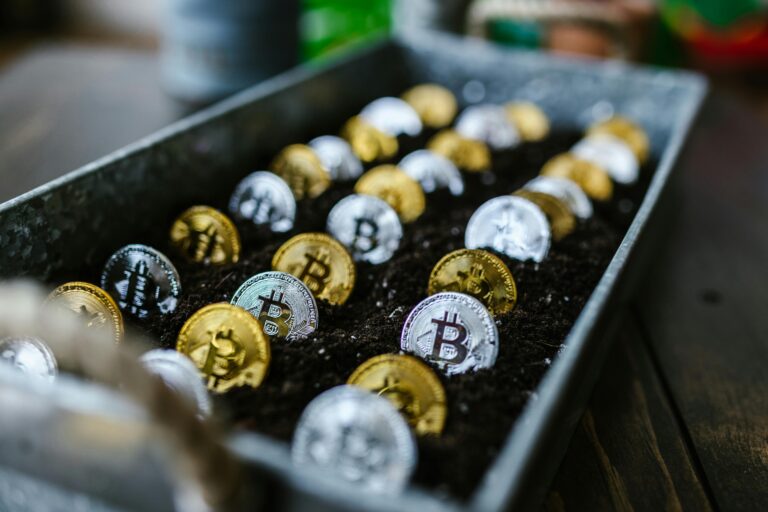
Discover why silver soared in 2025 and why its future looks even brighter. We explore the critical factors making investing in silver a compelling move.
The Unmistakable Shine of a New Era for Silver
The world of finance is often dominated by talk of stocks, bonds, and the ever-present allure of gold. But in 2025, another metal didn’t just join the conversation; it began to dominate it. That metal was silver. For those of us who had been watching the fundamentals, the explosive price surge was less of a surprise and more of a confirmation. The decision to start investing in silver became one of the most rewarding financial moves of the decade, and the story behind its meteoric rise is a masterclass in supply, demand, and the dawn of a new technological age.
For years, silver has been affectionately, and sometimes nervously, called the “Devil’s Metal” due to its notorious price volatility. It can lag behind gold for long periods and then suddenly erupt with breathtaking speed. In 2025, it erupted. The price per troy ounce surged to a historic peak of $54.47, marking an incredible 71% rise year-on-year. To put that in perspective, gold, which had its own impressive rally past the $4,000 mark, saw a growth of about 54% in the same period. Silver wasn’t just keeping up; it was leading the charge.
This wasn’t just a speculative frenzy. Unlike previous price spikes, such as the market-cornering attempt in 1980 or the safe-haven rush in 2011, the 2025 rally was built on a much more solid, and arguably more sustainable, foundation. It was the result of a perfect storm: a severe and prolonged supply crunch colliding with an unprecedented wave of demand from both traditional investors and future-forward industries. Understanding these dual forces is the key to grasping why investing in silver is no longer just a hedge, but a strategic play on the future of our global economy.
Unpacking the Phenomenal 2025 Surge: Why Investing in Silver Paid Off
To truly appreciate the scale of the 2025 rally, one must look at the signals that preceded it. One of the most-watched metrics in the precious metals space is the gold-to-silver ratio. This simple ratio tells you how many ounces of silver it takes to purchase one ounce of gold. Historically, a high ratio suggests that silver is undervalued relative to gold, and a correction is likely.
In April of 2025, that ratio spiked to a historic high, surging past 100. This was a massive flashing light for savvy investors. It signaled that silver was exceptionally cheap compared to its more famous cousin. For those of us who decided that this was the moment for investing in silver, the subsequent months were a period of rapid and satisfying validation as the ratio began to contract and silver’s price rocketed upwards.
The catalyst wasn’t a single event but a confluence of factors. As Rhona O’Connell, head of market analysis for EMEA and Asia at Stone X, noted, fears of trade tariffs created a situation where “risk managers in financial and industrial entities did not want to let any metal go out.” This hesitation to move physical metal created logistical bottlenecks, intensifying the feeling of scarcity long before it was reflected in the headline supply numbers.
Then came the seasonal demand drivers, particularly from India, the world’s largest consumer of the white metal. Following the harvest and monsoon seasons, rural wealth often flows into tangible assets. “Farmers don’t really like the banks very much, so gold and latterly, silver, tend to be the first port of call when they’ve got the harvest in,” O’Connell explained to CNBC. With silver being a more affordable option, it became the metal of choice, especially with the festive Diwali season amplifying demand for jewelry and ornaments. The result was a record price in the local currency, reaching an astounding 170,415 rupees per kilogram.
The Supply Squeeze: A Deep Dive into Scarcity and Its Impact on Investing in Silver
While surging demand painted one half of the picture, the other, more alarming half was the profound and worsening supply deficit. For those considering investing in silver, the supply side of the equation offers one of the most compelling long-term arguments.
According to The Silver Institute’s 2025 World Silver Survey, the issue is not new. Mine production has been on a downward trend for the better part of a decade. This isn’t due to a lack of effort but to fundamental geological and operational challenges. Primary silver mines are becoming rarer, with a significant portion of silver being produced as a byproduct of mining for other metals like copper, lead, and zinc. Key mining regions in Central and South America have faced a string of setbacks, including resource depletion at aging mines, geopolitical instability, and a lack of investment in new infrastructure.
This slow-burning issue reached a critical point in the vaults of the London Bullion Market Association (LBMA), one of the world’s most important hubs for physical precious metals. The inventory numbers told a stark story. In June 2022, the vaults held 31,023 metric tons of silver. By March 2025, that figure had plummeted by nearly a third to just 22,126 metric tons, its lowest level in years. “What isn’t necessarily so visible to people is what’s happening in the vaults,” said O’Connell. “And that had reached a point where there was basically there was no available metal left in London.”
This physical scarcity had immediate and severe consequences in the trading markets. Traders who needed to borrow silver to close out their positions found themselves paying exorbitant rates. At one point, the overnight lease rate for borrowing silver shot up to a staggering 200% on an annualized basis. This was a market under extreme stress, a clear signal that the paper price was struggling to keep up with the reality of physical availability.
The Demand Explosion: More Than Just a Precious Metal
The true game-changer for silver, and the primary reason why its future looks so compelling, is its indispensable role in modern technology. It is no longer just a monetary metal or a material for jewelry. Silver is a critical industrial commodity, and its demand is directly tied to the biggest technological transformations of our time.
Industrial Demand: The Future is Silver-Plated
The transition to a green economy and the explosion in advanced electronics are fundamentally rewiring the demand equation for silver. The metal has the highest electrical and thermal conductivity of any element, making it irreplaceable in a growing number of high-tech applications.
The Electrification of Vehicles: The shift from internal combustion engines to electric vehicles (EVs) is a massive tailwind for silver. A standard EV already contains between 25 and 50 grams of silver, used in everything from battery contacts and wiring to sensors and control modules. But the next generation of battery technology could multiply this demand exponentially. As Paul Syms of Invesco highlighted, “If we move into these solid-state silver batteries, each electric vehicle might require a kilo or more of silver.” A move from 50 grams to 1,000 grams per vehicle represents a 20-fold increase in demand from a sector that is already growing at a breakneck pace.
Photovoltaics (Solar Power): The global push for renewable energy is another powerful demand driver. Silver is used as a conductive paste on the front and back of nearly all crystalline silicon photovoltaic cells, which are the backbone of solar panels. As governments worldwide set ambitious clean energy targets, the installation of solar capacity is set to continue its exponential growth. While manufacturers are working to use less silver per panel (a process called “thrifting”), the sheer volume of new panels being produced is expected to far outstrip these efficiency gains, leading to a net increase in overall silver consumption for years to come.
Artificial Intelligence and 5G: The AI revolution and the rollout of 5G networks are built on a foundation of advanced electronics, and silver is at the heart of it. Every server in a data center, every semiconductor chip, and every smartphone contains silver. Its reliability and superior conductivity are essential for high-frequency applications and the efficient management of electrical currents in complex circuits. As our world becomes more connected and data-intensive, the need for the components that power this transformation—and the silver within them—will only escalate.
The “Devil’s Metal”: Navigating the Volatility of Investing in Silver
No discussion about investing in silver would be complete without acknowledging its inherent volatility. The “Devil’s Metal” nickname was earned for a reason. Its price can swing more dramatically than gold’s, which can be unsettling for the risk-averse investor. This volatility stems from its dual identity.
As a precious metal, its price is influenced by investor sentiment, inflation fears, and currency fluctuations, much like gold. However, as an industrial metal, its price is also heavily tied to the health of the global economy. During periods of economic expansion, industrial demand is strong, providing a solid floor for prices. But during a recession, a sharp drop in industrial activity can pull silver prices down, even if safe-haven buying is increasing.
This dual nature means investors must be prepared for a bumpier ride. However, it is also this industrial component that provides the explosive upside potential that gold often lacks. While gold’s demand is primarily for investment and jewelry, over half of all silver consumed each year is used in industry, tying its fate to innovation and progress.
Your Path to Wealth: Practical Ways to Start Investing in Silver
Convinced by the long-term case for silver? The good news is that there are multiple ways to gain exposure to the metal, each with its own set of pros and cons. Choosing the right method for investing in silver depends on your personal goals, risk tolerance, and desire for physical ownership.
Physical Silver: Coins and Bullion
This is the most direct way to own silver. It involves purchasing physical bars or coins.
- Pros: You hold a tangible asset with no counterparty risk. In a crisis, you physically possess your wealth. Many government-backed one-ounce coins are highly recognizable and easy to liquidate.
- Cons: You will pay a premium over the “spot” price of silver to cover manufacturing and dealer costs. You are also responsible for secure storage and insurance, which adds to the overall cost of ownership.
Silver Exchange-Traded Funds (ETFs)
These are funds that trade on a stock exchange, with their share price designed to track the price of silver. Most physical silver ETFs hold large bars of the metal in secure vaults.
- Pros: Extremely easy to buy and sell through any standard brokerage account. They offer high liquidity and very low transaction costs. You don’t have to worry about storage.
- Cons: You don’t own the physical metal itself, but rather a share in a trust that owns it. There is an annual management fee (expense ratio), and you are exposed to counterparty risk, however small, associated with the fund’s custodian.
Silver Mining Stocks
Another option is to invest in the companies that mine and produce silver.
- Pros: Mining stocks offer leverage to the silver price. A small increase in the price of silver can result in a much larger percentage increase in a mining company’s profits and stock price. Some companies may also pay dividends.
- Cons: This is a riskier approach. You are not only exposed to silver price fluctuations but also to company-specific risks like poor management, operational problems, labor strikes, and political instability in the countries where they operate.
The Long-Term Outlook: Is Investing in Silver a Brilliant Move for Your Portfolio?
The historic rally of 2025 put silver back in the spotlight, but the real story is not about the peak; it’s about the powerful, long-term fundamentals that drove it. The structural deficit—where demand consistently outstrips new supply from mines and recycling—is not a short-term anomaly. It is the new reality for the silver market.
The relentless demand from the green energy transition and the digital revolution is locked in for decades to come. As Paul Syms aptly put it, “Silver crosses over that bridge between precious and industrial metals, and the way technology is going on, the batteries, the solar panels, it’s got some great use cases as we move into a more electrified world.”
While the path will undoubtedly have its volatile swings, the underlying thesis for investing in silver has never been stronger. It is an investment in the tangible, indispensable material that is building the world of tomorrow. For those looking to diversify their portfolio and position themselves for the next wave of technological and economic change, the “Devil’s Metal” might just be the most brilliant asset to own.
Frequently Asked Questions
Why was my decision on investing in silver so profitable in 2025?
Investing in silver was highly profitable in 2025 due to a “perfect storm” of market conditions. Firstly, a decade-long decline in mine production created a severe supply shortage, which was visible in the rapidly emptying vaults in London. Secondly, demand exploded from multiple sectors. Investment demand surged, particularly in India, while industrial demand from key growth areas like electric vehicles, solar panels, and AI components reached new highs. This combination of shrinking supply and surging demand created a structural deficit, driving prices to record levels.
I’m worried about the volatility. Is investing in silver too risky for me?
Silver is undeniably more volatile than gold, which is why it’s nicknamed the “Devil’s Metal.” This is due to its dual nature as both a precious and an industrial metal. Its price is affected by both investor sentiment and global economic health. While this can lead to larger price swings, it also provides greater upside potential. For risk-averse investors, it’s wise to allocate a smaller portion of your portfolio to silver than you might to gold. Starting with a physical silver ETF can also be a lower-cost, highly liquid way to gain exposure without the complexities of physical storage or mining stock analysis.
What’s the easiest way to overcome the hurdle of starting to invest in silver?
For most beginners, the easiest and most accessible way to start investing in silver is through an Exchange-Traded Fund (ETF). These funds trade like stocks on major exchanges and can be bought and sold through any standard brokerage account. They are designed to track the price of silver, are highly liquid, and have very low annual fees. This method eliminates the need to worry about storage, insurance, and the authenticity of physical bullion, making it a simple and cost-effective entry point into the silver market.
Will the amazing demand for silver continue to grow even with higher prices?
Yes, the industrial demand for silver is largely expected to be price-inelastic, meaning demand will remain strong even if prices continue to rise. This is because silver is often used in small quantities per device, but its unique properties of conductivity make it irreplaceable. For manufacturers of EVs, solar panels, or advanced electronics, the cost of silver is a very small fraction of the final product’s price. The performance benefits it provides far outweigh the expense, ensuring that demand from these critical, high-growth sectors will likely continue to grow for the foreseeable future.