

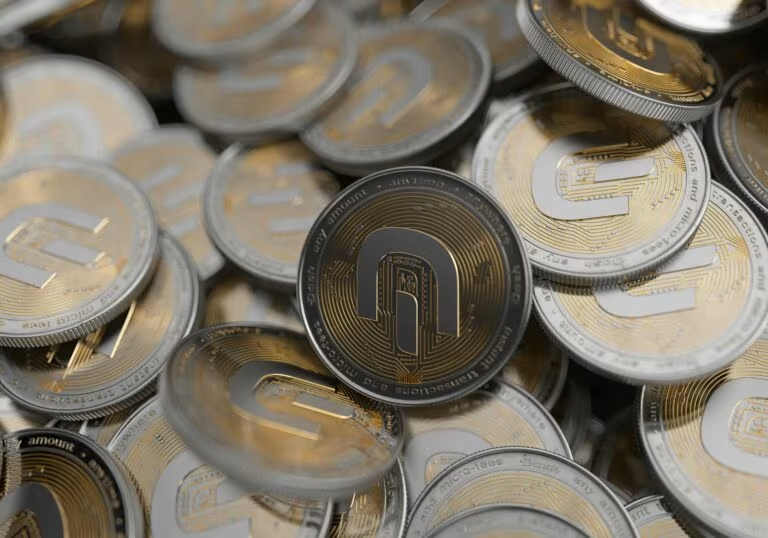
Navigate precious metals investing with confidence. This guide deciphers Fed signals, central bank trends, and technical insights to help secure your financial future.
In the dynamic landscape of global finance, where economic forecasts shift like desert sands and geopolitical tensions cast long shadows, individuals seeking to build and protect their wealth often find themselves searching for reliable anchors. Precious metals investing, particularly in gold and silver, has historically served this purpose, offering a tangible store of value when traditional assets face headwinds. As central banks worldwide recalibrate their strategies and economic data sends mixed signals, understanding the forces shaping the value of these metals becomes paramount for any astute investor aiming for long-term financial stability.
The current market environment presents a compelling case for considering precious metals. Recent financial analyses suggest a significant probability – reportedly over 90% among traders – of a central bank rate adjustment in the near future. Such a move would mark a pivotal shift in monetary policy, potentially reducing the opportunity cost of holding non-yielding assets like gold and silver. This article delves into the critical factors influencing gold and silver prices, from central bank purchasing sprees to nuanced economic indicators, and provides a framework for integrating these timeless assets into your personal wealth strategy.
The Foundational Appeal of Precious Metals Investing
Why do gold and silver continue to captivate investors across generations? Beyond their intrinsic beauty and industrial utility, these metals possess unique characteristics that make them invaluable components of a diversified investment portfolio. Understanding these core attributes is the first step toward appreciating their role in wealth preservation and growth.
Gold and Silver as Inflation Hedges: Protecting Purchasing Power
One of the most compelling reasons to engage in precious metals investing is their long-standing reputation as a hedge against inflation. When the cost of living rises and fiat currencies lose purchasing power, gold and silver often maintain or increase their value. This phenomenon is rooted in their finite supply and universal acceptance as a store of value. Unlike paper money, which can be printed in unlimited quantities, the availability of physical gold and silver is naturally constrained, making them resilient to inflationary pressures over the long term.
Consider a scenario where global economic growth is robust, but so are inflationary tendencies. In such an environment, the cost of goods and services escalates, eroding the real returns from many traditional investments. Precious metals, however, tend to perform well as investors flock to them to preserve their wealth. This protective quality is particularly relevant in today’s world, where economic policies and supply chain disruptions can quickly ignite inflationary spikes.
Portfolio Diversification: A Shield Against Volatility
A cornerstone of sound financial planning is diversification. The goal is to spread risk across various asset classes so that a downturn in one area does not decimate your entire portfolio. Gold and silver excel in this regard due to their historically low correlation with other major asset classes, such as stocks and bonds.
When stock markets experience significant corrections or economic uncertainties plague bond markets, precious metals often move independently or even inversely. This counter-cyclical behavior helps smooth out portfolio volatility, providing a stabilizing effect during turbulent times. For instance, during periods of market stress, investors typically seek refuge in safe-haven assets, and gold has consistently been among the top choices. Including precious metals in your portfolio can therefore act as an insurance policy, safeguarding your overall wealth against unexpected market shocks.
The Safe Haven Appeal: Stability in Times of Uncertainty
Beyond inflation and diversification, gold and silver are revered for their safe-haven status. In moments of geopolitical turmoil, economic crises, or widespread financial panic, investors frequently turn to precious metals. Their tangibility and universal recognition as a valuable asset provide a psychological comfort that digital or paper assets cannot always offer.
From regional conflicts to global pandemics, history is replete with examples where gold prices surged as fear gripped the markets. This flight to safety is not merely speculative; it reflects a fundamental human instinct to seek security in times of uncertainty. For individuals building wealth, having a portion of their portfolio in precious metals can provide peace of mind, knowing that a component of their assets is insulated from the more volatile currents of global events.
Decoding the Federal Reserve’s Influence on Precious Metals Investing
The policies of central banks, particularly the U.S. Federal Reserve, exert a profound influence on the valuation of precious metals investing. Interest rates, inflation targets, and economic outlooks communicated by the Fed can directly impact the attractiveness of non-yielding assets like gold and silver. Understanding this intricate relationship is crucial for making informed investment decisions.
Interest Rates and Opportunity Cost: A Direct Correlation
One of the most significant mechanisms through which the Fed influences precious metals is through interest rates. Gold and silver, unlike bonds or bank deposits, do not pay interest or dividends. Therefore, when interest rates rise, the opportunity cost of holding precious metals increases; investors can earn higher returns elsewhere with less risk. Conversely, when interest rates fall, the opportunity cost decreases, making gold and silver relatively more attractive.
Recent market intelligence, reflecting futures data, indicates a strong probability – exceeding 90% – that the Federal Reserve will implement a rate cut in the upcoming December meeting. Such a reduction would represent the first easing of policy since a period of significant inflationary pressures. This anticipated shift is a key driver for the current strengthening sentiment in precious metals markets. A lower interest rate environment makes holding physical gold or silver more appealing as the relative return on alternative, interest-bearing investments diminishes.
Economic Indicators: Signaling the Fed’s Next Move
The Federal Reserve bases its monetary policy decisions on a wide array of economic data, including inflation, employment figures, and consumer sentiment. Recent labor market indicators have shown signs of softening, which could accelerate the Fed’s move towards easing.
For example, economic reports highlighted a notable drop in private payrolls, alongside a decline in job openings. These statistics signal a cooling labor market, which could prompt the Fed to act preemptively to prevent a more significant economic slowdown. Weaker employment conditions typically align with an easing monetary policy stance, which is generally bullish for precious metals. A slowing economy often leads to reduced demand for industrial commodities and a flight to safety, where gold and silver shine.
However, the economic picture is rarely black and white. While labor data points towards easing, other indicators provide a mixed perspective. Consumer sentiment, for instance, recently showed a modest improvement, exceeding market expectations. Stronger consumer outlooks and stable services activity can lend support to the U.S. Dollar. A firmer dollar typically makes gold and silver more expensive for holders of other currencies, potentially moderating some of the bullish energy from rate-cut expectations. This creates a delicate balance for precious metals traders, highlighting the complexity of market dynamics.
Central Banks: The Driving Force of Global Gold Accumulation
Beyond individual investor sentiment and Federal Reserve policy, a powerful and consistent driver of precious metals investing demand comes from central banks worldwide. Their strategic purchases, often spanning years, underscore the enduring value and geopolitical significance of gold.
China’s Unwavering Demand: A Case Study in Diversification
One of the most notable trends in recent years has been the sustained accumulation of gold by central banks, particularly from major global economies. A prominent example is the continuous purchasing streak by the People’s Bank of China. Reports indicate that the Chinese central bank has extended its record gold-buying spree, marking its thirteenth consecutive monthly purchase. In a recent month, it added a significant quantity of troy ounces to its reserves, elevating its total holdings considerably. This consistent acquisition reinforces a broader global trend of central bank diversification.
China’s strategic move away from a sole reliance on traditional reserve assets, such as U.S. Treasury bonds, and towards hard assets like gold signals a calculated reassessment of reserve strategy. This shift is often driven by a desire to insulate national reserves from currency volatility and geopolitical frictions, enhancing financial stability and independence.
Global Trends in Reserve Strategy: Why Central Banks Buy Gold
The pattern observed with China is not isolated. The World Gold Council has consistently reported record-breaking central bank accumulation globally. This collective action is a testament to gold’s perceived stability and its role as a universally accepted reserve asset. Central banks historically hold gold for several key reasons:
- Diversification: To reduce reliance on a single currency or asset class, especially the U.S. Dollar.
- Store of Value: To protect against inflation and preserve purchasing power over the long term.
- Safe Haven: To provide stability during financial crises or geopolitical tensions.
- Monetary Independence: To bolster national financial sovereignty and confidence.
The ongoing geopolitical landscape, characterized by trade disputes, currency fluctuations, and international sanctions, only strengthens the argument for central banks to diversify into metals. This structural demand from official-sector buyers provides a strong, underlying support for precious metal prices, distinguishing it from purely speculative investor interest. For individual investors, recognizing this macro trend offers confidence in the long-term viability of precious metals investing.
Integrating Precious Metals into Your Personal Wealth Strategy
Understanding the fundamental drivers and market dynamics of gold and silver is essential, but the next crucial step is translating that knowledge into actionable strategies for your personal portfolio. Thoughtful integration of precious metals investing can fortify your wealth and enhance your financial resilience.
Determining Your Allocation: A Personalized Approach
There’s no one-size-fits-all answer to how much of your portfolio should be allocated to precious metals. The ideal percentage depends on several factors, including your age, risk tolerance, overall investment goals, and current market outlook. Financial advisors often suggest an allocation ranging from 5% to 15% for conservative investors, or potentially higher for those with a greater emphasis on wealth preservation or concerns about systemic risk.
A younger investor with a long time horizon and higher risk tolerance might opt for a smaller allocation, focusing more on growth-oriented assets. Conversely, someone nearing retirement or concerned about significant market volatility might choose a larger percentage. The key is to view precious metals as a complementary asset, designed to enhance stability and provide a hedge, rather than as the sole engine of portfolio growth.
Choosing Your Investment Vehicle: Physical vs. Paper
Once you’ve determined your desired allocation, the next decision is how to gain exposure to gold and silver. There are several popular avenues, each with its own advantages and considerations:
- Physical Gold and Silver (Bullion, Coins, Bars):
Direct ownership of physical metal offers the ultimate sense of security and tangibility. You hold the asset in your hand, free from counterparty risk. However, physical ownership comes with practical considerations:
- Storage: You’ll need a secure place to store your metals, whether it’s a home safe, a safety deposit box, or a specialized precious metals depository.
- Insurance: Adequate insurance is crucial to protect against theft or loss.
- Liquidity: Selling physical metal can sometimes be less immediate than trading electronic assets, though reputable dealers offer fair buy-back prices.
- Premium: Physical metals typically carry a small premium over their spot price to cover manufacturing, distribution, and dealer costs.
- Exchange-Traded Funds (ETFs):
Precious metals ETFs offer a convenient and liquid way to invest without the complexities of physical storage. These funds typically hold physical gold or silver in secure vaults and issue shares that track the metal’s price. Advantages include:
- Convenience: Easy to buy and sell through a brokerage account.
- Liquidity: Highly liquid, allowing for quick entry and exit.
- Lower Costs: Generally lower transaction costs compared to buying physical bullion.
- No Storage Hassles: The fund handles storage and insurance.
However, ETFs introduce counterparty risk (you don’t directly own the physical metal, but shares in a trust) and management fees.
- Mining Stocks:
Investing in the stocks of companies that mine gold and silver offers a leveraged play on precious metal prices. When metal prices rise, mining company profits can increase disproportionately, leading to higher stock prices. Conversely, falling metal prices can significantly impact their profitability.
- Higher Potential Returns: Can offer greater upside than direct metal ownership.
- Dividends: Some mining companies pay dividends.
However, mining stocks are subject to additional risks, including operational challenges, geopolitical risks in mining regions, management quality, and overall stock market volatility. This option is generally considered higher risk/higher reward compared to physical metal or ETFs.
Dollar-Cost Averaging: A Prudent Buying Strategy
Given the inherent volatility of all markets, including precious metals, employing a strategy like dollar-cost averaging can be highly beneficial. This involves investing a fixed amount of money at regular intervals (e.g., monthly or quarterly), regardless of the current price. When prices are high, your fixed sum buys fewer units; when prices are low, it buys more units. Over time, this strategy helps to average out your purchase price, reducing the risk of making a large investment at a market peak.
Dollar-cost averaging removes the emotional element from investing and aligns well with the long-term, wealth-building philosophy often associated with precious metals investing.
Risk Management: Diversification Within Diversification
Even within the realm of precious metals, diversification can be beneficial. Consider investing in both gold and silver, as their price movements, while often correlated, can sometimes diverge due to different industrial demands (silver has more industrial uses than gold). Furthermore, don’t put all your precious metals allocation into a single vehicle; a blend of physical metal for ultimate security and an ETF for liquidity might be a balanced approach.
Understanding Market Signals: Beyond Daily Fluctuations
While the intricacies of technical analysis, with its jargon of exponential moving averages and candlestick patterns, might seem daunting to the everyday investor, gaining a general appreciation for market signals can be highly informative for precious metals investing. It’s not about becoming a day trader, but rather understanding the underlying currents that can indicate market health and potential future direction.
The Concept of Support and Resistance Levels
In financial markets, specific price levels often act as psychological barriers or magnets for buying and selling activity. These are known as support and resistance levels. A support level is a price point at which a falling asset tends to stop declining and potentially rebound, as buying interest strengthens. Conversely, a resistance level is a price point at which a rising asset tends to pause or reverse, as selling pressure increases.
For gold, recent market observations indicate a strong holding pattern around certain price thresholds. For example, when analysts observe gold holding near a specific level, it suggests a baseline of consistent buying interest. This could be viewed as a robust support level. A breakdown below such a level could indicate increased selling pressure, while a sustained move above a resistance level might signal strengthening bullish sentiment. For long-term investors, recognizing these levels can help in understanding market consensus and potentially identifying opportune moments for staggered purchases or portfolio rebalancing.
Trendlines and Channels: Visualizing Market Momentum
Another fundamental concept in market analysis involves identifying trendlines and channels. A trendline is a line drawn over pivot highs or under pivot lows to show the direction of a trend. A rising trendline indicates an uptrend, while a falling trendline signals a downtrend. A channel expands on this by adding a parallel line to the trendline, creating an area within which the price tends to move.
When analysts discuss gold holding firm on a “rising trendline,” it means the price has consistently found support along this upward sloping line, reinforcing the idea of a sustained bullish movement. Similarly, if silver is trading within a “well-defined rising channel,” it implies that the price is advancing in an organized manner, albeit with occasional pullbacks to the channel’s mid-line or lower boundary.
These visual representations help investors gauge the prevailing market momentum. While they are not infallible predictors, they offer valuable insights into investor behavior and expectations. For those engaged in precious metals investing, understanding that prices are respecting established trends can provide reassurance about the underlying strength of the market, helping to differentiate noise from significant shifts.
The Long-Term View: Beyond Short-Term Fluctuations
It is crucial for wealth builders to remember that technical analysis, particularly for long-term investors, serves best as a directional guide rather than a precise timing tool for daily trades. Short-term price movements can be volatile and influenced by numerous fleeting factors. The real value of understanding these signals in the context of precious metals investing comes from confirming broader trends and making strategic decisions based on a long-term perspective. Focusing on fundamental drivers like central bank demand, monetary policy shifts, and geopolitical stability, rather than hourly price swings, will ultimately lead to more robust wealth growth and preservation.
The Road Ahead: What to Watch for in Precious Metals Investing
As we navigate the complexities of the global economy, staying informed about key events and indicators will be crucial for successful precious metals investing. The confluence of monetary policy, economic data, and geopolitical developments will continue to shape the landscape for gold and silver.
The Federal Reserve’s Decision: A Key Inflection Point
All eyes remain on the upcoming Federal Reserve decision. The market has largely priced in an interest rate adjustment, but the accompanying statements from the central bank, along with updated economic projections and commentary from its Chair, will provide vital clues on the pace and trajectory of monetary policy into the future. Any deviation from market expectations, or stronger signals about further easing, could significantly impact the appeal of precious metals. Investors should pay close attention to the language used, looking for indications of the Fed’s confidence in economic growth versus its concerns about inflation or employment.
Global Economic Indicators and Geopolitical Shifts
Beyond domestic economic data, global indicators will also play a crucial role. Manufacturing output, trade balances, and inflation figures from major economies worldwide can influence global growth prospects and, in turn, demand for safe-haven assets. Furthermore, persistent geopolitical frictions and currency volatility continue to drive institutions and individuals toward the perceived security of gold and silver. Any escalation of international tensions or unexpected currency devaluations could trigger renewed interest in precious metals as a hedge against systemic risk.
Inflation Trends: The Ever-Present Factor
Despite recent efforts to tame it, inflation remains an ever-present concern for investors. Should inflation show signs of re-accelerating, or if central banks struggle to keep it within their target ranges, the demand for gold and silver as inflation hedges could intensify. Conversely, a sustained period of low and stable inflation might reduce some of the urgency for precious metals, though their role in diversification would remain.
For those dedicated to precious metals investing, continuous monitoring of these broader macroeconomic and geopolitical trends, rather than short-term market noise, will enable more strategic and resilient portfolio management. The goal is to anticipate shifts and position your wealth effectively to thrive in an ever-evolving financial world.
Avoiding Common Pitfalls in Precious Metals Investing
While precious metals investing offers significant benefits for wealth preservation and diversification, it is not without its potential pitfalls. Being aware of these common mistakes can help investors navigate the market more effectively and protect their hard-earned capital.
Emotional Investing: The Enemy of Rational Decisions
One of the biggest dangers in any investment, and particularly in markets prone to sentiment-driven swings, is making decisions based on emotion rather than objective analysis. Fear of missing out (FOMO) can lead to buying at market peaks, while panic can trigger selling at market lows. Precious metals, especially gold, can experience significant price volatility in the short term, often fueled by global events or economic anxieties.
A disciplined approach, anchored in your long-term financial goals and a predefined asset allocation strategy, is paramount. Stick to your plan, utilize strategies like dollar-cost averaging, and avoid reacting impulsively to daily news cycles or short-term price fluctuations. Remember that precious metals are primarily a long-term wealth preservation tool.
Over-Concentration: Putting All Your Eggs in One Basket
While the arguments for including gold and silver in a portfolio are strong, over-concentrating your entire wealth into precious metals is a significant risk. Even the best assets have periods of underperformance, and an overly concentrated portfolio loses the very benefit of diversification it seeks to achieve. A balanced portfolio includes a mix of equities for growth, fixed income for stability, and alternative assets like precious metals for hedging and diversification.
Adhere to a sensible allocation percentage that aligns with your overall financial plan and risk tolerance. This ensures that you benefit from the protective qualities of precious metals without exposing yourself to undue concentration risk.
Ignoring Storage and Security for Physical Assets
For those opting for physical gold and silver, neglecting proper storage and security arrangements is a critical oversight. Storing valuable bullion or coins in an unsecured location can expose you to theft or loss, negating the very tangibility benefit of physical ownership. Consider secure options such as certified precious metals depositories, bank safety deposit boxes, or highly secure home safes that are properly insured.
Always verify the reputation and security protocols of any third-party storage provider. Proper insurance is non-negotiable for physical assets, protecting your investment against unforeseen circumstances.
Falling for Scams and Misleading Claims
Unfortunately, the allure of precious metals can attract unscrupulous actors. Be wary of aggressive sales tactics, guaranteed returns, or pitches for obscure and illiquid “collectible” coins that are sold at exorbitant premiums over their melt value. Always deal with reputable and recognized precious metals dealers or financial institutions.
Educate yourself on fair pricing (e.g., understanding the spot price versus dealer premiums) and never feel pressured into making a hasty purchase. Due diligence is crucial in protecting yourself from fraud and ensuring you receive fair value for your investment.
By being mindful of these common pitfalls, investors can approach precious metals investing with greater confidence and secure the long-term benefits these timeless assets offer for their wealth accumulation journey.
Frequently Asked Questions
How can precious metals investing help safeguard my wealth against economic downturns?
Precious metals like gold and silver often act as a safe haven during economic uncertainty, inflation, or geopolitical instability. They tend to have a low correlation with traditional assets like stocks and bonds, meaning they may hold or increase their value when other investments are falling. This diversification helps to stabilize your overall portfolio and preserve purchasing power, offering a crucial layer of protection when market conditions become challenging.
What’s the ideal percentage of my portfolio to allocate to gold and silver to feel more secure?
There’s no single “ideal” percentage, as it depends on your individual risk tolerance, age, and financial goals. However, many financial planners suggest an allocation of 5% to 15% of your portfolio to precious metals for diversification and wealth preservation. This allocation can provide significant hedging benefits without over-concentrating your assets, allowing you to feel more secure without sacrificing growth potential in other areas of your portfolio.
Are there significant risks in precious metals investing that could lead to losses?
Yes, like any investment, precious metals come with risks. Their prices can be volatile in the short term, influenced by economic data, interest rate changes, and global events. For physical metals, risks include storage costs, security concerns, and potential premiums over spot price. For ETFs, there’s counterparty risk and management fees. Mining stocks carry additional operational and market-specific risks. The key is to avoid emotional investing, ensure proper diversification, and deal with reputable providers to mitigate these risks and avoid unnecessary losses.
How do central bank actions, like rate cuts, impact the appeal of precious metals investing?
Central bank actions, especially interest rate changes, significantly influence precious metals. When central banks cut interest rates, the opportunity cost of holding non-yielding assets like gold and silver decreases, making them more attractive compared to interest-bearing alternatives. This often leads to increased demand and upward price pressure. Conversely, rising rates can reduce their appeal. Recent expectations of a rate cut highlight this dynamic, enhancing the sentiment for precious metals as a more favorable investment.
I’m new to this; what’s the simplest way to start precious metals investing without feeling overwhelmed?
For beginners, one of the simplest and most accessible ways to start precious metals investing is through Exchange-Traded Funds (ETFs) that track gold or silver prices. These can be easily bought and sold through a standard brokerage account, eliminate the complexities of physical storage and insurance, and offer high liquidity. Start with a small, consistent investment using dollar-cost averaging to gradually build your position without feeling overwhelmed by market timing.