

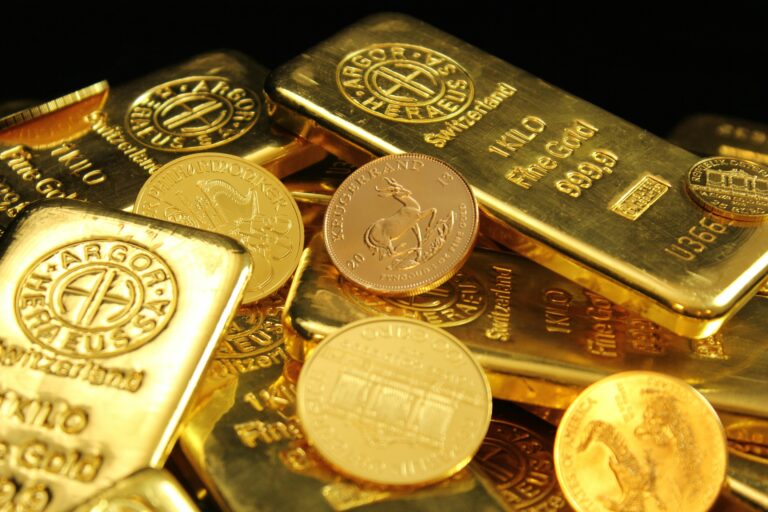
Explore the gold price outlook as it faces near-term pressure, with experts predicting a $5,000 target by 2026. Learn how global trade dynamics shape future trends.
Understanding the current gold price prediction is crucial for any investor navigating the complexities of global financial markets. Recent developments, particularly in international trade and monetary policy, have placed precious metals under significant scrutiny. While short-term forecasts suggest a period of pressure, a deeper dive into economic indicators and expert analyses reveals a promising long-term trajectory for gold, with ambitious targets that could significantly enhance a diversified investment portfolio.
The journey of wealth creation often involves strategic asset allocation, and gold has historically served as a critical component for hedging against inflation and market volatility. However, the dynamics influencing its value are constantly evolving, requiring continuous vigilance and informed decision-making. This article delves into the various factors shaping the current outlook for gold and silver, providing a comprehensive perspective for those aiming to build and preserve their wealth.
Understanding Current Gold Price Pressure
Recent market movements indicate that gold prices are experiencing significant downward pressure. A primary driver of this sentiment is the prevailing optimism surrounding potential trade deals, particularly between major global economies. The prospect of reduced trade tensions often diminishes the appeal of safe-haven assets like gold, as investors become more inclined to shift towards riskier, growth-oriented assets.
According to an analysis published in The Times of India, gold price prediction indicates that prices are likely to remain under pressure ahead of high-level meetings between key economic leaders. This anticipation of a trade truce can lead to a softening in gold’s demand, influencing its immediate market valuation. For investors, recognizing these short-term influences is vital to avoid impulsive reactions and maintain a long-term strategic perspective.
Recent Performance and Market Reactions
The immediate impact of trade optimism was visibly reflected in gold’s recent performance. On October 27, spot gold experienced a notable decline, tumbling below the psychologically significant $4000 level. This sharp drop, exceeding 3% for the day, was attributed to reports of a trade deal framework being reached on multiple issues ahead of a much-anticipated summit. Similarly, the MCX December gold contract also registered a decline of 2.35% on the same day, trading at Rs 120,546.
This marked a significant shift, as the metal had earlier posted its first weekly loss in ten weeks, tumbling 3.29% to $4112 in the week ending October 24. Such pronounced movements underscore the market’s sensitivity to geopolitical developments and the swift re-evaluation of asset safety. For investors, these dips, while concerning in the short term, can represent strategic entry points for long-term accumulation, provided they align with a well-researched gold price prediction.
The psychological threshold of $4000 for spot gold is more than just a number; it represents a significant support or resistance level that traders and investors closely monitor. Breaking below such a level often triggers further selling, as market participants adjust their positions based on technical indicators and prevailing sentiment. However, discerning investors understand that these movements are often transient, especially when core economic fundamentals and longer-term drivers remain intact.
It is worth noting that while gold experienced a downturn, silver, another precious metal, showed its own unique dynamics. Despite general market vulnerability, the medium to long-term outlook for silver, as highlighted in the same analysis, suggests it could present a buying opportunity. This distinction between gold and silver, even within the precious metals category, emphasizes the need for nuanced understanding and careful portfolio construction.
Global Trade Dynamics and Their Impact on Gold Price Prediction
The intricate dance of international trade relations plays a pivotal role in shaping the global economic landscape and, by extension, the demand for safe-haven assets like gold. The recent US-China trade truce talks, held in Malaysia, reportedly led to a preliminary consensus on several contentious issues. These included agreements on export controls, measures against fentanyl, and shipping levies. Such progress injects a dose of optimism into the market, often leading investors to reduce their exposure to assets traditionally sought during times of uncertainty.
Statements from high-ranking officials, such as the US Treasury Secretary, confirming that proposed tariffs were off the table and expressing optimism about resolving differences over high-profile corporate sales, further fueled this positive sentiment. Expectations that major economic powers would delay certain controls on critical materials, like rare earths—essential for advanced technology production—also contributed to the perception of easing tensions. Additionally, the anticipation of renewed large-scale commodity purchases signaled a move towards normalization in trade relations.
Leaders from both nations were expected to finalize these deals, with one leader expressing hopes for a “good deal” and hinting at further follow-up meetings. This atmosphere of potential resolution directly impacts the gold price prediction. When global trade appears to be stabilizing, the need for a safe hedge against economic disruption lessens. Investors, therefore, tend to rotate funds from gold into equities or other assets perceived to benefit from global economic growth.
However, it is crucial to recognize that beneath the surface of immediate optimism, several fundamental issues often remain unresolved. Concerns regarding national security, state subsidies, the race for technological supremacy, and broader financial imbalances can persist, acting as underlying currents that could re-emerge and shift market sentiment once again. The mention of ongoing trade investigations into past agreements underscores the fragility of these truces and the potential for renewed friction.
For savvy investors, this nuanced understanding is key. While short-term trade optimism may put pressure on gold, the persistent, deeper geopolitical and economic tensions mean that gold’s role as a long-term store of value and portfolio diversifier remains intact. These periods of temporary pressure, driven by perceived resolutions, can be strategic opportunities for disciplined accumulation, especially when considering a long-term gold price prediction that points towards significant appreciation.
Key Economic Indicators and Monetary Policy Shaping Gold Price Prediction
Beyond trade dynamics, a confluence of economic data and central bank actions significantly influences the appeal and valuation of gold. These indicators provide a snapshot of economic health, inflationary pressures, and the trajectory of interest rates, all of which are critical for an accurate gold price prediction.
Recent Economic Data Roundup
The US Consumer Price Index (CPI) report for September, a highly anticipated release, showed cooler-than-expected readings across the board. The headline CPI rose 0.3% month-over-month, slightly below the forecast of 0.4%, while core CPI increased by 0.2% month-over-month, also below expectations. On a year-over-year basis, headline CPI was up 3%, and core CPI rose 3%, both slightly below forecasts of 3.1%.
While these figures indicated that CPI inflation was still running above the central bank’s target of 2%, the cooler-than-expected data, hovering around recent ranges, suggested a slow pass-through of tariffs. This data solidified expectations for a rate cut by the central bank in October, with traders almost fully pricing in a further 25-basis-point rate cut in December. Lower interest rates generally reduce the opportunity cost of holding non-yielding assets like gold, making it more attractive to investors.
Further insights into economic activity came from the S&P US Composite PMI (preliminary for October), which registered 54.80, exceeding the forecast of 53.50. This strong performance was attributed to stellar services and manufacturing PMIs, indicating robust economic expansion. However, the University of Michigan consumer sentiment survey (October final) came in at 53.60, below the forecast of 54.50, suggesting a deterioration in current conditions.
Inflation expectations also presented a mixed picture. One-year inflation expectations, though elevated at 4.6%, matched the median estimate. In contrast, 5-10 year inflation expectations, at 3.9%, were hotter than the expectation of 3.7%. Persistent inflation expectations, even if moderated in the short term, bolster gold’s long-term appeal as a hedge against the erosion of purchasing power.
Central Bank Influence and Monetary Policy Decisions
Central bank policies, particularly interest rate decisions, are paramount in shaping the gold price prediction. Upcoming monetary policy meetings from key central banks globally were slated to be significant. The US Federal Open Market Committee (FOMC) was widely expected to cut the overnight Fed Fund rate by 25 basis points. Such a move typically weakens the local currency and lowers bond yields, both of which are generally supportive of gold prices.
Similarly, the Bank of Canada was anticipated to cut rates by 25 basis points amid faltering growth, exacerbated by tariff wars. In contrast, the European Central Bank (ECB) was expected to keep its benchmark rate unchanged, given that core inflation in the Eurozone was running at 2.3% year-over-year. The Bank of Japan (BOJ) was also projected to maintain its interest rate policy. These divergent approaches highlight the varied economic conditions across regions and their potential ripple effects on global financial markets and commodity prices.
The selection of central bank leadership also carries weight. The naming of five finalists for the Fed Chair position ahead of a year-end decision introduces an element of uncertainty regarding future monetary policy direction. The candidates included a mix of current governors, former officials, and prominent financial executives, each potentially bringing a different economic philosophy to the table. Investors closely watch these appointments for clues on long-term policy stances, which in turn feed into their long-term gold price prediction models.
Moreover, broader sovereign debt concerns, such as the rating agency changing a major European nation’s sovereign debt outlook to negative due to political instability and potential fiscal weakening, can indirectly influence gold. Such events can trigger a flight to safety, increasing demand for gold as a reliable store of value amidst perceived governmental financial fragility.
In essence, the interplay of inflation data, economic growth indicators, and central bank forward guidance creates a complex environment for gold. While immediate rate cuts might offer some tailwind, the underlying tensions and varying global economic health demand a cautious yet strategic approach to gold investment, always with an eye on both short-term volatility and long-term value preservation.
Global Market Influences and Investor Sentiment in Gold Price Prediction
Beyond direct economic data and policy decisions, a range of global market influences and shifts in investor sentiment also play a critical role in shaping the gold price prediction. These factors often provide nuanced insights into market psychology and the underlying demand for precious metals.
Insights from the LBMA Conference
The London Bullion Market Association (LBMA) conference, a significant annual event gathering gold traders, brokers, and refiners, offers valuable insights into market sentiment. At a recent conference in Kyoto, Japan, a market strategist from a leading global gold organization commented that central bank demand for gold was not as strong as it had been earlier. This observation is crucial because central banks are major purchasers of gold, and any shift in their buying patterns can significantly impact overall demand and price stability.
Furthermore, discussions with traders at the conference reflected a sentiment that gold prices might need to fall further after a steep rally observed in the preceding three months. This collective view among industry professionals suggests an expectation of continued short-term pressure, aligning with the broader narrative of trade optimism discussed earlier. For investors, understanding these industry-specific sentiments, garnered from leading experts, can help contextualize immediate price movements and inform strategic decision-making around the gold price prediction.
Gold Exchange Traded Funds (ETFs) and Holdings
Gold ETFs represent a significant segment of gold investment, reflecting broader investor interest and sentiment. Total known global gold ETF holdings experienced a decline for the third straight day, reaching 98.19 million ounces as of October 24. This marked the first net weekly outflow after eight consecutive weeks of net positive inflows, signaling a shift in investor behavior.
Despite this recent outflow, it is important to note that ETF holdings continued to hover around a three-year high, having risen 15.62% year-to-date. This juxtaposition of short-term outflows against robust year-to-date growth suggests that while some investors might be trimming their positions or taking profits due to immediate market conditions, the underlying long-term conviction in gold as an asset class remains strong. Persistent high ETF holdings provide a floor for prices and indicate sustained institutional and retail interest, which is a positive signal for the long-term gold price prediction.
US Dollar Index and US Yields
The US Dollar Index (DXY) and US Treasury yields are often inversely correlated with gold prices. A stronger US dollar makes gold, which is denominated in dollars, more expensive for holders of other currencies, thereby dampening demand. Conversely, higher US yields increase the opportunity cost of holding non-yielding assets like gold, making fixed-income investments relatively more attractive.
At the time of the analysis, the US Dollar Index was slightly down, indicating a minor weakening against a basket of major currencies. However, ten-year US yields were up, and two-year yields also rose. This mixed signal suggests a complex interplay. While a slightly weaker dollar might offer some support to gold, rising yields could exert counter-pressure. Investors must carefully monitor these movements, as they provide critical cues for short-term trading strategies and refining the tactical aspects of a gold price prediction.
The combination of these global market influences paints a nuanced picture for gold. While professional sentiment and recent ETF outflows suggest near-term caution, the sustained high level of ETF holdings and the potential for a weakening dollar amidst rate cuts could provide a strong foundation for future growth. Understanding these dynamics is essential for investors looking to make informed decisions and build robust wealth portfolios.
Upcoming Events and Future Catalysts for Gold Price Prediction
The financial markets are constantly looking ahead, with a calendar full of economic releases and policy decisions that can act as catalysts for significant price movements in assets like gold. For a comprehensive gold price prediction, anticipating these future events is as critical as understanding past and current trends.
Major US Data Releases
The upcoming week held several key US data points that analysts would be closely watching. These included the US Conference Board consumer confidence report, which provides insights into consumer spending intentions and overall economic sentiment. A stronger consumer outlook might suggest reduced demand for safe havens, while a weaker outlook could boost gold’s appeal.
Additionally, the advance goods trade balance and the third-quarter advance GDP figures were on tap. The GDP report is a critical measure of economic activity, and its strength or weakness can significantly influence market expectations for future growth and inflation. Furthermore, the Core PCE Price Index, the central bank’s preferred gauge of inflation, and the broader September PCE Price Index were scheduled for release. Stronger-than-expected inflation figures could reignite concerns about purchasing power erosion, potentially benefiting gold, while weaker figures might ease inflationary fears.
Eurozone Economic Data and Global Monetary Policy
Beyond the US, the Eurozone’s third-quarter GDP data was also due. The economic health of this major bloc has global implications, and its performance can affect currency strengths and investor risk appetite, thereby indirectly influencing the global gold price prediction.
Crucially, the week was packed with monetary policy decisions from several key central banks around the world. As previously noted, the US FOMC was widely expected to cut the overnight Fed Fund rate by 25 basis points. Such a move would be a direct catalyst, potentially weakening the US dollar and making gold more attractive to investors by reducing the opportunity cost of holding it. Historically, periods of easing monetary policy have often coincided with rising gold prices.
The Bank of Canada was also largely expected to cut rates, a response to faltering growth exacerbated by ongoing trade disputes. This mirrored the US central bank’s potential easing stance, reflecting a global trend of central banks being prepared to support economic growth. In contrast, the European Central Bank (ECB) was anticipated to keep its benchmark rate unchanged, a decision influenced by its stable core inflation rates.
Similarly, the Bank of Japan (BOJ) was expected to maintain its current interest rate policy. These divergent monetary policy paths among major economies can lead to shifts in currency valuations and capital flows, which in turn can impact precious metal markets. Investors must consider how these varied approaches collectively shape the global investment environment and influence their own gold price prediction.
Each of these upcoming events carries the potential to introduce new information, shift market sentiment, and alter the trajectory of gold prices. Staying abreast of these developments and understanding their potential implications is fundamental for making informed investment decisions and successfully managing a wealth-building portfolio.
Detailed Gold Price Prediction and Long-Term Strategy
Bringing together all the influencing factors, a clear picture of the gold price prediction emerges, offering both near-term challenges and compelling long-term opportunities. Understanding these dynamics is essential for investors committed to building sustainable wealth.
Near-Term Outlook: Pressure and Support Levels
In the immediate future, gold is expected to remain under pressure, largely due to the optimism surrounding trade discussions between major economic powers. As long as the narrative of easing trade tensions dominates, the appeal of safe-haven assets may diminish, leading to continued short-term outflows. According to the analysis from The Times of India, bears are eyeing a test of support around the $3822 level, with interim support noted around $3950.
However, this short-term downward pressure is expected to be limited by prevailing expectations for central bank rate cuts. The anticipated easing of monetary policy, particularly from the US central bank, tends to support gold prices by reducing the opportunity cost of holding non-yielding assets and potentially weakening the dollar. Resistance for gold is noted around $4160 to $4200, levels that, if breached, could signal a reversal in the short-term trend.
For investors, this period of near-term pressure presents a strategic dilemma. While the instinct might be to shy away from assets showing weakness, a disciplined, long-term perspective suggests a different approach. These dips, contained by underlying monetary policy support, could be considered favorable accumulation points for those looking to build their gold reserves at more advantageous prices.
Long-Term Outlook: A $5,000 Horizon by 2026
While the short-term outlook suggests caution, the long-term gold price prediction paints a much more bullish picture. The analysis from The Times of India suggests a target of $5,000 by the end of 2026. This ambitious target is predicated on several underlying factors that underscore gold’s enduring value proposition.
Despite the immediate trade optimism, fundamental issues like national security, state subsidies, the technological race, and broader financial imbalances between major economies often remain unresolved. These deeper geopolitical and economic tensions can resurface, reigniting demand for gold as a hedge against systemic risk and uncertainty. Furthermore, persistent, albeit moderate, inflation expectations globally continue to reinforce gold’s role as a store of value and protector of purchasing power.
The recommendation to accumulate gold during downward corrections is a cornerstone of long-term investment strategy. By dollar-cost averaging into positions during periods of weakness, investors can reduce their average purchase price and position themselves to benefit significantly when the price inevitably rebounds and moves towards higher targets. This strategy requires patience and conviction, but it aligns perfectly with the ‘Work to Wealth’ philosophy of disciplined, strategic investing.
Gold’s role as a portfolio diversifier cannot be overstated. In an environment characterized by fluctuating economic growth, potential inflation, and geopolitical complexities, gold often performs inversely to other asset classes, thereby reducing overall portfolio volatility and enhancing risk-adjusted returns. The long-term gold price prediction towards $5,000 by 2026 emphasizes its continued relevance as a core component of a well-balanced wealth-building strategy.
Silver Price Prediction and Opportunity
While gold often captures the headlines, silver, as another precious metal, also offers distinct investment opportunities and warrants a careful gold price prediction companion. Its dual role as an industrial metal and a monetary asset makes its price dynamics somewhat different from gold’s, often leading to higher volatility but also potentially greater upside during certain market conditions.
Silver’s Near-Term Vulnerability and Oversold Status
Currently, silver appears vulnerable, having fallen through a significant support zone of $47.50-$47.80. This technical breakdown indicates a weakening in its immediate price momentum. However, the analysis highlights that silver is looking quite oversold after falling nearly 15% from its peak of $54.49. An oversold condition, in technical analysis, suggests that an asset’s price has fallen sharply and may be due for a rebound as selling pressure subsides.
The US-China trade truce, while initially putting pressure on safe-haven assets, is generally seen as positive for industrial metals like silver due to expectations of increased economic activity and industrial demand. This dynamic creates a complex environment for silver: while short-term downside pressure persists due to broader market sentiment, the positive implications of trade stability for its industrial applications offer a counterbalance.
Accumulation for Medium to Long Term
Given its current state, the recommendation is to accumulate silver for the medium to long term. This strategy mirrors the advice for gold, emphasizing the importance of looking beyond immediate volatility. Support for silver is identified at $45.70, followed by $44, indicating levels where buying interest might emerge to halt further declines. Resistance is noted at $47.80 to $48.50, which, if overcome, could signal a shift in momentum.
The rationale for accumulating silver stems from several factors. Its industrial demand component means that a globally growing economy, buoyed by resolving trade disputes, could significantly increase consumption of silver in various applications, from electronics to solar panels. Furthermore, like gold, silver also serves as a hedge against inflation and currency debasement, making it an attractive asset for wealth preservation, especially for investors who consider its relatively lower price point compared to gold more accessible for larger physical holdings.
For investors focused on wealth building, diversifying precious metal holdings to include silver can offer complementary benefits to gold. While gold provides stability, silver often offers higher beta, meaning it can experience larger percentage gains during bull markets, albeit with commensurately larger declines during downturns. A strategic allocation to silver, especially during periods of perceived undervaluation or “oversold” conditions, can enhance overall portfolio returns within a diversified precious metals strategy that aligns with a long-term gold price prediction and broader market outlook.
In conclusion, both gold and silver are navigating a complex landscape of trade optimism, evolving monetary policies, and shifting investor sentiment. While near-term pressures are evident, expert analysis points towards significant long-term appreciation, particularly for gold with its $5,000 target by 2026. For wealth builders, these periods of correction offer strategic opportunities to accumulate positions in precious metals, leveraging their enduring role as hedges against uncertainty and stores of value. A disciplined, long-term approach, informed by comprehensive analysis, remains the cornerstone of successful investing in this dynamic market.
Frequently Asked Questions
Why is my gold investment seeing near-term pressure?
Gold investments are currently experiencing near-term pressure primarily due to increased optimism surrounding global trade deals, particularly between major economic powers. When trade tensions ease, investors tend to shift away from safe-haven assets like gold towards riskier, growth-oriented investments. Additionally, some technical indicators suggest a period of consolidation. However, expectations of future central bank rate cuts are likely to limit this downward movement, making these dips potential buying opportunities for long-term wealth builders.
Can I still grow wealth with gold despite current market dips?
Absolutely. While gold may face short-term dips due to market sentiment, the long-term gold price prediction remains strong, with analysts targeting $5,000 by 2026. These temporary corrections are often viewed as strategic accumulation points by disciplined investors. Gold’s role as a hedge against inflation, geopolitical uncertainty, and currency devaluation makes it a valuable asset for wealth preservation and growth over the long run. By accumulating on dips, you can lower your average purchase price and position your portfolio for significant gains.
What factors influence gold price prediction for long-term gains?
Several key factors influence the long-term gold price prediction. These include persistent global economic uncertainties, underlying geopolitical tensions (even if trade truces are achieved), sustained inflation expectations, and central bank monetary policies, particularly interest rate trends. When real interest rates are low or negative, gold becomes more attractive. Furthermore, ongoing demand from central banks and global gold ETFs, alongside its role as a fundamental store of value, underpin its long-term growth potential.
How does global trade uncertainty impact my gold portfolio?
Global trade uncertainty typically boosts gold’s appeal, as it acts as a safe haven during economic instability. However, renewed optimism or the announcement of trade deals can temporarily reduce this demand, placing downward pressure on gold prices. For your gold portfolio, this means that while short-term price fluctuations may occur due to trade news, deeper, unresolved trade issues and the potential for future disruptions continue to support gold’s long-term value as a protective asset. Strategic investors monitor these dynamics to make informed decisions about when to accumulate or hold their positions.
Is silver a good investment alternative to gold for wealth building?
Silver can be an excellent complementary investment to gold for wealth building. While it shares gold’s safe-haven characteristics, silver also has significant industrial demand, meaning its price can be influenced by global economic growth. The analysis suggests silver is currently vulnerable but appears oversold, presenting a buying opportunity for the medium to long term. Its higher volatility compared to gold can lead to potentially greater percentage gains during bull markets, making it an attractive component for diversification within a precious metals portfolio, especially when aligning with a positive gold price prediction outlook.