

This article explores the nuanced behavior of gold in today’s dynamic financial landscape, offering insights for investors seeking to understand its steadiness amidst a stronger dollar and shifting interest rate expectations. It provides a comprehensive analysis for those aiming to build wealth and diversify their portfolios.
Gold’s enduring appeal as a store of value and a hedge against economic uncertainty is a cornerstone of many investment strategies. However, its recent performance, characterized by a notable steadiness despite a strengthening dollar and a recalibration of interest rate expectations, presents a complex picture for investors. Understanding these interwoven forces is crucial for anyone looking to optimize their wealth-building journey with precious metals.
The market has seen gold maintain its position, even as the dollar gains ground and investor bets on further interest rate cuts by the Federal Reserve have been trimmed. This apparent calm belies a series of powerful economic and geopolitical currents that are shaping the yellow metal’s trajectory. For those observing the market closely, the challenge isn’t just to react to headlines, but to comprehend the underlying mechanics that drive gold’s value.
The Dollar’s Enduring Influence on Gold Prices
One of the most fundamental relationships in commodity markets is the inverse correlation between the value of the U.S. dollar and the price of gold. Since gold is primarily denominated in dollars, a stronger dollar makes gold more expensive for holders of other currencies, thereby dampening demand. Conversely, a weaker dollar makes gold cheaper, often boosting its appeal.
Recently, the dollar has climbed to a near three-month high, a significant factor in keeping gold prices in check. This resilience in the dollar can be attributed to several factors, including expectations around economic performance and monetary policy relative to other major economies. For investors outside the U.S., a strong dollar diminishes the purchasing power when acquiring gold, which can lead to a slight reduction in demand or a shift in investment flows.
OANDA senior market analyst Kelvin Wong noted, “There’s a lack of upside momentum (in gold) due to some technical factors and the dollar remains pretty resilient so that has a negative impact on gold.” This statement underscores the immediate effect of currency strength on commodity pricing, particularly for a globally traded asset like gold.
Understanding this dynamic is critical for wealth builders. When evaluating gold as an investment, it’s not enough to just look at its dollar price; one must also consider the broader currency market. A strong dollar environment typically means gold has an uphill battle to make significant gains, as the cost for international buyers increases. This doesn’t negate gold’s value, but it does influence its short-to-medium term price movements.
Interest Rate Expectations and Their Tug-of-War with Gold
Another dominant force shaping gold’s performance is the outlook for interest rates. Non-yielding assets like gold typically thrive in a low-interest-rate environment. When interest rates are low, the opportunity cost of holding gold – which doesn’t pay dividends or interest – is reduced. Conversely, higher interest rates make interest-bearing assets, such as bonds or high-yield savings accounts, more attractive, drawing capital away from gold.
The Federal Reserve’s recent monetary policy decisions have created a fascinating scenario. After cutting interest rates by 25 basis points (bps) on October 29 for the second time this year, market expectations for further cuts have significantly shifted. Following hawkish remarks from Chair Jerome Powell, traders now see only a 71% chance that the Fed will cut rates again in December, a notable decrease from over 90% prior to Powell’s statements (as per CME’s FedWatch Tool).
This recalibration of rate-cut bets is a direct drag on gold’s upside potential. When the market anticipates fewer rate cuts, or even the possibility of stable or rising rates, the appeal of non-yielding gold diminishes relative to assets that offer a return. This adjustment reflects a more cautious stance by the central bank, suggesting that they may not be as aggressive in easing monetary policy as initially hoped by some investors.
For individuals building wealth, this implies a need to factor in monetary policy projections. If interest rates are expected to remain higher for longer, or if the pace of rate cuts slows, other income-generating investments might offer a more compelling value proposition in the short term. However, the long-term hedge value of gold against inflation or systemic financial risk often transcends these shorter-term rate fluctuations.
Geopolitical Calm: Reduced Safe-Haven Demand for Gold
Historically, gold has been considered the ultimate safe-haven asset, an investment that retains or increases its value during times of economic or geopolitical uncertainty. When global tensions rise, stock markets become volatile, or economic forecasts turn grim, investors often flock to gold as a refuge for their capital.
The provided information highlights that “Safe-haven play has been reduced at this point in time, over the de-escalation of U.S.-China trade tensions,” as noted by Kelvin Wong. This de-escalation, including agreements on tariffs and specific trade concessions, has instilled a greater sense of stability in the global economic outlook. When major economic powers reduce trade friction, the perceived risk in the global financial system decreases, lessening the immediate need for safe-haven assets.
U.S. President Donald Trump’s announcement last week regarding agreements with Chinese President Xi Jinping to trim tariffs in exchange for concessions like illicit fentanyl trade, U.S. soybean purchases, and rare earths exports, signals a positive shift. Such developments encourage a “risk-on” sentiment among investors, leading to a rotation of capital towards equities and other growth-oriented assets that offer higher potential returns in a stable environment.
For wealth builders, this means understanding the ebb and flow of global stability. While a calmer geopolitical environment might temporarily reduce gold’s allure as a crisis hedge, it doesn’t diminish its long-term role in portfolio diversification. It simply means that during periods of reduced tension, other asset classes might outperform. The strategic investor understands that safe-haven demand is cyclical, ready to pivot as global conditions evolve.
Technical Factors and Market Momentum for Gold
Beyond the fundamental economic and geopolitical drivers, technical factors also play a significant role in gold’s price movements. These include chart patterns, trading volumes, and momentum indicators that seasoned traders and institutional investors use to identify trends and potential price reversals.
The analyst’s comment about a “lack of upside momentum” points to technical resistance. Even with underlying demand, if buying pressure isn’t strong enough to break through key price levels, gold can trade sideways or experience minor pullbacks. The retreat of gold prices by about 10% from a record high of $4,381.21 hit on October 20 suggests that some of the earlier speculative fervor has cooled, possibly due to profit-taking or a shift in sentiment.
When an asset hits a record high, it often attracts short-term traders looking for quick gains. Once the upward momentum stalls or reverses slightly, these traders might exit their positions, contributing to a pullback. The current steady state could be seen as a consolidation phase, where the market absorbs previous movements and establishes a new equilibrium before a clearer trend emerges.
For long-term investors, understanding technical factors helps in timing entries and exits, though it’s less critical than fundamental analysis. However, for those looking to actively trade or make tactical allocations, momentum and technical support/resistance levels can provide valuable cues on the immediate direction of gold’s price.
Economic Indicators on the Horizon: Shaping Gold’s Future
Investors are always forward-looking, and a significant part of gauging gold’s future performance involves monitoring upcoming economic data releases. These indicators provide fresh insights into the health of the economy, which in turn influences central bank policy and investor sentiment toward safe havens.
This week, investors have their eyes on several key reports, including ADP employment data and ISM PMIs (Purchasing Managers’ Index). The ADP National Employment Report offers a preliminary look at private sector employment trends, often serving as a precursor to the government’s official jobs report. Strong employment figures typically suggest a robust economy, which could further solidify the Fed’s hawkish stance and reduce the likelihood of aggressive rate cuts.
ISM PMIs, on the other hand, measure the health of the manufacturing and services sectors. A strong PMI indicates expansion in these sectors, signaling economic growth. If these indicators point to continued economic strength, it might reinforce the “risk-on” sentiment, diverting investment away from gold and towards growth-oriented assets like stocks.
Conversely, weaker-than-expected economic data could reignite concerns about a potential economic slowdown or recession. Such an outcome would likely increase the probability of further rate cuts by the Fed and boost demand for gold as a safe haven. Therefore, staying abreast of these economic releases is paramount for any investor seeking to make informed decisions about their gold allocation.
These data points don’t just provide snapshots; they contribute to a broader narrative about economic stability and growth, directly impacting the perceived need for gold’s protective qualities. Wealth builders should integrate these forecasts into their broader financial planning, understanding that macro-economic shifts can significantly alter the investment landscape.
Gold’s Role in a Diversified Wealth Portfolio
Despite the recent fluctuations and the various pressures keeping its price in check, gold maintains a crucial role in a well-diversified investment portfolio for those building wealth. Its traditional function as a hedge against inflation, currency devaluation, and systemic economic risks remains valid.
Even if gold is not experiencing dramatic upward swings, its stability amidst a strengthening dollar and shifting rate expectations can be viewed positively by long-term investors. In a volatile market, an asset that holds steady can provide a valuable anchor, protecting overall portfolio value when other assets are declining. This stability is particularly important for retirement planning and preserving capital.
The core principle of diversification is to spread risk across various asset classes that behave differently under various market conditions. Gold’s often inverse relationship with equities and its unique response to economic uncertainty make it an excellent diversifier. It acts as a form of “portfolio insurance,” offering protection when traditional assets falter.
For wealth builders, allocating a portion of their portfolio to gold is not about chasing short-term gains, but about long-term capital preservation and risk management. It’s a strategic decision to mitigate potential losses during unforeseen crises and to maintain purchasing power over extended periods.
Methods of Investing in Gold for Wealth Building
There are several avenues for investors to gain exposure to gold, each with its own advantages and considerations:
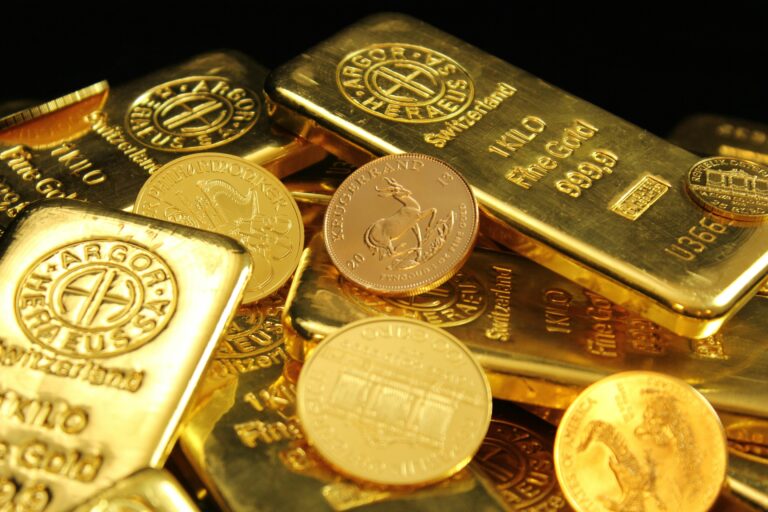
Physical Gold: Bars, Coins, and Jewelry
- Pros: Direct ownership, tangible asset, no counterparty risk (if stored securely).
- Cons: Storage costs, insurance needs, potential for high premiums over spot price, less liquid for large transactions.
- Relevance: Ideal for those prioritizing ultimate security and physical possession, often favored for long-term wealth preservation.
Gold Exchange-Traded Funds (ETFs) and Exchange-Traded Commodities (ETCs)
- Pros: High liquidity, low transaction costs, ease of buying/selling through brokerage accounts, diversification (some ETFs hold physical gold, others track futures).
- Cons: Do not offer direct physical ownership, subject to management fees, potential for tracking error.
- Relevance: Excellent for investors who want exposure to gold’s price movements without the hassle of physical storage, suitable for both short-term trading and long-term holding within a diversified portfolio.
Gold Mining Stocks
- Pros: Potential for higher returns than the underlying commodity if mining operations are efficient and well-managed, dividend payments.
- Cons: Subject to company-specific risks (management, operational issues, geological risks), broader equity market volatility, geopolitical risks in mining regions.
- Relevance: For investors willing to take on more risk for potentially higher rewards, benefiting from both gold prices and the operational leverage of a successful company.
Gold Futures and Options
- Pros: High leverage, ability to profit from both rising and falling prices, good for sophisticated traders.
- Cons: Extremely high risk, requires significant knowledge and capital, potential for substantial losses, not suitable for most long-term wealth builders.
- Relevance: Primarily for experienced traders with a high risk tolerance and in-depth market understanding.
The choice of investment vehicle depends on an individual’s financial goals, risk tolerance, and investment horizon. For most wealth builders, a combination of physical gold for security and gold ETFs for liquidity and ease of access often proves to be a balanced approach.
The Investor’s Perspective: Navigating Gold’s Current Stance
For many investors, the current steadiness of gold might evoke mixed feelings. Those who purchased gold expecting rapid gains, especially after its record high in October, might feel a sense of frustration at its lack of significant upward momentum. The trimmed rate-cut bets and strong dollar are headwinds that can challenge short-term speculative positions.
However, for the long-term wealth builder focused on portfolio stability and capital preservation, gold’s ability to hold steady amidst these challenging market conditions could be seen as a positive sign. It demonstrates resilience, reinforcing its role as a reliable component of a diversified strategy rather than a speculative play. Its performance, as reported by CNBC, shows spot gold at $3,997.94 per ounce, with U.S. gold futures at $4,008.60 per ounce, indicating a relatively stable price point even after retreating from its peak.
This stability can provide a sense of security, preventing the wild swings that can plague other asset classes. In a world characterized by ongoing uncertainties – from economic policy shifts to geopolitical realignments – an asset that demonstrates consistent value can be a source of calm for an investor’s portfolio. The goal isn’t always maximal returns, but optimal, risk-adjusted returns that align with one’s financial objectives.
Moreover, the current environment offers an opportunity for reflection and strategic adjustment. Investors can use this period to re-evaluate their asset allocation, ensuring that their exposure to gold aligns with their overall financial plan. Is it primarily for inflation hedging, crisis protection, or simple diversification? Answering these questions helps refine one’s approach to gold investing.
Beyond Gold: A Glimpse at Other Precious Metals
While gold often takes center stage, other precious metals also play a role in the broader commodity market and can offer diversification benefits. The CNBC report also mentions the performance of silver, platinum, and palladium:
- Spot silver rose 0.3% to $48.77 per ounce.
- Platinum climbed 1% to $1,583.28.
- Palladium gained 0.4% to $1,439.21.
These metals often have different supply and demand dynamics than gold. Silver, for example, is both a monetary metal and an industrial commodity, meaning its price is influenced by both investment demand and industrial applications. Platinum and palladium are heavily used in catalytic converters for automobiles, making their prices sensitive to the automotive industry’s performance and environmental regulations.
For a comprehensive wealth-building strategy, understanding these differences is key. While gold remains the primary safe-haven precious metal, adding exposure to silver, platinum, or palladium can further diversify a portfolio, offering potential for growth from industrial demand or specific market trends. However, these metals often exhibit higher volatility than gold, requiring a careful assessment of risk tolerance.
The Road Ahead: What to Watch For
Looking forward, several key factors will continue to influence gold’s trajectory:
- Federal Reserve Policy: Any further signals or actual decisions regarding interest rates will be paramount. A shift back towards more aggressive rate cuts could be a strong tailwind for gold, while a more hawkish stance would continue to exert pressure.
- Economic Data: The upcoming ADP employment data, ISM PMIs, and other critical economic indicators will provide crucial insights into the health of the U.S. and global economies. Strong data could reduce gold’s safe-haven appeal, while weaker data could boost it.
- Geopolitical Developments: While U.S.-China trade tensions have de-escalated, new geopolitical flashpoints or renewed tensions elsewhere could quickly reignite safe-haven demand for gold.
- U.S. Dollar Strength: The dollar’s performance against other major currencies will remain a critical determinant of gold’s international pricing.
- Inflation Expectations: Should inflation begin to accelerate unexpectedly, gold’s traditional role as an inflation hedge would likely come to the forefront, potentially driving renewed investor interest.
For investors committed to building long-term wealth, remaining informed about these overarching trends and their potential impact on gold is essential. Its current steadiness offers a moment for strategic evaluation, rather than impulsive reactions. By understanding the forces at play, investors can make more informed decisions about how gold fits into their overall financial picture, ensuring it continues to serve its purpose in securing their future.