

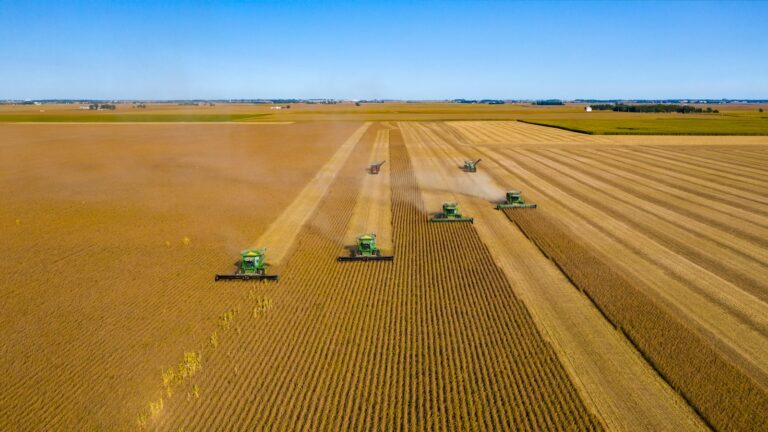
Navigate commodity markets with confidence. Discover how strategic insights into agricultural assets like soybeans can secure your portfolio’s growth and financial future.
Navigating Commodity Investing: Lessons from Soybean Market Dynamics
The world of finance is constantly in motion, with various assets experiencing cycles of growth and retraction. Recently, the soybean market showed a notable rebound, a seemingly minor fluctuation that, upon closer inspection, offers profound insights into the broader landscape of commodity investing. For those aiming to build enduring wealth, understanding the forces behind such movements is not just academic; it is a critical skill for portfolio diversification and strategic financial planning.
This article delves into the intricacies of agricultural commodities, using the recent soybean activity as a tangible example to illuminate the principles of successful commodity investing. We will explore why these raw materials are more than just agricultural products or industrial components; they are vital instruments for hedging against inflation, diversifying portfolios, and potentially generating significant returns when approached with informed strategy.
The Enduring Appeal of Commodity Investing in Wealth Building
For centuries, commodities have formed the bedrock of global economies. From the grains that feed populations to the metals that build our infrastructure and the energy that powers our world, their fundamental demand ensures their relevance. In an investment portfolio, commodities offer a distinct advantage: their prices often move independently of traditional asset classes like stocks and bonds.
This decorrelation is a powerful tool for diversification. When equity markets face headwinds, or bond yields offer meager returns, a well-placed allocation in commodities can act as a buffer, smoothing out portfolio volatility and protecting capital. Moreover, commodities are often seen as a natural hedge against inflation. As the cost of living rises, the value of raw materials tends to increase, preserving purchasing power for investors.
However, commodity investing is not without its complexities. It demands a keen understanding of global supply and demand dynamics, geopolitical events, weather patterns, and economic policies. The recent soybean market activity, as reported by Barchart.com, serves as an excellent case study to illustrate these interconnected factors.
Decoding the Soybean Rebound: A Microcosm of Market Forces
The news of soybeans rebounding on a given Thursday might seem like a niche market report, but it encapsulates a wealth of information crucial for any commodity investor. Agricultural commodities, especially staples like soybeans, are influenced by a myriad of factors, many of which are unique to their sector.
One primary driver for agricultural commodity prices is global supply and demand. Harvest forecasts, planting intentions, and weather conditions in major producing regions (like the United States, Brazil, and Argentina) directly impact supply. On the demand side, population growth, dietary shifts, and, crucially, export demand play a significant role. The Barchart report, for instance, mentioned specific export sales figures, including a notable appearance by a major global consumer market.
Export sales are a particularly sensitive indicator. When a large buyer enters the market or significantly increases its purchases, it signals strong demand, which can quickly translate into higher prices. Conversely, a drop in export figures can depress prices. The interplay between these factors creates the daily fluctuations observed in markets, such as the recent positive movement in soybean contracts.
Beyond these immediate factors, broader economic trends, currency valuations, and even speculative trading can contribute to price volatility. Understanding this intricate web is the first step toward successful commodity investing.
Agricultural Commodities: More Than Just Food
Soybeans are an excellent example of an agricultural commodity with multifaceted demand. They are not merely a food source; they are processed into soybean meal (a crucial component in animal feed) and soybean oil (used in cooking, industrial applications, and increasingly, biofuels). This diverse utility means that the price of soybeans can be affected by factors ranging from global livestock production trends to energy policies and even consumer health preferences.
For investors, this complexity presents both challenges and opportunities. The challenge lies in accurately forecasting demand across multiple sectors. The opportunity, however, is in identifying these diverse demand drivers and recognizing how shifts in one area can create a ripple effect across the entire market.
The Barchart report also highlighted Canadian production estimates and Brazilian export data. Such information from credible sources is invaluable. It provides a snapshot of global supply adjustments and the competitive landscape among major producers. Changes in production forecasts in one region can be offset by increased exports from another, or vice-versa, leading to price adjustments.
Strategies for Integrating Commodity Investing into Your Portfolio
For retail investors looking to venture into commodity investing, there are several accessible avenues, each with its own risk-reward profile.
1. Commodity Exchange-Traded Funds (ETFs) and Exchange-Traded Notes (ETNs)
These are perhaps the most popular ways for individual investors to gain exposure to commodities without directly buying futures contracts. Commodity ETFs and ETNs typically track commodity indices, individual commodity prices, or baskets of commodities. They trade like stocks on major exchanges, offering liquidity and ease of access.
- Broad Commodity ETFs: These funds often track a diversified index, giving exposure to a wide range of commodities like energy, precious metals, industrial metals, and agriculture. This approach offers broad diversification within the commodity space itself.
- Sector-Specific ETFs: For those who have a strong conviction about a particular commodity or sector (e.g., agricultural commodities, oil, or gold), there are ETFs that focus specifically on those areas. An investor interested in soybeans could look for ETFs that primarily hold soybean futures contracts or related agricultural products.
- ETN Considerations: While similar to ETFs, ETNs are debt instruments issued by financial institutions. They carry credit risk in addition to market risk, meaning if the issuer defaults, investors could lose their capital. It is crucial to understand these distinctions before investing.
2. Futures Contracts
Direct investment in commodity futures contracts is for more experienced investors due to its leverage and potential for significant gains or losses. Futures are agreements to buy or sell a commodity at a predetermined price on a future date. They are highly volatile and require active management.
- Understanding Leverage: Futures allow investors to control a large amount of a commodity with a relatively small amount of capital (margin). While this can amplify returns, it can also magnify losses beyond the initial investment.
- Expiration Dates: Futures contracts have expiration dates, requiring investors to either close their positions before expiration or roll them over into a later contract, which can incur additional costs.
- Brokerage Requirements: Trading futures requires a specialized brokerage account and often necessitates meeting specific financial qualifications due to the inherent risks.
3. Stocks of Commodity-Producing Companies
Another indirect way to participate in commodity investing is by purchasing shares of companies involved in the exploration, extraction, processing, or distribution of commodities. For instance, investing in a major agricultural firm that processes soybeans or a large mining company for metals.
- Equity Risk: While these companies are tied to commodity prices, their stock performance also depends on broader corporate factors like management quality, operational efficiency, debt levels, and overall market sentiment for equities.
- Dividend Potential: Some well-established commodity-producing companies pay dividends, offering an income stream in addition to potential capital appreciation.
- Less Direct Exposure: The correlation between a company’s stock price and the underlying commodity price may not always be 1:1, as other business factors can influence the stock.
Key Considerations for Successful Commodity Investing
Regardless of the method chosen, several strategic considerations are paramount for successful commodity investing.
1. Diligent Market Research and Data Analysis
The importance of staying informed cannot be overstated. Sources like Barchart.com provide crucial, up-to-date market information, export data, production estimates, and price movements. Investors should regularly consult such platforms to track relevant commodities.
- Supply and Demand Reports: Pay close attention to reports from government agencies and industry bodies that provide insights into crop conditions, inventory levels, and consumption trends.
- Geopolitical Developments: Political instability, trade disputes, or policy changes in major producing or consuming nations can significantly impact commodity flows and prices.
- Weather Patterns: For agricultural commodities, weather is king. Droughts, floods, or unusual temperature patterns can severely affect yields and, consequently, prices.
2. Understanding Global Macro Trends
Commodity prices are deeply intertwined with global economic health. A robust global economy typically drives demand for industrial metals and energy, while slowdowns can dampen prices. Inflationary pressures or deflationary spirals also play a significant role.
- Interest Rates: Higher interest rates can strengthen the currency of the issuing nation, making commodities priced in that currency more expensive for international buyers, potentially reducing demand.
- Industrial Activity: Indicators like manufacturing PMIs (Purchasing Managers’ Indexes) can provide clues about future demand for industrial commodities.
- Emerging Market Growth: Rapid urbanization and industrialization in developing economies often translate to increased demand for a wide range of commodities.
3. Risk Management and Diversification
Volatility is an inherent characteristic of commodity markets. Therefore, robust risk management is essential.
- Position Sizing: Never allocate an disproportionate amount of your portfolio to a single commodity or a highly volatile commodity.
- Stop-Loss Orders: For active traders, utilizing stop-loss orders can help limit potential losses if the market moves against your position.
- Portfolio Diversification: Beyond diversifying within commodities, ensure your overall investment portfolio remains well-diversified across different asset classes (stocks, bonds, real estate) to mitigate overall risk.
4. Long-Term Versus Short-Term Views
Some investors approach commodities with a long-term, strategic allocation aimed at diversification and inflation hedging. Others engage in short-term trading, attempting to profit from price swings. Your investment horizon will dictate your strategy.
- Long-Term Allocation: This typically involves a smaller, consistent percentage of the portfolio allocated to broad commodity ETFs or stable commodity-producing companies, rebalanced periodically.
- Short-Term Trading: This demands deep market knowledge, advanced technical analysis skills, and a high tolerance for risk. It is generally not recommended for novice investors.
The Psychological Aspect: Staying Rational in Volatile Markets
The rapid price swings characteristic of commodity markets can be emotionally taxing. It is easy to get swept up in the euphoria of a rally or panic during a downturn. Maintaining a disciplined, rational approach is crucial.
Recall the soybean rebound. While positive, such movements are often followed by corrections or further volatility. Acting on impulse, whether out of fear of missing out or panic selling, frequently leads to suboptimal outcomes. Develop an investment plan based on thorough research and stick to it, adjusting only when fundamental market conditions genuinely change, not just due to short-term noise.
Acknowledge that losses are an inevitable part of investing, especially in volatile sectors. The goal is to manage those losses and learn from them, while positioning yourself for long-term gains. Continuous learning and adaptation are vital attributes for successful commodity investing.
Building Wealth Through Strategic Commodity Allocation
For individuals on their journey from work to wealth, strategic allocation to commodities can be a powerful enhancer of a well-diversified portfolio. It provides a means to protect against the eroding effects of inflation, offer uncorrelated returns, and capitalize on global economic trends.
Consider a balanced approach: a core portfolio of diversified equities and fixed income, supplemented with a modest allocation to commodities. This allocation might vary based on your risk tolerance, investment horizon, and prevailing economic conditions. During periods of high inflation or geopolitical uncertainty, a slightly higher allocation might be warranted, while in periods of stable growth, a more conservative stance might be appropriate.
The lesson from the recent soybean rebound is not just about the price of one crop; it is a testament to the dynamic nature of markets and the importance of informed decision-making. Investors who take the time to understand these dynamics, leverage credible data sources, and adhere to sound investment principles are better positioned to harness the power of commodity investing for their long-term financial prosperity.
In conclusion, while the world of commodities can appear complex, its underlying principles are rooted in fundamental economics. By approaching this asset class with a combination of diligent research, strategic planning, and emotional discipline, investors can effectively integrate commodities into their wealth-building journey, transforming market fluctuations into opportunities for growth and resilience.