

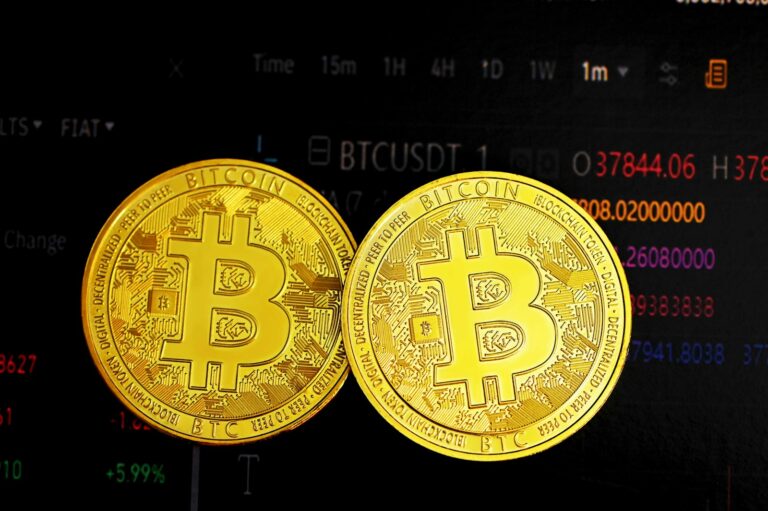
Unpacking Bitcoin’s current $70K range. Understand market dynamics and strategize for potential shifts. Essential for long-term wealth builders.
Bitcoin, the trailblazing digital asset, has long been synonymous with dramatic price swings and breathtaking volatility. Its journey from an obscure digital currency to a global financial phenomenon has been anything but linear, characterized by euphoric highs and precipitous drops. This inherent dynamism has captivated investors worldwide, drawing those seeking exponential growth alongside those intrigued by its revolutionary technology.
For many years, the very notion of “Bitcoin Price Stability” seemed almost contradictory. The asset was notorious for daily fluctuations that could rival traditional markets’ yearly movements. This unpredictability, while thrilling for some traders, often presented a significant challenge for long-term investors aiming to build sustainable wealth. The emotional toll of watching a portfolio swing wildly can deter even the most seasoned participants.
However, recent market observations suggest a period of relative calm. As noted by sources such as TradingView, Bitcoin’s price has been hovering around the $70,000 mark, exhibiting what some describe as “quiet volatility.” This apparent Bitcoin Price Stability, particularly when contrasted with its historical tendencies, presents a fascinating new chapter for investors. It begs the question: What does this mean for those committed to building wealth through digital assets?
The current environment around $70,000 is not without its complexities. The market data, as reported, indicates that Bitcoin is attempting a recovery but is encountering significant hurdles near the $72,000 to $72,500 levels. Simultaneously, it holds support above $68,800. This constrained range suggests a standoff between buyers and sellers, where neither side has yet gained decisive control, contributing to the perceived Bitcoin Price Stability.
For individuals focused on long-term financial growth and wealth accumulation, understanding this nuanced phase is critical. Is this stability a sign of market maturity, a brief pause before another significant move, or a period requiring cautious reassessment? This article will delve into these questions, offering insights into navigating Bitcoin’s current landscape with a focus on informed decision-making and strategic wealth building.
Navigating the Current Bitcoin Price Stability Around $70,000
The digital asset market has always been a dynamic ecosystem, but the recent behavior of Bitcoin’s price, particularly its sustained presence around the $70,000 threshold, marks a distinctive period. This current “quiet volatility,” as some analysts have termed it, presents a unique set of considerations for investors. Unlike the dramatic price surges or crashes that often define Bitcoin’s narrative, this phase of Bitcoin Price Stability necessitates a different analytical lens.
According to market data, Bitcoin has established a trading range, specifically consolidating gains above $70,000 after a recovery wave above $68,000. This consolidation is not necessarily a flat line, but rather a compressed oscillation within a relatively narrow band. The immediate resistance is noted around $72,000 to $72,500, a critical zone that bulls have struggled to overcome. Conversely, strong support levels have emerged around $68,800 and $67,700, preventing significant downward movements.
For long-term investors, this current Bitcoin Price Stability can be interpreted in several ways. Some may view it as a healthy period of consolidation, allowing the market to digest previous gains and build a stronger foundation for future upward trends. In this scenario, the market is pausing, absorbing new capital, and establishing new equilibrium points before potentially breaking out to new highs. This perspective often aligns with the belief that Bitcoin’s long-term value proposition remains intact, regardless of short-term price movements.
Others might view this stability with caution, interpreting it as a sign of waning momentum or a precursor to a potential downturn. A failure to decisively break through overhead resistance levels, particularly the $72,500 mark mentioned by market analysis, could lead to investor fatigue and a subsequent decline. This perspective emphasizes the importance of market structure and the psychological impact of repeated rejections at key resistance zones.
Historically, Bitcoin has experienced periods of consolidation before significant moves. These periods, while often frustrating for those accustomed to rapid gains, can be crucial for market health. They allow weak hands to be shaken out, new capital to enter, and the underlying technology to mature without the distraction of extreme price speculation. Understanding the context of past consolidations can provide valuable perspective on the current Bitcoin Price Stability.
Furthermore, the current environment demands a deeper look at the underlying factors influencing this behavior. Is it due to a general cooling of speculative interest, increased institutional participation providing more stability, or macroeconomic forces creating a wait-and-see attitude among investors? The answer likely involves a combination of these elements, making the current phase more complex than simply “quiet.”
Investors focused on wealth building must discern whether this Bitcoin Price Stability represents an accumulation zone, an opportunity to strategically add to positions, or a warning sign to exercise heightened caution. This requires moving beyond mere price observation and engaging with fundamental analysis, market sentiment, and broader economic trends.
The Implications of a Trading Range for Investor Strategy
Operating within a well-defined trading range, as Bitcoin currently is, offers specific strategic implications. For aggressive traders, this might mean playing the range, buying at support and selling at resistance. However, for the typical ‘Work to Wealth’ reader, who focuses on long-term accumulation, the approach differs significantly.
The stability can foster complacency. When prices are not moving dramatically, the urgency to act might diminish, potentially leading to missed opportunities when the market eventually breaks out. Conversely, it can also provide a less emotionally charged environment to make rational, long-term investment decisions, free from the frenzy of extreme volatility.
Deconstructing the Market: Why Bitcoin Price Stability Persists
The current phase of Bitcoin Price Stability, characterized by its measured movements around the $70,000 mark, prompts a critical examination of the forces at play. Several factors, both internal to the digital asset market and external macroeconomic influences, likely contribute to this unique period of reduced volatility.
One significant factor is the increasing maturity of the Bitcoin market itself. What began as a nascent, niche asset has evolved into a globally recognized store of value and an increasingly integrated component of the broader financial landscape. With this maturity comes greater institutional involvement, which tends to bring more disciplined trading strategies and larger capital flows, potentially smoothing out some of the extreme price swings that characterized earlier cycles. These large entities often have longer investment horizons and employ sophisticated risk management, which can dampen short-term volatility.
Another contributing element could be the anticipation of significant future events. The digital asset space is constantly evolving, with ongoing discussions around regulatory frameworks, technological upgrades (such as scaling solutions), and new product offerings. Investors and large market participants might be adopting a “wait and see” approach, holding their positions in anticipation of clarity or catalytic developments. This collective pause can lead to reduced trading volume and, consequently, greater Bitcoin Price Stability.
The classic economic principles of supply and demand also play a crucial role. While Bitcoin’s supply schedule is famously fixed and deflationary (with periodic halving events reducing the rate of new supply), demand can fluctuate. If demand is relatively balanced with the available selling pressure at certain price points, a state of equilibrium, or stability, can emerge. The current $70,000 zone might represent such a point where a significant number of participants are comfortable holding or buying, while sellers are reluctant to liquidate below certain levels.
Global macroeconomic conditions cannot be overstated in their influence. Factors such as inflation trends, central bank interest rate policies, geopolitical events, and the overall health of traditional financial markets all impact investor sentiment and capital allocation. When there is uncertainty in the broader economy, investors might retreat to perceived safer assets, or alternatively, remain cautious across all asset classes, including digital assets. This widespread caution can contribute to a dampening of speculative fervor and foster Bitcoin Price Stability.
For instance, if interest rates remain high, the attractiveness of growth assets like Bitcoin might be tempered compared to less volatile, income-generating alternatives. Conversely, expectations of future rate cuts could fuel renewed interest. The prevailing economic narrative often dictates the flow of institutional and retail capital into and out of the digital asset market, thereby influencing its volatility profile.
The Psychological Impact of a Stable Bitcoin Price
Beyond the technical and fundamental aspects, investor psychology is a powerful, albeit often overlooked, driver of market behavior. A period of Bitcoin Price Stability can have varied psychological effects.
For some, it might lead to complacency. The excitement associated with rapid gains or the fear of steep losses diminishes, potentially causing investors to become less engaged or to take their focus off their long-term strategies. This can be dangerous, as market conditions can shift rapidly, and complacency can lead to missed opportunities or delayed reactions to critical changes.
For others, especially those seeking quick returns, stability can induce “boredom” or frustration. They might interpret the lack of dramatic movement as a sign that the asset is no longer a viable vehicle for significant growth, prompting them to seek out more volatile, often riskier, alternatives. This can lead to poor investment decisions driven by emotion rather than sound financial principles.
However, a stable period can also be a gift. It provides an opportune moment for rational assessment, strategic planning, and education. Without the pressure of extreme volatility, investors can calmly evaluate their positions, rebalance their portfolios, and deepen their understanding of Bitcoin’s fundamentals and its role in their overall wealth-building journey. This is particularly valuable for those adhering to the ‘Work to Wealth’ philosophy, which prioritizes disciplined, long-term growth over speculative trading.
Evaluating Technical Obstacles and Opportunities at $70K
While long-term wealth building often prioritizes fundamental analysis and a disciplined investment strategy, understanding key technical levels and market indicators can provide valuable context, even during periods of Bitcoin Price Stability. The current range-bound trading around $70,000 highlights specific technical hurdles and support zones that professional traders and institutions closely monitor, and which can ultimately influence broader market sentiment.
As per recent market analysis, Bitcoin is facing immediate resistance near the $72,000 level, which also coincides with the 61.8% Fibonacci retracement level of a significant prior slide. The first key resistance is further identified near $72,500. This area is critical. A decisive close above $72,500 could signal renewed bullish momentum, potentially leading the price toward higher targets like $74,650 and even $75,880 or $76,500. For wealth builders, such a breakout could validate a thesis of continued appreciation, though one should always remain cautious.
Conversely, the downside is protected by several support levels. Immediate support is near $69,400, with a more significant major support around $68,500. Below that, the $67,600 zone and subsequently $66,500 and the main support at $65,000 are crucial. If Bitcoin fails to maintain these levels, particularly the $65,000 mark, it could trigger another decline, potentially undermining the current Bitcoin Price Stability and testing investor resolve.
The market analysis also points to a “rising channel” forming on hourly charts with support at $68,800. Such a channel suggests that while the asset is moving upwards, it is doing so within defined boundaries. A break below the lower boundary of this channel could indicate a shift in the short-term trend, even if the overall long-term outlook remains positive.
Technical indicators, while primarily used by short-term traders, offer insights into market momentum and sentiment. The Hourly MACD (Moving Average Convergence Divergence) losing pace in the bearish zone suggests that selling pressure might be easing, potentially paving the way for upward movement. Simultaneously, the Hourly RSI (Relative Strength Index) for BTC/USD moving above the 50 level indicates increasing buying momentum. These indicators, when viewed in conjunction with the price action, provide a snapshot of the current struggle between buyers and sellers that defines the present Bitcoin Price Stability.
For the long-term investor, interpreting these technicals is not about making split-second trading decisions. Instead, it’s about understanding the current market context. Knowing these resistance and support zones helps to calibrate expectations and understand potential pivot points. If Bitcoin consistently fails to break critical resistance, it might be a signal to revisit fundamental assumptions or consider portfolio adjustments. Conversely, a strong breakout could confirm an asset’s strength, reinforcing a long-term holding strategy.
Strategic Approaches to Bitcoin Price Stability for Long-Term Investors
Given the current Bitcoin Price Stability, long-term investors have distinct opportunities to refine their strategies without the pressure of extreme volatility. One of the most effective methods is Dollar-Cost Averaging (DCA). This involves investing a fixed amount of money at regular intervals, regardless of the asset’s price. During a stable period, DCA allows investors to accumulate more units of the asset at a relatively consistent cost, preparing them for potential future appreciation. It removes emotional decision-making and automates the process of building a position over time.
Another approach is portfolio rebalancing. Even during periods of Bitcoin Price Stability, other assets in an investor’s portfolio might fluctuate. A stable Bitcoin price provides an ideal opportunity to review overall asset allocation. If Bitcoin has grown to represent a larger percentage of the portfolio than desired, an investor might trim some gains (if any) to reallocate to other assets. Conversely, if Bitcoin’s weight has reduced, it might be an opportune time to add to the position at a stable price point. Rebalancing helps maintain desired risk exposure and aligns the portfolio with personal financial goals.
Furthermore, periods of Bitcoin Price Stability are excellent for focusing on fundamental analysis. Instead of being swayed by daily price movements, investors can delve deeper into Bitcoin’s underlying technology, network security, adoption rates, regulatory landscape, and its role in the global financial system. Understanding these fundamentals provides conviction, which is crucial for holding through future volatile periods. It allows investors to make decisions based on intrinsic value rather than speculative hype or fear.
Risk Management in a Quiet Bitcoin Market
The perception of Bitcoin Price Stability, while potentially calming, can sometimes create an illusion of reduced risk. However, true risk management is a continuous process that is equally vital during quiet market phases as it is during periods of high volatility. In fact, a lull can be deceptively dangerous if investors become complacent, overlooking potential shifts in underlying market dynamics.
One core principle of risk management is diversification. Bitcoin, despite its growing acceptance, remains a relatively volatile asset class compared to traditional investments. Therefore, it should typically represent only a portion of a well-diversified portfolio, commensurate with an individual’s risk tolerance. During periods of Bitcoin Price Stability, it is an excellent time to assess whether your digital asset allocation aligns with your overall financial strategy. Ensuring a mix of asset classes – including equities, bonds, real estate, and other alternatives – helps buffer against significant downturns in any single asset.
Understanding your personal risk tolerance is paramount. Are you comfortable with the possibility of substantial capital fluctuations, even if the market is currently stable? Your investment strategy should always reflect your comfort level with potential losses. A period of Bitcoin Price Stability allows for a calm, rational review of this tolerance, free from the emotional pressures of rapid market movements.
For some, particularly those with a shorter time horizon or who are more active, implementing clear exit strategies can be part of risk management. This might include setting mental or actual price targets for taking profits or establishing stop-loss orders (though these can be tricky with highly volatile assets like Bitcoin). For long-term investors, this often translates to predefined portfolio rebalancing rules, ensuring that no single asset becomes overweighted or underweighted beyond a predetermined threshold.
A common pitfall during periods of Bitcoin Price Stability is the temptation to chase higher returns in more speculative assets, often referred to as “altcoins.” When the flagship asset like Bitcoin is moving less dramatically, investors might be drawn to smaller, less established digital assets promising exponential gains. While some altcoins offer significant upside, they also carry substantially higher risks due to lower liquidity, less developed ecosystems, and greater susceptibility to market manipulation. A disciplined approach during a stable Bitcoin period means resisting this temptation and adhering to well-researched investments aligned with long-term wealth goals.
Furthermore, safeguarding your investments extends to robust security practices. Regardless of Bitcoin’s price movements, ensuring that your digital assets are stored securely – utilizing hardware wallets, strong passwords, two-factor authentication, and reputable custodians – is fundamental. No amount of market analysis or strategic positioning can protect you if your assets are compromised due to lax security.
The Broader Economic Landscape and Bitcoin’s Future
Bitcoin’s performance, even during phases of relative Bitcoin Price Stability, is inextricably linked to the broader macroeconomic environment. Wealth builders must consider global economic trends when evaluating their digital asset holdings.
Inflation and Interest Rates: These are critical drivers. When inflation is high, Bitcoin is sometimes viewed as a hedge against currency debasement. Conversely, higher interest rates make traditional, less risky investments more attractive, potentially drawing capital away from digital assets. Central bank policies, especially those of major global economies, therefore cast a long shadow over Bitcoin’s trajectory.
Regulatory Developments: The regulatory landscape for digital assets is still evolving. Clear, favorable regulations can foster greater institutional adoption and public confidence, potentially leading to increased demand and price appreciation. Conversely, restrictive or uncertain regulations can create headwinds. Investors should stay informed about legislative discussions in key jurisdictions.
Technological Advancements: The underlying technology of Bitcoin and other digital assets continues to mature. Innovations like scaling solutions (e.g., Lightning Network) improve transaction speed and reduce costs, enhancing Bitcoin’s utility as a medium of exchange. Ongoing development in the broader digital asset space can also indirectly benefit Bitcoin by increasing overall ecosystem adoption and understanding.
These external factors have the potential to disrupt the current Bitcoin Price Stability, whether by catalyzing a significant uptrend or precipitating a downturn. A holistic view, integrating both internal market dynamics and external economic forces, is essential for truly informed wealth management in the digital age.
Building Long-Term Wealth with Bitcoin: A Disciplined Approach
The core philosophy of ‘Work to Wealth’ emphasizes disciplined, long-term wealth creation. In the context of assets like Bitcoin, this approach is more critical than ever, especially during periods like the current Bitcoin Price Stability. While the allure of quick gains can be strong, sustainable wealth is built on patience, strategic planning, and an unwavering commitment to one’s financial goals.
The distinction between trading and investing is fundamental. Trading typically involves short-term speculation, aiming to profit from rapid price movements. Investing, on the other hand, focuses on capital appreciation over extended periods, often years or decades, based on the fundamental value and future potential of an asset. For Bitcoin, ‘Work to Wealth’ advocates for an investor’s mindset.
Patience is arguably the most undervalued virtue in investing, particularly in volatile markets. Periods of Bitcoin Price Stability, like the one around $70,000, can test an investor’s patience. The lack of immediate, dramatic returns can lead to frustration or the temptation to abandon a well-thought-out strategy. However, it is precisely during these quiet times that disciplined investors continue to execute their plans, perhaps through regular contributions via dollar-cost averaging, confident in Bitcoin’s long-term potential.
Conviction, derived from thorough research and understanding, underpins this patience. A deep dive into Bitcoin’s scarcity, its decentralized nature, its robust security, and its growing global adoption builds a strong belief in its role as a potential future store of value or digital gold. This conviction allows investors to weather market downturns and ignore short-term noise, focusing instead on the long-term vision.
Continuous education is another pillar of this disciplined approach. The digital asset space is rapidly evolving. Staying informed about technological advancements, regulatory changes, and macroeconomic trends that could impact Bitcoin is essential. ‘Work to Wealth’ encourages readers to view education as an ongoing investment in their financial literacy, empowering them to make informed decisions rather than relying on speculative tips or emotional reactions.
Furthermore, maintaining a balanced perspective is crucial. While Bitcoin offers exciting growth potential, it also carries inherent risks. A disciplined approach means acknowledging these risks, understanding one’s personal risk tolerance, and ensuring that Bitcoin forms an appropriate part of a diversified portfolio, rather than being the sole focus of one’s wealth-building efforts. It’s about intelligently integrating digital assets into a comprehensive financial plan.
Ultimately, building long-term wealth with Bitcoin during a period of Bitcoin Price Stability involves treating it as a serious asset, not a fleeting fad. It means applying the same rigor and strategic thinking to your digital asset investments as you would to any other significant component of your financial portfolio. This steadfast approach, grounded in research, patience, and prudent risk management, is the true path to harnessing Bitcoin’s potential for financial growth.
Conclusion: Capitalizing on Bitcoin Price Stability for Financial Growth
The current phase of Bitcoin Price Stability around the $70,000 mark offers a unique vantage point for investors dedicated to building lasting wealth. While Bitcoin’s history is largely defined by its dramatic price swings, this period of relatively quiet volatility provides a distinct set of opportunities and challenges. It is a time for calm assessment, strategic refinement, and disciplined action, rather than reactive speculation.
We’ve explored how this stability can stem from market maturity, institutional involvement, and a careful balance of supply and demand, alongside broader macroeconomic influences. Critically, the current technical landscape, with noted resistance at $72,000-$72,500 and support at $68,800-$67,700, delineates the immediate battlefield for price action. For long-term investors, understanding these levels helps in calibrating expectations and recognizing potential pivot points, even if short-term trading is not the primary objective.
For individuals committed to the ‘Work to Wealth’ philosophy, this period of Bitcoin Price Stability is an ideal time to reinforce fundamental investing principles. Strategies like dollar-cost averaging become exceptionally powerful, allowing for systematic accumulation without the emotional pressure of volatile markets. Portfolio rebalancing, comprehensive risk management through diversification, and an unwavering focus on Bitcoin’s long-term utility and scarcity are paramount.
Moreover, the psychological aspect cannot be overlooked. Periods of stability can breed complacency or frustration. However, the wise investor will utilize this calm to deepen their understanding, refine their strategy, and solidify their conviction in their investment choices. It’s an opportunity to look beyond the daily charts and consider the profound, long-term implications of digital assets in a global economy.
While the future direction of Bitcoin’s price remains uncertain – whether it will break higher, retest lower supports, or continue its range-bound dance – what is certain is the enduring importance of a well-researched, patient, and disciplined investment approach. The current Bitcoin Price Stability is not merely a pause; it is an invitation to refine your strategy, fortify your understanding, and position your portfolio thoughtfully for the journey toward sustained financial growth. Embrace the calm to prepare for the inevitable future movements, ensuring your wealth-building goals remain firmly on track.
Frequently Asked Questions
Is Bitcoin’s current price stability a sign of maturity or stagnation for my investments?
Bitcoin’s current price stability around $70,000 can be interpreted as both a sign of market maturity and a period of consolidation, rather than stagnation. Increased institutional involvement and a more balanced supply-demand dynamic suggest a maturing asset class. For long-term investors, it offers an opportunity to accumulate steadily and conduct deeper fundamental analysis without the distraction of extreme volatility. However, it’s crucial to avoid complacency and stay informed about potential shifts.
How does the $70K Bitcoin price range impact my long-term wealth strategy?
The $70K Bitcoin price range provides a relatively stable entry or accumulation point for long-term wealth builders. It’s an opportune time to employ strategies like Dollar-Cost Averaging (DCA), allowing you to build your position consistently without chasing volatile peaks. This stability also enables calm portfolio rebalancing and a focus on fundamental research, ensuring your digital asset holdings align with your broader financial goals over the long term.
Should I invest more in Bitcoin during this quiet period, or wait for a price shift?
Whether to invest more during this quiet period depends on your personal financial plan and risk tolerance. Many long-term investors view periods of Bitcoin Price Stability as ideal for consistent accumulation through Dollar-Cost Averaging, as it allows them to buy at relatively consistent prices. Waiting for a significant shift, while potentially offering a lower entry point, carries the risk of missing out if the price breaks upwards. It’s often best to stick to a predetermined investment schedule.
What risks are associated with Bitcoin when its price seems stable, potentially leading to investor frustration?
Even during periods of apparent Bitcoin Price Stability, risks persist. These include the illusion of safety, which can lead to complacency or overconcentration. There’s also the risk of ‘boring’ markets causing investor frustration, potentially leading to impulsive decisions like chasing highly speculative assets. Regulatory changes, macroeconomic shifts, and unexpected technical breaks (downward) are always possibilities. Maintaining diversification and robust security practices remains crucial.
How can I prepare my portfolio for a potential Bitcoin price shift after this period of stability?
To prepare your portfolio for a potential Bitcoin price shift, continue practicing disciplined investing. Maintain a diversified portfolio to mitigate single-asset risk. Regularly rebalance your holdings to ensure your Bitcoin allocation aligns with your risk tolerance. Stay informed about key resistance ($72,000-$72,500) and support ($68,800-$67,700) levels, and keep an eye on macroeconomic factors and regulatory developments that could trigger a significant move.