

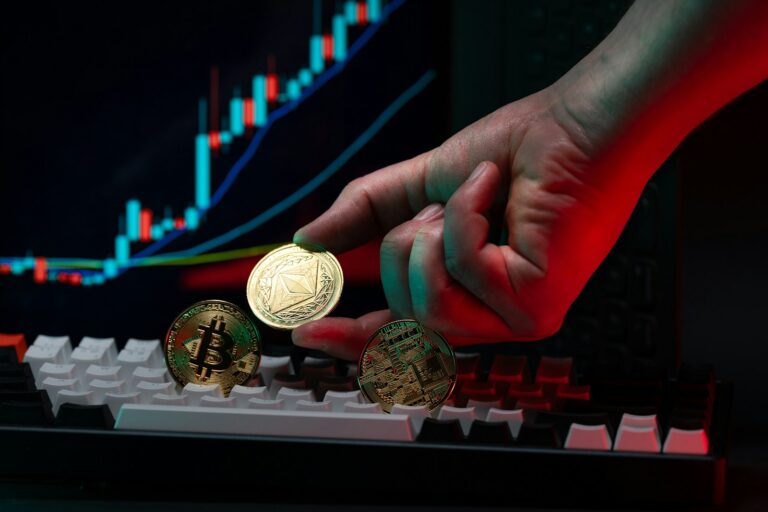
This guide helps beginners understand the complexities of investing in altcoins, promising clear steps to navigate volatile markets and build a diversified portfolio. It’s suitable for anyone new to the digital asset space seeking informed strategies for their financial future.
The world of digital assets extends far beyond Bitcoin, with thousands of alternative cryptocurrencies—commonly known as altcoins—vying for attention. For many, the idea of Investing in Altcoins presents both an exciting opportunity for significant returns and a daunting landscape of technical jargon, market volatility, and potential scams. This comprehensive guide aims to demystify the process, providing beginners with the knowledge and strategies needed to approach altcoin investments with confidence and caution.
Understanding the fundamental differences between various digital assets is the first step. Bitcoin, as the pioneer, set the standard, but altcoins emerged to offer different functionalities, technologies, or use cases. While some altcoins aim to improve upon Bitcoin’s original design, others are built for specific applications, such as powering decentralized applications (dApps), facilitating smart contracts, or enabling privacy-focused transactions. The sheer variety can be overwhelming, but a structured approach to learning is key.
Before diving into specific altcoins, it’s crucial to grasp the inherent risks. Unlike traditional investments, the digital asset market operates 24/7 and is highly speculative. Prices can swing wildly based on news, sentiment, technological developments, or even social media trends. This volatility means that while the potential for profit is high, so is the risk of substantial losses. Therefore, a core principle for any beginner embarking on Investing in Altcoins is to only invest what you can comfortably afford to lose.
Understanding Altcoins: What Are They and Why Do They Matter?
In simple terms, an altcoin is any cryptocurrency that isn’t Bitcoin. The term “altcoin” is a portmanteau of “alternative coin.” Since Bitcoin’s inception in 2009, thousands of altcoins have been created, each with its own unique purpose and underlying technology. They represent a vast ecosystem of innovation built on blockchain technology.
The primary reason for the proliferation of altcoins is the desire to address perceived limitations of Bitcoin or to introduce entirely new functionalities. For instance, some altcoins aim for faster transaction speeds or lower fees, while others focus on privacy, smart contract capabilities, or specific industry applications. This diversity is what makes Investing in Altcoins so complex yet potentially rewarding.
Altcoins can be broadly categorized based on their primary function or design:
- Stablecoins: Designed to maintain a stable value, typically pegged to a fiat currency like the US dollar. They are often used as a safe haven during market volatility or for quick transfers between exchanges.
- Utility Tokens: Provide access to a product or service within a specific ecosystem. For example, a token might grant voting rights in a decentralized autonomous organization (DAO) or serve as payment for network fees.
- Security Tokens: Represent ownership in a real-world asset, such as real estate, stocks, or company equity. These are generally subject to securities regulations.
- DeFi Tokens: Power decentralized finance applications, enabling lending, borrowing, trading, and other financial services without intermediaries.
- Privacy Coins: Focus on anonymity and untraceable transactions, using advanced cryptographic techniques.
- Meme Coins: Often created as a joke or a social experiment, driven primarily by community sentiment and social media hype rather than fundamental utility. Their value can be extremely volatile.
Each category carries different risk profiles and potential rewards. When considering Investing in Altcoins, it’s vital to understand which category a particular asset falls into and what its intended purpose is.
The Volatility Factor: Navigating Market Swings When Investing in Altcoins
The digital asset market is notorious for its extreme volatility. Prices can rise or fall by double-digit percentages within hours, driven by a confluence of factors including news events, regulatory changes, technological breakthroughs, and investor sentiment. This volatility is magnified in the altcoin market, where smaller market capitalizations mean that even relatively small buy or sell orders can have a significant impact on price.
Understanding and preparing for this volatility is paramount for anyone serious about Investing in Altcoins. Unlike traditional stock markets, which typically operate during business hours, the crypto market is 24/7, meaning price movements can occur at any time, anywhere in the world. This constant activity can be exhilarating for some and anxiety-inducing for others.
Factors Contributing to Altcoin Volatility:
- Lower Liquidity: Many altcoins have smaller trading volumes compared to Bitcoin or Ethereum. Lower liquidity means that large trades can cause disproportionately large price swings.
- Speculative Nature: A significant portion of altcoin investment is driven by speculation rather than intrinsic value or widespread adoption. Hype cycles can lead to rapid price increases, often followed by steep corrections.
- News and Events: Regulatory crackdowns, major exchange hacks, new technological developments, or even celebrity endorsements can cause immediate and dramatic price reactions.
- Market Cap: Generally, altcoins with smaller market capitalizations are more volatile than those with larger caps. A smaller project can experience parabolic growth but also precipitous drops.
- Interconnectedness: The altcoin market is often influenced by Bitcoin’s price movements. If Bitcoin experiences a significant drop, altcoins often follow suit, sometimes with even greater percentage losses.
For beginners, the key to managing volatility is not to avoid it entirely—as it’s an inherent characteristic of the market—but to mitigate its impact on your portfolio. This involves strategic planning, proper risk management, and emotional discipline. Avoid making impulsive decisions based on sudden price movements. Instead, stick to your pre-defined investment plan and risk tolerance when Investing in Altcoins.
Thorough Research: The Cornerstone of Successful Altcoin Investing
Without proper research, Investing in Altcoins is akin to gambling. The vast majority of altcoin projects will fail, and distinguishing legitimate innovations from speculative bubbles or outright scams requires diligent investigation. There is no shortcut to this process; it demands time, effort, and a critical mindset.
Key Areas for Altcoin Research:
- Whitepaper and Project Vision:
- Every legitimate blockchain project should have a detailed whitepaper outlining its purpose, technology, use case, team, and roadmap.
- Does the project solve a real problem? Is the problem significant enough to warrant a new cryptocurrency?
- Is the vision clear and realistic? Avoid projects with vague promises or grandiose, impossible-sounding goals.
- Team and Advisors:
- Who is behind the project? Do they have relevant experience in technology, finance, or the specific industry the project targets?
- Are the team members publicly identifiable, or are they anonymous? While anonymity isn’t always a red flag, it adds a layer of risk for beginners.
- Look for reputable advisors who have a track record in the blockchain space or relevant industries.
- Technology and Innovation:
- What is the underlying blockchain technology? Is it unique, or is it a fork of an existing chain?
- Does the technology offer a significant improvement over existing solutions?
- Is there an active development community? Check GitHub for code commits and development activity.
- Use Case and Market Opportunity:
- What is the practical application of the altcoin? How will it be used in the real world?
- Is there a demonstrable market need for this solution? How large is the potential market?
- Who are the target users or customers?
- Tokenomics (Token Economics):
- How is the token distributed? What is the total supply, circulating supply, and inflation rate?
- Is there a vesting schedule for the team or early investors? This prevents large token dumps immediately after launch.
- What incentives exist for holding the token (e.g., staking rewards, governance rights, fee discounts)?
- Does the token have a clear utility within its ecosystem, or is it merely a speculative asset?
- Community and Ecosystem:
- Is there an active and engaged community around the project? Check social media channels, forums, and discussion groups.
- How responsive is the team to community questions and concerns?
- Are there partnerships with other reputable projects or companies?
- Competitors:
- Who are the project’s main competitors?
- What are the project’s competitive advantages? How does it differentiate itself?
- Is the project’s valuation justified compared to its competitors?
This extensive research process helps you build a strong conviction about a project, which is essential for weathering market downturns. Never rely solely on social media hype or “get rich quick” promises when Investing in Altcoins. Do your own due diligence.
Setting Up for Success: Exchanges, Wallets, and Security for Altcoins
Once you’ve done your research and identified potential altcoins for investment, the next practical step is to set up the necessary infrastructure to buy, sell, and secure your digital assets. This involves choosing a reputable exchange and a secure digital wallet.
1. Choosing a Reputable Digital Asset Exchange:
An exchange is where you convert traditional money (fiat currency) into digital assets and trade between different cryptocurrencies. For beginners, it’s crucial to select an exchange that is:
- Regulated and Compliant: Look for exchanges that operate within established regulatory frameworks in your region.
- Secure: Implement strong security measures, including two-factor authentication (2FA), encryption, and insurance on user funds (if available).
- User-Friendly: An intuitive interface and easy navigation are essential for beginners.
- Offers Desired Altcoins: Ensure the exchange lists the specific altcoins you intend to buy.
- Competitive Fees: Compare trading fees, deposit/withdrawal fees, and network fees.
- Good Customer Support: Responsive and helpful customer service can be invaluable when issues arise.
While various exchanges are available, some are geared towards beginners with simplified interfaces, while others cater to experienced traders with advanced tools. Start with a beginner-friendly option and gain experience before exploring more complex platforms. Remember that holding significant amounts of digital assets on an exchange carries inherent risks, as exchanges can be targets for hacks or technical failures.
2. Understanding Digital Wallets:
A digital wallet is where you store your digital assets. It doesn’t physically hold your coins; rather, it holds the private keys that prove your ownership of the coins on the blockchain. There are several types of wallets, each with different levels of security and convenience:
- Hot Wallets (Software Wallets):
- Web Wallets: Provided by exchanges or online services. Convenient but less secure as your private keys are managed by a third party.
- Mobile Wallets: Apps for smartphones. Convenient for on-the-go transactions.
- Desktop Wallets: Software installed on your computer. Offers more control than web wallets.
Hot wallets are connected to the internet, making them more susceptible to online attacks. They are suitable for holding smaller amounts of digital assets for frequent trading.
- Cold Wallets (Hardware Wallets):
- Physical devices that store your private keys offline. They are considered the most secure option for storing digital assets.
- Examples include USB-like devices that require physical confirmation for transactions.
- Ideal for long-term storage of significant amounts of digital assets when Investing in Altcoins.
For beginners, it’s often recommended to start with a reputable hot wallet for small amounts and move larger investments to a cold wallet once you become more comfortable. Always back up your seed phrase (a series of words that can restore your wallet) and store it securely offline. If you lose your seed phrase, you lose access to your funds.
3. Security Best Practices:
- Enable 2FA: Always use two-factor authentication on exchanges and wallets.
- Strong, Unique Passwords: Use complex passwords that are different for each service.
- Beware of Phishing: Always double-check URLs before entering login credentials. Scammers often create fake websites that mimic legitimate ones.
- Update Software: Keep your operating system, browser, and wallet software up to date to patch security vulnerabilities.
- Be Skeptical: If something seems too good to be true, it probably is. Avoid clicking on suspicious links or responding to unsolicited messages promising guaranteed returns.
- Regular Backups: For desktop wallets, regularly back up your wallet file. For hardware wallets, ensure your seed phrase is safely stored.
Prioritizing security from the outset is crucial for protecting your investments when Investing in Altcoins.
Investment Strategies for Beginners: Smart Approaches to Altcoin Investing
Successful Investing in Altcoins isn’t just about picking the right assets; it’s also about adopting sound investment strategies that mitigate risk and foster long-term growth. For beginners, a cautious and disciplined approach is always advisable.
1. Dollar-Cost Averaging (DCA):
DCA is a strategy where you invest a fixed amount of money at regular intervals (e.g., weekly or monthly), regardless of the asset’s price. This approach has several benefits:
- Reduces Volatility Risk: By investing consistently, you average out your purchase price over time, reducing the impact of short-term price fluctuations. When prices are high, your fixed amount buys fewer units; when prices are low, it buys more.
- Removes Emotional Trading: DCA takes the guesswork out of market timing, preventing impulsive decisions driven by fear (FUD) or greed (FOMO).
- Simplicity: It’s a straightforward strategy that’s easy to implement for beginners.
DCA is particularly effective in volatile markets like digital assets, as it helps to smooth out the ups and downs. It encourages a long-term perspective when Investing in Altcoins.
2. Diversification:
While often preached, diversification is critical in the altcoin space. Instead of putting all your funds into one altcoin, spread your investment across several different projects. However, “diversification” doesn’t mean investing in every single altcoin. Focus on a select number of well-researched projects with different use cases, technologies, and market capitalizations.
- Diversify Across Categories: Consider investing in altcoins from different categories (e.g., a DeFi token, a Layer 1 blockchain, a utility token for a specific industry).
- Diversify by Market Cap: Include some larger, more established altcoins (like Ethereum) alongside smaller, higher-risk, higher-reward projects.
- Overall Portfolio Diversification: Remember that digital assets are just one part of your overall financial portfolio. Do not put all your life savings into digital assets. Maintain a diversified portfolio that includes traditional assets like stocks, bonds, and real estate.
3. Long-Term Holding (HODLing):
The term “HODL” (often stemming from a misspelling of “hold”) refers to the strategy of buying and holding digital assets for an extended period, often years, rather than trying to trade short-term fluctuations. This strategy is suitable for:
- Believers in the Technology: Those who have strong conviction in the long-term potential of the underlying blockchain technology and its applications.
- Busy Individuals: Those who don’t have the time or inclination to actively trade.
- Tax Efficiency: In many jurisdictions, long-term capital gains are taxed at a lower rate than short-term gains.
HODLing requires patience and the ability to withstand significant market downturns without selling. It’s about seeing the bigger picture of adoption and growth when Investing in Altcoins.
4. Risk Assessment and Position Sizing:
Before investing in any altcoin, determine how much you are willing to lose on that specific asset. This is called position sizing. Never allocate a disproportionately large amount of your portfolio to a single, highly speculative altcoin. A common rule of thumb for beginners is to start with a small percentage of your overall investment capital dedicated to altcoins (e.g., 5-10%), and within that, allocate even smaller percentages to individual altcoins.
5. Avoiding FOMO (Fear Of Missing Out) and FUD (Fear, Uncertainty, Doubt):
Emotions are the enemy of successful investing. FOMO can lead you to buy an altcoin at its peak because you see everyone else profiting. FUD can cause you to sell your assets at a loss during a market dip. Stick to your research and your investment plan, and resist the urge to make impulsive decisions based on social media chatter or rapid price movements when Investing in Altcoins.
Navigating Common Pitfalls: Protecting Your Investment in Altcoins
The allure of quick profits in the altcoin market can sometimes overshadow the significant risks involved. For beginners, being aware of common pitfalls is as important as understanding investment strategies. Avoiding these traps can save you from substantial financial losses when Investing in Altcoins.
1. Scams and “Rug Pulls”:
Unfortunately, the decentralized nature of digital assets can also be exploited by malicious actors. “Rug pulls” are a common type of scam where developers launch a new altcoin, create hype, attract investors, and then suddenly abandon the project, disappearing with the investors’ funds. These often involve anonymous teams, vague whitepapers, and promises of impossibly high returns.
- Red Flags: Anonymous teams, no clear product or use case, promises of guaranteed high returns, aggressive marketing with little substance, lack of publicly available code or development updates.
- Prevention: Always research the team, look for audits of smart contracts, and be wary of any project that seems too good to be true.
2. Pump and Dump Schemes:
These schemes involve coordinated efforts by a group of individuals to artificially inflate the price of a low-liquidity altcoin (the “pump”) by generating hype, often through social media. Once the price reaches a certain level, the organizers sell off their holdings, causing the price to crash (the “dump”), leaving new investors with significant losses.
- Red Flags: Sudden, unexplained price spikes, coordinated social media promotion of obscure coins, new groups or channels promoting specific coins.
- Prevention: Do not buy into coins simply because someone on social media is aggressively promoting them. Stick to fundamental research.
3. Over-Leveraging:
Some platforms offer margin trading or futures trading, allowing you to trade with borrowed funds. While this can amplify gains, it also significantly amplifies losses. For beginners, using leverage when Investing in Altcoins is extremely dangerous and can lead to rapid liquidation of your entire investment.
- Prevention: Avoid margin trading or any form of leveraged trading until you have a deep understanding of market mechanics and risk management. For beginners, stick to spot trading (buying and selling with your own funds).
4. Emotional Trading:
As discussed earlier, allowing emotions to dictate your investment decisions is a recipe for disaster. Reacting to every price swing, buying into hype, or selling in a panic will consistently lead to poor outcomes. The volatile nature of altcoins makes emotional trading particularly destructive.
- Prevention: Develop an investment plan and stick to it. Set clear entry and exit points. Use tools like stop-loss orders to manage risk automatically. Practice emotional discipline.
5. Lack of Fundamental Research:
Blindly following advice from others, whether it’s a social media influencer or a friend, without conducting your own thorough research is a major pitfall. Each altcoin project has its own nuances, risks, and potential. What works for one investor may not work for another, or the advice may be outdated or biased.
- Prevention: Commit to doing your own due diligence. Understand the technology, the team, the use case, and the tokenomics of any altcoin before investing a single dollar.
6. Ignoring Security Measures:
Neglecting to use strong, unique passwords, enabling two-factor authentication, or storing your private keys insecurely can lead to your digital assets being stolen. The decentralized nature of blockchain means that once your assets are gone, they are almost impossible to recover.
- Prevention: Prioritize security. Treat your digital assets like physical cash in a wallet, and your private keys like the PIN to your bank account.
By being vigilant and adhering to best practices, beginners can significantly reduce their exposure to these common pitfalls when Investing in Altcoins.
Tax Implications of Investing in Altcoins: A Brief Overview
While the excitement of Investing in Altcoins often focuses on potential gains, it’s crucial not to overlook the tax implications of your digital asset activities. Tax regulations vary significantly by country, and the landscape is constantly evolving, but generally, most jurisdictions consider digital assets as property for tax purposes.
This means that certain transactions involving altcoins can trigger taxable events. Here are common scenarios that may result in taxable gains or losses:
- Selling Altcoins for Fiat Currency: When you sell an altcoin for USD, EUR, or any other fiat currency, any profit you make is typically considered a capital gain.
- Trading One Altcoin for Another: In many countries, swapping one altcoin for another (e.g., selling Ethereum to buy a DeFi token) is also considered a taxable event, similar to selling one stock to buy another.
- Using Altcoins to Purchase Goods or Services: Spending altcoins on products or services can be treated as a disposition event, potentially triggering capital gains or losses.
- Receiving Altcoins as Income: If you receive altcoins as payment for services, mining rewards, staking rewards, or airdrops, these are generally considered taxable income at their fair market value on the date of receipt.
Key concepts to be aware of include:
- Capital Gains/Losses: The difference between your purchase price (cost basis) and the selling price. These can be short-term (held for a year or less) or long-term (held for more than a year), with different tax rates applying.
- Cost Basis: The original value of an asset for tax purposes, usually the purchase price plus any acquisition costs.
- Record Keeping: Maintaining meticulous records of all your digital asset transactions—including dates, amounts, types of assets, fair market value at the time of transaction, and the purpose of the transaction—is absolutely essential. This will be invaluable when it comes time to calculate your taxes.
Given the complexity and evolving nature of digital asset taxation, it is highly recommended to consult with a qualified tax professional who specializes in digital assets. They can provide personalized advice based on your specific financial situation and jurisdiction. Ignoring tax obligations can lead to significant penalties, so proactive planning is vital when Investing in Altcoins.
Building a Resilient Portfolio: Long-Term Vision for Altcoins
The journey of Investing in Altcoins is not a sprint, but a marathon. Building a resilient portfolio requires a long-term vision, continuous learning, and adaptability. While market cycles can be challenging, a well-thought-out strategy can help you navigate the inevitable ups and downs.
1. Regular Rebalancing:
Over time, the weight of different assets in your portfolio will shift due to price movements. Rebalancing involves periodically adjusting your portfolio back to your target asset allocation. For example, if your target is 10% in a particular altcoin, and its value surges to 20% of your portfolio, you might sell some of it to bring it back to 10% and reallocate the proceeds. This helps you:
- Manage Risk: Prevents any single asset from becoming an outsized portion of your portfolio, especially highly volatile ones.
- Buy Low, Sell High (Automatically): Forces you to sell assets that have performed well and buy assets that have underperformed, aligning with a disciplined investment approach.
2. Staying Informed, Not Overwhelmed:
The digital asset space evolves rapidly. New projects emerge, technologies advance, and regulations change. Staying informed is crucial, but it’s equally important not to get overwhelmed by the constant influx of information.
- Follow Reputable Sources: Identify a few trusted news outlets, analysts, and project channels (e.g., official blogs, GitHub repos) and stick to them.
- Understand the Macro Trends: Focus on broader developments in the blockchain industry, regulatory shifts, and technological breakthroughs rather than getting bogged down in daily price movements.
- Be Skeptical of Hype: Discern real innovation from marketing hype.
3. Continuous Learning and Adaptation:
The digital asset market is dynamic. What works today might not work tomorrow. Be open to learning new concepts, understanding emerging technologies (like new DeFi protocols or Layer 2 solutions), and adapting your strategies as the market matures. This includes:
- Deepening Technical Knowledge: Understanding the underlying tech can give you an edge.
- Exploring New Use Cases: The applications of blockchain are constantly expanding.
- Evaluating Your Thesis: Regularly revisit why you invested in a particular altcoin. Has its fundamentals changed? Is the team still delivering?
4. Patience and Discipline:
These are perhaps the most undervalued qualities in the digital asset market. Significant wealth is rarely built overnight. It requires patience to ride out bear markets and discipline to stick to your investment plan, even when emotions are running high. Avoid the temptation to chase every new trend or panic sell during corrections. The most successful investors often demonstrate an uncanny ability to do nothing during periods of extreme volatility.
Investing in Altcoins can be a powerful avenue for wealth creation, but it demands respect for its volatility and commitment to a disciplined, research-driven approach. By understanding the landscape, mitigating risks, and maintaining a long-term perspective, beginners can build a resilient portfolio capable of navigating the exciting yet challenging world of digital assets.
Frequently Asked Questions
How can a beginner avoid losing money when Investing in Altcoins?
Avoiding losses entirely is impossible in any investment, especially in the volatile altcoin market. However, beginners can significantly mitigate risk by adhering to several key practices. First, only invest what you can afford to lose. Second, conduct thorough independent research on any altcoin before investing, focusing on its whitepaper, team, technology, and use case, rather than relying on hype. Third, employ strategies like Dollar-Cost Averaging (DCA) to average out your purchase price over time and avoid emotional trading. Fourth, diversify your altcoin holdings across different projects and categories, and ensure your overall portfolio is diversified beyond just digital assets. Finally, prioritize robust security measures for your digital assets, including strong passwords, two-factor authentication, and secure wallet solutions like hardware wallets for long-term storage.
What is the safest way for someone new to start Investing in Altcoins?
The safest way for a beginner to start Investing in Altcoins involves a combination of education, caution, and strategic planning. Begin by thoroughly educating yourself on blockchain technology, common altcoin categories, and market dynamics. Start with a very small amount of capital that you are prepared to lose. Choose well-established and highly liquid altcoins (e.g., those with larger market capitalizations) that have a proven track record and strong fundamentals, rather than highly speculative new projects. Utilize a reputable, regulated, and user-friendly digital asset exchange. Implement Dollar-Cost Averaging (DCA) to invest fixed amounts regularly, reducing the impact of volatility. Finally, secure your investments with two-factor authentication and consider transferring larger sums to a cold (hardware) wallet for enhanced security.
Is it too late to start Investing in Altcoins and still see growth?
It’s generally not “too late” to start Investing in Altcoins, as the digital asset space is still relatively young and continues to evolve with new innovations and increasing adoption. While some altcoins have already seen massive gains, the market is constantly introducing new projects with potential for growth. The key is to focus on long-term trends and fundamental value rather than short-term price pumps. Growth potential depends on various factors including the project’s utility, adoption, technological advancements, and overall market conditions. A disciplined approach, thorough research, and a long-term investment horizon are crucial for identifying opportunities and realizing potential growth, regardless of when you start.
How do I know which altcoins are legitimate for investment?
Determining the legitimacy of an altcoin for investment requires rigorous due diligence to avoid scams and projects with no real utility. Look for projects with a clear, detailed whitepaper outlining their problem, solution, technology, and roadmap. Research the development team: are they publicly known and do they have relevant experience? Check for an active and transparent development community, often visible on platforms like GitHub. Evaluate the altcoin’s utility and use case; does it solve a real-world problem or offer a significant improvement over existing solutions? Analyze the tokenomics—how the token is distributed, its supply, and its incentive mechanisms. Finally, be wary of projects promising guaranteed high returns, aggressive marketing with little substance, or anonymous teams, as these are common red flags for illegitimate ventures.
What are the tax implications beginners should know about Investing in Altcoins?
Beginners Investing in Altcoins should be aware that digital assets are generally treated as property for tax purposes in many jurisdictions. This means that selling altcoins for fiat currency, trading one altcoin for another, or using altcoins to purchase goods or services can trigger taxable capital gains or losses. Additionally, receiving altcoins as income (e.g., through staking rewards, mining, or airdrops) may be considered taxable income. It is crucial to maintain meticulous records of all transactions, including purchase dates, amounts, prices, and the purpose of each transaction. Given the complexity and evolving nature of digital asset taxation, consulting a qualified tax professional specializing in cryptocurrencies is highly recommended to ensure compliance and understand your specific obligations.