

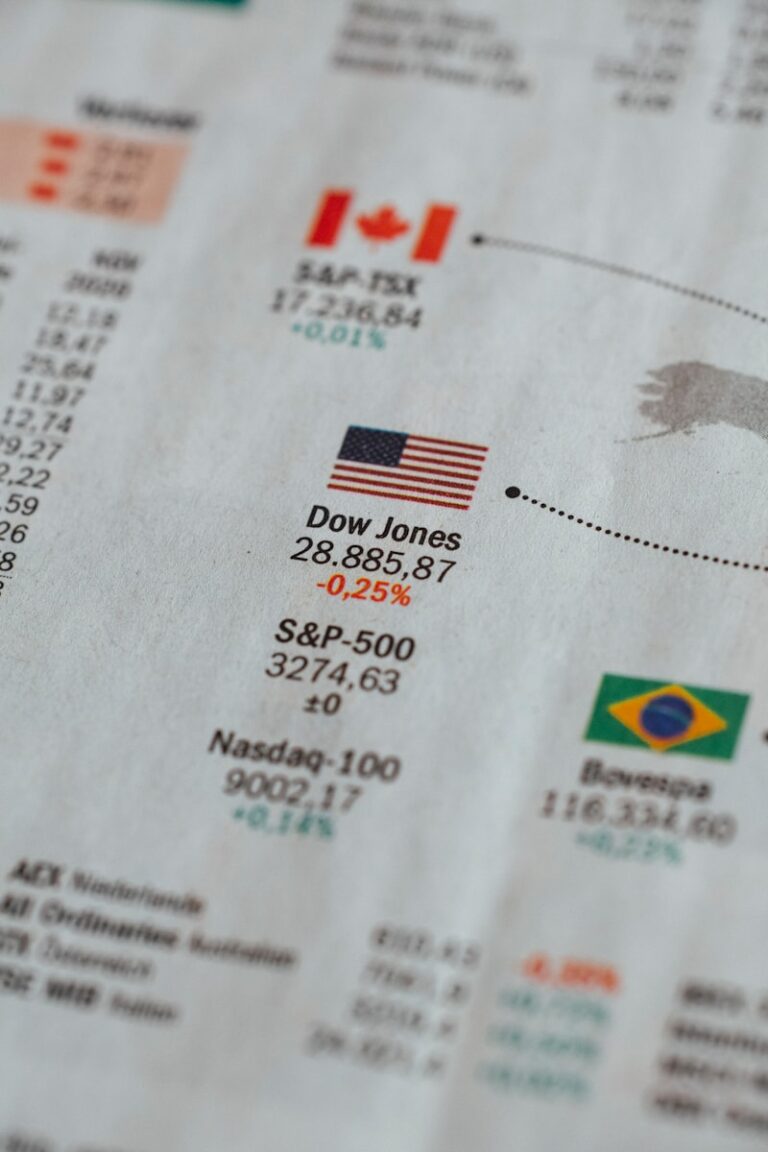
Discover the unparalleled simplicity and profound effectiveness of investing in index funds. This comprehensive guide reveals how even the busiest individuals can construct a robust financial future, promising passive wealth growth with minimal effort and maximum compatibility with diverse financial goals.
For many, the world of investing appears daunting, a complex labyrinth best navigated by financial gurus and market savants. The sheer volume of information, the endless stream of stock recommendations, and the constant fear of making the wrong move can paralyze even the most ambitious individual. This widespread apprehension often leads to inaction, leaving potential wealth untapped and financial goals distant. However, there exists a powerful, yet remarkably simple, strategy that cuts through this complexity: investing in index funds. It’s a method so straightforward, so fundamentally sound, that it’s often referred to as “the lazy way to build wealth.” But make no mistake, its simplicity belies its profound long-term power.
This article will delve deep into the mechanics and immense benefits of investing in index funds. We’ll explore why this approach consistently outperforms many active strategies, how it minimizes risk through inherent diversification, and why it is the preferred choice for anyone seeking substantial financial growth without dedicating countless hours to market research. Whether you’re just starting your investment journey or looking for a more efficient way to manage your existing portfolio, understanding index funds is a crucial step towards securing your financial future.
Understanding Index Funds: The Core of Simple Investing
At its heart, an index fund is a type of investment fund or exchange-traded fund (ETF) designed to replicate the performance of a specific market index. Instead of a fund manager actively picking individual stocks or bonds, an index fund simply buys and holds all the securities listed in a particular index, in the same proportions. Think of it as owning a small piece of every company in a specific market segment, rather than betting on just a few.
For instance, an index fund tracking a major stock market index would hold shares in hundreds, or even thousands, of different companies. If that index contains 500 of the largest publicly traded companies in a country, the fund will own shares in all 500 of those companies. When a company is added to or removed from the index, the fund adjusts its holdings accordingly. This passive management strategy is what makes index funds so powerful and, indeed, so “lazy.”
The beauty of this approach lies in its inherent diversification. By owning a broad basket of securities, your investment is not overly reliant on the performance of any single company. If one company struggles, its impact on your overall portfolio is minimized by the collective performance of hundreds of others. This dramatically reduces individual stock risk, which is often a major source of anxiety for new investors.
Furthermore, because index funds do not require active management—meaning no team of analysts constantly researching and trading individual securities—their operating costs are significantly lower than those of actively managed funds. These lower fees translate directly into higher net returns for the investor, allowing more of your money to work for you over the long term.
The Frustration of Active Management: Why Most Investors Struggle
Many investors embark on their wealth-building journey with the intention of “beating the market.” They pore over company reports, follow financial news, and try to predict which stocks will soar. This active management approach, while seemingly logical, is fraught with challenges and often leads to disappointment. The truth is, consistently outperforming the broader market is an exceedingly difficult task, even for seasoned professionals.
One major pitfall is the sheer time commitment. To make informed decisions about individual stocks or bonds, one must dedicate countless hours to research, analysis, and monitoring. For busy professionals, parents, or anyone with a demanding schedule, this is simply not feasible. The pressure to constantly identify undervalued assets or predict market swings can be overwhelming, leading to stress and poor decisions driven by emotion rather than logic.
Another significant hurdle is fees. Actively managed funds employ teams of fund managers, analysts, and traders, all of whom need to be compensated. These costs are passed on to investors in the form of higher expense ratios, sometimes ranging from 1% to 2% or even more annually. While a 1% fee might seem small, over decades, it can erode a substantial portion of your returns due to the power of compounding working against you.
Perhaps the most compelling argument against active management is its track record. Numerous studies consistently show that the vast majority of actively managed funds fail to outperform their respective benchmarks over the long term, especially after accounting for fees. This means that, despite the higher costs and perceived expertise, most active funds deliver worse returns than a simple, passively managed index fund.
The psychological toll of active investing cannot be overstated either. The thrill of a winning pick is often overshadowed by the anxiety of losses. Investors frequently fall prey to behavioral biases, such as chasing past performance, selling low out of fear, or buying high out of greed. These emotional decisions are detrimental to long-term wealth accumulation and are largely sidestepped when investing in index funds, which promote a disciplined, hands-off approach.
Why “Lazy” Is a Compliment: The Unseen Power of Index Funds
When we say investing in index funds is “lazy,” it’s not a critique of effort, but rather a celebration of efficiency and intelligence. This “laziness” translates directly into significant advantages that are crucial for long-term wealth creation.
Minimal Time Commitment
The primary benefit of index funds for busy individuals is the minimal time required. Once you’ve chosen your funds and set up automatic contributions, there’s very little else you need to do. You don’t need to read quarterly reports, analyze balance sheets, or fret over daily market fluctuations. This frees up your valuable time for work, family, hobbies, or simply relaxing, knowing your money is diligently working for you in the background.
Inherent Diversification
As discussed, index funds automatically provide broad diversification. By holding a multitude of stocks or bonds across various sectors and industries, your portfolio is naturally protected from the poor performance of any single company. This mitigates specific company risk and even sector-specific downturns to a large extent. This built-in diversification is a cornerstone of sound investment strategy and is effortlessly achieved with index funds.
Lower Costs and Higher Returns
The low expense ratios of index funds are a game-changer. Without the need for expensive research teams and frequent trading, these funds can operate with minimal overhead. These savings are directly passed on to investors. Over decades, even a difference of 0.5% or 1% in annual fees can amount to tens or even hundreds of thousands of dollars in lost returns due to the power of compounding. By keeping costs low, index funds allow more of your capital to grow uninterrupted, significantly boosting your long-term wealth.
Market Returns Without the Guesswork
By tracking a broad market index, you are effectively capturing the returns of the entire market. While this means you won’t “beat” the market, it also means you won’t significantly underperform it, which is the fate of many active investors. For most people, achieving market-level returns consistently over the long term is more than sufficient to reach their financial goals. History has shown that broad market indexes tend to grow significantly over extended periods, making them a reliable engine for wealth accumulation.
Simplicity and Accessibility
Investing in index funds demystifies the investment process. There’s no need to understand complex financial jargon or intricate valuation models. The concept is straightforward: own the market, keep costs low, and let time do the heavy lifting. This simplicity makes index funds accessible to everyone, regardless of their financial expertise, empowering more people to take control of their financial future.
Types of Index Funds: Building Your Diversified Portfolio
While the concept of an index fund is simple, there’s a variety of them, each tracking a different segment of the market. Understanding the main types will help you construct a well-diversified portfolio that aligns with your financial goals and risk tolerance.
Broad Market Stock Index Funds
These are perhaps the most popular and foundational index funds. They aim to track the performance of a wide cross-section of the stock market. Examples include funds that follow large market indices of a specific country, representing its biggest companies, or total stock market funds that include large, mid, and small-cap companies.
- Large-Cap Index Funds: These funds track indices composed of large, established companies. They offer stability and are often considered the backbone of many investment portfolios.
- Total Stock Market Index Funds: These funds provide exposure to the entire investable stock market of a country, encompassing companies of all sizes. They offer maximum diversification within the equity market.
International Stock Index Funds
To truly diversify your equity holdings and reduce country-specific risk, it’s crucial to invest beyond your home country’s borders. International index funds track stock markets in developed countries outside your own, or even emerging markets, which offer higher growth potential but also higher volatility.
- Developed Markets Index Funds: These funds track indices of well-established economies outside your primary market, providing exposure to global leaders.
- Emerging Markets Index Funds: These funds focus on faster-growing, often more volatile, economies in developing countries. They can offer higher potential returns but come with increased risk.
Bond Index Funds
While stock index funds are designed for growth, bond index funds serve a different, equally important purpose: stability and income. They track various bond market indices, offering exposure to government bonds, corporate bonds, or a mix of both. Bond funds typically provide lower returns than stock funds but also exhibit lower volatility, acting as a ballast in a diversified portfolio, especially during stock market downturns.
- Total Bond Market Index Funds: These funds offer broad exposure to the entire U.S. investment-grade bond market, including government, corporate, and mortgage-backed securities.
- Specific Maturity Bond Funds: Some bond index funds focus on bonds of specific maturities (e.g., short-term, intermediate-term, long-term), allowing investors to tailor their interest rate risk.
Sector-Specific and Niche Index Funds (with caution)
While the core principle of index investing is broad diversification, some index funds track specific sectors (e.g., technology, healthcare) or niche market segments. While these can offer targeted exposure to specific growth areas, they also introduce a higher degree of risk due to lack of diversification. For most “lazy” investors, focusing on broad market and international index funds is sufficient.
ETFs vs. Mutual Funds (Index Funds)
Index funds can be structured as either traditional mutual funds or Exchange-Traded Funds (ETFs). Both offer the benefits of index investing, but they have key differences:
- Mutual Funds: Traditionally bought directly from a fund provider or brokerage. They are traded once a day after the market closes at their Net Asset Value (NAV). Best for setting up automatic contributions.
- ETFs: Traded like individual stocks on an exchange throughout the day. Their price can fluctuate based on supply and demand, not just NAV. They often have slightly lower expense ratios and are more tax-efficient for taxable accounts due to their redemption mechanism.
For long-term investors making regular contributions, both types of index funds are excellent choices. Many providers offer both versions of their popular index funds, allowing investors to choose based on their preference for trading flexibility and cost structure.
Getting Started with Index Funds: A Simple Roadmap
The beauty of investing in index funds is that the barrier to entry is remarkably low. You don’t need a massive sum of money to begin, nor do you need to be a financial expert. Here’s a simple roadmap to get started:
1. Open an Investment Account
The first step is to open an investment account. You have several options depending on your goals:
- Brokerage Account: A standard investment account that you can open with any reputable brokerage firm. This is suitable for general investing goals, such as saving for a down payment or accumulating wealth for future needs.
- Retirement Accounts: These accounts offer significant tax advantages for saving for retirement. Examples include:
- 401(k) or 403(b): Employer-sponsored plans. If your employer offers one, this is often the first place to invest, especially if they provide a matching contribution (which is essentially free money).
- IRA (Individual Retirement Account): You can open a Traditional IRA (pre-tax contributions, tax-deferred growth, taxed in retirement) or a Roth IRA (after-tax contributions, tax-free growth, tax-free withdrawals in retirement). Roth IRAs are particularly popular among younger investors due to the power of tax-free growth.
Choose a reputable investment platform known for low fees, a wide selection of low-cost index funds, and user-friendly interfaces. Many popular platforms offer commission-free trading on their own funds and ETFs.
2. Choose Your Core Index Funds
Once your account is open, the next step is to select the index funds for your portfolio. For most investors, a simple three-fund portfolio can provide excellent diversification and capture broad market returns:
- Total U.S. Stock Market Index Fund: Provides exposure to the entire U.S. stock market.
- Total International Stock Market Index Fund: Provides exposure to developed and emerging markets outside the U.S.
- Total U.S. Bond Market Index Fund: Provides exposure to the U.S. investment-grade bond market for stability.
The proportion of each fund will depend on your risk tolerance and time horizon. A younger investor with a long time horizon might opt for 80-90% stocks (split between U.S. and International) and 10-20% bonds. As you get closer to retirement, you might gradually shift to a more conservative allocation, increasing your bond allocation.
3. Implement Dollar-Cost Averaging
One of the most effective strategies when investing in index funds is dollar-cost averaging (DCA). This involves investing a fixed amount of money at regular intervals (e.g., monthly or bi-weekly), regardless of market conditions. For example, you might decide to invest $500 into your chosen index funds on the 15th of every month.
The benefits of DCA are manifold:
- Removes Emotion: By automating your investments, you avoid the temptation to time the market, which is notoriously difficult and often leads to poor outcomes.
- Averages Your Purchase Price: When prices are high, your fixed dollar amount buys fewer shares; when prices are low, it buys more shares. Over time, this averages out your purchase price, reducing the risk of buying all your shares at a market peak.
- Promotes Discipline: Regular contributions build a consistent savings habit, which is crucial for long-term wealth accumulation.
Set up automatic transfers from your checking account to your investment account, and then automatic investments into your chosen index funds. This “set it and forget it” approach perfectly embodies the “lazy” ethos of index fund investing.
Building a Robust Portfolio with Index Funds: Asset Allocation
While the selection of specific index funds is important, the overarching strategy for building a robust portfolio revolves around asset allocation. This refers to how you divide your investment across different asset classes, primarily stocks and bonds. The right allocation depends on several factors:
- Time Horizon: How long until you need the money? Longer horizons typically allow for more aggressive (higher stock) allocations.
- Risk Tolerance: How comfortable are you with market fluctuations? Higher risk tolerance permits more stock exposure.
- Financial Goals: What are you saving for? Retirement (long-term) or a down payment (shorter-term)?
The Stock-Bond Mix
A common rule of thumb, though simplistic, is to subtract your age from 110 or 120 to determine the percentage of your portfolio that should be in stocks. For example, a 30-year-old might aim for 80-90% stocks and 10-20% bonds. As you age, you generally shift towards a more conservative allocation, increasing your bond percentage to reduce volatility as you approach your withdrawal phase.
Within the stock portion, it’s wise to diversify between U.S. and international equities. A common split might be 60-70% U.S. stocks and 30-40% international stocks, though this can vary based on individual preference and market views.
Rebalancing Your Portfolio
Over time, the initial asset allocation you set will drift as different asset classes perform differently. For example, if stocks have a strong year, your stock allocation might grow beyond your target percentage. Rebalancing is the process of adjusting your portfolio back to your target allocation.
There are two primary ways to rebalance:
- Time-Based Rebalancing: Review and rebalance your portfolio on a set schedule, typically once a year. This is simple and effective.
- Threshold-Based Rebalancing: Rebalance only when an asset class deviates by a certain percentage from its target (e.g., if your stock allocation goes from 70% to 75%).
For “lazy” investors, annual rebalancing is often sufficient. Some investors achieve rebalancing simply by directing new contributions to the underperforming asset class until the target allocation is restored, avoiding the need to sell assets and potentially trigger capital gains in a taxable account. Target-date funds, which are mutual funds that automatically adjust their asset allocation over time based on a projected retirement date, offer an even lazier approach to asset allocation and rebalancing.
The Power of Compounding with Index Funds: Patience Pays Off
The true magic of investing in index funds is unlocked by the principle of compounding. Compounding is the process where your investment returns generate their own returns, creating an exponential growth effect over time. It’s often called the “eighth wonder of the world” for good reason.
Imagine you invest a sum of money into an index fund that grows by an average of 8% per year. In the first year, your initial investment earns 8%. In the second year, not only does your initial investment earn 8%, but the earnings from the first year also earn 8%. This snowball effect accelerates over time, particularly in the later stages of your investment journey.
Time in the Market, Not Timing the Market
Compounding highlights the importance of “time in the market” over “timing the market.” Instead of trying to predict market tops and bottoms (a futile exercise for most), the most effective strategy is to invest consistently and stay invested for as long as possible. The longer your money is exposed to market growth, the more powerful compounding becomes.
Consider two hypothetical investors, both contributing the same amount to an index fund with an average 8% annual return:
- Investor A (Early Starter): Starts at age 25, contributes $500/month for 10 years ($60,000 total), then stops contributing but leaves the money invested until age 65.
- Investor B (Late Starter): Starts at age 35, contributes $500/month for 30 years ($180,000 total) until age 65.
Despite contributing only one-third of the total amount, Investor A, thanks to an extra decade of compounding, will often end up with a significantly larger sum than Investor B. This illustrates that the earliest dollars you invest are the most powerful due to the extended period they have to compound.
This principle underscores why investing in index funds is so effective for long-term wealth. You don’t need to be brilliant; you just need to be patient and consistent. Let the market do what it does best – grow over time – and let compounding amplify those returns for you.
Common Myths and Misconceptions About Index Funds
Despite their proven track record and simplicity, index funds are still subject to several common myths that can deter potential investors. Let’s debunk some of these misconceptions:
Myth 1: “Index Funds Only Offer Average Returns.”
Reality: This is technically true, as index funds aim to match the market’s average return. However, “average” in this context is often excellent. The average return of a broad market index over long periods (e.g., decades) has historically been very strong, often 8-10% annually. When factoring in the high fees and underperformance of many actively managed funds, “average” market returns often beat the returns of the vast majority of professional money managers. So, getting “average” market returns consistently is actually a winning strategy for most investors.
Myth 2: “Index Funds Are Not Exciting Enough.”
Reality: Investing is not meant to be entertainment; it’s a disciplined path to financial security. While picking individual stocks might offer a thrill, it also comes with significant stress and risk. Investing in index funds is designed to be boring because boring investing is often successful investing. The goal is steady, reliable growth, not speculative thrills. If you want excitement, find a hobby; your financial future deserves a sober approach.
Myth 3: “Index Funds Are Only for Beginners or Small Investors.”
Reality: While their simplicity makes them ideal for beginners, index funds are used by sophisticated investors, institutional funds, and even billionaires. Warren Buffett famously advised that upon his death, the money left for his wife should be invested in a low-cost S&P 500 index fund. This is a testament to their universal appeal and effectiveness, regardless of portfolio size or investor experience.
Myth 4: “Index Funds Are Too Simple to Be Effective.”
Reality: Sometimes the simplest solutions are the most powerful. The effectiveness of index funds comes precisely from their simplicity: they minimize costs, maximize diversification, and eliminate the futile exercise of market timing. Complex investment strategies often come with higher fees, increased risk, and a higher probability of underperformance. The elegance of index funds lies in their straightforward, powerful approach to wealth creation.
Myth 5: “Index Funds Don’t Protect You During Market Crashes.”
Reality: Like any equity investment, stock index funds will decline during market downturns. However, their broad diversification means they tend to recover with the overall market. Unlike individual stocks that might go to zero, an entire diversified index is highly unlikely to disappear. Bond index funds, when held in conjunction with stock index funds, can provide a buffer during equity market volatility, maintaining overall portfolio stability. The key is to stay invested through downturns, allowing the market to recover and your funds to rebound.
Tax Efficiency of Index Funds: Keeping More of Your Returns
Beyond their low costs and broad diversification, another significant advantage of investing in index funds, particularly ETFs, is their superior tax efficiency, especially in taxable brokerage accounts.
Lower Capital Gains Distributions
Actively managed mutual funds frequently buy and sell individual securities in an attempt to outperform the market. Each time a fund manager sells a stock for a profit, that gain is considered a capital gain. If the fund distributes these gains to investors, they become taxable events for investors, even if the investor hasn’t sold any shares of the fund itself. This can lead to unexpected tax bills and erode returns.
Index funds, by contrast, have very low portfolio turnover. They only buy and sell securities when the underlying index changes (e.g., a company is added or removed, or its weighting adjusts). This means they generate far fewer taxable capital gains distributions. For investors in taxable accounts, this translates into more money remaining invested and compounding, rather than being siphoned off by annual taxes.
ETFs and Tax Efficiency
Index ETFs often have an additional layer of tax efficiency due to their unique creation and redemption mechanism. When large institutional investors want to redeem shares from an ETF, they don’t receive cash. Instead, they receive a basket of the underlying securities. This “in-kind” redemption process allows the ETF manager to strategically offload low-cost-basis shares (shares that have appreciated significantly) without triggering a taxable sale for the fund or its remaining investors. This makes ETFs particularly attractive for long-term holdings in taxable accounts.
The Role of Tax-Advantaged Accounts
While index funds are tax-efficient in taxable accounts, their benefits are amplified when held within tax-advantaged accounts like 401(k)s, IRAs (Traditional or Roth), and HSAs. In these accounts, all growth is tax-deferred (Traditional IRA, 401k) or tax-free (Roth IRA, HSA), meaning you won’t pay any capital gains taxes until withdrawal (for tax-deferred accounts) or never (for tax-free accounts, assuming qualified withdrawals). This allows your investments to compound completely unhindered by annual taxation, leading to significantly higher returns over the long run.
For optimal tax planning, many financial advisors suggest prioritizing index funds with higher potential capital gains (like stock index funds) within tax-advantaged accounts, reserving less tax-efficient investments or assets with lower expected gains (like bond funds, which primarily generate taxable income) for taxable accounts.
When Index Funds Might Not Be Enough (And Why That’s Okay)
While investing in index funds is arguably the most effective and simplest strategy for building long-term wealth, it’s important to acknowledge situations where they might not cover every specific investment goal or satisfy every investor’s preference. However, for the vast majority of people focused on “lazy” wealth accumulation, index funds will constitute the core, if not the entirety, of their portfolio.
Specific, Niche Investments
Index funds provide broad market exposure. If an investor has a strong conviction about a very specific, niche industry or a single, highly innovative company, a broad index fund might not offer sufficient concentrated exposure. For example, if you believe a particular private equity firm or a nascent technology startup will revolutionize an industry, direct investment or specialized funds (often with higher risk and fees) might be considered. However, this moves away from the “lazy” ethos and into active, speculative investing.
Alternative Assets
Index funds typically cover publicly traded stocks and bonds. If an investor wishes to gain exposure to alternative assets like physical real estate (beyond REIT index funds), commodities, private debt, or venture capital, they would need to look beyond traditional index funds. These alternatives often require significant capital, illiquidity tolerance, and specialized knowledge, making them unsuitable for the average “lazy” investor.
Core-Satellite Approach (for Advanced Investors)
Some more experienced investors adopt a “core-satellite” approach. In this strategy, the vast majority of their portfolio (the “core,” perhaps 80-90%) is allocated to low-cost, broadly diversified index funds. The remaining smaller portion (the “satellite,” 10-20%) is then used for more speculative, active, or niche investments, where the investor believes they have an edge or wish to take on higher risk for potentially higher returns. This allows for diversification and stability in the core while satisfying a desire for more active engagement with a smaller, more volatile portion of the portfolio. This approach is not necessary for most people, but it demonstrates how index funds can be integrated even by those with more complex investment interests.
It’s crucial to understand that for most individuals aiming for financial independence, retirement savings, or general long-term wealth accumulation, the simplicity and effectiveness of broad-market index funds are paramount. Overthinking and complicating the process often lead to worse outcomes, higher fees, and unnecessary stress. For the vast majority, index funds are not just “enough,” they are the optimal strategy.
Maintaining Your Index Fund Portfolio: Simple and Consistent
The beauty of investing in index funds is that maintenance is minimal, aligning perfectly with the “lazy” approach to wealth building. Once your initial setup is complete, your ongoing tasks are few, but crucial for sustained success.
1. Consistent Contributions
The most important ongoing task is to continue making regular, consistent contributions. As discussed with dollar-cost averaging, regular investments ensure you’re always putting money to work, regardless of market conditions. This builds your wealth steadily over time and averages out your purchase prices. Automate these contributions wherever possible to ensure discipline.
2. Annual Review (and Rebalancing, if needed)
While daily monitoring is unnecessary, a quick annual review of your portfolio is a good habit. During this review:
- Check your asset allocation: See if your stock-to-bond ratio has drifted significantly from your target. If so, rebalance by buying more of the underperforming asset or selling a small portion of the overperforming one to bring it back into line. Many investors simply direct new contributions to the asset class that has fallen behind.
- Review your funds: Ensure your chosen index funds still align with your goals and that their expense ratios remain competitive. While index funds rarely change their strategy, a quick check can provide peace of mind.
- Adjust contributions: If your income has increased, consider increasing your monthly contribution amount.
- Consider your financial goals: Are they still the same? Do you need to adjust your risk level as you get closer to a major goal (like retirement)?
This annual check-up should take no more than an hour or two, embodying the efficient nature of index fund investing.
3. Stay Disciplined During Market Volatility
Perhaps the hardest, yet most critical, aspect of maintaining any long-term investment portfolio is staying disciplined during market downturns. Stock markets are cyclical; corrections and bear markets are a natural part of the investing landscape. When prices fall, the temptation to sell out of fear can be overwhelming.
However, for investors in broad-market index funds, market downturns are not crises but opportunities. It means your regular contributions are buying more shares at lower prices. Historically, markets have always recovered from downturns, and those who remain invested (or even invest more during these periods) are ultimately rewarded. Resist the urge to check your portfolio constantly during volatile periods, and remember your long-term plan.
By focusing on these few, simple maintenance tasks, you can ensure your index fund portfolio remains on track to deliver robust long-term growth, all while requiring minimal active management from your end.
Conclusion: The Smart, Simple Path to Wealth
In a financial world that often thrives on complexity, fear, and the promise of quick riches, investing in index funds stands out as a beacon of common sense and long-term effectiveness. It’s not a secret strategy, nor is it a complex maneuver; it’s simply a recognition of market realities and the powerful advantages of diversification, low costs, and consistent compounding.
For anyone feeling overwhelmed by investment choices, frustrated by the underperformance of actively managed funds, or simply too busy to dedicate endless hours to stock research, index funds offer an elegant solution. They provide exposure to the collective growth of the global economy, allowing you to participate in wealth creation without needing to be an expert stock picker or a market timer.
The “lazy” label associated with index funds is, in fact, their greatest strength. It frees you from the emotional rollercoaster of individual stock fluctuations and the costly drain of high fees. It empowers you to build a substantial financial future with minimal effort, allowing you to focus your precious time and energy on other aspects of your life.
The path to wealth doesn’t have to be paved with stress and complexity. By embracing the simplicity and power of investing in index funds, you can set yourself on a clear, disciplined, and highly effective course towards achieving your financial goals. Your journey to long-term wealth begins not with a bold, risky bet, but with a humble, consistent investment in the market itself. Start today, and let time and compounding work their magic.