

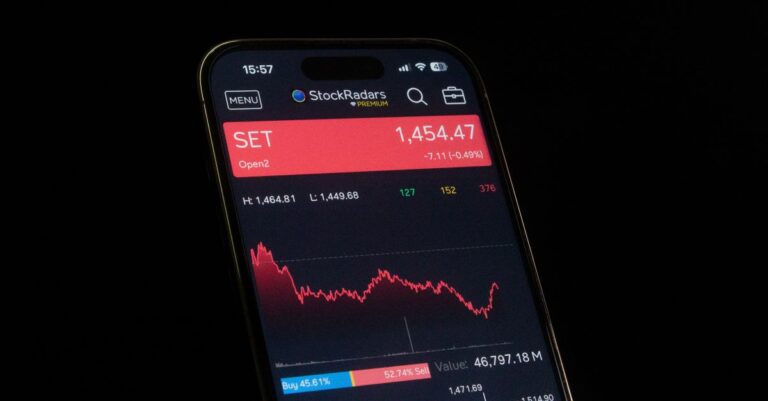
Market volatility can shake even seasoned investors. This article reveals practical strategies to safeguard your portfolio and find opportunities amidst economic uncertainty.
The Unsettling Dance of Global Markets
The financial headlines often paint a picture of unease: geopolitical tensions escalating, inflation data prompting concerns, and major indexes experiencing daily swings. This environment, characterized by heightened market volatility, can be unsettling for even the most experienced investors. It’s easy to feel a surge of anxiety when you see your portfolio values fluctuate significantly in a short period. However, rather than succumbing to fear or making rash decisions, understanding and preparing for these periods is crucial for long-term financial success.
Many investors, myself included, have witnessed several cycles of market turbulence. One consistent observation is that panic selling, driven by fear, almost always crystallizes losses that could have been temporary. A well-thought-out strategy, coupled with emotional discipline, serves as your best defense. This isn’t about predicting the next market move; it’s about building resilience into your financial framework to weather any storm.
Understanding the Nature of Volatility
Volatility simply refers to the degree of variation of a trading price series over time. In simpler terms, it’s how much prices go up and down. While often associated with negative market downturns, volatility also includes upward swings. The key distinction lies between short-term market noise – the daily jitters caused by news cycles or minor economic reports – and more fundamental shifts driven by significant economic, political, or technological changes. Differentiating these two is paramount to making informed decisions.
Short-term fluctuations are an inherent part of healthy markets. They present opportunities for growth and, occasionally, for correction. A common mistake is to react to every headline. Instead, consider the broader economic context and your personal financial goals. Does a temporary dip fundamentally change your long-term investment thesis for a particular asset or sector? Often, the answer is no, making patience a valuable asset.
Building a Resilient Portfolio Foundation
A strong foundation is critical when navigating uncertain times. This begins with sound diversification. Spreading your investments across different asset classes – stocks, bonds, real estate, and potentially commodities – can help cushion the blow if one particular area performs poorly. Within equities, diversifying across industries, geographies, and company sizes (large-cap, mid-cap, small-cap) further mitigates risk.
Beyond asset classes, consider your asset allocation. This is the strategic mix of investments tailored to your risk tolerance, time horizon, and financial goals. A younger investor with decades until retirement might comfortably hold a higher percentage of growth-oriented stocks, while someone nearing retirement might opt for a more conservative mix weighted towards income-generating bonds. Regularly reviewing and rebalancing your portfolio back to its target allocation ensures you stay aligned with your strategy and don’t become overexposed to any single segment of the market.
The Indispensable Power of a Long-Term Perspective
One of the most powerful tools against market volatility is time. Historical data consistently shows that major market dips, even severe ones, have eventually recovered and gone on to reach new highs. The urge to “time the market” – selling before a crash and buying before a rebound – is a futile and often counterproductive exercise. Very few, if any, investors consistently succeed at this.
Instead, focusing on “time in the market” allows compounding to work its magic and helps you ride out the inevitable ups and downs. Every major financial downturn, from the dot-com bubble to the global financial crisis and recent pandemic-induced drops, has been followed by a recovery. Maintaining a long-term outlook helps dampen emotional responses to short-term events, allowing your investments the necessary time to grow.
Cash Flow and Emergency Funds: Your Financial Anchor
Your personal financial situation plays a crucial role in how you perceive and react to market swings. A robust emergency fund, covering three to six months of essential living expenses, provides a vital safety net. This cash reserve means you won’t be forced to sell investments at a loss if an unexpected expense or job loss occurs during a market downturn.
Beyond the emergency fund, maintaining healthy cash flow from your income or other sources reduces the psychological pressure during volatile periods. Knowing that your regular expenses are covered allows you to think more clearly about your investment strategy. It prevents emotional decisions driven by immediate financial needs, reinforcing your ability to stick to your long-term plan.
Strategic Opportunities in Downturns
While downturns can be frightening, they also present unique opportunities for savvy investors. When others are selling in fear, quality assets can become available at significantly reduced prices. This is where a disciplined approach like dollar-cost averaging truly shines. By investing a fixed amount of money regularly, regardless of market conditions, you automatically buy more shares when prices are low and fewer when prices are high.
This strategy removes emotion from the buying process and builds a stronger position over time. Recognizing that value often emerges when pessimism is at its peak is a critical lesson learned from managing finances through multiple market cycles. It’s about being prepared to deploy capital strategically when fear dominates the narrative, rather than joining the crowd.
Navigating Market Volatility Through Diversification and Inflation Hedges
Current economic concerns, such as persistent inflation and geopolitical instability, add layers of complexity. While broad market diversification is a primary defense, specific asset classes can offer some protection. Real assets like real estate or certain commodities, for instance, have historically shown some ability to act as inflation hedges, maintaining or even increasing in value when the cost of living rises.
For bonds, the current rising interest rate environment can be challenging for existing bondholders, as new bonds offer higher yields, making older bonds less attractive. However, bonds still play a vital role in portfolio diversification, offering stability and income, especially high-quality government or corporate bonds. A trusted financial advisor can help assess how these factors specifically impact your bond holdings and overall asset allocation strategy.
Emotional Discipline: The Investor’s Superpower
Perhaps the hardest aspect of investing is mastering one’s own psychology. The human brain is hardwired for fight or flight, making us prone to emotional reactions when our money is on the line. Avoiding the herd mentality – buying because everyone else is buying, or selling because everyone else is selling – is essential. Develop a clear investment plan based on your goals and risk tolerance, and commit to sticking to it.
A valuable exercise is to mentally prepare for downturns. Acknowledge that they will happen and decide beforehand how you will react. This pre-commitment can help you override the immediate impulse to panic when the market takes a dip. Focus on the underlying fundamentals of your investments rather than just daily price movements.
Regular Review and Professional Guidance
Even with a robust strategy, regular review is essential. Conduct an annual financial check-up to assess your portfolio’s performance, re-evaluate your goals, and ensure your asset allocation remains appropriate. Life changes – a new job, a new family member, a shift in retirement plans – should prompt a review of your financial strategy.
For complex situations or if you find yourself struggling with emotional decision-making, seeking guidance from a trusted financial institution or a fee-only financial advisor can be invaluable. They can provide an objective perspective, help you refine your strategy, and ensure you remain on track to achieve your financial objectives, even amidst periods of significant market volatility.