

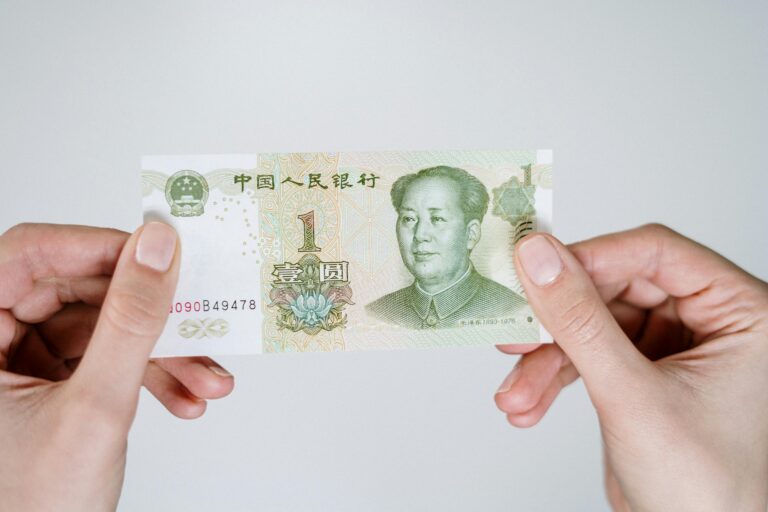
Investors seeking global diversification find the Chinese yuan’s projected stability and appreciation bias for 2026 a compelling prospect. This article details its potential benefits for your wealth strategy.
The Chinese Yuan: A Beacon of Stability and Growth for 2026
The global financial landscape is constantly evolving, presenting both challenges and lucrative opportunities for astute investors. Amidst this dynamic environment, the Chinese yuan (CNY) has emerged as a currency generating significant discussion and optimism among global financial institutions. A recent consensus from multiple financial services groups and analysts points to a promising outlook for the Chinese yuan in 2026, characterized by remarkable stability and a gradual appreciation bias.
This positive forecast is not merely a fleeting sentiment; it is underpinned by robust economic fundamentals, proactive central bank policies, and shifting global monetary conditions. For individuals focused on building long-term wealth, understanding the dynamics of the Chinese yuan and its potential trajectory is crucial. It offers a unique lens through which to view international diversification and risk management, potentially adding a strong, steady component to a well-rounded investment portfolio. As noted by news.cgtn.com in December 2025, the yuan briefly strengthened past the 7.0 per US dollar mark, underscoring this broader shift in market sentiment.
This article delves into the various factors contributing to this optimistic assessment, exploring how the confluence of internal economic restructuring, strategic policy interventions, and external market forces are positioning the Chinese yuan for a period of low volatility and gradual appreciation. We will analyze the implications for personal finance and investment strategies, offering insights into how you might consider this development in your journey from work to wealth.
Understanding the Foundations of Chinese Yuan Stability
The stability of any currency is a complex interplay of governmental policy, economic health, and global financial conditions. For the Chinese yuan, its projected stability in 2026 is rooted in several key pillars, meticulously observed and highlighted by leading financial institutions worldwide.
The Central Bank’s Steady Hand: People’s Bank of China (PBOC)
A primary driver of the Chinese yuan‘s expected stability is the demonstrated resolve and capability of the People’s Bank of China (PBOC). This central banking authority has consistently shown its commitment to maintaining exchange rate stability, even under significant market pressures. This steadfast approach instills confidence among investors and analysts alike.
Global financial services groups have specifically lauded the PBOC’s actions. As one prominent group noted, “In 2025, the PBOC showed not only its determination but also its ability to maintain currency stability amid heavy market stress.” This statement, reported by CGTN, highlights the critical role of policy credibility. When a central bank effectively communicates and executes its monetary policy, it anchors market expectations, reducing speculative volatility and fostering a predictable environment for its currency.
The PBOC employs a range of tools, including adjustments to the daily reference rate (the USD/CNY fix), open market operations, and various macro-prudential measures, to guide the yuan’s value. Their proactive management prevents extreme fluctuations, offering a more secure environment for those holding or investing in yuan-denominated assets. This commitment to stability is a significant draw for long-term wealth builders who prioritize predictable returns over speculative gains.
External Economic Factors Shaping the Yuan’s Trajectory
Beyond domestic policy, the Chinese yuan‘s outlook is also heavily influenced by global economic shifts, particularly the monetary policies of major global economies.
The Federal Reserve’s Shifting Stance and Its Ripple Effect
A pivotal factor contributing to the yuan’s anticipated appreciation is the expected shift towards a more accommodative stance by the US Federal Reserve. As global central banks adjust their interest rate policies, it creates a ripple effect across currency markets. When a major central bank like the Fed signals potential rate cuts, it typically weakens the US dollar relative to other currencies, especially those backed by strong economic fundamentals and stable policy.
This expectation is a key component in the yuan’s strengthening narrative. Lower US interest rates make dollar-denominated assets less attractive compared to those in economies with relatively stable or higher yields. This rebalancing of investment appeal naturally encourages capital flows towards currencies like the Chinese yuan, pushing its value upwards.
Narrowing China-US Interest Rate Differentials
Directly linked to the Fed’s stance is the narrowing of the interest rate differential between China and the United States. Historically, significant interest rate differentials can drive capital flows. If US interest rates are considerably higher, investors might move capital to the US to capture better returns. However, as the gap closes, or even reverses, the incentive to hold yuan-denominated assets increases.
Industrial Securities, a domestic broker, observed that the yuan’s latest appreciation cycle “may be just beginning, driven by a shift toward a more accommodative Federal Reserve stance, a narrowing China–US interest rate differential, and the gradual return of previously outflowing capital,” as reported by CGTN. This narrowing differential makes Chinese bonds and other fixed-income instruments more appealing to international investors, leading to increased demand for the Chinese yuan.
Strengthening Internal Dynamics
The yuan’s projected strength is not solely a passive response to external conditions; it also reflects robust internal economic dynamics and market behavior.
Resurgent Capital Inflows
A significant indicator of growing confidence in China’s economy and currency is the gradual return of previously outflowing capital. This phenomenon suggests that global investors are increasingly comfortable with China’s economic prospects and regulatory environment. Capital inflows manifest as foreign direct investment, portfolio investment in Chinese equities and bonds, and general cross-border financial transactions.
These inflows directly increase demand for the Chinese yuan in foreign exchange markets. As investors convert their foreign currency into yuan to purchase Chinese assets, they exert upward pressure on the currency’s value. This trend is a vote of confidence in China’s long-term growth potential and financial stability.
Rising Foreign Exchange Conversion Demand Onshore
Beyond international capital inflows, an increase in onshore foreign exchange (FX) conversion demand also signals strength for the Chinese yuan. This demand can come from various sources: domestic companies repatriating earnings, increased foreign investment within China requiring yuan, or even domestic investors seeking to diversify within their own market. International private banking and asset management groups, such as LGT, have pointed to “increased onshore FX conversion” as a factor supporting yuan appreciation, according to CGTN.
This internal demand indicates a healthy and active domestic financial market that requires a stable and appreciating currency. It suggests that economic activity within China is robust, leading to more transactions and a greater need for the local currency. This dual force of external and internal demand creates a powerful momentum for the yuan’s strengthening position.
Macroeconomic Tailwinds for the Chinese Yuan
The positive outlook for the Chinese yuan is further bolstered by a supportive macroeconomic environment, characterized by projected economic growth and strategic policy shifts.
Robust Economic Growth Forecasts
Sustained economic growth is the bedrock of any strong currency. For 2026, global research institutions are projecting healthy growth for China. Bank of America Global Research, for instance, forecasts China’s GDP growth at 4.7 percent for 2026. This figure points to a stabilization and healthy momentum in the nation’s economic output, a critical factor for currency strength.
A growing economy typically attracts foreign investment, as businesses and investors seek opportunities in a expanding market. This investment fuels demand for the local currency. Furthermore, robust GDP growth often correlates with strong export performance and a stable domestic market, both of which contribute to a favorable balance of payments and, consequently, a stronger currency. For investors, aligning with economies exhibiting such growth potential is a cornerstone of wealth accumulation.
Strategic Economic Rebalancing and the Five-Year Plan
China’s economic development is guided by comprehensive long-term plans. The upcoming March National People’s Congress is anticipated to outline the next five-year plan, with a stronger pivot towards consumption and advanced manufacturing. This strategic rebalancing is designed to foster more sustainable, high-quality growth, moving away from an over-reliance on investment and exports.
A focus on domestic consumption means a larger, more affluent consumer base, which can drive internal economic activity and resilience. Investment in advanced manufacturing, on the other hand, positions China at the forefront of technological innovation and high-value production. Both aspects contribute to a more diversified and robust economic structure, reducing vulnerabilities and enhancing the long-term stability and value of the Chinese yuan.
This pivot signifies a maturing economy, one that is shifting towards endogenous growth drivers. For investors, this means opportunities in sectors aligned with consumption growth, technology, and high-tech industries, all operating within an economy whose currency is expected to remain stable or appreciate.
Global Diplomatic Signals and Trade Relations
Positive developments in international relations also play a role in fostering a favorable environment for the Chinese yuan. Constructive outcomes from high-level talks, such as the China-US leaders’ discussions, can significantly reduce geopolitical uncertainty and improve investor sentiment. Reduced tensions generally lead to greater confidence in cross-border trade and investment, which in turn benefits the currencies of the involved nations.
When major economies engage in productive dialogue, it paves the way for stable trade relations, predictable policy environments, and enhanced economic cooperation. This stability is highly attractive to international capital. A report from a Chinese financial institution, Shenwan Hongyuan, attributed the yuan’s recent movements significantly to “proactive central bank management and changes in the external dollar environment,” suggesting that policy factors, including diplomatic advancements, play a decisive role.
Investment Implications for Work to Wealth Readers
For individuals on their journey from work to wealth, understanding the dynamics of a currency like the Chinese yuan is not an academic exercise; it has tangible implications for portfolio diversification, risk management, and potential returns. The projected stability and upside bias of the Chinese yuan in 2026 present a compelling case for its consideration within a diversified investment strategy.
Diversification Opportunities with the Chinese Yuan
Diversification is a cornerstone of sound investment strategy, aiming to reduce overall portfolio risk by spreading investments across different asset classes, geographies, and currencies. The Chinese yuan, with its forecast for low volatility and gradual appreciation, offers an attractive opportunity for currency diversification.
Adding exposure to a currency that is expected to strengthen, particularly one from a large and growing economy, can act as a hedge against potential weaknesses in other parts of a portfolio, such as the home currency or traditional equity markets. It provides an additional layer of stability and potential growth that may not be directly correlated with existing investments.
This isn’t about betting on short-term currency swings, but rather incorporating a currency with strong underlying fundamentals and institutional support into a long-term wealth accumulation strategy. For those looking beyond traditional investment avenues, the yuan represents a significant emerging market currency with increasing global relevance.
Navigating the Global Economic Landscape
Global currency movements directly impact investment returns, particularly for international investments. A strengthening Chinese yuan means that yuan-denominated assets held by foreign investors will increase in value when converted back to their home currency, assuming no other changes. This currency effect can significantly boost overall returns.
Conversely, for individuals or businesses that import goods from China, a stronger yuan might mean higher costs. However, for investors with a long-term horizon, focusing on the broader economic stability and growth prospects that underpin the yuan’s strength is paramount. It’s about understanding the macro narrative and positioning your portfolio to benefit from it, rather than reacting to daily fluctuations.
Understanding Risk and Reward in Emerging Markets
While the outlook for the Chinese yuan is positive, it is essential to approach emerging market investments with a balanced perspective. Emerging markets, by their nature, can carry different risk profiles compared to developed markets. These may include geopolitical risks, regulatory changes, and liquidity considerations. However, the unique position of China, with its substantial economy and proactive central bank, often mitigates some of these concerns.
The reward potential, as indicated by the consensus view of global institutions, lies in the combination of stability and appreciation. This offers a different risk-reward dynamic than purely high-growth, high-volatility emerging market plays. Due diligence, ongoing monitoring, and a clear understanding of your personal risk tolerance are crucial. It’s about seeking informed exposure to a powerful global economic force, rather than chasing speculative gains.
Strategies for Incorporating the Chinese Yuan into Your Wealth Plan
For individuals ready to consider the potential of the Chinese yuan, there are several avenues to gain exposure, ranging from direct investments to understanding indirect economic impacts. Each approach requires careful consideration and alignment with your overall financial objectives.
Direct Exposure via Investments
Direct exposure to the Chinese yuan can be achieved through various financial instruments, allowing investors to capitalize on its expected stability and appreciation.
Yuan-Denominated Bonds
Investing in yuan-denominated bonds, particularly those issued by stable entities or the government, can be an attractive option. With narrowing interest rate differentials, these bonds become more competitive against offerings from other major economies. They offer a fixed income stream and can benefit from currency appreciation, providing a dual return potential. These can be accessed through bond funds or directly via certain brokerage platforms that offer access to international debt markets.
Equity Funds Focused on China
While not direct currency plays, equity funds that invest in Chinese companies offer indirect exposure to the health of the Chinese economy and, by extension, the yuan. Funds focused on sectors identified in the five-year plan, such as advanced manufacturing, technology, and consumer goods, could particularly benefit. As the economy rebalances towards domestic consumption and high-tech industries, companies in these areas are poised for growth, potentially enhancing the value of the yuan.
Exchange-Traded Funds (ETFs) and Mutual Funds
For many individual investors, ETFs and mutual funds are the most accessible way to gain exposure to the Chinese yuan or broader Chinese markets. There are currency ETFs specifically designed to track the performance of the yuan against other major currencies. Additionally, a wide array of country-specific or regional ETFs and mutual funds invest in Chinese equities or a basket of Chinese assets. These professionally managed funds offer diversification within the Chinese market and simplify the investment process for individual wealth builders.
Indirect Exposure and Economic Impact
Even without direct investment in yuan-denominated assets, the Chinese yuan‘s trajectory can impact your financial well-being through broader economic channels.
Impact on Global Trade and Cost of Goods
A stronger Chinese yuan can influence global trade dynamics. For businesses that import goods from China, a stronger yuan means that the cost of those imports, when converted to their home currency, may increase. This can have downstream effects on consumer prices for certain products. Conversely, companies exporting to China might find their products more competitive if the yuan strengthens, as Chinese buyers have more purchasing power.
Effect on Companies with Chinese Operations
Many global corporations have significant operations, supply chains, or customer bases in China. A stable or appreciating Chinese yuan can positively impact the profitability of these companies when they repatriate earnings back to their home currency. Investing in such companies, even if they are not Chinese, can provide an indirect benefit from the yuan’s strength. This highlights the interconnectedness of global finance and the importance of monitoring major currency trends.
Consulting a Financial Advisor
Navigating international investments, especially in an emerging market currency, can be complex. The information provided by CGTN and other global institutions offers valuable insights, but personalized advice is invaluable. A qualified financial advisor can help assess your individual risk tolerance, financial goals, and existing portfolio to determine the appropriate level and method of exposure to the Chinese yuan.
They can guide you through the intricacies of international investment vehicles, explain potential tax implications, and help construct a diversified portfolio that strategically incorporates global opportunities while managing risk. This expert guidance ensures that any steps taken are well-informed and align with your long-term wealth accumulation objectives.
Long-Term Vision: The Yuan’s Role in a Multipolar Financial World
The projected stability and gradual appreciation of the Chinese yuan in 2026 are not isolated events but rather part of a larger trend reflecting its increasing prominence in the global financial architecture. As the world moves towards a more multipolar economic system, the yuan’s role as a major reserve and trading currency is steadily expanding.
International institutions and central banks are progressively incorporating the Chinese yuan into their foreign exchange reserves, recognizing its growing liquidity and stability. This broader acceptance enhances its status and further reinforces its foundational strength. For individual investors, this trend offers a compelling argument for considering the yuan as a valuable component in a diversified international portfolio.
The consensus view from global institutions, as highlighted by CGTN, underscores a shift in how the Chinese yuan is perceived—from a managed currency with occasional volatility to a maturing currency supported by strong policy and economic fundamentals. This evolution positions the yuan not just as an emerging market opportunity, but as a potential anchor of stability and a source of modest appreciation within a global wealth strategy.
Embracing this long-term vision means looking beyond immediate market headlines and focusing on the structural shifts that are reshaping global finance. The Chinese yuan represents a significant piece of this evolving puzzle, offering Work to Wealth readers an opportunity to align their portfolios with enduring economic trends.
In summary, the outlook for the Chinese yuan in 2026 is one of low volatility and gradual appreciation, supported by the PBOC’s commitment to stability, favorable interest rate dynamics, strengthening capital inflows, robust economic growth forecasts, and strategic national development plans. For investors, this offers compelling opportunities for portfolio diversification and potential returns, making the Chinese yuan a currency worth serious consideration in your wealth-building journey.
Frequently Asked Questions
How can the Chinese yuan’s stability benefit my investment portfolio, avoiding unnecessary volatility?
The projected low volatility and gradual appreciation of the Chinese yuan can benefit your portfolio by providing a stable asset for diversification. Currencies with low volatility tend to reduce overall portfolio risk, especially when other asset classes might be experiencing fluctuations. By including yuan-denominated assets, you can potentially smooth out returns and protect against significant downturns in other parts of your portfolio, contributing to more predictable wealth growth.
What are the primary drivers ensuring the Chinese yuan’s positive outlook, to help investors feel confident?
The positive outlook for the Chinese yuan stems from several key drivers that should instill investor confidence. These include the People’s Bank of China’s (PBOC) proven capacity to stabilize the exchange rate, a narrowing China-US interest rate differential driven by anticipated Federal Reserve rate cuts, increasing capital inflows into China, robust GDP growth forecasts (e.g., 4.7% for 2026), and China’s strategic economic rebalancing towards consumption and advanced manufacturing. These factors collectively create a strong foundation for the yuan’s performance.
Are there specific investment vehicles to capitalize on the Chinese yuan’s projected appreciation, making the most of this opportunity?
Yes, there are specific investment vehicles to capitalize on the Chinese yuan‘s projected appreciation. You can gain direct exposure through yuan-denominated bonds or currency Exchange-Traded Funds (ETFs) that track the yuan’s performance. Indirect exposure can be achieved by investing in equity funds or mutual funds focused on Chinese companies, particularly those in sectors aligned with the country’s strategic growth areas like advanced manufacturing and domestic consumption. Consulting a financial advisor can help tailor these options to your specific wealth-building goals.
How do global economic shifts, like the Federal Reserve’s stance, influence the Chinese yuan and my international investments?
Global economic shifts, particularly the Federal Reserve’s monetary policy, significantly influence the Chinese yuan and your international investments. When the Fed adopts a more accommodative stance (e.g., cutting interest rates), it tends to weaken the US dollar. This, in turn, narrows the interest rate differential between China and the US, making yuan-denominated assets more attractive to international investors. This shift encourages capital flows into China, strengthening the yuan and potentially boosting returns on your yuan-denominated assets when converted back to your home currency, thereby impacting your overall international investment performance.
What risks should investors consider when adding the Chinese yuan to their portfolios, to avoid unwelcome surprises?
While the outlook for the Chinese yuan is positive, investors should consider several risks to avoid unwelcome surprises. These include potential geopolitical tensions, regulatory changes within China, and unforeseen shifts in global economic conditions or major central bank policies. While the PBOC has demonstrated stability, future policy changes are always a possibility. Furthermore, liquidity can sometimes be a concern in emerging markets. It’s crucial to conduct thorough due diligence, maintain a long-term perspective, and consider consulting a financial advisor to manage these inherent risks effectively.