

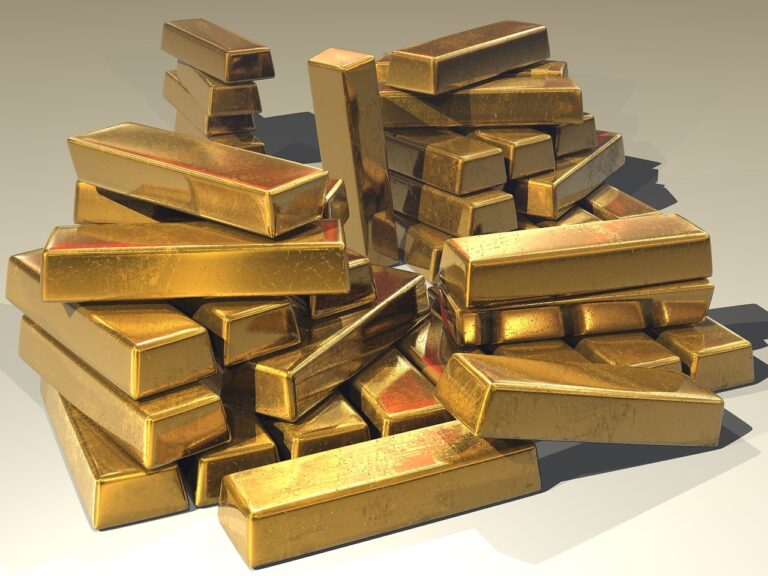
Precious metals endure as a strategic investment, offering stability when market dynamics shift. This guide simplifies gold and silver’s role in your wealth journey.
Navigating Economic Tides: Why Gold and Silver Remain Steadfast Investments
In the dynamic landscape of global finance, investors often seek reliable anchors for their wealth. Gold and silver, for centuries, have served this pivotal role, acting as traditional safe-haven assets. As economic indicators fluctuate and geopolitical uncertainties persist, understanding the factors that influence these precious metals becomes crucial for anyone building or preserving their wealth. Recent market movements suggest a fascinating resilience in gold and silver prices, even as broader economic signals present a complex picture. This article delves into the forces shaping their value, offering insights for the astute investor looking to integrate these metals into a robust wealth-building strategy.
The current market environment is characterized by a delicate balance of inflation concerns, evolving interest rate expectations, and a persistent undercurrent of geopolitical risk. These elements converge to create a compelling case for the enduring appeal of gold and silver investment. Far from being relic assets, they continue to demonstrate their ability to hold gains, providing a potential hedge against various forms of market turbulence. For those committed to the ‘Work to Wealth’ philosophy, understanding these dynamics is not just academic; it’s fundamental to making informed decisions that safeguard and grow your capital.
The Resilience of Precious Metals: Holding Gains Amidst Uncertainty
Gold and silver prices have shown remarkable stability, maintaining their gains even as investors carefully observe upcoming economic reports. This steadfastness isn’t accidental; it reflects a collective market sentiment prioritizing wealth preservation and diversification. In an era where traditional investment vehicles can experience significant volatility, the relative calm in the precious metals market offers a compelling narrative for stability. This resilience is particularly noteworthy given the mixed signals emanating from various economic sectors.
For individuals diligently working towards financial independence and wealth accumulation, the concept of an asset that “holds gains” is inherently attractive. It signifies a reduced risk of sudden, severe downturns that can erode years of careful planning. Precious metals, in this context, act as a ballast, providing a degree of predictability that complements more growth-oriented, but potentially more volatile, assets within a diversified portfolio. The sustained interest in gold and silver underscores a widespread desire among investors to protect their purchasing power against inflationary pressures and unforeseen economic shocks.
Inflationary Pressures and the PCE Index: A Critical Benchmark for Gold Prices
At the heart of current market sentiment lies the anticipation surrounding key inflation data, specifically the U.S. Personal Consumption Expenditures (PCE) Price Index. This index is not just another economic report; it is the Federal Reserve’s preferred measure of inflation, meaning its readings carry significant weight in shaping monetary policy. Economists project headline PCE to edge up to 2.8%, with core inflation holding at 2.9%. These figures, while seemingly small, can dramatically influence interest-rate expectations and, by extension, the attractiveness of non-yielding assets like gold and silver.
Understanding the PCE report is vital for any investor. It provides a clearer picture of consumer spending habits and price changes across a broad range of goods and services, offering a more comprehensive view of inflation than other measures. When inflation rises, the purchasing power of fiat currencies erodes. Historically, gold and silver investment have served as a robust hedge against such erosion, as their intrinsic value tends to appreciate during periods of higher inflation. This makes them a critical component for investors worried about their savings being devalued over time.
A higher-than-expected PCE reading could signal persistent inflationary pressures, potentially reinforcing the safe-haven demand for precious metals. Conversely, a significantly lower reading might alleviate some inflation concerns, possibly dampening immediate demand. However, the market’s current positioning suggests that investors are already factoring in ongoing inflation, viewing gold and silver as essential tools for wealth preservation in this economic climate. The ability of these metals to maintain their value, or even appreciate, when the cost of living is rising, directly addresses a core frustration for many wealth builders: the silent erosion of their hard-earned capital.
Interest Rate Expectations: The Federal Reserve’s Pivot and Its Impact on Gold
One of the most significant drivers behind the recent stability and potential upside for precious metals is the prevailing expectation of a Federal Reserve rate cut. Market-based pricing mechanisms, such as those monitored by financial models, currently assign a substantial 85% probability to a 25-basis-point rate cut at the central bank’s upcoming meeting. This expectation creates a powerful tailwind for gold and silver investment.
Here’s why: interest rate decisions directly influence the strength of the U.S. dollar and the opportunity cost of holding non-yielding assets. When interest rates are high, the dollar tends to strengthen, and investors are more inclined to hold interest-bearing assets, as they offer a better return. This makes non-yielding assets like gold less attractive by comparison. However, when the Fed signals or implements rate cuts, the opposite effect often occurs.
A rate cut typically weakens the U.S. dollar. Since gold is primarily denominated in dollars, a weaker dollar makes gold more affordable for international buyers, thereby increasing demand and price. Furthermore, lower interest rates reduce the opportunity cost of holding gold. If bonds and savings accounts yield less, the appeal of holding an asset that retains its value and offers potential capital appreciation without generating income increases significantly. This inverse relationship is a cornerstone of understanding precious metal price movements and is a key reason why the current anticipation of a Fed pivot is so supportive of gold and silver. For investors aiming to protect their wealth during periods of monetary policy shifts, this dynamic is immensely important.
Labor Market Nuances: Why Metals Remain Resilient Despite Strong Jobs Data
The economic backdrop for precious metals is further complicated by recent U.S. labor data, which typically would strengthen the dollar and, by extension, weigh on gold and silver. For instance, reports indicate a significant 53% drop in U.S. job cuts in November, coupled with Initial Jobless Claims declining to a more than three-year low of 191,000. These figures generally point to a robust economy, which historically would lead to higher interest rates and a stronger dollar. Yet, the reaction in the precious metals market has been notably muted.
This apparent disconnect highlights a crucial shift in market priorities. While strong labor data is certainly a positive economic indicator, investors are currently placing a greater emphasis on the inflation outlook and the Federal Reserve’s response to it. The market seems to be interpreting the strong labor numbers not as a signal for tighter monetary policy, but rather as data within a larger framework dominated by inflation concerns and the likelihood of future rate adjustments.
For wealth builders, this means that merely looking at isolated economic indicators might lead to incomplete conclusions. The resilience of gold and silver despite strong labor performance suggests that these metals are fulfilling their role as a hedge against broader systemic risks, such as persistent inflation, rather than solely reacting to short-term economic fluctuations. This nuanced behavior reinforces their value as a diversification tool, capable of performing well even when other economic signals might suggest otherwise. It’s a testament to the complex interplay of factors influencing gold and silver investment.
Geopolitical Risk: Sustaining Safe-Haven Demand for Precious Metals
Beyond economic data and central bank policy, geopolitical tensions continue to exert a significant influence on the demand for precious metals. Global instability historically drives investors towards safe-haven assets, and gold and silver are often the first port of call. Recent statements from international leaders regarding ongoing conflicts, such as the situation in Ukraine, underscore the persistent nature of global flashpoints. These uncertainties foster risk-averse behavior among investors worldwide, channeling funds into tangible assets perceived as secure stores of value.
The flight to safety during times of political or economic upheaval is a well-documented phenomenon. When trust in traditional financial systems or political stability wanes, individuals and institutions alike seek assets that are independent of any single government or currency. Gold, with its millennia-long history as a universal currency and store of wealth, and silver, often following in its footsteps, perfectly fit this criterion. The ongoing geopolitical backdrop ensures a baseline demand for these metals, insulating them to some extent from purely economic pressures.
For the ‘Work to Wealth’ community, understanding this aspect is vital. Geopolitical risk is notoriously difficult to predict and quantify, yet its impact on investment portfolios can be profound. Allocating a portion of one’s wealth to gold and silver acts as a form of insurance, providing a buffer against the unforeseen consequences of international events. This strategic allocation helps safeguard accumulated capital, ensuring that external shocks do not derail long-term financial goals. The sustained safe-haven interest highlights the indispensable role of gold and silver investment in a truly diversified and resilient portfolio.
Short-Term Forecasts: Gauging Momentum in Gold and Silver
Looking at the immediate horizon, market analysts provide specific price targets and trends for precious metals. For gold, the metal is currently holding above the $4,227 mark, with potential to retest $4,257. Silver, on the other hand, is steady near $58.23, with scope for movement towards $58.95. These short-term forecasts are often driven by momentum indicators and immediate market sentiment, particularly ahead of significant data releases like the PCE report.
Momentum favors mild upside for both metals, suggesting that the prevailing buying interest could push prices slightly higher, provided there isn’t a significant disruption from the upcoming PCE data. While short-term forecasts should always be considered alongside a broader investment strategy, they offer valuable insights into current market dynamics and trader psychology. For active investors, these levels can inform entry and exit points, though for long-term wealth builders, the underlying fundamental drivers remain paramount.
Technical Analysis Deep Dive: Interpreting Gold (XAUUSD) Price Forecasts
Technical analysis provides a structured way to understand price movements based on historical data. For gold, current trading near $4,227 shows it’s holding above an ascending trendline that has supported prices since late November. This trendline acts as a dynamic support level, indicating that buyers are stepping in at lower prices within this upward trajectory.
- Higher Lows: Recent hourly candles confirm steady higher lows, a classic bullish signal. This pattern indicates that sellers are losing momentum, and buyers are consistently pushing prices higher after minor pullbacks.
- Resistance Levels: Immediate resistance is observed at $4,257. Overcoming this level could open the path to stronger resistance points at $4,301 and then $4,343. These are price points where selling pressure is expected to increase, potentially halting or reversing an upward move.
- Support Levels: On the downside, initial support rests at $4,201. If sellers gain traction and push the price below this, deeper support levels are found at $4,164 and $4,122. These are crucial levels where buying interest is likely to re-emerge, potentially preventing further declines.
- Moving Averages (EMAs): Price remains above the 50-Exponential Moving Average (EMA), which is a short-to-medium-term indicator of trend direction. The 200-EMA, positioned below the current price, signals broader, long-term trend strength, reinforcing a bullish outlook. When price stays above these key EMAs, it often suggests the uptrend is intact.
- Relative Strength Index (RSI): The RSI is rising from the mid-range towards 60. This indicates improving bullish momentum without the market being overbought, suggesting there’s still room for upward movement before a potential correction.
A sustained close above $4,257 would be a strong bullish signal, potentially triggering a move towards the $4,300+ range. Conversely, if the price drops below the ascending trendline, it would suggest a shift in momentum and could lead to a retest of the $4,164 support. For investors, these technical indicators offer a framework for making informed decisions about when to enter or exit positions, though they should always be used in conjunction with fundamental analysis and a comprehensive understanding of one’s risk tolerance. The ability to interpret such charts provides a distinct advantage for effective gold and silver investment.
Technical Outlook: Silver (XAG/USD) Price Forecast and Analysis
Silver, often referred to as “poor man’s gold,” frequently mirrors gold’s movements but with higher volatility due to its industrial applications. Currently, silver trades near $58.23, moving within a rising channel that has provided consistent support since late November. This channel indicates a defined upward trend where price oscillates between parallel support and resistance lines.
- Rising Channel: The price recently bounced off the lower boundary of this channel, near $56.74, forming higher lows. This reinforces the integrity of the rising channel and suggests sustained buying pressure within the trend.
- 20-EMA: Silver has reclaimed the 20-EMA, and this moving average is turning upward again. The 20-EMA is a short-term indicator, and its upward slope alongside the price above it typically signals bullish sentiment and short-term strength.
- Resistance Levels: Immediate resistance for silver sits at $58.95. Previous price action shows rejection wicks at this level, indicating an area where sellers have previously stepped in. A decisive break above $58.95 would be a significant bullish development, potentially opening the path towards $60.15 and then $61.46.
- Support Levels: Support remains firm at $57.00. Should the price fall through the channel floor, the next significant support would be at $55.48. The 200-EMA, providing a deeper anchor for the broader uptrend, is located near $54.23. This long-term moving average suggests that the overarching trend for silver remains bullish, offering a strong foundation even during pullbacks.
For those considering gold and silver investment, understanding these technical patterns for silver is crucial. A break above key resistance levels suggests renewed momentum, while a failure of support could signal a deeper correction. As with gold, silver’s technical indicators provide a roadmap for understanding potential price trajectories and managing risk within a portfolio. The higher volatility of silver also means that potential gains (and losses) can be more pronounced, requiring careful consideration of position sizing and overall portfolio allocation.
Strategic Integration: Incorporating Gold and Silver into Your Wealth Plan
For the ‘Work to Wealth’ enthusiast, simply understanding market forecasts isn’t enough; the key lies in strategically integrating this knowledge into a coherent wealth-building plan. Gold and silver offer unique benefits that can significantly enhance a diversified portfolio.
Diversification Benefits
Precious metals often exhibit a low correlation with traditional assets like stocks and bonds. This means that when stocks or bonds are underperforming, gold and silver might be holding their value or even appreciating. This inverse relationship provides crucial diversification, smoothing out portfolio volatility and potentially improving risk-adjusted returns over the long term. For instance, during periods of economic recession or market downturns, gold frequently acts as a haven, providing stability when other assets are declining.
Inflation Hedge
As discussed with the PCE index, inflation is a silent wealth destroyer. Gold and silver have historically proven to be excellent hedges against inflation. As the cost of goods and services rises and the purchasing power of fiat currencies diminishes, the intrinsic value of physical precious metals tends to rise commensurately, preserving real wealth. This is a primary driver for many investors to include these metals in their portfolios.
Wealth Preservation During Volatility
Beyond inflation, broader economic or geopolitical volatility can severely impact financial markets. In such times, investors flock to assets perceived as safe. Gold and silver, being tangible assets with universal value, offer psychological comfort and practical security. They represent a store of value that transcends national borders and specific economic policies, making them invaluable for wealth preservation during periods of extreme uncertainty.
Considering Investment Vehicles
Investors have several avenues for gold and silver investment:
- Physical Bullion: Owning physical gold and silver coins or bars provides direct ownership and maximum security, though it comes with storage and insurance costs.
- Exchange-Traded Funds (ETFs): These funds track the price of gold or silver and trade on stock exchanges, offering liquidity and convenience. They are a popular choice for investors who want exposure to precious metals without the complexities of physical storage.
- Mining Stocks: Investing in companies that mine gold and silver can offer leverage to metal prices, but also carry company-specific risks (management, operational issues, geopolitical risks in mining regions).
- Futures and Options: These derivatives are for more advanced investors seeking to speculate on price movements or hedge existing positions, carrying higher risk.
Risk Management and Long-Term View
While gold and silver offer compelling benefits, they are not without risks. Their prices can be volatile, and they do not provide income like dividends from stocks or interest from bonds. Therefore, proper risk management, including appropriate position sizing (typically 5-15% of a diversified portfolio), is crucial. The most effective approach to gold and silver investment is often a long-term one, viewing them as core components of a wealth preservation strategy rather than speculative short-term plays.
The objective is not to get rich quickly from precious metals but to ensure that your accumulated wealth is protected and grows steadily in real terms, irrespective of economic or geopolitical headwinds. By understanding the multifaceted roles of gold and silver—as hedges against inflation, diversifiers against market volatility, and safe havens during crises—investors can intelligently integrate these enduring assets into their journey from ‘Work to Wealth’.
The Path Ahead: Future Outlook for Precious Metals
As we look towards the future, the confluence of factors supporting gold and silver prices appears likely to persist. The ongoing battle against inflation, the Federal Reserve’s careful dance with interest rates, and the unpredictable nature of geopolitical events all contribute to an environment where precious metals can thrive.
The inflation narrative, driven by factors like supply chain disruptions, energy costs, and fiscal stimulus, suggests that price pressures may not dissipate quickly. In such a scenario, the intrinsic value of gold and silver as inflation hedges will remain highly relevant. Furthermore, if central banks globally continue to ease monetary policies or if economic growth slows, the appeal of non-yielding assets increases significantly.
Geopolitical uncertainties, whether stemming from ongoing conflicts, trade disputes, or emerging global flashpoints, provide a constant undercurrent of risk that prompts investors to seek safety. This continuous demand for safe-haven assets underpins the long-term bullish outlook for gold and silver investment.
Investors should remain vigilant, observing upcoming economic data, central bank communications, and geopolitical developments. While short-term fluctuations are inevitable, the overarching fundamental and technical picture points to a sustained role for gold and silver as essential components of a resilient and growth-oriented wealth strategy. For those committed to building and preserving wealth for the long haul, these precious metals continue to offer a powerful and time-tested solution, providing confidence amidst an ever-changing financial world.
The journey from ‘Work to Wealth’ requires foresight, discipline, and a well-informed strategy. By appreciating the unique value proposition of gold and silver, investors can construct a portfolio that is not only poised for growth but also fortified against the inevitable challenges and uncertainties of the global economic landscape.
Frequently Asked Questions
Why are gold and silver prices stable despite conflicting economic signals?
Gold and silver often maintain stability because investors prioritize inflation concerns and interest rate expectations over other economic data like strong labor reports. They serve as a hedge against inflation and a safe haven during uncertainty, influencing their prices more profoundly than short-term economic fluctuations. This resilience in gold and silver investment helps protect investor capital during complex market periods.
How do interest rate cuts impact the value of my gold investments?
Anticipated interest rate cuts typically boost gold and silver prices. Lower rates tend to weaken the U.S. dollar, making dollar-denominated gold more affordable for international buyers. Additionally, reduced interest rates decrease the opportunity cost of holding non-yielding assets like gold, as other interest-bearing investments become less attractive. This directly aids wealth preservation by making gold and silver investment more appealing.
Can geopolitical tensions genuinely safeguard my wealth through precious metals?
Yes, geopolitical tensions significantly increase demand for precious metals as safe-haven assets. During periods of global instability or uncertainty, investors typically seek tangible assets like gold and silver, which are perceived as universally valuable and independent of any single government or currency. This flight to safety provides a protective layer for wealth, a key benefit of gold and silver investment.
What role do technical indicators like EMAs and RSI play in gold and silver investment decisions?
Technical indicators like Exponential Moving Averages (EMAs) and the Relative Strength Index (RSI) help investors analyze past price action to forecast future movements. EMAs identify trend direction and support/resistance levels, while RSI gauges momentum and whether an asset is overbought or oversold. These tools, when combined with fundamental analysis, provide a clearer picture for making informed gold and silver investment entry and exit decisions.
What is the optimal strategy for incorporating precious metals into a long-term wealth plan?
For long-term wealth planning, precious metals are best used for diversification, inflation hedging, and wealth preservation during volatility. A common strategy involves allocating a modest portion (e.g., 5-15%) of your portfolio to physical bullion or ETFs. This approach leverages the low correlation of gold and silver with traditional assets, helping to stabilize returns and protect purchasing power over time, reinforcing the value of strategic gold and silver investment.