

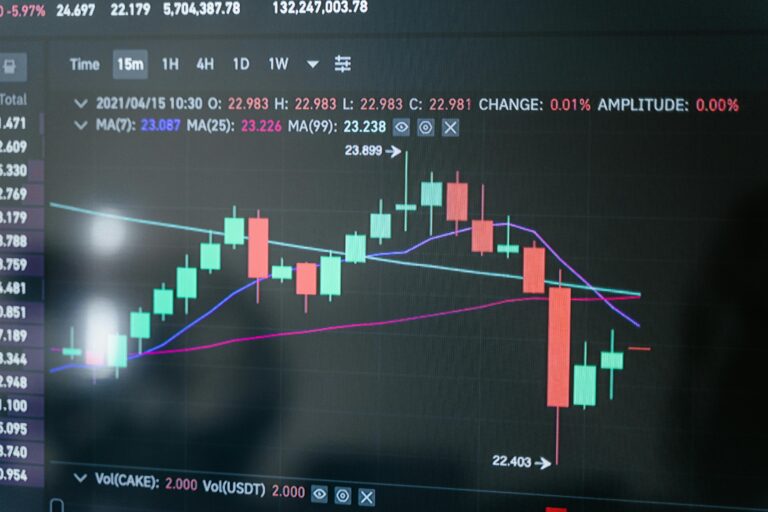
The market is in a panic, and the critical BTC $80k support is being tested. Understand the global forces causing this crypto crash and learn how to position your portfolio for what comes next.
The digital screens are flashing red, notifications are buzzing with price alerts, and a palpable sense of fear is gripping the cryptocurrency market. If you’re watching your portfolio value plummet and wondering what on earth is happening, you are not alone. A perfect storm of macroeconomic shocks, geopolitical tensions, and wavering institutional confidence has pushed Bitcoin to a terrifying precipice: the critical BTC $80k support level. This isn’t just another volatile Tuesday; it’s a moment of truth for the entire crypto space.
Every seasoned investor and anxious newcomer has their eyes glued to this one number. It has become the most important line in the sand as Bitcoin endures a relentless wave of selling. But why now? And more importantly, what can you do about it? This article will dissect the complex forces at play, break down the technical charts in simple terms, and provide a strategic guide to navigating this treacherous market. We’ll move beyond the panic to find clarity and a plan for the weeks and months ahead.
The Macroeconomic Hurricane: Why the Global Economy is Wrecking Crypto
To understand the current crypto crash, we must first look beyond the blockchain and into the world of global economics. Cryptocurrencies, despite their decentralized nature, do not exist in a vacuum. They are increasingly intertwined with traditional financial markets, making them susceptible to the same fears and pressures.
The Trade War Tremor
The initial shockwave that destabilized the market began with a significant escalation in the trade war between the United States and China. On October 10, 2025, a sudden announcement of new tariffs and trade restrictions sent a ripple of fear across all global markets. For investors, this news signaled rising business costs, potential disruptions to supply chains, and a general slowdown in global economic growth. In such an environment, investors tend to shed their riskiest assets first.
This “risk-off” sentiment immediately targeted the crypto market, which is still perceived as a high-risk, high-reward asset class. The reaction was swift and brutal, triggering a cascade of liquidations totaling a staggering $19.16 billion. This event was a stark reminder that macroeconomic policy can have a direct and devastating impact on digital asset prices, putting immense pressure on key levels like the BTC $80k support.
Understanding the Liquidation Cascade
What exactly is a liquidation? Many traders in the crypto space use leverage, which is essentially borrowed money, to amplify their potential profits. When they take a “long” position, they are betting that the price of an asset will go up. However, if the price moves against them and falls below a certain point (the liquidation price), the exchange automatically closes their position to ensure the loan is repaid. This forced selling adds more downward pressure to the market.
The $19.16 billion wipeout was a classic example of a “long squeeze.” As prices began to fall due to the trade war news, leveraged long positions started getting liquidated. This created more selling, which pushed the price down further, triggering even more liquidations. It’s a vicious cycle that can cause prices to crash with breathtaking speed. The sheer scale of this event demonstrated just how much speculative excess was in the market, an imbalance that is now being painfully corrected.
The Federal Reserve’s Misfire: When a Lifeline Becomes an Anchor
In traditional markets, when economic storm clouds gather, investors often look to central banks, like the U.S. Federal Reserve, for a lifeline. Typically, cutting interest rates makes borrowing cheaper, encourages spending and investment, and often boosts the price of assets like stocks and, by extension, crypto.
A Rate Cut with a Catch
Many in the market were hoping that a late-October rate cut would act as a safety net, softening the decline. The Federal Reserve did deliver a 0.25bps cut, but it had the exact opposite effect. Instead of calming nerves, it amplified the uncertainty. The problem wasn’t the cut itself, but the lack of clear guidance about the future.
The Fed’s commentary left investors with little confidence that more easing would be coming. This ambiguity was interpreted as a sign that the central bank was either less concerned about the economic slowdown than the market was, or that its hands were tied. Without the promise of future support, investors saw no reason to return to riskier assets. The market wanted certainty, and it got confusion instead. This pushed even more capital out of volatile markets and into safer havens, intensifying the pressure on the BTC $80k support.
The crypto liquidation charts from this period paint a clear picture. Long positions continued to be liquidated at a much higher rate than short positions, confirming that the dominant market force was fear-driven selling, not opportunistic shorting. The supposed good news had turned sour, leaving the market more fragile than before.
Geopolitical Crises and the Flight to Safety
Adding another layer of complexity to the crisis are escalating geopolitical tensions. Markets despise uncertainty, and nothing creates more uncertainty than the risk of international conflict. The recent missile and drone attacks in the ongoing Russia-Ukraine conflict served as another major catalyst for panic.
This news triggered two more massive liquidation events, with $1.87 billion wiped out on November 21 and another $1.70 billion on November 22. These weren’t just numbers on a screen; they represented a massive, fear-induced exodus from the market. Each headline about the conflict deepened concerns that the global risk of a wider war was rising, prompting investors to protect their capital by selling assets perceived as volatile.
While some proponents argue that Bitcoin can act as a “safe haven” asset like gold during times of turmoil, its performance during this crisis has shown that it is still treated primarily as a risk asset by the broader market. When global tensions flare, the first instinct of most large-scale investors is to reduce exposure to assets like Bitcoin, not increase it. This dynamic added significant fuel to the selloff, making the defense of the BTC $80k support all the more difficult.
The Big Money Exodus: Watching the Institutions Retreat
One of the most significant drivers of the recent crypto bull market was the influx of institutional capital. The participation of large hedge funds, asset managers, and corporations lent an air of legitimacy and, more importantly, brought billions of dollars into the space. Now, that trend is reversing.
Following the Smart Money
Throughout November, data from crypto-backed investment products showed a consistent and substantial outflow of funds. Billions of dollars were withdrawn as institutional investors, known for their cautious and data-driven approach, decided the risk was no longer worth the potential reward. This institutional retreat is a powerful bearish signal. It indicates that the “smart money” is anticipating further downside or, at the very least, a prolonged period of uncertainty.
This stands in stark contrast to the environment that saw Bitcoin reach its all-time high of $126,296 earlier in the year. That peak was fueled by a friendly macroeconomic backdrop and rampant institutional optimism. Today, that optimism has evaporated, overshadowed by global economic and political fears. The macro environment has soured, and the institutional capital that once buoyed the market is now flowing out, leaving retail investors to face the storm.
Decoding the Charts: A Technical Look at the BTC $80k Support
While macroeconomic and geopolitical factors provide the “why” behind the crash, technical analysis of the price charts can help us understand the “what” and “what’s next.”
Bitcoin’s price has been in a persistent downtrend, falling a painful 35% from its peak to its recent low of $80,524. While the price today has shown a minor bounce towards $84,244, market analysts are quick to caution that this rebound is shallow and lacks strong buying momentum. The overall structure of the BTC price chart continues to favor lower levels unless a decisive and powerful wave of demand emerges.
The Importance of the $80,000 Level
The BTC $80k support is not just an arbitrary number. In technical analysis, a support level is a price point where a downtrend can be expected to pause due to a concentration of demand or buying interest. The $80,000 area represents several key things:
- A Psychological Barrier: Round numbers often act as strong psychological levels for traders and investors.
- A Previous Consolidation Zone: It’s an area where the price has previously stabilized, suggesting that buyers have shown interest there before.
- A Key Structural Level: On higher timeframes, it represents the last significant support zone before a much steeper drop.
Potential Scenarios: The Bull vs. The Bear Case
The market is now at a crossroads, and the fate of the BTC $80k support will likely dictate the trend for the remainder of the year.
The Bearish Scenario: If sellers overwhelm buyers and the price breaks decisively below $80,000, it could trigger another wave of panic selling and liquidations. Analysts have identified the next major support zone in the $72,000-$73,000 range. If that level fails to hold, a deeper slide toward the broader $66,000 region becomes a very real possibility.
The Bullish Scenario: For buyers to regain control, they must not only defend the $80,000 level but also push the price back up with conviction. According to analysts, a reclaim of the $86,000 level would be the first sign of stabilization. However, a single sign is not enough. Traders would need to see a sustained move above this level to have confidence that a bottom is in place.
Your Bear Market Playbook: Smart Moves for an Uncertain Market
With the total crypto market capitalization shedding an astonishing $1.3 trillion since October, it’s clear we are in a bearish trend. During times like these, your strategy should shift from seeking profit to preserving capital and positioning for the future. As one analyst noted, this phase is about “positioning, not panic.”
Strategy 1: Dollar-Cost Averaging (DCA)
If you have a long-term belief in the core assets of the crypto market and have available capital, this downturn could be an opportunity. Dollar-Cost Averaging involves investing a fixed amount of money at regular intervals, regardless of the price. This approach removes emotion from the equation and allows you to accumulate assets at a lower average cost during a downtrend. It is a strategy for building a position, not for timing the bottom.
Strategy 2: The Stability of Stablecoins
If your risk tolerance is low or you are uncertain about the market’s direction, protecting your capital should be your top priority. Moving a portion of your portfolio into high-quality stablecoins (digital assets pegged to a stable currency like the US dollar) can shield you from further downside. This isn’t about selling everything in a panic but about strategically de-risking so you have capital ready to deploy when conditions improve.
Strategy 3: Focus on Quality Over Hype
Bear markets are ruthless. They expose weak projects and wash away the hype-driven tokens that have no real substance. Analysts strongly advise avoiding random, low-liquidity altcoins. Instead, focus on quality, established assets like BTC and ETH, and high-liquidity chains like SOL and BNB. These projects have stronger fundamentals, larger communities, and are more likely to survive a prolonged downturn and lead the recovery when it comes.
Ultimately, navigating this market requires a cool head and a clear plan. Whether Bitcoin can defend the crucial BTC $80k support will shape sentiment heading into the new year. But regardless of the outcome, your focus should be on making sound, strategic decisions that align with your long-term financial goals.
Frequently Asked Questions
Why is my crypto portfolio crashing so hard today?
Your portfolio is likely down due to a broad market crash triggered by a combination of factors. These include escalating global trade tensions, massive spikes in leveraged liquidations, and a general “risk-off” sentiment among investors who are moving away from volatile assets in response to economic and geopolitical uncertainty. This has put extreme pressure on key levels like the BTC $80k support.
I thought interest rate cuts were good for crypto, why did the market fall?
While rate cuts are typically bullish for risk assets, the most recent cut from the Federal Reserve created more uncertainty than relief. The Fed’s forward guidance was unclear, leaving investors with little confidence in future economic support. This ambiguity pushed investors toward safer assets and away from crypto, extending the selloff.
How can I stop losing money in this crypto downturn?
To protect your capital, consider a defensive strategy. This could involve moving a portion of your assets into stablecoins to avoid further downside. Focus on holding high-quality assets with strong fundamentals (like BTC and ETH) and avoid speculating on risky, low-liquidity tokens. For long-term investors, using a Dollar-Cost Averaging (DCA) strategy to slowly accumulate during the dip can be effective, provided you have liquid capital and conviction in your investments.
What happens if the BTC $80k support level breaks?
If the BTC $80k support fails to hold, analysts predict it could trigger an accelerated drop. The next major support zones are identified around the $72,000-$73,000 area, and if selling pressure continues, a further decline to the $66,000 region is considered possible. A break of this critical level would likely signal a deeper and more prolonged bearish phase for the market.