

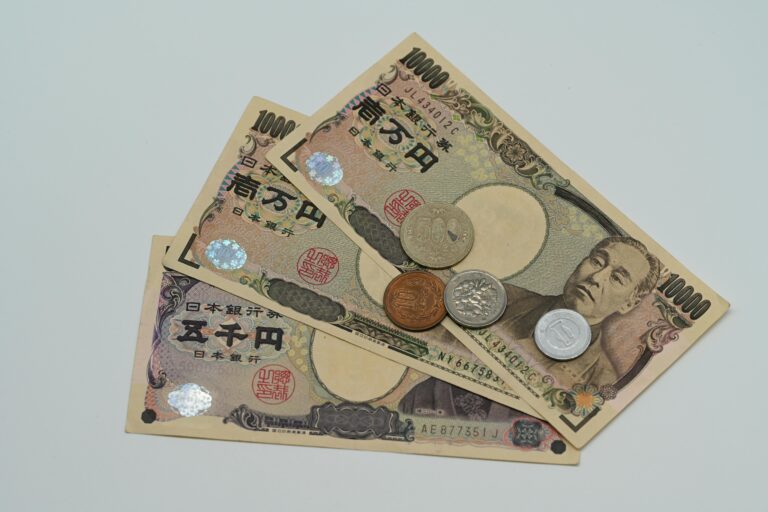
Why the Japanese Yen’s Weakness Is a Disaster for My Portfolio
The Japanese Yen has been in a freefall, and investors are feeling the pain. This article breaks down the complex forces pressuring the yen—from the Bank of Japan’s indecision to global economic shifts—and provides clear strategies to protect your wealth from the ongoing currency crisis.
If you’ve checked your international investment portfolio recently, you might have noticed a troubling trend. The value of assets denominated in the Japanese Yen has taken a significant hit. For months, the currency has been on a relentless downward slide against major counterparts like the US Dollar, leaving many investors wondering what went wrong and how much further it can fall. The sentiment is one of deepening concern as the yen languishes near multi-month lows, eroding returns and creating a sense of financial vulnerability.
This isn’t just a minor fluctuation; it’s a fundamental shift driven by a complex interplay of domestic policy, international economic pressures, and shifting market sentiment. Understanding these forces is the first step toward navigating this turbulent period and safeguarding your hard-earned wealth. This deep dive will explore the core reasons behind the yen’s dramatic weakness and what it means for you.
The Alarming Decline of the Japanese Yen
The numbers paint a stark picture. The USD/JPY currency pair, which measures how many yen one US dollar can buy, has surged to levels not seen in many months. This means the yen’s purchasing power on the global stage has diminished significantly. Every dollar converted now yields more yen, which is great for tourists visiting Japan but a severe blow for those holding yen-based assets.
This persistent decline is not a sudden event but the culmination of prolonged pressure. For weeks, the currency has retained a negative bias, struggling to find a foothold. The primary driver of this trend is the widening gap in monetary policy between Japan and other major economies, particularly the United States. While central banks around the world have been aggressively hiking interest rates to combat inflation, the Bank of Japan (BoJ) has remained a notable outlier, maintaining its ultra-loose monetary policy. This divergence creates what is known as a “yield differential,” a powerful magnet for currency traders.
Investors can earn significantly higher returns, or “yield,” by holding US government bonds compared to Japanese government bonds. Naturally, capital flows towards the higher-yielding currency, strengthening the US Dollar and weakening the Japanese Yen in the process. This dynamic has become the central narrative dominating the yen’s performance.
Uncertainty at the Bank of Japan: A Core Problem for the Yen
At the heart of the Japanese Yen‘s woes is the deep-seated uncertainty surrounding the Bank of Japan’s future actions. The central bank faces a monumental dilemma: on one hand, there is mounting pressure to normalize policy and raise interest rates to support the currency and address inflationary pressures. On the other hand, decades of deflationary mindset and a fragile economic recovery make the BoJ extremely cautious about tightening policy too soon, which could stifle growth.
This internal conflict was laid bare at a recent policy meeting. As reported by financial analysts at FXStreet, the BoJ opted to hold interest rates steady, a decision that was not unanimous. Two dissenting board members voted for a substantial hike, signaling a growing rift within the institution. This division sends a mixed message to the markets, fueling speculation and volatility rather than providing a clear and confident path forward.
In a post-meeting press conference, BoJ Governor Kazuo Ueda did little to quell the uncertainty. He stated that there were “no preset ideas about the timing of the next rate hike,” a comment that markets interpreted as a sign that any significant policy shift is not imminent. This dovish stance, or inclination towards maintaining low interest rates, immediately puts downward pressure on the yen.
Political Winds and Fiscal Policy: Adding Fuel to the Fire
Monetary policy isn’t the only factor at play. The political landscape in Japan is also contributing to the yen’s weakness. The nation’s new leadership has signaled a preference for aggressive fiscal spending to stimulate the economy and combat the rising cost of living. This pro-stimulus approach, while aimed at helping households and businesses, works at cross-purposes with potential monetary tightening.
Injecting large amounts of government money into the economy is inflationary. If the government is spending freely while the central bank is trying to keep a lid on prices, it creates a policy conflict. This reaffirms the market’s expectation that the BoJ will be forced to delay interest rate hikes to accommodate the government’s fiscal agenda. For currency traders, this is another clear signal to sell the Japanese Yen.
The combination of a hesitant central bank and a government committed to fiscal expansion creates a perfect storm for currency devaluation. It suggests that, for the foreseeable future, Japan’s policy mix will remain exceptionally accommodative compared to its global peers.
The Unstoppable US Dollar and the Fed’s Hawkish Stance
The story of the weak Japanese Yen is also a story of a remarkably strong US Dollar. The Greenback has been consolidating strong gains, reaching its highest levels in months. This strength is a direct result of the US Federal Reserve’s (Fed) decidedly hawkish monetary policy.
Unlike the BoJ, the Fed has been resolute in its fight against inflation. Following recent hawkish comments from Federal Reserve Chair Jerome Powell, traders have scaled back their bets on interest rate cuts. The prevailing sentiment is “higher for longer,” meaning US interest rates are expected to remain elevated for an extended period. This makes holding US dollars highly attractive, drawing capital from around the world and pushing its value up against other currencies, including the yen.
To understand this impact, it’s helpful to grasp the fundamentals of central banking:
- The Federal Reserve’s Mandate: The Fed operates with a dual mandate: to achieve price stability (typically a 2% inflation target) and foster maximum employment. Its primary tool is adjusting the federal funds rate, which influences borrowing costs across the entire economy.
- Impact of Rate Hikes: When the Fed raises interest rates to cool inflation, it increases the return on dollar-denominated assets. This makes the US a more attractive destination for international investors, who must buy US Dollars to invest there. This increased demand strengthens the USD.
- Quantitative Easing (QE) and Tightening (QT): In extreme situations, the Fed can use other tools. QE involves creating new money to buy bonds, increasing liquidity and typically weakening the currency. Conversely, Quantitative Tightening (QT) is the process of shrinking the Fed’s balance sheet by not reinvesting proceeds from maturing bonds. QT reduces the money supply and is generally positive for the currency’s value. The Fed’s current QT policy further supports the dollar’s strength.
This stark contrast in policy—a hawkish Fed versus a dovish BoJ—is the primary engine driving the USD/JPY pair higher and, consequently, the Japanese Yen lower.
Is the Yen’s Safe-Haven Status a Thing of the Past?
Historically, the Japanese Yen has been considered a “safe-haven” currency. During times of global economic uncertainty or geopolitical turmoil, investors would flock to the yen, trusting in Japan’s political stability and its status as a major creditor nation. However, this long-held reputation is now being seriously questioned.
Recent geopolitical events have done little to bolster the yen. An upbeat market mood, fueled by optimism over de-escalating trade tensions and a resilient global economy, has reduced the overall demand for safe-haven assets. Investors are more willing to take on risk, preferring higher-yielding currencies over the perceived safety of the low-yielding yen.
Furthermore, concerns about Japan’s own economic fundamentals and policy paralysis have eroded confidence. When a currency’s value is being so heavily undermined by its own central bank’s policy, its appeal as a store of value diminishes. While a major global crisis could still trigger a flight to safety that temporarily boosts the yen, its reliability as a haven has been compromised.
The Threat of Intervention: A Double-Edged Sword
As the yen continues its precipitous fall, speculation is mounting that Japanese authorities might intervene in the currency markets to prop it up. This would involve the Ministry of Finance directing the Bank of Japan to sell foreign currency reserves (like US Dollars) and buy Japanese Yen on a massive scale.
However, intervention is a risky and often temporary solution. While it can cause a sharp, short-term reversal in the yen’s decline, it rarely succeeds in changing the underlying trend unless it is accompanied by a fundamental shift in monetary policy. Without the BoJ signaling a move towards higher interest rates, any intervention is likely to be seen by traders as a temporary roadblock and an opportunity to sell the yen at a better price.
This puts Japanese policymakers in a difficult position. The constant threat of intervention may prevent the yen from going into a complete freefall, but it does little to solve the core problem. It merely adds another layer of uncertainty for investors.
What the Charts Say: A Technical Look at USD/JPY
For those who follow market technicals, the charts confirm the bullish outlook for the USD/JPY pair. According to analysis from FXStreet, the breakout through a key resistance hurdle around the 153.25-153.30 level was a significant trigger for buyers. This price level, which had previously acted as a ceiling, has now become a floor, or support.
Key technical indicators, such as oscillators on the daily chart, remain in positive territory but are not yet in the “overbought” zone. This suggests that the upward trend has more room to run before it becomes exhausted. The next logical targets for the pair are seen around the 154.75-154.80 area, with the major psychological barrier of 155.00 just beyond.
On the flip side, any corrective pullback is expected to find strong support. The former resistance levels will now likely act as cushions, preventing a sharp decline. A decisive break below the 153.00 mark would be needed to begin negating the positive near-term bias. This technical picture reinforces the fundamental story: the path of least resistance for the Japanese Yen is down.
How the Weak Japanese Yen Impacts Your Wealth
The performance of the Japanese Yen is not just an abstract financial headline; it has tangible consequences for your personal finances and investment portfolio.
- Direct Investments in Japan: If you own Japanese stocks, bonds, or real estate, a weaker yen directly erodes the value of those assets when converted back to your home currency. A 10% gain in a Japanese stock can be completely wiped out by a 10% decline in the yen.
- International Mutual Funds and ETFs: Many global or international funds have significant exposure to Japan’s market, the third-largest in the world. Even if you don’t invest directly, you are likely exposed. A weak yen acts as a drag on the overall performance of these funds. Some funds use currency hedging to mitigate this risk, but many do not.
- Companies with Japanese Revenue: Major multinational corporations in your home country that earn a significant portion of their revenue in Japan will see those earnings translate into fewer dollars, potentially impacting their stock prices.
- Consumers and Importers: While a weak yen hurts investors, it benefits consumers of Japanese goods. Products from Japan, from cars to electronics, become cheaper. It also makes Japan an incredibly affordable travel destination.
Strategies to Protect Your Portfolio from the Yen’s Plunge
Feeling helpless in the face of these powerful market forces is understandable, but there are proactive steps you can take to manage the risk.
1. Review and Diversify Your Exposure
The first step is to understand your exposure. Look through your investment holdings, including mutual funds and ETFs, to determine what percentage of your portfolio is allocated to Japan or denominated in Japanese Yen. If the concentration is higher than you’re comfortable with, consider rebalancing to diversify across different geographic regions and currencies.
2. Consider Currency-Hedged Investments
For investors who want to maintain exposure to the Japanese stock market without taking on the currency risk, currency-hedged ETFs are a powerful tool. These funds use financial instruments to strip out the effect of currency fluctuations, meaning your return is based purely on the performance of the underlying assets. They often perform much better than their unhedged counterparts when the local currency is weakening.
3. Stay Informed on Central Bank Policy
Pay close attention to announcements from both the Bank of Japan and the US Federal Reserve. Policy decisions and even subtle changes in rhetoric from central bank governors can cause significant and immediate moves in the currency markets. Being aware of the economic calendar and scheduled meetings can help you anticipate potential volatility.
4. Maintain a Long-Term Perspective
Currency markets are notoriously volatile. While the current trend is strong, it will not last forever. Avoid making rash decisions based on short-term movements. If your investment in Japan is part of a long-term, diversified strategy, it may be prudent to ride out the volatility rather than selling at a low point. Eventually, policy divergence will narrow, and the Japanese Yen may find a more stable footing.
The current weakness of the Japanese Yen presents a significant challenge for global investors. Driven by a wide and persistent gap in monetary policy between a cautious Bank of Japan and an aggressive US Federal Reserve, the path of least resistance for the yen appears to be downward. While the threat of intervention may provide temporary support, a sustainable recovery will require a fundamental shift in BoJ policy. For now, investors must remain vigilant, understand their exposure, and employ smart strategies like diversification and hedging to protect their wealth from this ongoing currency disaster.
Frequently Asked Questions
Why is my investment in the Japanese Yen performing so poorly?
Your investment in the Japanese Yen is likely performing poorly due to a major policy difference between the Bank of Japan (BoJ) and other central banks like the US Federal Reserve. The BoJ has kept its interest rates near zero, while the Fed has raised rates significantly. This “interest rate differential” makes holding US Dollars more profitable than holding yen, causing investors to sell yen and buy dollars, which pushes the yen’s value down.
Is the Bank of Japan expected to fix the weak Japanese Yen soon?
The Bank of Japan faces a difficult choice. While it is under pressure to raise interest rates to support the Japanese Yen, it is also concerned that doing so could harm Japan’s fragile economic recovery. BoJ Governor Kazuo Ueda has indicated there is no set timeline for a rate hike, suggesting the bank will remain cautious. Therefore, a quick fix is not widely expected, and the policy of low interest rates may continue for some time.
How does the US economy’s strength create a problem for the Japanese Yen?
A strong US economy allows the US Federal Reserve to maintain high interest rates to control inflation. These high rates attract global investment capital to the US, strengthening the US Dollar. Since currencies are traded in pairs, a stronger US Dollar directly translates to a weaker Japanese Yen (and other currencies). The Fed’s “hawkish” or pro-rate-hike stance is a primary driver of the yen’s current weakness.
Is this weakness a bad time to invest in Japan?
It depends on your strategy. The weak Japanese Yen makes Japanese assets (like stocks and real estate) cheaper for foreign investors. However, if the yen continues to weaken, it will erode your returns when you convert them back to your home currency. One strategy is to use currency-hedged investment vehicles (like ETFs) that allow you to invest in Japanese companies while protecting you from the yen’s exchange rate risk.