

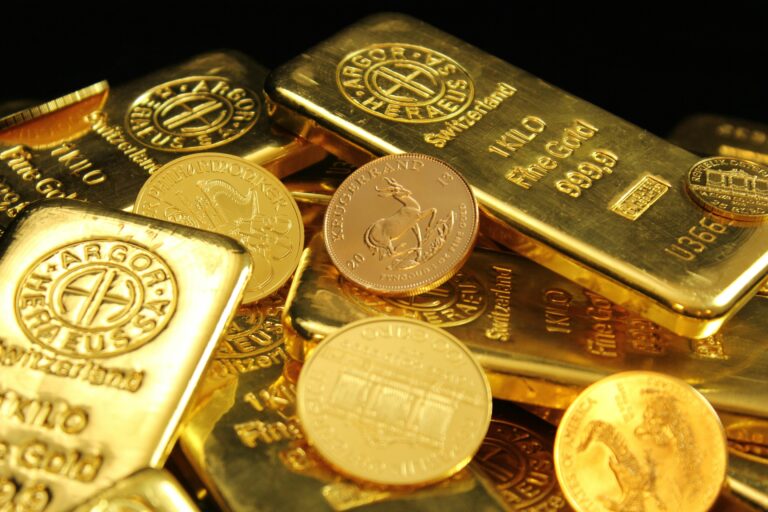
This article delves into the recent shifts in gold’s performance, particularly its decline amidst evolving global trade dynamics. We’ll explore why your gold investment might be underperforming and how to adapt your wealth preservation strategies, ensuring compatibility with diversified financial goals. Discover resilient approaches to secure your financial future, even when traditional safe havens face unexpected headwinds.
For many years, gold has stood as a steadfast symbol of stability, a beacon for investors seeking refuge during turbulent economic times. It has traditionally been considered a prime asset for wealth preservation, a hedge against inflation, and a reliable diversification tool. However, recent market movements have presented a different narrative, causing many to question the immediate role and reliability of their gold investment strategies.
The precious metal experienced a notable drop, extending its decline after posting its first weekly fall in months, as progress on a significant US-China trade deal began to materialize. This development, as reported by Bloomberg.com on October 26, 2025, significantly eased the demand for haven assets. For investors accustomed to gold’s upward trajectory during periods of geopolitical uncertainty and economic risk, this shift prompts a crucial re-evaluation.
Understanding Gold Investment Fundamentals
Before diving into the specifics of the recent downturn, it’s essential to revisit the foundational reasons why gold has long held a place in investment portfolios. A solid understanding of these principles is key to navigating its current volatility and refining your gold investment approach.
Gold as a Traditional Safe Haven
The concept of gold as a safe haven asset is deeply rooted in financial history. When political instability, economic crises, or widespread market fear grips the global economy, investors often flock to gold. This rush is driven by its perceived intrinsic value and its tendency to retain or even increase in value when other assets, such as stocks and bonds, falter. It acts as an emergency store of wealth, offering a sense of security when the future seems uncertain.
This psychological aspect of gold investment is powerful. During times of crisis, fiat currencies can depreciate rapidly, and government bonds might carry increased risk. Gold, being a tangible asset with a finite supply, offers an alternative that doesn’t depend on the creditworthiness of any single government or institution.
The Role of Gold as an Inflation Hedge
Another primary appeal of gold investment lies in its historical ability to act as a hedge against inflation. When the purchasing power of currency erodes due to rising prices, gold has often maintained its value or even appreciated. This is because gold cannot be printed like fiat money, making its supply relatively stable compared to an expanding money supply that can lead to inflation.
Investors often look to gold to protect their wealth from the corrosive effects of inflation, especially during periods when central banks are implementing expansionary monetary policies. While its effectiveness as an inflation hedge can vary in the short term, over the long run, many financial experts consider it a valuable tool for preserving real wealth.
Gold for Portfolio Diversification
Diversification is a cornerstone of sound investment strategy, and gold plays a significant role in achieving it. Gold often exhibits a low or even negative correlation with other traditional asset classes like stocks and bonds. This means that when stocks are falling, gold might be rising, and vice-versa.
By including gold in a diversified portfolio, investors aim to reduce overall portfolio volatility and risk. It helps to smooth out returns and provide a cushion during market downturns, making the entire portfolio more resilient. A thoughtful gold investment allocation can therefore contribute to a more stable and robust financial plan.
The Recent Dip in Gold Investment: Why the Change?
The recent decline in gold prices has surprised some investors who expected its upward trend to continue. Understanding the catalysts behind this shift is crucial for adapting your gold investment strategy effectively.
Easing US-China Trade Tensions
As highlighted by Bloomberg.com, a major contributing factor to gold’s recent drop was the significant progress made on a US-China trade deal. For an extended period, the trade dispute between these two global economic powerhouses fueled uncertainty, sparking fears of a global economic slowdown and prompting investors to seek safety in assets like gold.
When the prospect of an agreement became more concrete, and a sweeping deal appeared imminent, the perceived need for a haven asset diminished. The reduction in geopolitical and economic risk meant that investors felt more comfortable moving capital back into riskier, growth-oriented assets like equities, thereby reducing demand for gold.
“Gold fell — after posting its first weekly drop since mid-August — as progress on a US-China trade deal sapped haven demand. Bullion declined as much as 1.4% to near $4,053 an ounce. The US and China signaled they were nearing completion of a sweeping deal…”
Bloomberg.com, October 26, 2025
This illustrates a fundamental principle: gold’s price is heavily influenced by investor sentiment regarding risk. When global risks recede, so too does some of the urgency for gold investment.
Other Contributing Factors to Gold Investment Pressure
While trade progress was a primary driver, other macroeconomic factors often play a role in gold price movements:
- Stronger Dollar: Gold is typically priced in US dollars. A stronger dollar makes gold more expensive for holders of other currencies, potentially dampening demand. Conversely, a weaker dollar can make gold more attractive.
- Rising Interest Rates: When interest rates rise, the opportunity cost of holding non-yielding assets like gold increases. Investors might prefer to put their money into bonds or savings accounts that offer guaranteed returns, rather than holding gold which offers no dividend or interest.
- Equity Market Performance: A robust stock market can draw capital away from gold. When equities are performing well, investors might prioritize growth over safety, reducing their allocation to traditional safe havens.
The Enduring Appeal of Gold Investment
Despite recent fluctuations, the allure of gold investment remains strong for many. Its historical track record and unique characteristics continue to make it a valuable component of a comprehensive wealth management strategy.
Historical Performance During Crises
Gold’s reputation as a crisis asset is well-earned. Throughout various global financial upheavals, from the 2008 financial crisis to the economic uncertainties of recent years, gold has often demonstrated resilience, sometimes even surging in value when other markets were in freefall. This counter-cyclical behavior is a primary reason why it’s considered a reliable protector of wealth during times of extreme stress.
For investors focused on long-term wealth preservation and protection against unforeseen systemic risks, the historical performance of gold investment during crises offers compelling evidence of its utility.
Tangible Asset and Store of Value
In an increasingly digital world, the tangibility of gold holds significant appeal. Unlike digital assets or paper currencies, physical gold is a concrete asset that you can hold. This tangibility provides a psychological comfort and a sense of enduring value that isn’t dependent on digital systems or the solvency of financial institutions.
Moreover, gold has functioned as a universal store of value for thousands of years, predating modern financial systems. Its acceptance across cultures and economies underscores its fundamental role as a reliable medium for preserving wealth over generations.
The ‘Debasement’ Trade and Currency Protection
One of the key arguments for gold investment, often referred to as the ‘debasing trade’, revolves around protecting wealth from currency devaluation. When central banks engage in quantitative easing or print large amounts of money, the supply of currency increases, potentially leading to its devaluation relative to tangible assets. Gold, with its limited supply, is seen as a hedge against such monetary policies.
Investors concerned about the long-term purchasing power of their fiat currency often turn to gold to shield their assets from what they perceive as currency debasement. This perspective underscores gold’s role as a counterweight to potentially inflationary monetary environments.
Diverse Avenues for Gold Investment
Investing in gold isn’t limited to buying physical bars and coins. A variety of instruments exist, each offering different advantages and considerations for your gold investment strategy.
Physical Gold: Bullion and Coins
The most direct form of gold investment is owning physical gold in the form of bullion bars or coins. This method offers complete ownership and eliminates counterparty risk. However, it comes with practical considerations such as storage costs (safe deposit boxes, secure vaults) and insurance. Authenticity is also paramount, necessitating purchase from reputable dealers.
- Bullion Bars: Available in various weights, from small grams to kilogram bars. They typically carry a lower premium over the spot price of gold compared to coins.
- Gold Coins: Popular options include American Eagles, Canadian Maples, and South African Krugerrands. While they also contain pure gold, their collectibility or numismatic value can sometimes add a premium beyond their intrinsic metal value.
For those prioritizing tangibility and absolute control over their asset, physical gold remains the preferred gold investment choice.
Gold ETFs (Exchange-Traded Funds)
Gold ETFs provide an accessible and liquid way to gain exposure to gold prices without the complexities of owning and storing physical metal. These funds hold physical gold on behalf of investors, and their shares trade on stock exchanges like regular stocks.
Key advantages of Gold ETFs for gold investment include:
- Liquidity: Easily bought and sold throughout the trading day.
- Convenience: No need to worry about storage, insurance, or authenticity.
- Lower Entry Barrier: Can be bought in smaller denominations than physical bars.
- Diversification: Some ETFs track baskets of precious metals, offering broader exposure.
However, it’s important to understand that owning an ETF share is not the same as direct ownership of physical gold; it represents a claim on the gold held by the fund. Investors should research the specific fund’s structure, fees, and the physical location of its gold holdings.
Gold Mining Stocks
Investing in the shares of gold mining companies offers an indirect way to participate in the gold market. The profitability of these companies is directly tied to the price of gold, but also influenced by their operational efficiency, management quality, geopolitical risks in mining regions, and exploration success.
This gold investment avenue can offer higher leverage to gold price movements compared to direct gold ownership, but also comes with additional business-specific risks. Dividends may also be a possibility, unlike direct gold holdings.
Gold Futures and Options
For sophisticated investors, gold futures and options contracts offer another way to speculate on gold price movements. These are derivative instruments that allow investors to agree to buy or sell gold at a specific price on a future date. They offer significant leverage but come with substantial risk and are not typically recommended for novice investors.
These instruments are primarily used by institutional investors and experienced traders for hedging existing positions or for speculative purposes.
Gold-Backed Digital Assets
The advent of blockchain technology has introduced new forms of gold investment, such as gold-backed digital tokens. These cryptocurrencies are designed to represent a specific amount of physical gold held in reserve, combining the tangibility of gold with the transferability and divisibility of digital assets. They aim to offer a more liquid and accessible way to own fractional amounts of gold.
While still a relatively new frontier, these digital assets are gaining traction as an innovative approach to gold investment, bridging traditional assets with modern technology.
The Role of Jewelers and Industrial Demand
Beyond investment, a significant portion of gold demand comes from the jewelry industry and various industrial applications, including electronics, dentistry, and medical devices. “Jewelers Cashed In,” as mentioned in the original source, highlights this aspect. Consumer demand for jewelry, particularly in key markets, can significantly impact gold prices, acting as both a floor and a catalyst for price movements.
Understanding these diverse demands provides a more complete picture of the factors influencing gold’s market value, extending beyond purely financial investment decisions.
Strategic Considerations for Your Gold Investment Portfolio
Given gold’s recent volatility, a thoughtful and strategic approach to its inclusion in your portfolio is more critical than ever. It’s not just about buying gold, but about integrating it intelligently.
Determining the Right Gold Allocation
There’s no one-size-fits-all answer for how much gold should be in a portfolio. A common guideline suggests an allocation between 5% and 15% of your total portfolio, depending on your risk tolerance, investment horizon, and economic outlook. Those with a higher concern for systemic risks or inflation might lean towards the higher end.
The goal is to provide a degree of protection and diversification without overwhelming the portfolio with an asset that doesn’t generate income or consistently offer capital appreciation in all market conditions. A carefully considered gold investment allocation is key.
Long-Term Versus Short-Term Views on Gold
Gold investment is often best viewed through a long-term lens. While short-term fluctuations can be significant, gold’s fundamental role as a store of value and an inflation hedge plays out over decades, not days or weeks. Short-term trading in gold can be highly speculative and risky.
For wealth preservation, investors typically hold gold for extended periods, allowing it to act as an anchor during various economic cycles. This long-term perspective helps to mitigate the impact of temporary price dips, like the recent one.
Gold’s Correlation with Other Assets
Regularly reviewing gold’s correlation with your other assets is vital. While gold generally has a low or negative correlation with stocks and bonds, these relationships can shift over time. Understanding how gold moves in relation to the rest of your portfolio helps ensure it is fulfilling its intended role as a diversifier.
If gold starts moving in lockstep with other assets during a particular market environment, its diversification benefits might be temporarily diminished, warranting a review of your gold investment strategy.
Navigating Volatility and Rethinking Your Gold Investment Strategy
Market volatility can be unsettling, but it also presents an opportunity to review and strengthen your investment framework. The recent gold dip is a prime example of when to re-evaluate without panic.
Avoiding Panic Selling
One of the biggest mistakes investors make during a downturn is panic selling. Reacting emotionally to short-term price movements can lock in losses and prevent you from benefiting from potential rebounds. Instead, take a step back and assess the fundamental reasons for your gold investment.
If your long-term objectives for holding gold (e.g., inflation hedge, crisis protection) remain valid, then a temporary dip, especially one triggered by positive news like trade progress, might not warrant a complete overhaul of your strategy. Patience is often a virtue in precious metal investing.
Rebalancing Your Portfolio
Market fluctuations naturally cause your asset allocation to drift. A dip in gold prices might mean your gold allocation has fallen below your target percentage. This is an opportune time to rebalance. Rebalancing involves selling assets that have grown to bring your portfolio back to your desired allocation, or buying assets that have fallen to restore their target weight.
For gold investment, rebalancing ensures that it continues to serve its intended role in your portfolio’s risk profile, rather than becoming either under-allocated or over-allocated due to market movements.
Considering Dollar-Cost Averaging
For investors looking to increase their gold exposure or maintain a consistent position, dollar-cost averaging can be an effective strategy. This involves investing a fixed amount of money at regular intervals, regardless of gold’s price. When prices are low, your fixed amount buys more gold; when prices are high, it buys less.
This approach helps to smooth out the average purchase price over time and reduces the risk associated with trying to time the market. It’s a disciplined approach to gold investment that can be particularly useful during periods of volatility.
Reviewing Your Original Reasons for Gold Investment
Take this moment of price adjustment to reflect on why you initially decided to include gold in your portfolio. Was it primarily as a hedge against inflation? Protection during economic crises? Portfolio diversification? Or perhaps a speculation on geopolitical tensions?
If your core reasons remain valid, then the recent price action, influenced by a specific external factor like trade progress, may simply be a short-term blip in a longer-term strategy. If, however, your circumstances or market outlook have fundamentally changed, it might be time to adjust your gold investment strategy accordingly.
Diversifying Beyond Gold: Other Safe Havens
While gold is a prominent safe haven, it’s not the only one. A truly robust wealth preservation strategy might consider diversifying across various safe-haven assets. These could include:
- Treasury Bonds: Government bonds from highly stable economies are often considered safe havens, particularly during periods of deflationary pressure or flight to quality.
- Certain Currencies: Currencies like the Swiss Franc or Japanese Yen have historically been seen as safe havens during global turmoil.
- Real Estate: While less liquid, certain types of real estate can act as a store of value, especially during periods of high inflation.
A diversified approach to safety ensures that your portfolio isn’t solely reliant on the performance of a single asset class, even one as historically reliable as gold investment.
Factors Influencing Gold Prices Beyond Trade
While the US-China trade progress was a significant recent factor, the price of gold is influenced by a complex interplay of global economic, financial, and geopolitical forces. A holistic understanding of these factors is crucial for any serious gold investment strategy.
Interest Rates and Opportunity Cost
Interest rates play a critical role in determining gold’s attractiveness. Gold is a non-yielding asset; it doesn’t pay interest or dividends. When real interest rates (nominal rates minus inflation) are high, the opportunity cost of holding gold increases. Investors might prefer to put their money into bonds or savings accounts that offer a positive real return.
Conversely, when real interest rates are low or negative, the opportunity cost of holding gold decreases, making it a more appealing store of value. Central bank monetary policy, therefore, has a profound impact on gold investment flows.
Inflation Expectations
The market’s expectation of future inflation is another key driver. If investors anticipate rising inflation, they may turn to gold as a hedge, driving up its price. If inflation expectations are low or deflationary pressures are dominant, gold’s appeal as an inflation hedge diminishes.
Monitoring inflation indicators and central bank commentary on price stability is essential for predicting gold’s movements. Periods of high inflation often correlate with strong gold investment performance.
Currency Strength: The US Dollar
As gold is typically denominated in US dollars, there is often an inverse relationship between the strength of the dollar and the price of gold. A stronger dollar makes gold more expensive for international buyers holding other currencies, which can suppress demand. Conversely, a weaker dollar makes gold cheaper, potentially boosting demand.
Movements in the US Dollar Index (DXY) are closely watched by gold investors as a key indicator. Global currency fluctuations can significantly impact the profitability of gold investment for non-US dollar holders.
Central Bank Policies and Holdings
Central banks are major holders of gold, and their buying or selling activities can have a substantial impact on the market. Many central banks view gold as a strategic reserve asset, a bulwark against financial instability, and a diversification tool for their foreign exchange reserves.
Trends in central bank gold purchases or sales are closely monitored. Increased buying from central banks, particularly those from emerging economies, can provide significant support to gold prices and signal a broader shift in global financial strategy and increased confidence in gold investment.
Supply and Demand Dynamics
Like any commodity, gold prices are ultimately influenced by the forces of supply and demand. Supply comes from mining output, recycling, and official sector sales. Demand stems from jewelry, industrial use, investment (bars, coins, ETFs), and central bank purchases.
Disruptions to mining operations, new gold discoveries, changes in recycling rates, or shifts in consumer demand for jewelry (especially from large markets) can all affect the delicate balance between supply and demand, thus influencing the price of gold investment.
The Future Outlook for Gold Investment
Despite recent volatility, gold’s fundamental characteristics suggest it will continue to play an important role in investment portfolios for the foreseeable future. However, its performance will remain subject to a dynamic global environment.
Continued Role as a Hedge Against Uncertainty
While the immediate future might see reduced haven demand due to specific geopolitical de-escalations, the world is rarely devoid of new uncertainties. Future trade disputes, geopolitical tensions in other regions, unexpected economic shocks, or inflationary pressures could quickly reignite demand for gold investment.
Gold’s intrinsic value as an ultimate store of wealth means it will likely retain its status as a go-to asset when confidence in traditional financial systems or currencies wanes.
Impact of Global Economic Shifts
The global economic landscape is constantly evolving. Factors such as the pace of economic growth in major economies, the effectiveness of fiscal and monetary policies, and the dynamics of international trade will all continue to shape gold’s trajectory. A slowdown in global growth, for instance, could lead to more accommodative monetary policies, which might be favorable for gold investment.
Conversely, sustained strong economic growth and rising interest rates could reduce its appeal, prompting investors to reallocate funds to growth-oriented assets.
The Evolution of Money and Digital Assets
The rise of digital currencies and gold-backed digital assets represents an interesting frontier for gold investment. As the financial world digitizes, gold might find new avenues for liquidity and accessibility through tokenization, potentially broadening its appeal to a new generation of investors.
However, competition from other digital assets that aim to offer similar stability or store-of-value functions could also influence gold’s future positioning. It is a space worth watching closely for its implications on traditional gold investment.
Conclusion: Adapting Your Gold Investment Strategy for Resilience
The recent dip in gold prices, spurred by positive developments in US-China trade relations, serves as a powerful reminder that no asset, not even gold, is immune to market dynamics. However, this should not lead to a wholesale dismissal of gold’s utility in a well-diversified portfolio.
Instead, it offers an opportunity for investors to critically review their gold investment strategy. Understand the multifaceted factors influencing its price, distinguish between short-term noise and long-term trends, and ensure your allocation aligns with your personal financial goals and risk tolerance. Whether through physical holdings, ETFs, or other instruments, a thoughtful approach to gold investment remains a cornerstone of robust wealth preservation.
By staying informed, avoiding emotional reactions, and strategically rebalancing, you can leverage gold’s unique properties to enhance the resilience of your portfolio, ensuring it continues to serve as a valuable component on your journey to wealth.