

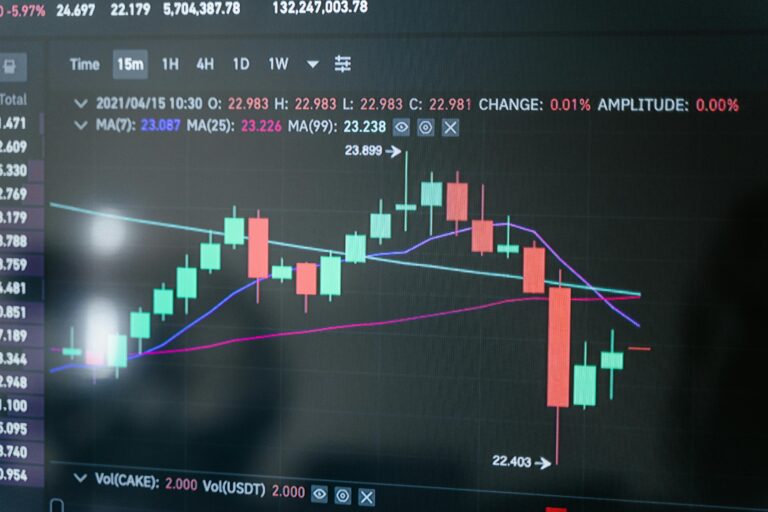
The recent unprecedented $19 billion liquidation event in the cryptocurrency market, triggered by significant global trade tensions, has undoubtedly caused widespread investor unease. This article provides a comprehensive guide for navigating such intense crypto market volatility, offering strategies to protect and grow your wealth in a rapidly changing digital asset landscape, suitable for both new and experienced investors.
Understanding the Immediate Impact of Crypto Market Volatility
The cryptocurrency market recently experienced a staggering single-day wipeout, with over $19 billion liquidated after a major global power announced a 100% tariff on critical software imports from another economic giant. This shock move, as reported by The Economic Times, sent digital assets into a dramatic tailspin, triggering massive sell-offs and liquidations across the board. The event underscored the extreme sensitivity of the digital asset market to macroeconomic and geopolitical shifts, leading to significant crypto market volatility.
Over 1.6 million traders saw their positions forcibly closed in a mere 24 hours, with more than $7 billion of these liquidations occurring within just one hour of the announcement. This unprecedented scale of loss highlights the inherent risks associated with leveraged trading in a highly volatile environment. Such rapid unwinding of positions can create a cascading effect, where declining prices trigger more liquidations, further intensifying the downward spiral and exacerbating crypto market volatility.
Major cryptocurrencies bore the brunt of this downturn. Bitcoin, the leading digital asset, saw a significant percentage decline, struggling to hold crucial support levels around the $120,000 mark before briefly testing $102,000. Ethereum, the second-largest cryptocurrency, plunged even more sharply, experiencing a double-digit percentage drop. Other prominent tokens like XRP and Binance Coin also suffered steep declines, eroding billions from their market capitalizations. This widespread correction demonstrated that even established digital assets are not immune to the forces driving significant crypto market volatility.
The catalyst for this market turmoil was a direct response to escalating trade tensions. Specifically, the move came after one nation decided to impose export restrictions on rare earth minerals—key inputs for global manufacturing and technology production—a step described by the opposing nation as “extraordinarily aggressive.” The retaliatory tariffs extended beyond just physical goods to include “any critical software,” signaling a broadening scope of economic conflict with far-reaching implications for global technology supply chains and, consequently, the entire digital asset ecosystem. Such policy shifts are powerful drivers of crypto market volatility.
Understanding what constitutes a liquidation event is crucial for investors. In the context of leveraged trading, liquidation occurs when a trader’s position, funded partly by borrowed capital, is automatically closed by the exchange. This happens when the value of their collateral falls below a certain threshold, unable to cover potential losses. The suddenness and magnitude of the recent liquidations serve as a stark reminder of the amplified risks involved when navigating periods of high crypto market volatility with leverage.
The focus for many market participants immediately turned to potential counterparty exposure and the risk of broader market contagion. Some estimates, cited by industry traders, suggested that total liquidations might have exceeded $30 billion, indicating that the reported figures could be an understatement given the staggered reporting mechanisms of various exchanges. This uncertainty further fuels investor anxiety and contributes to the overall crypto market volatility.
The Deeper Roots of Crypto Market Volatility
While specific events like tariff announcements can trigger immediate plunges, crypto market volatility is a multifaceted phenomenon rooted in several key underlying factors. Digital assets operate within a global, 24/7 market, making them susceptible to a constant stream of influences that traditional markets, with their fixed trading hours, might absorb differently. Understanding these fundamental drivers is essential for any investor seeking to navigate the digital asset space effectively.
Macroeconomic Factors and Global Trade Dynamics
Global economic indicators, interest rate changes, inflation data, and, crucially, international trade relations play a significant role in shaping investor sentiment towards risk assets, including cryptocurrencies. When there is uncertainty in the traditional financial system, investors often pull back from higher-risk investments. The recent tariff news is a prime example of how geopolitical tensions directly translate into immediate and severe crypto market volatility. Trade wars can disrupt global supply chains, impact corporate earnings, and lead to broader economic slowdowns, all of which create an environment of caution among investors and heighten sensitivity to market shifts.
Economic reports, such as inflation rates or employment figures, can cause investors to reassess the attractiveness of various asset classes. If inflation is high, for instance, some might view cryptocurrencies as a hedge, while others might sell off risk assets to hold more stable investments. This constant re-evaluation based on macroeconomic data contributes to the inherent crypto market volatility. Furthermore, the interconnectedness of global economies means that an economic downturn in one major region can quickly ripple across the world, impacting digital asset prices regardless of their specific utility or technology.
Regulatory Landscape and Policy Changes
The regulatory environment for cryptocurrencies is still nascent and evolving rapidly across the globe. Announcements from governments regarding taxation, classification of digital assets, or restrictions on trading can cause significant market swings. The prospect of stricter regulations or outright bans in certain jurisdictions can inject fear into the market, leading to rapid price adjustments as investors reposition themselves. This regulatory uncertainty is a constant source of crypto market volatility.
Conversely, favorable regulatory news, such as the approval of spot altcoin exchange-traded funds (ETFs) in major economies, can act as a powerful catalyst for growth and reduce perceived risks, influencing crypto market volatility positively. The anticipation of such approvals can build market optimism, while delays or rejections can cause significant corrections. The lack of a uniform global regulatory framework means that different regions can have vastly different approaches, creating a complex and sometimes unpredictable landscape for digital asset investors.
Market Sentiment and News Cycles
Cryptocurrency markets are heavily influenced by news and social media. A single post from an influential figure, a major hack on an exchange, a significant technological development, or even a widely circulated rumor can send prices soaring or plummeting within minutes. The rapid dissemination of information, often without thorough verification, contributes to quick shifts in market sentiment. This “herd mentality,” where investors react in unison to news, amplifies price movements and is a significant driver of day-to-day crypto market volatility.
Social media platforms, specialized news outlets, and online forums often act as echo chambers, intensifying positive or negative narratives around certain assets. This can lead to phenomena like “pump and dump” schemes or sudden waves of “fear, uncertainty, and doubt” (FUD) that are not always based on fundamental analysis. Navigating this information-rich but often noisy environment requires a critical approach to sources and a strong filter for speculative information, especially when attempting to gauge genuine shifts in crypto market volatility versus temporary hype.
Inherent Characteristics of Digital Assets
Beyond external factors, digital assets possess inherent characteristics that contribute to their crypto market volatility. They are a relatively new asset class, lacking the long historical data and established valuation models of traditional investments like stocks or bonds. This makes it harder for investors to gauge intrinsic value, leading to prices being more influenced by speculation and sentiment. Many cryptocurrencies have smaller market capitalizations compared to established financial instruments, meaning that even relatively small trades can have a disproportionate impact on price.
The speculative nature of much of the crypto market also means that prices are often driven by expectations of future utility rather than current fundamental value. This can lead to rapid price appreciation based on hype, followed by sharp corrections when those expectations are not immediately met or when broader market sentiment shifts. The relatively low liquidity of some altcoins further amplifies their crypto market volatility, as large buy or sell orders can move prices dramatically. Understanding these intrinsic characteristics is key to appreciating why digital assets experience such pronounced price swings.
The Psychological Toll of Sudden Plunges on Crypto Investors
Experiencing a significant drop in investment value, as witnessed in the recent $19 billion wipeout, can be incredibly taxing on an investor’s psychology. The emotional rollercoaster from optimism and excitement to fear, uncertainty, and doubt (FUD) is a common, yet powerful, driver of irrational decisions during periods of high crypto market volatility. Understanding these psychological pressures is the first step towards developing a more resilient investment approach.
The Trap of Emotional Decision-Making
When markets plunge, the immediate instinct for many is to panic. This panic often leads to impulsive selling, driven by an overwhelming desire to stop further losses. This phenomenon, often termed “capitulation,” occurs when investors give up hope and sell their holdings at or near the lowest points, frequently missing out on subsequent recoveries. Such emotional selling locks in losses that might have been temporary. Conversely, during bull runs, the “fear of missing out” (FOMO) can lead to buying assets at inflated prices without sufficient due diligence, exposing investors to greater risk when the inevitable corrections occur. Both scenarios underscore the importance of emotional discipline in navigating crypto market volatility.
These emotional responses are hardwired into human psychology, making it incredibly difficult to remain rational when significant amounts of money are on the line. The constant availability of real-time price data and news feeds exacerbates this, creating a continuous loop of emotional triggers. A disciplined investor learns to recognize these emotional traps and employs strategies to counteract them, rather than succumbing to the urge to react impulsively to every market tremor or surge in crypto market volatility.
Overcoming Cognitive Biases
Investors are prone to various cognitive biases that can impair judgment during stressful market conditions. For example, confirmation bias might lead an investor to selectively seek out news that confirms their existing bearish sentiment during a downturn, ignoring contrary evidence that suggests a potential recovery. Anchoring bias can cause them to fixate on a previous high price as the “true” value of an asset, leading to frustration and regret when the asset trades significantly below that level. The sunk cost fallacy might compel an investor to hold onto a losing asset, hoping it will recover, rather than cutting losses and reallocating capital.
Recognizing these biases is the first crucial step towards making more rational decisions. Developing a systematic approach to investing, such as setting clear entry and exit strategies and sticking to them, helps counteract these innate human tendencies to panic or become overly euphoric in the face of crypto market volatility. By consciously identifying when these biases might be influencing decisions, investors can make more objective choices that align with their long-term financial goals, rather than short-term emotional swings.
The Importance of a Rational, Disciplined Approach
To truly build wealth in the long term, especially in a dynamic environment like the crypto market, a rational and disciplined approach is paramount. This means having a predefined investment strategy and rigorously sticking to it, rather than reacting to every news headline or daily price fluctuation. It involves understanding your personal risk tolerance before you invest a single dollar and mentally preparing yourself for the inevitable ups and downs that characterize crypto market volatility.
Cultivating a calm demeanor and consistently focusing on your long-term financial goals can significantly mitigate the psychological toll of market volatility. This might involve setting up automated investments, reviewing your portfolio only at scheduled intervals, and avoiding constant chart-watching. By creating distance from the immediate emotional stimuli of price movements, investors can make more thoughtful decisions that serve their ultimate objective of building lasting wealth, rather than being swayed by the temporary whims of the market.
Effective Strategies for Navigating Crypto Market Volatility
While crypto market volatility can be daunting, investors are not powerless. Implementing sound financial strategies can help mitigate risks, preserve capital, and even turn downturns into opportunities for long-term growth. The key is to approach the market with a well-thought-out plan, rather than reacting impulsively to every surge or dip.
1. Diversification: Spreading Your Bets to Mitigate Crypto Market Volatility
One of the foundational principles of sound investment is diversification. This means not putting all your investment capital into a single asset or asset class. Within the crypto space, diversification could involve holding a mix of established cryptocurrencies (like Bitcoin and Ethereum), newer promising altcoins with different use cases, and stablecoins to hedge against extreme price swings. More broadly, it means allocating only a sensible portion of your overall wealth to digital assets, complementing it with traditional assets like stocks, bonds, and real estate. This reduces your overall portfolio’s exposure to the inherent crypto market volatility.
If one asset class or individual cryptocurrency experiences a downturn, other holdings may perform differently, buffering your overall portfolio from severe losses. Diversification is not about eliminating risk entirely, but about managing it by spreading it across various assets that may not move in perfect correlation. A well-diversified portfolio is more resilient to unexpected shocks and sudden periods of crypto market volatility.
2. Dollar-Cost Averaging (DCA): A Consistent Approach to Reduce Crypto Market Volatility Impact
Dollar-cost averaging (DCA) is a powerful strategy for mitigating the impact of crypto market volatility. Instead of investing a large lump sum at once, which carries the significant risk of buying at a market peak, DCA involves investing a fixed amount of money at regular intervals (e.g., weekly or monthly) regardless of the asset’s price. This strategy ensures that you automatically buy more units when prices are low and fewer units when prices are high, effectively averaging out your purchase price over time.
This systematic approach removes the emotional element of trying to “time the market,” which is notoriously difficult even for seasoned professionals. By committing to a consistent investment schedule, you are less likely to be swayed by fear during downturns or greed during speculative rallies. DCA simplifies the investment process and helps to smooth out the entry points into a market characterized by high crypto market volatility.
3. Maintaining a Long-Term Perspective Amidst Crypto Market Volatility
For those aiming to build substantial wealth, a long-term perspective is indispensable, especially when confronting crypto market volatility. Short-term price swings, while alarming and widely reported, often represent noise rather than fundamental shifts in value. As suggested by market experts like Edul Patel, CEO of Mudrex, historical data often shows that significant corrections can be followed by robust relief rallies. Focusing on the underlying technology, adoption rates, and the long-term potential of digital assets, rather than daily fluctuations, allows investors to weather temporary storms.
This mindset encourages holding through difficult periods, avoiding the trap of panic selling at the bottom, and benefiting from potential future growth as the market matures and technology advances. True wealth creation often comes from compounding returns over many years, which requires the discipline to look beyond immediate price action and trust in a well-researched long-term vision, even in the face of intense crypto market volatility.
4. Robust Risk Management: Only Invest What You Can Afford to Lose
This advice cannot be overstated: only invest capital that you are prepared and able to lose entirely. The high degree of crypto market volatility means that significant, even total, losses are a real possibility. Defining your personal risk tolerance before investing helps set realistic expectations and prevents emotional reactions like panic selling during downturns. For those using more advanced trading strategies, setting stop-loss orders can limit potential losses on individual trades, although this carries its own risks in highly volatile markets due to potential slippage and execution at unexpected prices.
Ensure your crypto investments do not jeopardize your essential financial stability, your emergency fund, or funds designated for crucial life goals. A prudent approach involves allocating only a small percentage of your overall investment portfolio to cryptocurrencies, proportionate to your comfort level with extreme fluctuations. This foundational principle of risk management is critical for sustaining your investment journey through periods of pronounced crypto market volatility.
5. Portfolio Rebalancing: Keeping Your Strategy in Check
Regularly rebalancing your portfolio involves periodically adjusting your asset allocation back to your original target percentages. For example, if your crypto holdings have performed exceptionally well, they might now constitute a larger percentage of your portfolio than you initially intended, thereby increasing your overall risk exposure to crypto market volatility. Rebalancing would involve selling a portion of your now over-weighted crypto to buy other assets, or vice versa if crypto has significantly underperformed.
This systematic approach helps maintain your desired risk profile and ensures you are not over-exposed to any single asset class due to market movements. Rebalancing helps you “buy low and sell high” in a disciplined manner, trimming profits from strong performers and adding to underperformers that still fit your long-term thesis. It’s a proactive way to manage risk and maintain control over your investment strategy amidst changing market conditions and persistent crypto market volatility.
6. Staying Critically Informed and Educated
The digital asset space is constantly evolving, with new technological developments, regulatory changes, and broader economic trends emerging continuously. Staying informed about these factors is vital. However, it’s equally important to filter out noise, speculation, and unsubstantiated rumors. Rely on reputable news sources, academic research, and well-vetted analysis from trusted experts. Understand the fundamental utility, technology, and economic models behind the cryptocurrencies you invest in.
This deeper understanding provides conviction during periods of intense crypto market volatility and helps avoid emotional reactions to unsubstantiated claims or sensational headlines. Continuous education equips you to make informed decisions, distinguish between genuine innovation and speculative hype, and adapt your strategy intelligently rather than reactively. A well-informed investor is a more resilient investor.
7. Implementing Strong Security Measures for Digital Assets
While not directly related to price movements, the security of your digital assets is absolutely paramount in wealth preservation. The adage “not your keys, not your coins” rings true, emphasizing the importance of holding your own private keys for significant holdings, typically through hardware wallets. Utilize strong, unique passwords and enable two-factor authentication (2FA) on all exchanges, wallets, and accounts. Be extremely wary of phishing attempts, malicious links, and scams that aim to steal your digital assets.
A robust security posture protects your capital from theft, which is just as damaging, if not more so, than market downturns. Ensuring your assets are secure provides peace of mind and allows you to focus on your investment strategy amidst crypto market volatility, rather than constantly worrying about potential compromises. It’s an essential component of any responsible digital asset investment plan.
8. Cultivating Emotional Discipline: The Investor’s Edge Against Crypto Market Volatility
Perhaps the most challenging, yet crucial, strategy is cultivating emotional discipline. Market fluctuations, particularly intense crypto market volatility, are designed to test your resolve, often making you feel like you are making the wrong decision. Developing a strong mental framework that prioritizes your long-term plan over short-term fears or greed is vital. This involves recognizing your own emotional responses to market movements and developing strategies to mitigate their impact on your decision-making.
Practice mindfulness, take regular breaks from constantly checking charts and news feeds, and remember that market cycles, including significant corrections, are a natural and recurring part of investing. A calm, rational mind is your greatest asset in navigating turbulent markets and adhering to your investment plan, ultimately enhancing your ability to generate wealth despite pronounced crypto market volatility.
Analyzing the Opportunity in Crypto Market Volatility
While a $19 billion wipeout can instill widespread fear and unease, seasoned investors often view significant market corrections as presenting unique opportunities. The inherent crypto market volatility, though challenging, can create advantageous entry points for those with a long-term vision, conviction, and a well-defined strategy. Understanding these potential opportunities is key to turning adverse events into strategic gains.
The “Buy the Dip” Mentality for Convicted Investors
When prices drop sharply, quality assets become cheaper. For investors who have thoroughly researched and maintain strong conviction in the long-term potential of specific cryptocurrencies, a major downturn can be an opportune moment to “buy the dip.” This strategy involves purchasing more of an asset when its price falls significantly, with the expectation that it will recover and appreciate over time. However, this requires both conviction in the asset’s future and available capital to deploy during these stressful periods.
It’s important to note that “buying the dip” is not about catching the absolute bottom, which is nearly impossible. Instead, it’s about systematically accumulating quality assets at a discount during periods of heightened crypto market volatility, confident in their future growth. This approach requires patience and the ability to withstand potential further short-term declines. For those employing dollar-cost averaging, a dip can simply mean your regular investment buys more units for the same amount of money, improving your average purchase price.
Identifying Fundamentally Strong Assets During High Crypto Market Volatility
Not all cryptocurrencies are created equal, and market downturns often reveal this disparity. During a significant correction, weak projects with little genuine utility or speculative foundations often fail or see disproportionately severe declines, while those with strong fundamentals, active development teams, real-world use cases, and robust communities tend to demonstrate greater resilience and recover more effectively. This period of intense crypto market volatility can act as a natural selection process, weeding out less viable projects.
Investors should use these times to critically evaluate their holdings and identify which projects have the staying power and innovation to thrive in the long run. Focusing on these fundamentally strong assets can significantly improve the chances of long-term success and reduce exposure to projects that might not survive protracted bear markets. It’s an opportunity to refine your portfolio to only the most promising contenders.
Potential for Capital Rotation and New Inflows
Market experts, like Edul Patel, CEO of Mudrex, have noted that such declines can create attractive entry opportunities. He suggests that with traditional assets, such as gold, potentially trading in overbought territory, there could be an anticipated capital rotation into cryptocurrencies. This implies that some investors might strategically shift funds from what they perceive as fully valued or overvalued traditional assets into digital assets that have recently corrected, seeking higher growth potential.
Furthermore, the market is anticipating the potential approval of dozens of spot altcoin exchange-traded funds (ETFs) in major economies. Such approvals could open doors for substantial fresh institutional and retail capital to enter the markets, providing new liquidity and potentially driving renewed momentum that could offset some of the current crypto market volatility. These anticipated inflows could serve as significant catalysts for future price appreciation, making current low prices attractive.
Historical Precedent for Recovery from Crypto Market Volatility
Historical analysis of the cryptocurrency market reveals recurring patterns of significant corrections followed by strong recoveries. As highlighted by Patel, October corrections observed between 2017 and 2022 have often been followed by relief rallies of up to 21%. While past performance is never an indicator or guarantee of future results, this historical context can provide a degree of reassurance that market cycles, including periods of severe crypto market volatility, are a natural occurrence, and recovery is often part of the cycle.
These patterns suggest that for long-term investors, the ability to withstand short-term pain is often rewarded. Each cycle has seen the market mature slightly, with improving infrastructure, growing institutional interest, and continuous technological advancements. This historical resilience, while not guaranteeing a specific outcome for the current downturn, encourages a broader perspective on market behavior and the potential for digital assets to rebound and reach new highs over time.
Building a Resilient Crypto Investment Strategy
To effectively navigate the unpredictable waters of crypto market volatility, it is essential to build a resilient investment strategy that aligns with your personal financial goals and risk tolerance. This isn’t just about picking the right coins; it’s about establishing a robust framework for decision-making that can withstand market turbulence.
Setting Clear Financial Goals
Before making any investment, define what you aim to achieve. Are you saving for retirement, a down payment on a major asset, or simply aiming to grow your wealth over a specific period? Your financial goals will dictate your investment horizon, the amount of risk you can reasonably take, and ultimately, the suitable allocation to assets like cryptocurrencies. Clear, measurable goals provide an anchor during times of intense crypto market volatility, preventing impulsive decisions driven by fear or greed. They help you stay focused on the bigger picture.
Understanding Your Personal Risk Tolerance
Everyone has a different capacity and willingness to take on risk. It’s crucial to honestly assess how you would genuinely react to a 20%, 50%, or even 80% drop in your crypto portfolio. If the thought induces significant stress, anxiety, or panic, your current or proposed allocation might exceed your comfort zone. Adjusting your exposure to match your true risk tolerance is crucial for long-term emotional well-being and consistent adherence to your investment plan, especially when confronting extreme crypto market volatility. Investing within your comfort zone reduces the likelihood of making rash, emotional decisions when markets turn sour.
Creating an Investment Plan and Sticking to It
A well-defined investment plan should be your roadmap. It typically includes your target asset allocation (how much to crypto vs. traditional assets), your dollar-cost averaging schedule (if applicable), your rebalancing strategy, and your criteria for when you might consider selling. This plan serves as a rational guide. During periods of high crypto market volatility, refer back to your plan. It provides a structured framework and significantly reduces the likelihood of making emotional, spur-of-the-moment decisions that could derail your long-term financial objectives. Discipline in adhering to your plan is paramount for success.
Continuous Learning and Adaptation for Evolving Crypto Market Volatility
The world of cryptocurrencies is dynamic and constantly evolving. New technologies emerge, regulatory landscapes change, and market dynamics shift. Therefore, an effective investment strategy is not static. It requires continuous learning, research into new developments, and a willingness to adapt your understanding and approach based on new, validated information. This might involve re-evaluating certain assets, adjusting your risk exposure, or refining your investment thesis. However, adaptation should always be strategic and data-driven, not a knee-jerk reaction to every minor market fluctuation or bout of crypto market volatility.
The Role of the Regulatory Environment in Crypto Market Volatility
The recent market plunge directly attributed to tariff announcements underscores the significant and growing influence of government policy and regulatory actions on crypto market volatility. As digital assets gain mainstream attention and broader adoption, their interconnectedness with traditional financial systems and global political landscapes becomes more pronounced. Investors must increasingly consider these external factors.
Direct Impact of Government Actions
The imposition of 100% tariffs on critical software imports, as detailed in the Economic Times report, had an immediate and severe effect on crypto markets. This is because such tariffs can disrupt global technology supply chains, impact corporate profitability, and signal a broader environment of economic uncertainty. While cryptocurrencies are often lauded for their decentralization and supposed independence from traditional finance, their prices are still determined by supply and demand dynamics influenced by overall global economic sentiment, which is heavily shaped by government policies. Events like this highlight how macroeconomic policies, traditionally thought to primarily affect stocks or commodities, can now directly trigger immense crypto market volatility.
Government statements, policy proposals, and enforcement actions can create waves of optimism or fear that sweep across the market. For instance, discussions about a central bank digital currency (CBDC) or new taxation rules for digital assets can lead to significant price reactions. Investors need to monitor these developments closely, as regulatory shifts often precede significant periods of market instability or opportunity, becoming key drivers of crypto market volatility.
Evolving Global Crypto Regulation
Across the globe, governments are grappling with how to regulate cryptocurrencies effectively. Some nations are embracing them, creating favorable legal frameworks to foster innovation, while others are taking a more restrictive or even prohibitive stance due to concerns about financial stability, consumer protection, or illicit activities. These divergent approaches create uncertainty and can lead to capital flight from or inflow into specific jurisdictions depending on the regulatory climate.
Clarity on issues such as the legal classification of various digital assets, consumer protection standards, anti-money laundering (AML) protocols, and the legal status of different blockchain projects can help reduce some sources of crypto market volatility by providing a more stable and predictable operating environment for investors and businesses. Conversely, a patchwork of conflicting regulations or sudden, unexpected policy changes continues to be a major source of market friction and unpredictability.
Implications for Global Supply Chains and Technology Sectors
Tariffs on technology imports do more than just raise costs; they can force companies to rethink their entire supply chains, potentially leading to reduced innovation, slower economic growth, or even outright economic slowdowns in affected sectors. Since many blockchain projects and cryptocurrencies are deeply intertwined with the broader technology sector—either as infrastructure providers, payment solutions, or platforms for decentralized applications—any significant disruption here can indirectly affect the perception and valuation of digital assets.
This creates a ripple effect where geopolitical events impacting industrial and technological sectors ultimately contribute to crypto market volatility. Investors must therefore broaden their analytical scope beyond just on-chain metrics to include global economic policy, international relations, and the health of the technology sector when assessing the future prospects and risks of their digital asset investments. The interconnectedness of the modern global economy means that few assets truly operate in isolation from these powerful forces.
Historical Context: Navigating Past Crypto Market Volatility
To better understand and manage the current environment of intense crypto market volatility, it is incredibly helpful to look at past instances of significant price swings. The digital asset space has a relatively short but incredibly eventful history, marked by numerous periods of extreme price movements, both upwards and downwards.
Cycles of Boom and Bust in Digital Assets
Since its inception, the cryptocurrency market has experienced several distinct cycles of rapid growth, often termed “bull runs,” followed by substantial corrections, or “bear markets.” For example, the massive bull run of 2017 saw Bitcoin and many altcoins reach unprecedented highs, only to be followed by a prolonged bear market throughout 2018. Similarly, the surge in 2021 that saw many assets achieve new all-time highs was succeeded by a significant downturn in 2022. These historical patterns demonstrate that periods of intense crypto market volatility are not new; they are, to some extent, an inherent characteristic of this nascent asset class as it matures and finds its footing.
Each cycle has brought with it new entrants, technological advancements, and shifts in market dynamics. Understanding these cyclical patterns can help investors prepare for the inevitable downturns and avoid making emotional decisions based on the temporary euphoria or despair of the moment. Recognizing that extreme price swings are a feature, not a bug, of this market is a crucial part of developing a long-term investment strategy.
Lessons from Previous Recoveries
Crucially, these past downturns have often been followed by periods of recovery and even new all-time highs. Each cycle has seen the market mature slightly, with infrastructure improving, institutional interest growing, and technological developments continuing apace. This historical resilience, while not a guarantee of future performance, can provide a framework for investors to maintain perspective during current periods of crypto market volatility. It reinforces the idea that for long-term holders, weathering the storm can eventually lead to significant gains as the ecosystem grows and evolves.
The ability of the market to absorb shocks, rebuild, and innovate after major corrections is a testament to the underlying conviction in blockchain technology and digital assets. Lessons from these recoveries include the importance of focusing on fundamentals, diversifying, and adhering to a long-term plan rather than being swayed by short-term price movements. These periods of recovery often reward those who had the patience and foresight to hold or even accumulate during the downturns.
How Different Assets Reacted to Past Crypto Market Volatility
While the overall market often moves in tandem during major events, different assets can exhibit varying degrees of resilience and recovery speed. Established cryptocurrencies with larger market caps, stronger network effects, and robust use cases often demonstrate more stability during downturns and tend to recover first. These “blue-chip” digital assets are often seen as safer havens within the crypto ecosystem.
Newer, more speculative assets, particularly those with smaller market capitalizations or unproven technology, might experience more extreme price swings and slower recoveries. Understanding these nuances, and how your specific holdings have behaved in previous periods of crypto market volatility, can inform your current strategy. It encourages a more granular analysis of individual assets rather than treating the entire crypto market as a monolithic entity, helping you to build a more robust and diversified portfolio.
Conclusion: Cultivating Resilience Amidst Crypto Market Volatility
The recent $19 billion liquidation event serves as a stark reminder of the inherent crypto market volatility and the profound impact that global economic and geopolitical forces can have on digital assets. While such sudden plunges can be alarming and cause considerable investor unease, they are an expected, though often painful, part of investing in this dynamic and rapidly evolving space. For those committed to building wealth through digital assets, the key is not to avoid volatility entirely, but to develop robust strategies for navigating it effectively.
By embracing foundational investment principles such as diversification, practicing dollar-cost averaging, and maintaining a steadfast long-term perspective, investors can significantly mitigate the immediate shock of market downturns. A disciplined approach to risk management, coupled with continuous education and a conscious effort to manage emotional responses, forms the bedrock of a resilient investment strategy capable of weathering the storm of crypto market volatility.
Furthermore, discerning opportunities during periods of correction—by identifying fundamentally strong assets, recognizing the potential for new capital inflows, and drawing lessons from historical market recoveries—can transform perceived crises into strategic entry points. As the regulatory landscape continues to evolve and digital assets become more deeply integrated into the global financial system, understanding the intricate interplay between policy, technology, and market sentiment will become even more critical for sustainable wealth creation.
Ultimately, succeeding in the world of cryptocurrencies requires patience, a strong belief in the underlying technology and its long-term potential, and an unwavering commitment to a well-defined investment plan. The journey to wealth is rarely a straight line, and navigating crypto market volatility with a calm, informed, and disciplined approach is essential for achieving your financial aspirations and building lasting prosperity.
Frequently Asked Questions
How can I protect my crypto portfolio from sudden drops due to crypto market volatility?
Protecting your crypto portfolio from sudden drops requires a multi-faceted approach. Diversification across different cryptocurrencies and traditional assets can reduce overall risk. Implementing dollar-cost averaging helps mitigate the impact of market timing and reduces the average cost over time. Only invest what you can genuinely afford to lose, ensuring that significant downturns do not jeopardize your financial stability. Moreover, maintaining a long-term investment horizon helps you ride out short-term crypto market volatility without panic selling and allows for potential recovery.
Should I sell my cryptocurrencies after a major event causing high crypto market volatility, like a $19 billion wipeout?
Reacting emotionally by selling immediately after a major market plunge can often lead to locking in losses and missing out on subsequent recoveries. Instead of panic selling, it’s crucial to refer back to your original investment plan and risk tolerance. For long-term investors, significant corrections can present opportunities to accumulate more quality assets at a lower price. However, if your personal financial situation has fundamentally changed, or if your initial investment thesis for specific assets is no longer valid, a strategic re-evaluation may be warranted, but this should be a rational, not emotional, decision.
What role do geopolitical events, like tariffs, play in influencing crypto market volatility?
Geopolitical events, such as the imposition of tariffs or trade wars, can have a significant and immediate impact on crypto market volatility. These events often create broader economic uncertainty, disrupt global supply chains, and can lead to shifts in investor sentiment towards riskier assets. While cryptocurrencies are decentralized, their prices are still heavily influenced by global economic conditions, investor confidence, and the health of the technology sector. Major policy announcements can trigger widespread selling as investors seek safety, leading to substantial price corrections across the digital asset market.
Is investing in crypto still a viable path to wealth given its extreme crypto market volatility?
Yes, for many, investing in cryptocurrencies remains a viable path to wealth, provided it’s approached with a strategic, long-term mindset and a clear understanding of the inherent risks, particularly the extreme crypto market volatility. While short-term fluctuations can be dramatic, many experts believe in the transformative potential of the underlying blockchain technology and digital assets. Successful investing in this space requires patience, continuous learning, and a commitment to a disciplined plan that includes robust risk management and diversification. Viewing corrections as opportunities rather than pure losses is a critical part of this approach for long-term success.
How does emotional discipline help investors navigate crypto market volatility?
Emotional discipline is paramount for navigating crypto market volatility. Without it, investors are prone to making impulsive decisions driven by fear during downturns (panic selling) or greed during rallies (buying at peaks). By cultivating emotional discipline, investors can stick to their pre-defined investment plans, avoid reacting to every price swing, and maintain a long-term perspective. This involves recognizing cognitive biases, taking breaks from constant market monitoring, and trusting in a well-researched strategy, even when short-term market movements are alarming. It helps prevent irreversible mistakes that can derail wealth-building goals.