

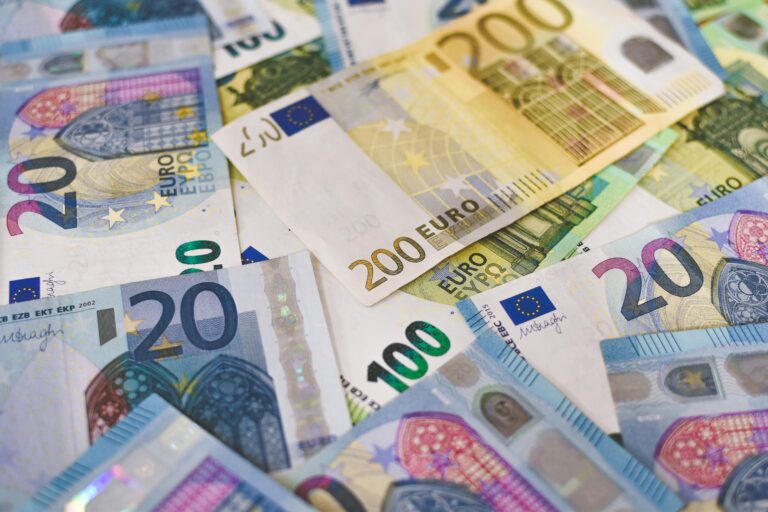
Understanding the intricate dance between major global currencies, particularly the Euro-Dollar exchange rate, is crucial for anyone building enduring wealth. This article demystifies currency dynamics, explaining how global events and economic data can affect your international investments and overall financial stability, offering insights compatible with a long-term wealth accumulation strategy.
For individuals dedicated to building sustainable wealth, the world of currency exchange often appears as a complex, rapidly shifting landscape. While daily fluctuations might dominate financial headlines, the underlying movements of major currency pairs like the Euro-Dollar exchange rate (EUR/USD) carry significant implications for long-term investment portfolios, international financial planning, and even the cost of goods and services we consume. Ignoring these powerful forces would be akin to sailing without understanding the tides.
The relationship between the Euro and the US Dollar is not merely a concern for day traders or large multinational corporations. It’s a fundamental barometer of global economic health and investor sentiment, reflecting the strength and stability of two of the world’s largest economic blocs. When you hold investments denominated in a foreign currency, travel internationally, or even purchase imported goods, the Euro-Dollar exchange rate directly or indirectly influences your financial reality.
This comprehensive guide aims to illuminate the key drivers behind the Euro-Dollar dynamics, translating complex financial jargon into actionable insights for the savvy investor. We will explore how central bank policies, vital economic data, geopolitical events, and even global trade wars sculpt the value of these currencies, and most importantly, how you can strategically navigate these shifts to safeguard and grow your wealth.
Our focus at ‘Work to Wealth’ is always on strategies that empower individuals to achieve financial independence and security over the long haul. Therefore, while we acknowledge the swift movements seen in daily market analyses, our emphasis remains on understanding the enduring principles that underpin currency valuations and how these principles can inform robust, long-term investment decisions, protecting your wealth from unexpected market jitters.
The Euro-Dollar Exchange Rate: More Than Just a Number
At its core, the Euro-Dollar exchange rate expresses how many US Dollars one Euro can buy. It is the most heavily traded currency pair globally, reflecting the profound economic interconnections between the Eurozone and the United States. This constant exchange reflects an ongoing negotiation of value, driven by a multitude of economic, political, and psychological factors.
For many, currency exchange rates are abstract figures, perhaps only becoming relevant when planning a vacation or making an international purchase. However, for investors with diversified portfolios that include international assets, or those anticipating future global financial needs, these rates are a critical component of their overall financial picture.
A stronger Euro against the Dollar means European assets (like stocks or bonds) become more expensive for US Dollar holders but yield higher returns when converted back to Dollars. Conversely, a weaker Euro makes European assets more attractive to Dollar investors and reduces the converted value of Euro-denominated earnings for US investors.
Why the Euro-Dollar Exchange Rate Matters for Your Portfolio
The impact of the Euro-Dollar exchange rate extends far beyond simple conversions. Here’s how it can directly influence your long-term wealth building efforts:
- International Investments: If you own stocks or bonds in Eurozone companies, the value of those investments, when translated back into US Dollars, is directly affected by the EUR/USD rate. A decline in the Euro’s value can erode gains, even if the underlying asset performed well in its local currency.
- Global Diversification: Many wealth strategies advocate for international diversification. Understanding currency risk is paramount to making informed decisions about how much exposure you have to different currency blocs.
- Cost of Goods and Services: A stronger Dollar makes imported European goods cheaper, which can benefit consumers but potentially hurt domestic industries competing with imports. For businesses, currency swings impact import costs and export competitiveness.
- Inflation and Purchasing Power: Currency strength can influence inflation. A weaker domestic currency makes imports more expensive, potentially fueling inflation. This directly impacts your purchasing power and the real return on your investments.
- Retirement Planning: For those planning to retire abroad or who have retirement accounts with international holdings, currency fluctuations can significantly alter the purchasing power of their savings in a foreign country.
Global Forces Shaping the Euro-Dollar Dynamics
The value of the Euro relative to the US Dollar is a dynamic reflection of various fundamental and technical factors. For the long-term investor, understanding these underlying drivers is far more valuable than predicting daily price movements.
Central Bank Policies: The European Central Bank’s Influence
Central banks, such as the European Central Bank (ECB) for the Eurozone and the Federal Reserve for the United States, are powerful architects of currency value. Their primary mandate often revolves around maintaining price stability (controlling inflation) and fostering economic growth.
The ECB, based in Frankfurt, Germany, is the reserve bank for the 19 European Union countries that use the Euro. Its Governing Council makes monetary policy decisions eight times a year, including setting interest rates. Higher interest rates (or the expectation of them) generally make a currency more attractive to foreign investors seeking better returns on their savings, thus strengthening the currency. Conversely, lower interest rates or expansive monetary policies (like quantitative easing) can weaken it.
For example, if the ECB signals a tightening of its monetary policy, indicating potential rate hikes, the Euro typically strengthens. This is because investors anticipate higher returns on Euro-denominated assets. Conversely, if the ECB adopts a dovish stance, signaling lower rates or further stimulus, the Euro may weaken.
Economic Health: GDP, Inflation, and Employment
The overall health of an economy is a critical determinant of its currency’s strength. Robust economic data signals a thriving economy, which tends to attract foreign investment and strengthen the currency. Key economic indicators include:
- Gross Domestic Product (GDP): Measures the total economic output of a country or region. Strong GDP growth often supports a stronger currency.
- Inflation Data (HICP for Eurozone): The Harmonized Index of Consumer Prices (HICP) measures Eurozone inflation. If inflation rises above the ECB’s target (typically 2%), it often prompts the ECB to consider raising interest rates to control it. Higher rates can boost the Euro.
- Manufacturing and Services PMIs: Purchasing Managers’ Index (PMI) surveys gauge economic activity in the manufacturing and services sectors. Stronger PMIs indicate economic expansion and can be bullish for the currency.
- Employment Data: Low unemployment rates and strong wage growth reflect a healthy labor market, contributing to overall economic strength and currency appreciation.
- Consumer Sentiment Surveys: These indicators reflect consumer confidence in the economy. Optimistic consumers are more likely to spend, boosting economic activity.
Economic data from the four largest Eurozone economies—Germany, France, Italy, and Spain—are particularly influential, as they collectively account for approximately 75% of the Eurozone’s economy. Therefore, investors closely monitor their individual economic reports for broader implications for the Euro.
Trade Balances and Capital Flows
The flow of money into and out of an economy is another powerful force. The Trade Balance, which measures the difference between a country’s exports and imports, is a key indicator. A positive Trade Balance (exports exceed imports) means more foreign currency is flowing into the economy to purchase its goods and services, increasing demand for the domestic currency and strengthening it. Conversely, a negative Trade Balance (imports exceed exports) tends to weaken the currency.
Beyond physical goods, capital flows—investments in stocks, bonds, real estate, and direct foreign investment—also play a significant role. If a region offers attractive investment opportunities, it draws capital, increasing demand for its currency. For example, if European companies offer higher dividend yields or better growth prospects, global investors will convert their Dollars to Euros to invest, strengthening the Euro-Dollar exchange rate.
Geopolitical Factors and Market Sentiment
Even robust economic fundamentals can be overshadowed by geopolitical events and shifts in market sentiment. Political stability, global trade relations, and unexpected crises can trigger rapid and significant currency movements.
For instance, political turmoil within a major Eurozone country, such as France, can introduce uncertainty about the region’s economic future or its commitment to common fiscal policies. This uncertainty can make investors wary, leading to a flight of capital from the Euro and a weakening of the Euro-Dollar exchange rate.
Similarly, major international trade disputes, like a re-escalation of the US-China trade war, can create risk aversion. In such scenarios, investors often flock to safe-haven currencies, which historically include the US Dollar, thereby strengthening the Dollar against the Euro. These events highlight that currency values are not solely mathematical equations but also reflections of human confidence and fear.
Understanding Volatility: A Long-Term Investor’s Perspective on Euro-Dollar
Volatility is an inherent characteristic of currency markets. While short-term traders thrive on these rapid fluctuations, long-term investors need a different lens through which to view the Euro-Dollar exchange rate. The goal isn’t to predict tomorrow’s price but to understand how these movements affect your overall wealth strategy over years, not days.
Short-Term Fluctuations vs. Long-Term Trends
Financial news often highlights daily or weekly currency movements, sometimes even referring to technical indicators like Exponential Moving Averages (EMAs) or the Relative Strength Index (RSI). These are valuable tools for short-term speculation but can be distractions for the long-term investor focused on fundamental value and strategic asset allocation.
For wealth builders, it’s the broader, multi-month or multi-year trends in the Euro-Dollar exchange rate that hold significance. These trends are driven by the persistent fundamental factors discussed earlier—diverging central bank policies, sustained economic performance gaps, or enduring geopolitical shifts. Short-term noise, while potentially alarming, often resolves within the context of these larger trends.
Impact on International Investments
Consider an investor holding a portfolio of European equities purchased with US Dollars. If the Euro weakens significantly against the Dollar, the value of those equities, when converted back to Dollars, will decline, even if the Euro-denominated stock prices remained stable or even increased. This is known as currency risk.
Conversely, a strengthening Euro benefits US Dollar-based investors in European assets, as their investment gains are magnified upon conversion. This highlights the double-edged sword of international investing: while it offers diversification and access to growth opportunities not available domestically, it also introduces currency risk.
- Stocks: Earnings of European companies are reported in Euros. A weak Euro makes these earnings less valuable when converted to Dollars.
- Bonds: Returns on Euro-denominated bonds will convert to fewer Dollars if the Euro weakens, affecting your fixed-income portfolio’s performance.
- Real Estate: Investing in European property directly exposes you to Euro fluctuations. The value of your investment, when eventually sold and converted, will be subject to the prevailing Euro-Dollar exchange rate.
Protecting Your Wealth from Currency Swings
While eliminating currency risk entirely might be impractical or undesirable for a long-term diversified portfolio, several strategies can help mitigate its adverse effects:
- Diversification Across Currencies: Instead of concentrating investments in a single foreign currency, spreading your international holdings across several major currencies (e.g., Euro, Yen, Pound, Swiss Franc, Canadian Dollar) can help balance out fluctuations. If one currency weakens, another might strengthen, offsetting some losses.
- Currency Hedging: More sophisticated investors, or those with significant international exposure, might consider hedging strategies using financial instruments like forward contracts or currency options. These aim to lock in an exchange rate for a future transaction, thereby eliminating uncertainty. However, hedging comes with costs and its own complexities, making it more suitable for larger portfolios or specific business needs.
- Investing in Companies with Natural Hedges: Some multinational corporations naturally hedge their currency exposure by operating and earning revenues in multiple currencies. Investing in such companies can provide a degree of indirect currency diversification.
- Focus on Strong Fundamentals: Ultimately, the long-term performance of your international investments will largely depend on the fundamental strength and growth prospects of the underlying companies or economies, regardless of short-term currency noise. A strong company in a robust economy is more likely to recover from currency-related dips.
- Long-Term Perspective: For most ‘Work to Wealth’ readers, adopting a long-term perspective is the most effective “hedge.” Over many years, short-term currency fluctuations tend to average out, and the focus remains on the growth of the underlying assets.
Practical Steps for Wealth Management Amidst Currency Changes
For the committed wealth builder, navigating the complexities of currency markets requires a disciplined approach rooted in understanding, diversification, and long-term thinking. Here are practical steps to integrate an awareness of the Euro-Dollar exchange rate into your wealth management strategy.
Regular Portfolio Review
Periodically assess your international investment exposure. Understand what percentage of your portfolio is denominated in foreign currencies, particularly the Euro. This isn’t about daily monitoring, but rather an annual or semi-annual check-up to ensure your asset allocation still aligns with your risk tolerance and financial goals, especially if there have been significant, sustained shifts in major currency pairs.
During these reviews, consider the performance of your Euro-denominated assets not just in their local currency but also after converting them back to your base currency (e.g., USD). This provides a more realistic picture of your actual returns and currency impact.
Diversification Across Currencies and Assets
True diversification extends beyond merely spreading investments across different industries or asset classes like stocks and bonds. It also encompasses geographical and currency diversification. Holding a mix of assets in various currencies can cushion your portfolio against the volatility of any single currency pair, including the Euro-Dollar exchange rate.
For example, if you have significant exposure to the Eurozone, you might consider balancing it with investments in other strong economies with different currency dynamics, such as Switzerland, Canada, or Japan. This doesn’t mean constantly buying and selling, but rather structuring your initial allocation and rebalancing strategically over time.
Stay Informed, Not Obsessed
While understanding the drivers of currency movements is crucial, daily obsession with the Euro-Dollar exchange rate is counterproductive for a long-term wealth strategy. Instead, focus on major economic reports and central bank announcements from both the Eurozone and the US. Pay attention to broad trends and significant policy shifts rather than hourly price quotes.
Reliable financial news sources can provide valuable context, helping you understand the ‘why’ behind major currency moves, rather than just the ‘what’. This informed perspective allows you to make calm, rational decisions, avoiding impulsive reactions to market noise that can derail a well-planned financial future.
Consulting Financial Experts
Currency risk management and international investment strategy can be complex. If you have a substantial international portfolio or specific concerns about currency exposure, consulting a qualified financial advisor is highly recommended. A professional can help you:
- Assess your current currency risk.
- Develop a tailored diversification strategy.
- Explore sophisticated hedging options if appropriate for your situation.
- Integrate currency considerations into your overall wealth plan, including retirement and estate planning.
Their expertise can provide clarity and confidence, ensuring your wealth-building journey accounts for global market dynamics effectively.
The Future Outlook: What to Watch for in the Euro-Dollar Landscape
The global economic environment is in constant flux, and the Euro-Dollar exchange rate will continue to reflect these shifts. For the long-term investor, it’s not about predicting precise price points but rather understanding the ongoing narratives that will shape its trajectory.
Key areas to monitor include:
- Central Bank Divergence: Pay attention to the relative policy stances of the ECB and the US Federal Reserve. If one central bank is tightening (raising rates) while the other is loosening (cutting rates or stimulating), this divergence can create strong trends in the EUR/USD.
- Economic Growth Differentials: Consistent outperformance of one economy (Eurozone vs. US) in terms of GDP growth, employment, and innovation can lead to sustained currency appreciation for the stronger economy.
- Geopolitical Stability: Major political events, elections, or conflicts in either the Eurozone or the US (or globally) can introduce uncertainty, causing shifts in investor confidence and currency flows.
- Trade Dynamics: Changes in global trade agreements, tariffs, or supply chain shifts can impact trade balances and, consequently, currency valuations.
- Inflation Trends: The persistent battle against inflation or the emergence of deflationary pressures in either region will continue to be a primary driver for central bank actions, thus influencing the Euro-Dollar exchange rate.
By maintaining a vigilant yet composed approach to these overarching themes, you can better position your wealth portfolio to withstand market jitters and capitalize on long-term opportunities, ensuring your ‘Work to Wealth’ journey remains on a steady and prosperous course.
Frequently Asked Questions
How do Euro-Dollar fluctuations impact my retirement savings invested internationally?
If your retirement savings include assets denominated in Euros (like European stocks, bonds, or real estate), a weakening Euro against the US Dollar will reduce the value of those assets when converted back to Dollars. Conversely, a strengthening Euro will enhance their value. This currency risk can significantly affect your portfolio’s overall return and your purchasing power if you plan to retire in a Eurozone country or frequently use Euros.
What should I do if political instability in Europe worries me about my international investments?
Political instability in regions like Europe can introduce uncertainty and potentially weaken the Euro, affecting your investments. Instead of making impulsive decisions, it’s wise to review your portfolio’s overall diversification. Ensure you’re not overly concentrated in any single region or currency. Consider balancing your Eurozone exposure with investments in other stable economies or strong currencies. A long-term perspective and consultation with a financial advisor can help you maintain a strategic approach rather than reacting to short-term political noise.
Is it possible to protect my long-term wealth from sudden Euro-Dollar drops?
While completely eliminating currency risk from international investments is challenging, you can significantly mitigate the impact of sudden Euro-Dollar drops. Strategies include broad geographical and currency diversification across your portfolio, investing in companies with natural hedges (multinationals earning in various currencies), and maintaining a long-term investment horizon where short-term fluctuations tend to balance out. For very large portfolios, more complex hedging instruments might be considered, but these often come with additional costs and complexities.
How can understanding economic data help me make better investment decisions regarding the Euro-Dollar exchange rate?
Understanding key economic data like GDP, inflation (HICP), employment figures, and central bank policies (ECB, Federal Reserve) helps you grasp the fundamental drivers behind the Euro-Dollar exchange rate. By knowing whether the Eurozone or US economy is showing stronger growth or if their central banks are diverging in monetary policy, you can anticipate broader, long-term trends. This informed perspective allows for more strategic international asset allocation and reduces the likelihood of making reactive decisions based on short-term market noise.
What’s the difference between short-term currency trading and long-term investment strategy concerning the Euro-Dollar?
Short-term currency trading (like Forex trading) involves speculating on rapid, often daily, price movements of the Euro-Dollar exchange rate using technical indicators and leverage, aiming for quick profits. A long-term investment strategy, on the other hand, focuses on building wealth over years by investing in fundamentally sound assets (stocks, bonds, real estate) across different regions. For long-term investors, currency movements are a risk factor to manage through diversification and strategic asset allocation, not a primary source of speculative profit. The goal is wealth preservation and growth, not immediate trading gains.