

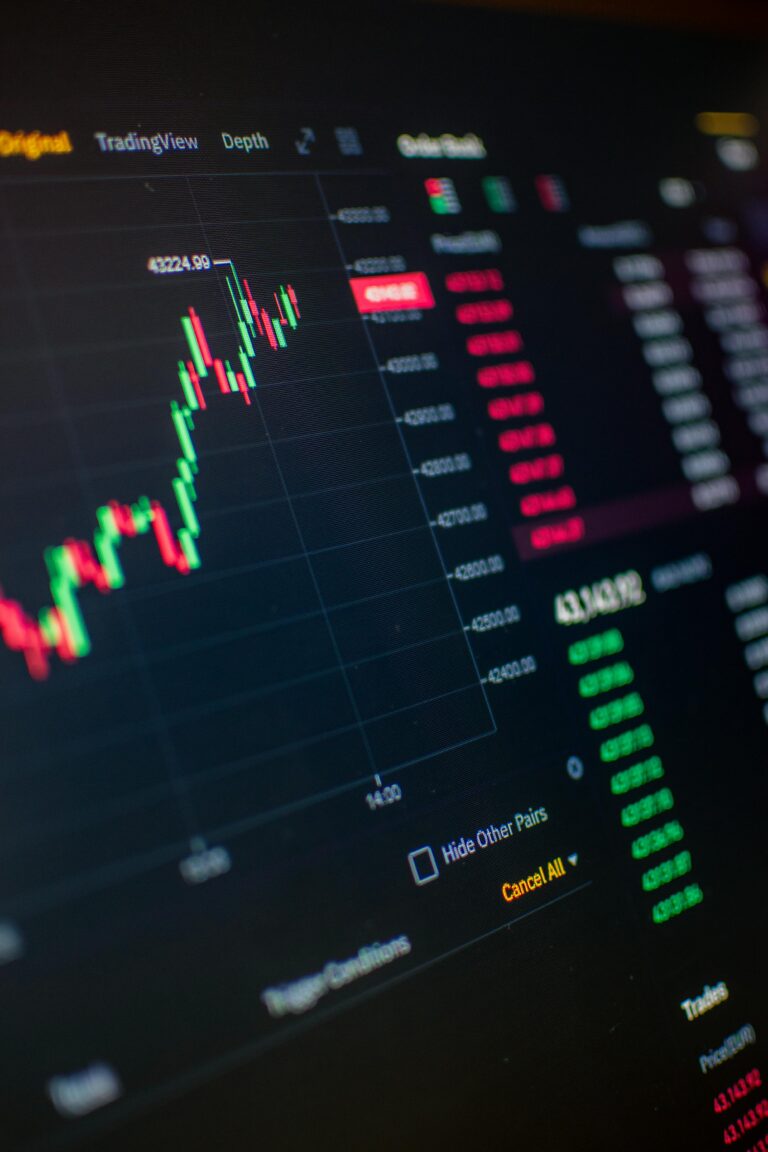
Recent market tremors, often triggered by significant corporate actions like buyouts or privatizations, can leave investors feeling uncertain about their financial future. This article promises to equip you with robust strategies to navigate such market volatility, ensuring your investment portfolio remains resilient and aligned with your wealth-building goals, regardless of external shifts. It’s designed for anyone seeking to fortify their financial position against unexpected corporate maneuvers and broader market instability.
The financial markets are a dynamic landscape, constantly shaped by a myriad of factors ranging from geopolitical events to technological advancements. Among these influential forces, significant corporate actions—such as a major financial institution proposing to take one of its subsidiaries private—can create considerable ripples, leading to widespread portfolio uncertainty. Such events, as recently observed with a prominent global bank’s move to privatize a significant regional entity, often result in immediate share price fluctuations and can trigger broader investor unease.
When news broke about a substantial corporate buyout, valuing the target at tens of billions, it sent a clear message to the market: change is underway. The acquiring institution, a well-known financial services provider, saw its shares experience their most significant slide in months. This immediate market reaction wasn’t just about the specific entities involved; it highlighted how major strategic decisions, even those designed for long-term growth and capital efficiency, can spark portfolio uncertainty among existing shareholders and the wider investment community.
The proposed deal, intended to consolidate ownership, also brought about a temporary halt in share buybacks for the acquiring company to maintain its capital ratios. While the dividend payout target for the current year remained intact, the cessation of buybacks can be interpreted by some investors as a reduction in capital returns, further contributing to market jitters. Such strategic adjustments, though often sound from a corporate perspective, require individual investors to reassess their own positions and understand the potential implications for their investment portfolio stability.
For many, particularly those new to the investment world or those primarily focused on steady growth, these kinds of headlines can be unsettling. The immediate reaction of a share price drop, combined with changes in capital distribution policies, raises fundamental questions about the safety and future performance of their holdings. This article aims to demystify these complex events and provide actionable strategies to manage the inherent portfolio uncertainty that arises from such significant corporate maneuvers, helping you build and maintain a robust path to wealth.
Understanding Corporate Actions and Their Impact on Investment Portfolio Stability
Corporate actions encompass a broad range of events initiated by a company that affects its stock, shareholders, or both. These can include mergers, acquisitions, stock splits, dividends, rights issues, and, as in our recent example, buyouts or privatizations. Each type of action carries unique implications for a company’s financial structure and, consequently, its share price and investor sentiment.
What is a Privatization or Buyout?
A privatization, or taking a company private, occurs when a publicly traded company is bought out by a smaller group of investors, often including its existing parent company, and its shares are delisted from the stock exchange. The goal can be to gain full control, simplify corporate structure, reduce regulatory costs, or make strategic changes away from public scrutiny. For the acquiring entity, it might be about consolidating assets, achieving synergies, or optimizing capital allocation.
In the scenario we’re discussing, a major financial institution sought to acquire the remaining stake in its publicly listed subsidiary. While the intent might be to streamline operations and unlock greater value over time, the immediate capital outlay required for such a large-scale acquisition, coupled with decisions like halting buybacks, directly influences the market’s perception of the parent company’s financial health and its near-term shareholder return policies. This can directly contribute to portfolio uncertainty for those holding shares in either the parent or the subsidiary.
Immediate Market Reactions and Portfolio Uncertainty
The initial market reaction to a major corporate buyout announcement can be swift and sometimes dramatic. For the acquiring company, concerns about the financial strain of the acquisition, the valuation paid, or potential dilution can lead to a sell-off, causing its share price to fall. This is precisely what was observed when the acquirer’s shares slid significantly after the announcement.
For the target company, shares often rally towards the buyout price, as arbitrageurs step in, though the final price is usually capped. However, for investors holding the acquiring company’s shares, the immediate impact can be negative, leading to a palpable sense of portfolio uncertainty. They may question the wisdom of the deal, its impact on future profitability, or the shift in capital allocation priorities away from direct shareholder returns like buybacks.
Beyond individual stock movements, such events can also trigger broader market sentiment shifts. If a major player in a sector experiences volatility, it can sometimes drag down related stocks or even impact overall investor confidence, creating a wider environment of market volatility. Understanding these mechanisms is the first step in mitigating their impact on your personal financial journey.
Direct and Indirect Impacts on Your Investment Portfolio Stability
When a significant corporate event unfolds, its effects can cascade through your investment portfolio in several ways, both direct and indirect. Recognizing these potential impacts is crucial for maintaining investment portfolio stability and making informed decisions.
For Direct Stockholders
If you hold shares directly in the acquiring company, you might experience an immediate paper loss if its stock price declines. This can be unsettling, especially if you had no prior knowledge of the impending corporate action. The decision to halt share buybacks, even if temporary, might also remove a support mechanism for the stock price, potentially extending the period of portfolio uncertainty.
On the other hand, if you hold shares in the target company, you might see your stock price rise towards the proposed buyout value, offering a positive return in the short term. However, upon privatization, those shares will be delisted, meaning you will receive cash for your shares, and you will need to find new investment opportunities for that capital.
For Indirect Investors (Mutual Funds, ETFs, Pension Funds)
Many investors hold shares indirectly through mutual funds, exchange-traded funds (ETFs), or pension funds. In such cases, the impact might be less direct but still significant. If the affected companies constitute a large portion of a fund’s holdings, the fund’s overall performance will be influenced. A fund manager might decide to sell off holdings in the acquiring company if they deem the corporate action detrimental to the fund’s strategy, or they might hold on, believing in the long-term value. This adds another layer of complexity to managing portfolio uncertainty, as your diversified holdings are still susceptible to individual stock movements.
Changes in Capital Allocation and Shareholder Returns
Corporate actions often lead to shifts in capital allocation. For instance, the significant capital outlay for a buyout might lead a company to temporarily pause share buyback programs, which are a common way companies return capital to shareholders and can help support share prices. While dividends might be maintained, the absence of buybacks can influence investor perception of total shareholder returns and future growth prospects, contributing to the general portfolio uncertainty surrounding the stock.
The Psychological Toll of Market Volatility
Beyond the financial figures, market events that create portfolio uncertainty can take a significant psychological toll. The sight of a dipping portfolio can trigger fear, prompting impulsive decisions like panic selling at a loss. Conversely, some might become paralyzed, unable to act, missing opportunities to rebalance or reposition their investments. Managing these emotional responses is as critical as understanding the financial mechanics, as behavioral biases often lead to suboptimal investment outcomes.
Understanding these multifarious impacts is the bedrock of building a resilient investment strategy. It’s about more than just reacting to news; it’s about having a framework that anticipates, absorbs, and adapts to such market shifts, transforming potential portfolio uncertainty into a foundation for growth.
Fortifying Your Wealth: Strategies to Navigate Portfolio Uncertainty
Navigating periods of portfolio uncertainty, whether triggered by corporate buyouts, economic shifts, or other market events, requires a proactive and disciplined approach. Building a resilient investment strategy involves a combination of sound financial principles and emotional fortitude. Here are key strategies to help you maintain investment portfolio stability and continue on your path to wealth.
1. Embrace Diversification: Your First Line of Defense
The oldest and perhaps most fundamental principle in investing is diversification. It’s the practice of spreading your investments across various asset classes, industries, geographies, and even types of securities. The idea is simple: if one part of your portfolio underperforms, another might perform well, balancing out the overall impact.
In the context of a major corporate action affecting a single company or sector, a diversified portfolio helps cushion the blow. For example, if your portfolio is spread across domestic stocks, international stocks, bonds, real estate investment trusts (REITs), and perhaps some commodities, the significant dip in one financial institution’s shares will have a proportionally smaller impact on your total wealth. A well-diversified portfolio is less susceptible to the whims of any single corporate entity or market segment, significantly reducing portfolio uncertainty during specific events.
Consider diversifying not just by asset class but also by industry. If a large financial services institution experiences a downturn, having investments in technology, healthcare, or consumer goods can provide stability. Geographical diversification is also vital, as different economies perform differently at various times. This broad approach helps create a buffer against localized market shocks and enhances your overall investment portfolio stability.
2. Conduct Thorough Due Diligence and Research
While reacting to daily news can be detrimental, staying informed about your investments is crucial. Before investing in individual stocks, or even selecting actively managed funds, understand the underlying businesses. What are their financials like? What is their competitive landscape? Who are their major shareholders? Are they prone to aggressive corporate actions?
In the case of a company considering a major buyout, understanding its capital structure, its debt levels, and its strategic objectives can provide insight into potential future actions. While you can’t predict every move, a strong understanding allows you to make more informed decisions about your holdings. Knowing the companies you invest in helps you differentiate between temporary market noise and fundamental shifts, reducing the emotional impact of portfolio uncertainty.
For funds, research the fund manager’s philosophy, historical performance, and the fund’s primary holdings. If a fund is heavily concentrated in a particular sector or region, it might be more exposed to specific risks, requiring you to balance it with other, less concentrated investments.
3. Adopt a Long-Term Investment Perspective
Short-term market fluctuations, including those caused by corporate buyouts, are a normal part of investing. For long-term wealth builders, these short-term movements are often just noise. Adopting a long-term perspective—thinking in terms of years or decades rather than days or months—helps you ride out periods of portfolio uncertainty.
History has shown that well-diversified portfolios tend to recover from downturns over time. Panic selling during a dip locks in losses and prevents you from participating in the subsequent recovery. Unless your fundamental investment thesis for a company or asset class has changed dramatically, it’s often best to stick to your long-term plan. This mindset is vital for maintaining investment portfolio stability through various market cycles and specific corporate events.
4. Assess and Understand Your Risk Tolerance
Your risk tolerance is your emotional and financial ability to handle investment losses. It’s a critical factor in determining your asset allocation. Someone with a high risk tolerance might be comfortable with a portfolio heavily weighted towards equities, while someone with a low risk tolerance might prefer a larger allocation to less volatile assets like bonds.
When market events like a major bank’s share slide occur, understanding your risk tolerance becomes paramount. If watching your portfolio dip causes you significant stress, it might be an indicator that your current asset allocation is too aggressive for your comfort level. Reassessing your risk tolerance, especially during periods of portfolio uncertainty, can help you adjust your strategy to better suit your temperament, thereby increasing your comfort and confidence in your long-term plan.
5. Establish Clear Financial Goals and an Emergency Fund
A well-defined set of financial goals—whether it’s saving for retirement, a down payment on a home, or a child’s education—provides a roadmap for your investments. When a market event causes portfolio uncertainty, these goals serve as a reminder of why you’re investing and help prevent impulsive decisions.
Equally important is an adequately funded emergency savings account, typically holding three to six months’ worth of living expenses in an easily accessible, liquid account. This fund acts as a financial safety net, ensuring you don’t have to sell investments at an inopportune time (e.g., when prices are down due to market volatility) to cover unexpected expenses. Having this buffer significantly reduces the pressure to react to short-term market movements, thereby protecting your investment portfolio stability.
6. Regularly Rebalance Your Portfolio
Over time, market movements can cause your asset allocation to drift away from your target percentages. For example, if stocks have performed exceptionally well, they might now represent a larger portion of your portfolio than you originally intended, increasing your overall risk exposure. Conversely, a downturn in a specific sector could reduce its allocation below your desired level.
Rebalancing involves periodically adjusting your portfolio back to your target asset allocation. This usually means selling some of your best-performing assets and buying more of your underperforming ones. This disciplined approach ensures you’re not overexposed to risk and can even provide a “buy low, sell high” mechanism. Regular rebalancing is an excellent way to proactively manage portfolio uncertainty, ensuring your portfolio remains aligned with your risk tolerance and long-term goals, thus contributing to greater investment portfolio stability.
7. Implement Dollar-Cost Averaging
Dollar-cost averaging (DCA) is an investment strategy where you invest a fixed amount of money at regular intervals, regardless of the asset’s price. This approach allows you to buy more shares when prices are low and fewer shares when prices are high, effectively averaging out your purchase price over time.
During periods of portfolio uncertainty or market downturns, DCA can be particularly effective. Instead of trying to time the market (which is notoriously difficult), you consistently contribute to your investments. This strategy removes emotion from the investment process and can help you take advantage of lower prices, setting you up for greater returns when the market eventually recovers. It’s a powerful tool against the temptation to panic during market volatility.
8. Consider Income-Generating Investments for Stability
While growth stocks offer potential for significant capital appreciation, a portion of your portfolio dedicated to income-generating assets can provide a steady stream of returns, especially valuable during periods of portfolio uncertainty. Dividend stocks from financially strong companies, high-quality bonds, or certain real estate investments can offer consistent income regardless of daily market fluctuations.
This income can be reinvested to buy more assets (taking advantage of lower prices during downturns) or used to cover living expenses, reducing the need to sell off growth-oriented assets when their prices are depressed. Income investments can significantly contribute to overall investment portfolio stability, offering a sense of security even when other parts of the market are volatile.
9. Stay Informed, But Avoid Overreaction
It’s important to stay informed about major market events and economic trends. Read reputable financial news sources and analyze reports from trusted institutions. However, it’s equally crucial to avoid excessive consumption of news, especially sensationalist headlines, which can amplify feelings of fear and anxiety, leading to poor decisions.
Distinguish between short-term noise and long-term trends. A single corporate buyout, while significant for the involved parties, may not fundamentally alter the global economic outlook or your personal long-term investment strategy. Use information to understand the landscape, not to react impulsively to every blip, thereby maintaining mental and portfolio stability.
10. Seek Professional Financial Advice When Needed
Investing can be complex, and significant corporate actions or periods of intense market volatility can make it even more challenging. If you feel overwhelmed, uncertain about your strategy, or simply want a second opinion, consider consulting a qualified financial advisor. A professional can help you:
- Assess your risk tolerance accurately.
- Create a personalized financial plan tailored to your goals.
- Diversify your portfolio effectively.
- Rebalance your investments strategically.
- Provide an objective perspective during emotional market swings.
- Help you navigate complex events like corporate buyouts and their specific implications for your holdings.
An advisor can be an invaluable partner in maintaining investment portfolio stability and guiding you through periods of portfolio uncertainty, ensuring your decisions are rational and aligned with your long-term wealth objectives.
Learning from Market Events: Building a Resilient Investment Future
Every significant market event, whether it’s a major bank’s shares sliding due to a privatization proposal or a broader economic downturn, offers invaluable lessons for investors. These periods of heightened portfolio uncertainty are not merely challenges to be endured but opportunities for growth and refinement of your investment philosophy.
One key takeaway from situations like the recent corporate buyout news is the importance of understanding capital structure and corporate governance. While individual investors may not directly influence these high-level decisions, being aware of how they affect share performance and capital allocation helps in anticipating potential shifts. It reinforces the idea that even seemingly stable investments can experience market volatility due to internal strategic choices, not just external economic pressures.
Furthermore, such events underscore the value of liquidity and an emergency fund. Knowing you don’t have to sell your investments at a loss to cover an unforeseen expense provides immense psychological comfort and safeguards your investment portfolio stability. It prevents forced selling and allows your long-term strategy to remain intact.
Finally, these moments are crucial for practicing emotional discipline. The urge to panic sell when headlines are negative or to chase quickly rising stocks is powerful. However, consistent long-term success often comes from adhering to a well-thought-out plan, even when it feels counterintuitive. Learning to separate your emotions from your investment decisions is perhaps the most significant skill an investor can develop to combat portfolio uncertainty.
Conclusion: Empowering Your Journey to Investment Portfolio Stability
The journey to wealth is rarely a straight line. It’s often marked by periods of portfolio uncertainty, sudden market reactions, and significant corporate events that can test an investor’s resolve. The recent news of a major institution’s shares reacting to a privatization proposal serves as a potent reminder of this inherent market volatility.
However, by understanding the mechanics of corporate actions, embracing robust diversification, maintaining a long-term perspective, and applying disciplined strategies like rebalancing and dollar-cost averaging, individual investors can not only weather these storms but emerge stronger. Building a resilient portfolio is about proactive planning, continuous learning, and making informed, unemotional decisions.
Your path to wealth is within your control. By implementing the strategies outlined here, you can transform potential portfolio uncertainty into a foundation of strength, ensuring your investments continue to work towards your financial independence and long-term prosperity. Take these lessons to heart, empower your investment strategy, and build enduring investment portfolio stability.
Frequently Asked Questions
How can a corporate buyout increase my portfolio uncertainty?
A corporate buyout can introduce portfolio uncertainty in several ways. If you own shares in the acquiring company, its stock price might fall due to concerns about the acquisition’s cost, potential debt, or changes in capital allocation (like halting share buybacks). This can lead to a direct decline in the value of your holdings. For funds you invest in, if the affected companies are significant holdings, the fund’s performance may also be impacted, leading to indirect uncertainty in your overall portfolio’s stability.
My shares dropped after news of a major corporate action; how do I regain my investment portfolio stability?
If your shares drop, the first step is to avoid panic selling. Reassess your initial investment thesis. If the company’s fundamentals remain strong and your long-term goals haven’t changed, consider holding or even dollar-cost averaging more shares at a lower price. Ensure your overall portfolio is diversified across different asset classes and sectors. Regularly rebalance your portfolio to maintain your desired asset allocation and reduce overexposure to any single event, which helps restore investment portfolio stability.
Is it wise to sell all my shares if a company announces a halt in buybacks?
A halt in share buybacks, while potentially impacting short-term share price support, is often a strategic decision by a company to preserve capital for other uses, such as a major acquisition, debt reduction, or internal investments. It doesn’t necessarily warrant immediate selling. Evaluate the reason for the halt and the company’s long-term prospects. Consult your financial plan and consider if this change fundamentally alters your investment thesis. Impulsive selling can lock in losses and prevent you from benefiting from potential future recovery or growth, thereby further disrupting your portfolio stability.
How does diversification truly protect against market volatility from corporate actions?
Diversification protects against market volatility by spreading your investments across various assets (stocks, bonds, real estate), industries, and geographical regions. If a corporate action negatively impacts one specific company or sector, the other, uncorrelated assets in your portfolio are less likely to be affected in the same way, or might even perform well. This minimizes the overall impact on your total wealth, preventing a single event from causing widespread portfolio uncertainty and maintaining your investment portfolio stability.
Should I change my retirement planning strategy due to market jitters from corporate buyouts?
Generally, short-term market jitters, even from significant corporate buyouts, should not drastically alter a well-thought-out long-term retirement planning strategy. Retirement plans are typically designed with a multi-decade horizon, allowing time for markets to recover from periods of portfolio uncertainty. Focus on consistent contributions, regular rebalancing, and maintaining a diversified portfolio. If your risk tolerance or financial situation has fundamentally changed, then a review with a financial advisor might be appropriate, but impulsive changes based on temporary market volatility are usually counterproductive.